


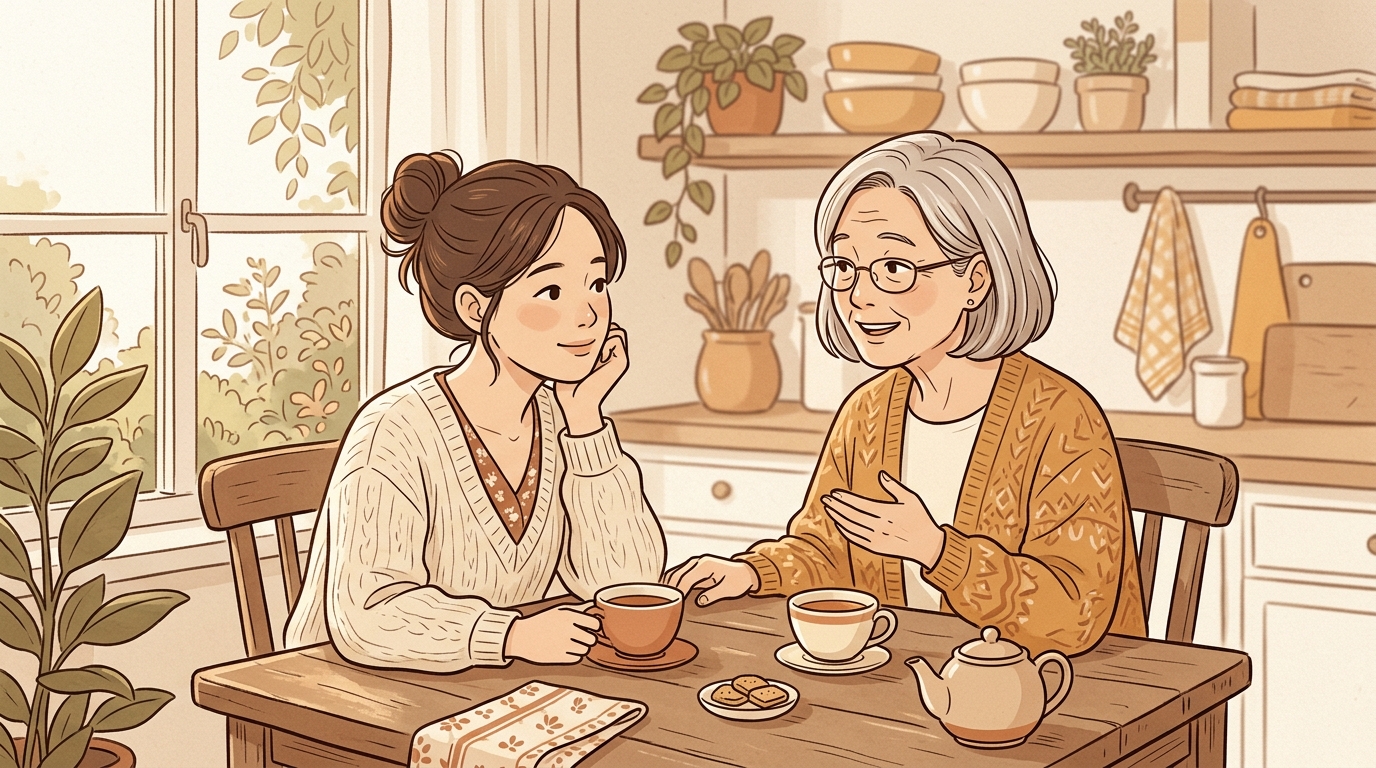
She does not need to. She just gets this look. A small, quiet smile that does not quite reach her eyes. The kind of smile that says everything without saying anything at all. I have been on the receiving end of that smile more times in the past three years than in the entire three decades before it.
Because it turns out my mother knew things.
Things I was absolutely certain, in my confident pre-baby life, that she had it all wrong. Things I nodded politely at while privately deciding I would do differently. Things I filed away under “well-meaning but outdated” and promptly ignored.
I am writing this partly as a record and partly because I owe her an acknowledgement she will never ask for.
“Don’t Pick Him Up Every Time He Cries”
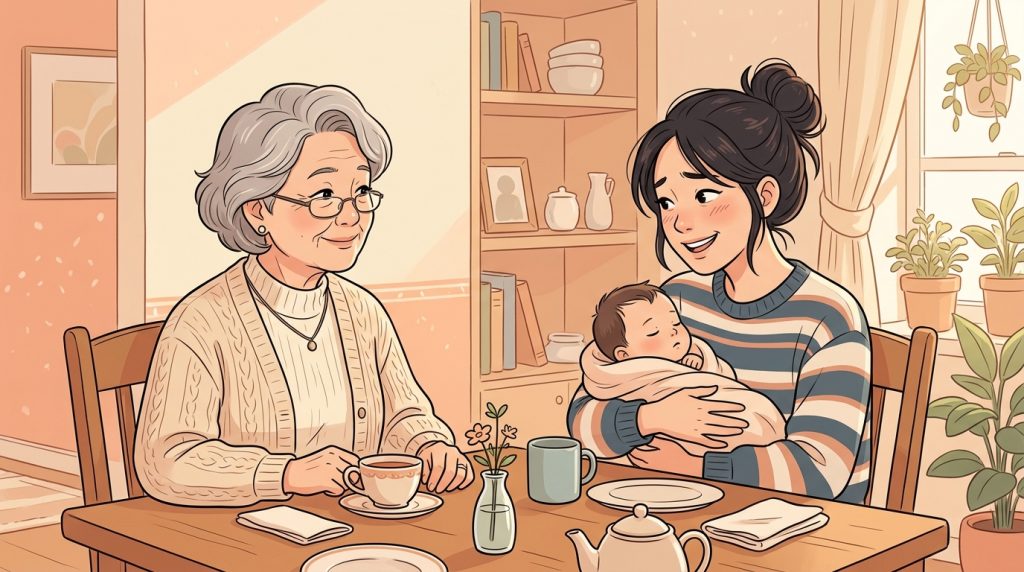
This was the first one.
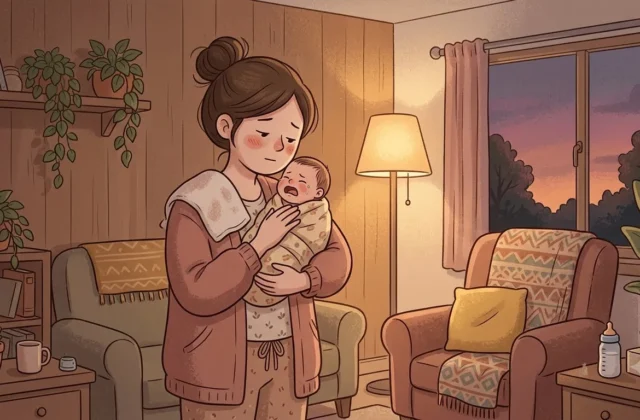
My mother said it gently, about two weeks after my son was born. I was exhausted, hormonal and deeply committed to everything I had read about responsive parenting and not letting babies cry alone. I smiled at her. I thanked her but continued picking him up every single time.
I was so sure she was wrong.
Here is what I did not understand then: she was not telling me to ignore my baby. She was telling me something I only understood much later, which is that learning to read your baby’s cries. To listen deeper to distinguish hunger from discomfort, tiredness from simply needing a moment to resettle. That rushing in at the first sound, every time, without pausing to listen, can actually make it harder to learn what your baby is communicating.
She was not saying to be cold. She was trying to teach me to be present enough and actually pay attention.
I learned this around month four, when I finally started pausing for thirty seconds before responding. Not ignoring. Just listening first. It changed how I understood my son completely.
My mother got the look. I pretended not to notice.
“Sleep When the Baby Sleeps”
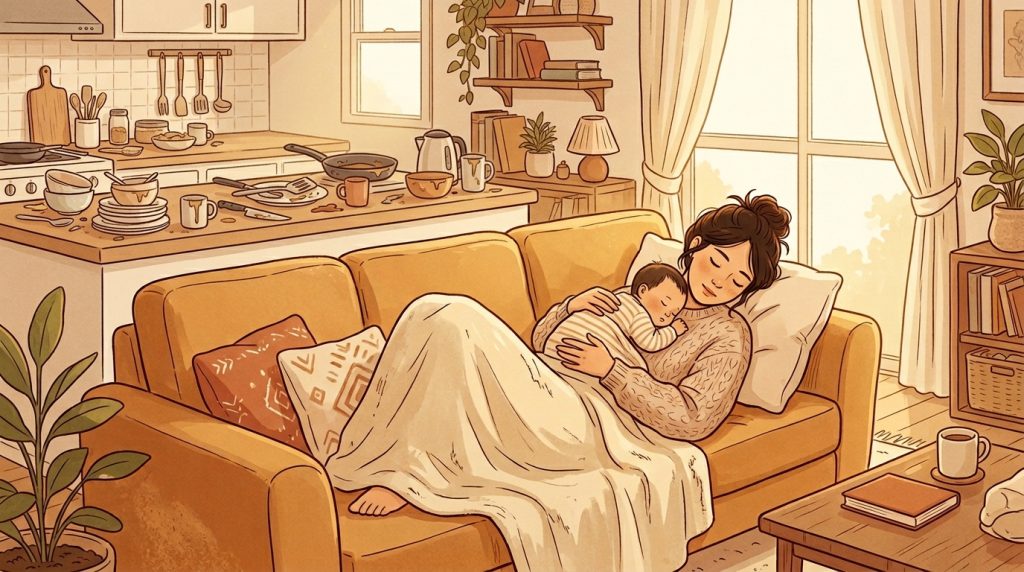
I thought this was the most useless advice anyone had ever given a new mother.
Sleep when the baby sleeps? What about the dishes? The laundry that had been sitting unfolded for four days? The emails I was already behind on even though I was technically on maternity leave? The shower I had been postponing since morning?
I spent the first six weeks of my son’s nap times being productive. Catching up. Maintaining some semblance of a functioning household and a perfectly normal self.
By week seven I was so tired I could not finish sentences.
My mother was not implying “sleep when the baby sleeps” because she did not understand that there were other things to do. She said it because she had already lived through the version of this where you choose the dishes over the sleep and she knew exactly where that road ended.
The dishes can wait but my body cannot run indefinitely on four hours of broken sleep and sheer determination. I know this now. I knew it then too, technically. But knowing something and believing it enough to actually lie down in the middle of the day are two completely different things.
“He Doesn’t Need So Much Stimulation”
When my son was around three months old I had his days fairly structured. Tummy time. Black and white cards. Soft music. Age-appropriate toys rotated in and out. A gentle class on Tuesday mornings. Everything I had read suggested early stimulation supported brain development and I was not going to be the mother who missed a window.
My mother watched all of this for approximately one afternoon before quietly saying that he seemed tired. That babies also needed time to just be. That not every moment needed to be optimised.
I explained, kindly, that research supported early enrichment.
She nodded and said nothing further.
What I eventually learned much later, and partly from the same research I had been citing, is that overstimulation in infants is a real thing. That babies need stretches of unstructured time. That staring at the ceiling and kicking their legs and processing the world without anyone directing the experience is not wasted time. It is actually important.
My mother did not know about neural development research. She knew what she had observed across decades of watching babies. Sometimes observation and research arrive at the same place by different roads.
“You Don’t Have to Explain Everything to Him”
This one took me the longest to understand.
I was committed to gentle parenting. Explaining reasons. Validating feelings. Getting down to my son’s level and walking him through why we were not going to throw food on the floor, calmly and respectfully, every single time.
My mother watched this process which sometimes took ten patient minutes to produce exactly the same result a simple firm “no” would have achieved in ten seconds, with the particular neutrality of someone who has decided not to say what they are thinking.
Eventually she said, very mildly, that children also needed to learn that some things were simply not acceptable. That explaining everything, endlessly, could sometimes communicate uncertainty rather than authority. That a child who knows their parent means what they say is actually a more secure child, not a less loved one.
I did not receive this well at the time.
But I have thought about it often since then because there is a version of gentle parenting that is genuinely about connection and respect. On the other hand, there is another version that is anxiety in disguise: a parent so afraid of their child’s upset that they negotiate endlessly rather than simply hold a boundary with warmth and confidence.
My mother was not telling me to be harsh. She was telling me that clarity is also a form of love. That a child does not need every decision explained to them. They need to trust that the adults around them know what they are doing.
I am still working on this one. Working really hard on it.
“Stop Reading So Much and Just Watch Him”
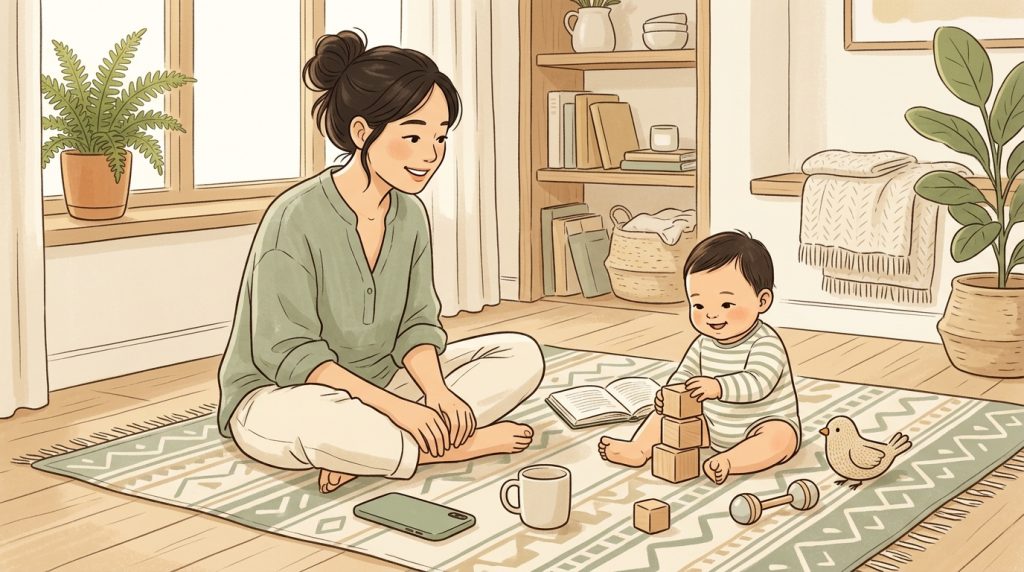
About six months in, during a particularly anxious week when I had convinced myself my son was behind on something after reading too many developmental milestone articles at midnight, my mother said this.
Not unkindly. Just directly. Stop reading so much and just watch him.
I had spent so much time measuring my son against lists and charts and other people’s babies on the internet that I had started seeing him primarily as a collection of milestones either achieved or not yet achieved. I was so busy checking whether he was doing the right things at the right times that I was only partially present for the actual experience of him.
He was fine, of course. He was completely fine. But I had spent two weeks quietly convinced otherwise because a website told me most babies did something by a certain week and he had not done it yet.
My mother raised her children in an era before parenting content was a genre. She watched her babies. She paid attention. She adjusted. She did not have a framework for every phase and a podcast for every problem.
I am not saying information is bad. I am saying I was using information as a way to manage anxiety rather than as genuine guidance. And there is a difference.
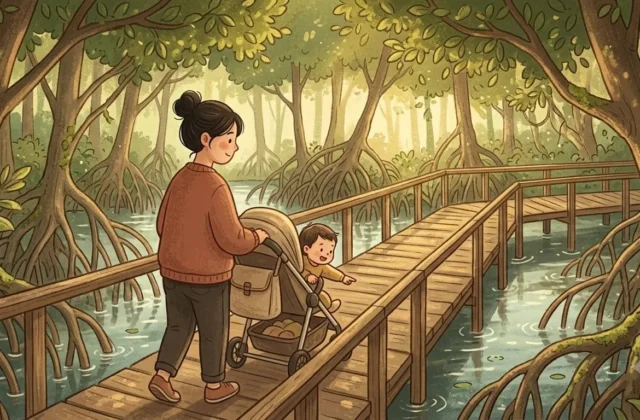
Watching my son, actually watching him, without the phone, without the mental checklist taught me more about who he was than any article I ever read.
What I Think Now
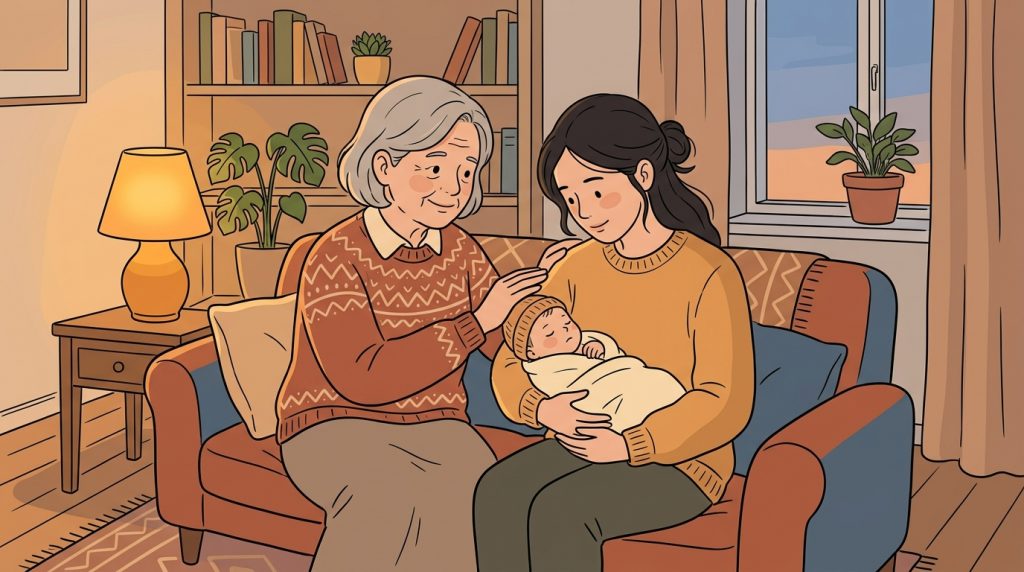
My mother was not always right. There are things she advised that I considered carefully and genuinely decided did not apply to how I wanted to parent. That is fine. That is also what she did with her own mother’s advice.
But she was right more often than I gave her credit for. She was right in a way that no book could have been because her knowledge was not theoretical. It was the accumulated understanding of someone who had actually done this, lived through the hardest parts, made her own mistakes, and come out the other side with a clear enough view to see what mattered and what did not.
I was so certain, before I became a mother, that I had access to better information than she did. More research. More evidence. More nuanced frameworks for child development.
What I did not account for is that she had something I did not. She had already been there.
There is a kind of knowledge that only comes from that. From having held a baby through the long nights and watched them grow and made the mistakes and repaired them. From having loved someone that completely and survived the fear and the exhaustion and come out the other side knowing, in your bones, what actually matters.
I am closer to understanding that now than I was three years ago. I have a feeling I will be closer still in another three.