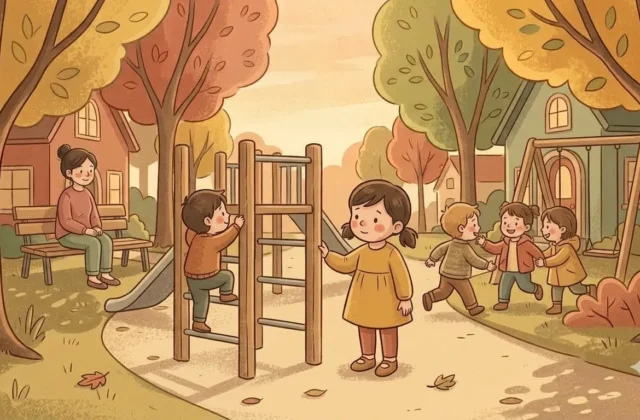




Most parents have had some version of the same evening: the tablet comes out so dinner can get cooked, and twenty minutes turns into an hour, and somewhere in the background there’s a vague sense of having broken a rule nobody has clearly explained.
Singapore now has a clear answer, which helps. In January 2025, the Ministry of Health issued updated guidance on screen use for children under 12, developed jointly with the Ministry of Education and the Ministry of Social and Family Development as part of the Grow Well SG strategy.
Here’s what it is, a screen time guidelines by age, and what to do with it.
The Guidelines at a Glance
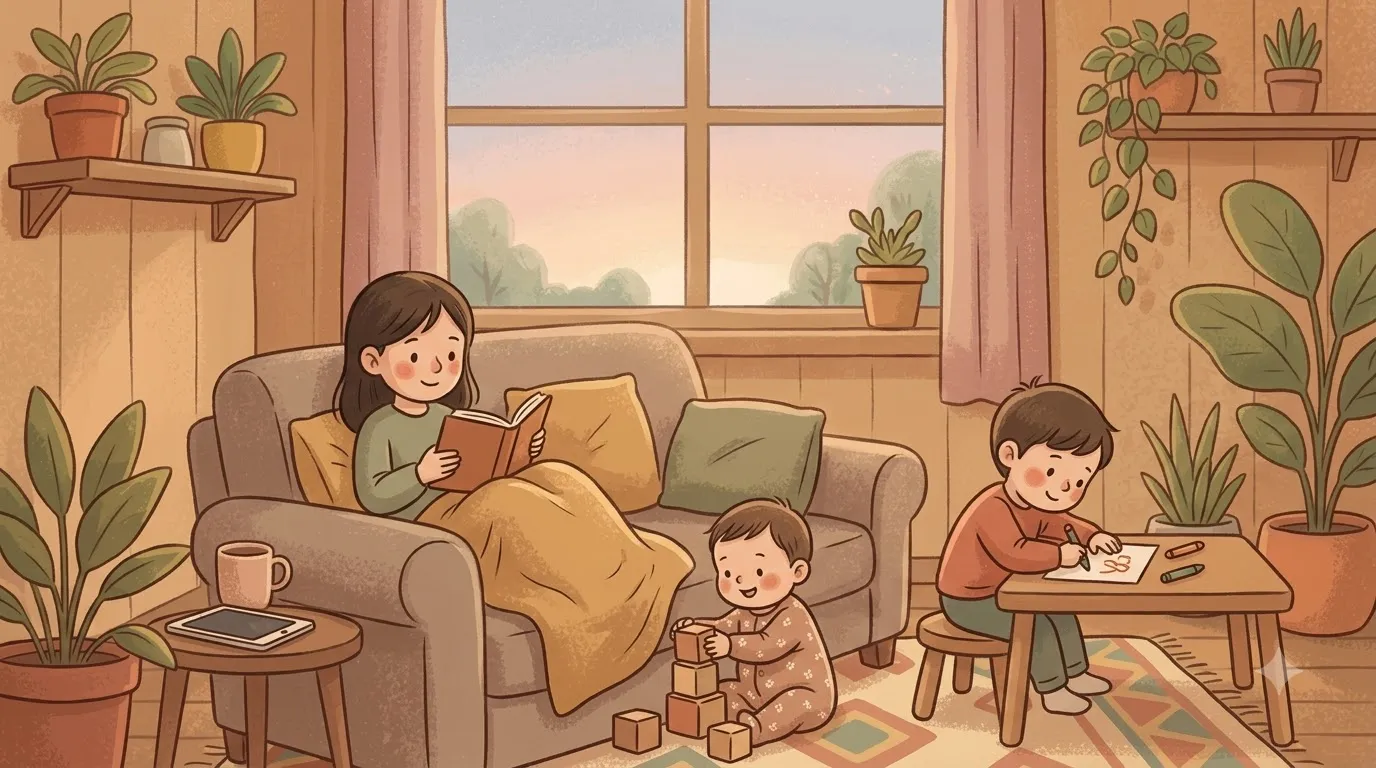
Under 18 months. No screen time at all, with one exception: interactive video calls with family. Background screens count too, so the TV left on while nobody is watching is also discouraged.
18 months to 6 years. Under one hour a day, outside of school-related use. Content should be age-appropriate, and the recommendation is to watch together and talk about what’s happening rather than hand the device over. Screens shouldn’t be used as a distraction or a settling tool.
7 to 12 years. Under two hours a day, not counting schoolwork. At this age the guidance shifts toward structure: agree on a screen-use plan, turn on parental controls, and talk regularly about what they’re doing online.
All ages under 13. No social media access. This is one of the firmer lines in the guidance.
Across every age band, three habits come up repeatedly:
- No screens during meals
- No screens in the hour before bedtime
- No background screens — a TV running unwatched
Preschools have their own version. From February 2025, all preschools follow an updated Code of Practice: no screen time for infants up to 18 months, and for children aged 18 months to 6 years, screens only for teaching and learning.
One important note: none of this is law. It’s national guidance, not a rule anyone will enforce on your household.
Why Under-Twos Are Treated Differently
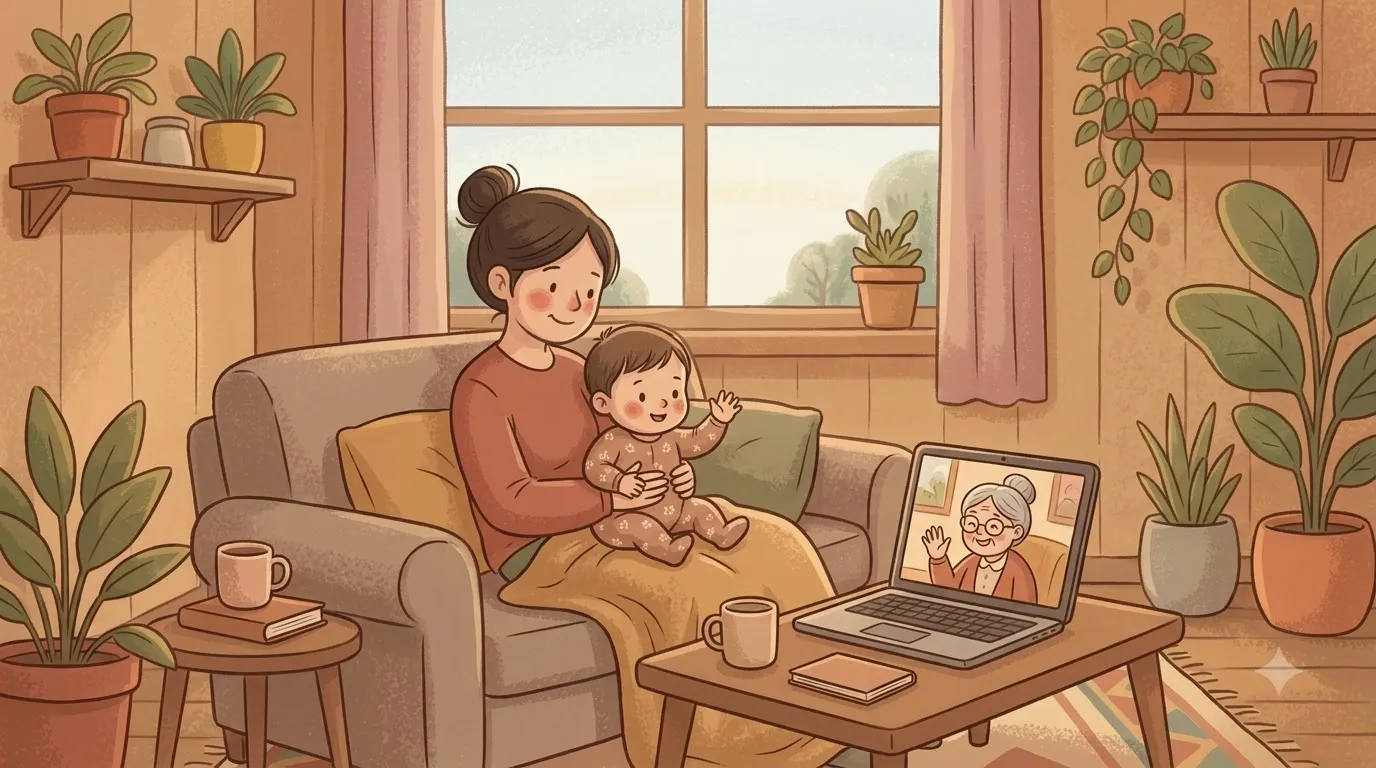
The sharpest line in the guidance sits at 18 months, and it’s worth understanding why rather than just following it.
Very young children learn language and social skills through back-and-forth exchange — you say something, they respond, you respond to that. Screens don’t do this. A video can be excellent and still provide none of the thing a one-year-old brain is actually built to use, which is why video chat is carved out as an exception: a grandparent on a screen talks back.
Background TV matters for the same reason. The research concern isn’t that the child is watching it. It’s that adults in a room with a television on talk to their children measurably less, and the child’s attention keeps getting pulled away from whatever they were doing.
Why “Watch It With Them” Keeps Appearing
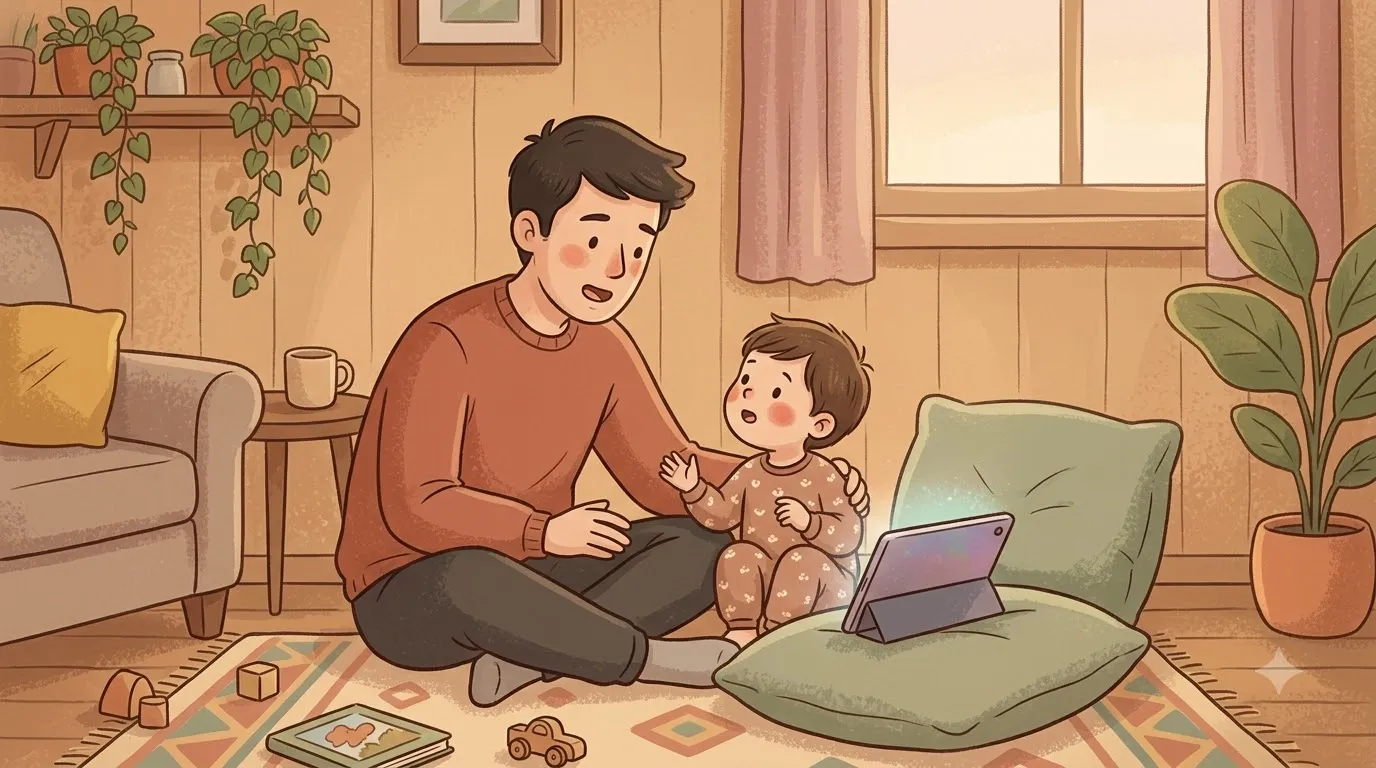
For the 18-months-to-6 band, the guidance doesn’t just set a time limit. It specifies how.
The difference between a child watching something alone and a child watching with an adult who comments, asks questions and connects it to real life is large enough that researchers gave it a name — joint media engagement. The same twenty minutes does substantially more when someone is narrating it.
In practice this doesn’t require much: naming what’s on screen, asking what they think happens next, mentioning the thing afterwards at dinner. It’s the difference between the screen being a babysitter and the screen being a shared activity.
What the Numbers Don’t Capture

The time limits are the part everyone remembers, and they’re the least useful part of the guidance on their own. Three things matter at least as much.
What it is. A video call with grandparents, a drawing app, a documentary and an autoplaying feed of short videos are not interchangeable, even though all four count as screen time. Content that ends on its own is very different from content engineered to never end.
When it happens. Screens in the hour before bed are singled out for a reason — both the light and the stimulation make falling asleep harder. The same thirty minutes earlier in the day costs far less.
What it replaced. Thirty minutes of a show while you cook dinner displaces almost nothing. Thirty minutes that replaces outdoor play, a conversation or sleep is a different trade.
A family hitting the one-hour target with an autoplaying feed at bedtime is doing worse than a family at ninety minutes of something watched together on a Saturday morning.
Making It Workable in a Real Household

The guidance describes the destination. These are the things that tend to get families there.
Set the ending before you start. “Two episodes, then it goes off” works far better than an unannounced stop mid-episode. Most screen-time meltdowns are about the surprise, not the screen.
Use a timer the child can see. It moves the role of enforcer from you to an object, which removes a surprising amount of conflict.
Turn off autoplay. This single setting change does more than almost any rule, because it restores a natural stopping point to content designed not to have one.
Make the zones do the work. No devices at the dining table and none in bedrooms is easier to maintain than negotiating minutes daily, because it’s a fixed fact about the house rather than a decision anyone makes.
Charge devices outside bedrooms overnight. Useful from primary school onward, and much easier to establish before a child has their own phone than after.
Mind your own screen. Children calibrate to what they see. This is the least popular item on any such list and probably the most influential.
Where Families Usually Come Unstuck
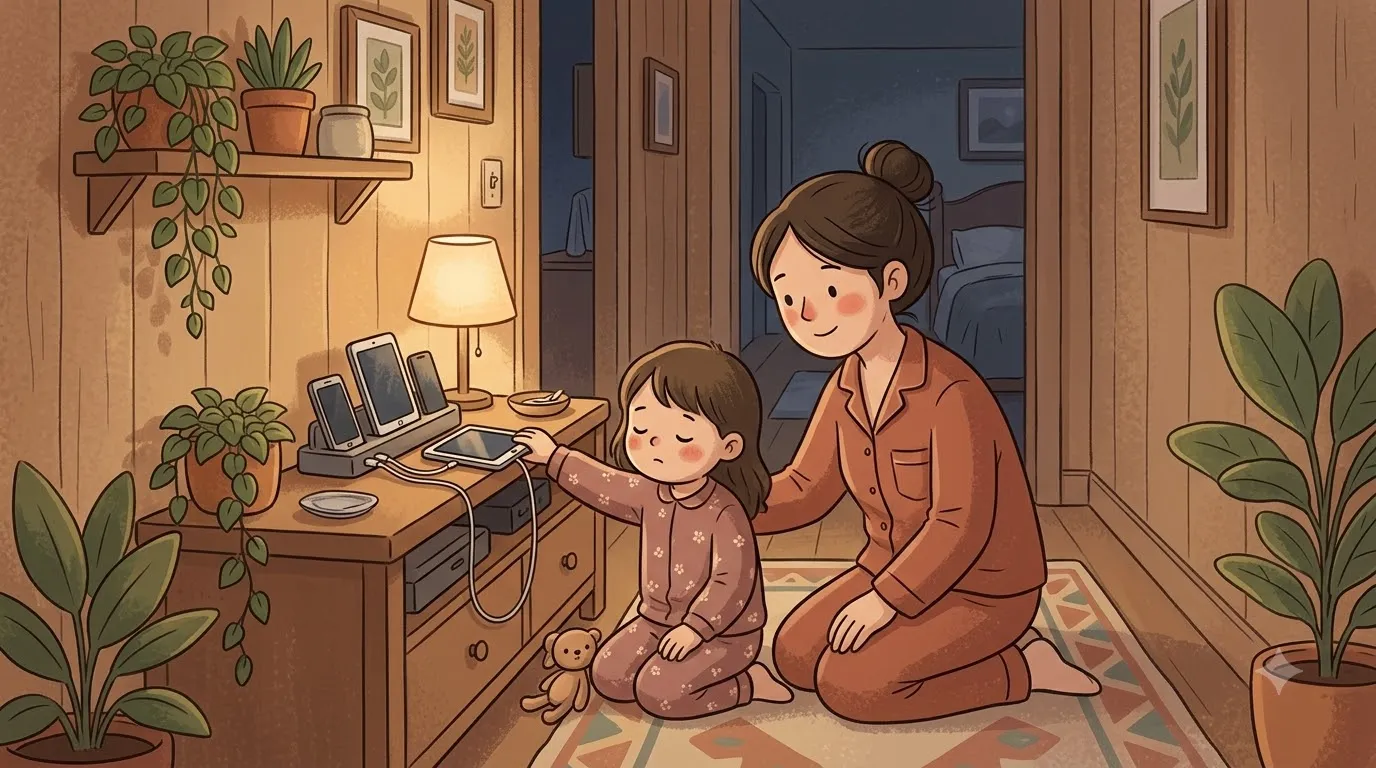
The transition, not the limit. Most conflict happens in the moment the device goes off. A countdown — “five more minutes” at five minutes, then a one-minute warning — resolves most of it.
Using screens to settle big feelings. It works immediately and teaches, over time, that discomfort is something a device fixes. Occasionally is fine; as a default it’s worth watching.
Weekend drift. Most families are reasonable on weekdays and lose the thread entirely on Saturdays. Setting a separate, explicit weekend expectation works better than pretending one rule covers both.
One parent enforcing, one not. Children find this gap within days. Agreeing on the rule matters more than which rule you agree on.
A Reasonable Standard

Worth saying clearly, since guidance like this tends to generate more guilt than change: these are targets, not a test you pass or fail each day.
Every family here has sick days, long flights, deadlines and evenings where the tablet buys the thirty minutes that holds everything together. The guidance is describing a pattern across weeks, not a verdict on any particular Tuesday.
If meals are screen-free, the hour before bed is screen-free, and most of what your child watches is something you’d be happy to watch with them, you’re doing the substantive part already. The minutes are the easiest thing to count and the least important thing on the list.