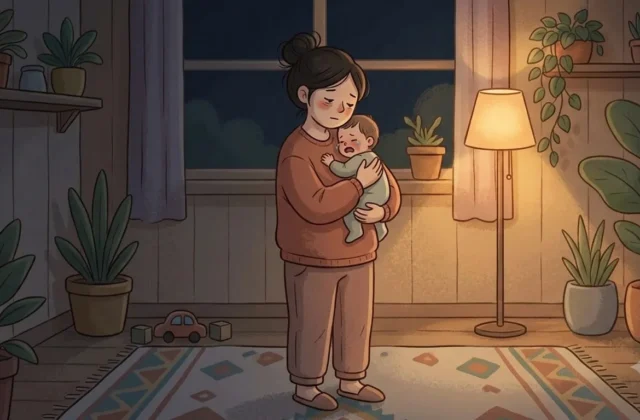




You step into the next room for thirty seconds — to grab a towel, to answer the door, to put something back in the fridge — and behind you, a small person falls apart.
It’s disorienting the first time it happens. Especially when your baby, who spent months being perfectly content to watch you move around the house, suddenly reacts as though you’ve disappeared entirely. Nothing changed. You didn’t do anything differently. And yet, overnight, leaving the room became an event.
Here’s what’s actually happening, and what tends to help.
Why Does My Toddler Cry When I Leave the Room?
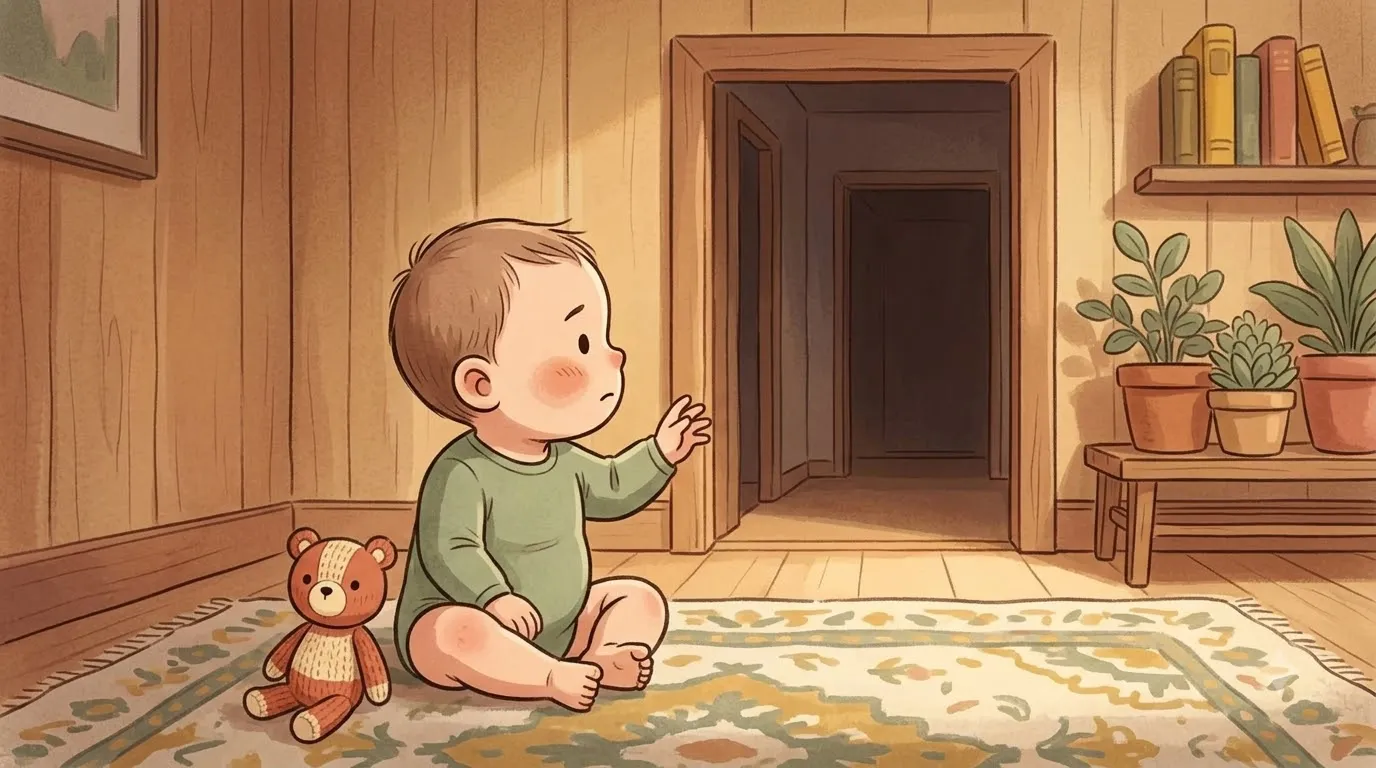
The short answer: because they’ve just become smart enough to miss you.
Somewhere around 8 to 10 months, most babies develop what’s called object permanence — the understanding that things continue to exist even when they can’t be seen. Before this, when you walked out of the room, you essentially stopped existing. There was nothing to protest.
Once object permanence develops, your baby knows you still exist somewhere out there — but has no concept of time, and no way of knowing whether “somewhere” means thirty seconds or forever. That combination, knowing you exist but not knowing if you’re coming back, is exactly what separation anxiety is made of.
So the crying isn’t a step backward. It’s a sign that your child’s understanding of the world just got noticeably more sophisticated.
When It Typically Starts and Peaks
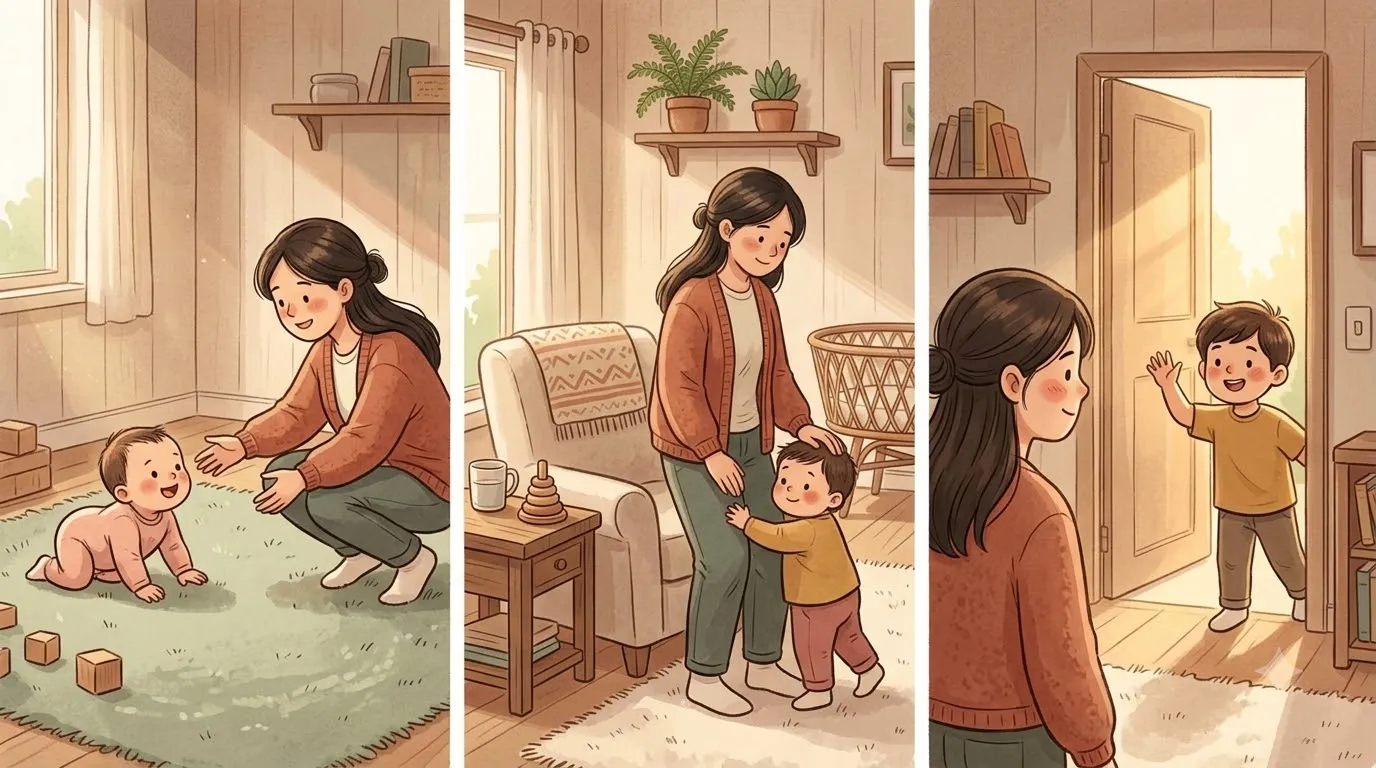
Separation anxiety follows a fairly predictable arc, though every child moves through it at their own pace:
- 6–8 months: Early signs appear — increased clinginess, reaching for you when someone else holds them.
- 10–18 months: The typical peak. This is when the “crying when you leave the room” phase is usually at its most intense.
- 18 months–2.5 years: Often a second wave, sometimes tied to new situations — starting daycare, a new sibling, a move.
- By around age 3: Most children have developed enough sense of time and object permanence to tolerate separations far more easily.
It can also resurface temporarily during illness, teething, travel, or any period of disrupted routine — even in a child who had seemed completely past it.
What Separation Anxiety Actually Looks Like
Beyond the obvious crying, it can show up in ways parents don’t always connect to the same cause:
- Following you from room to room, including into the bathroom
- Waking more at night, or resisting bedtime after previously going down easily
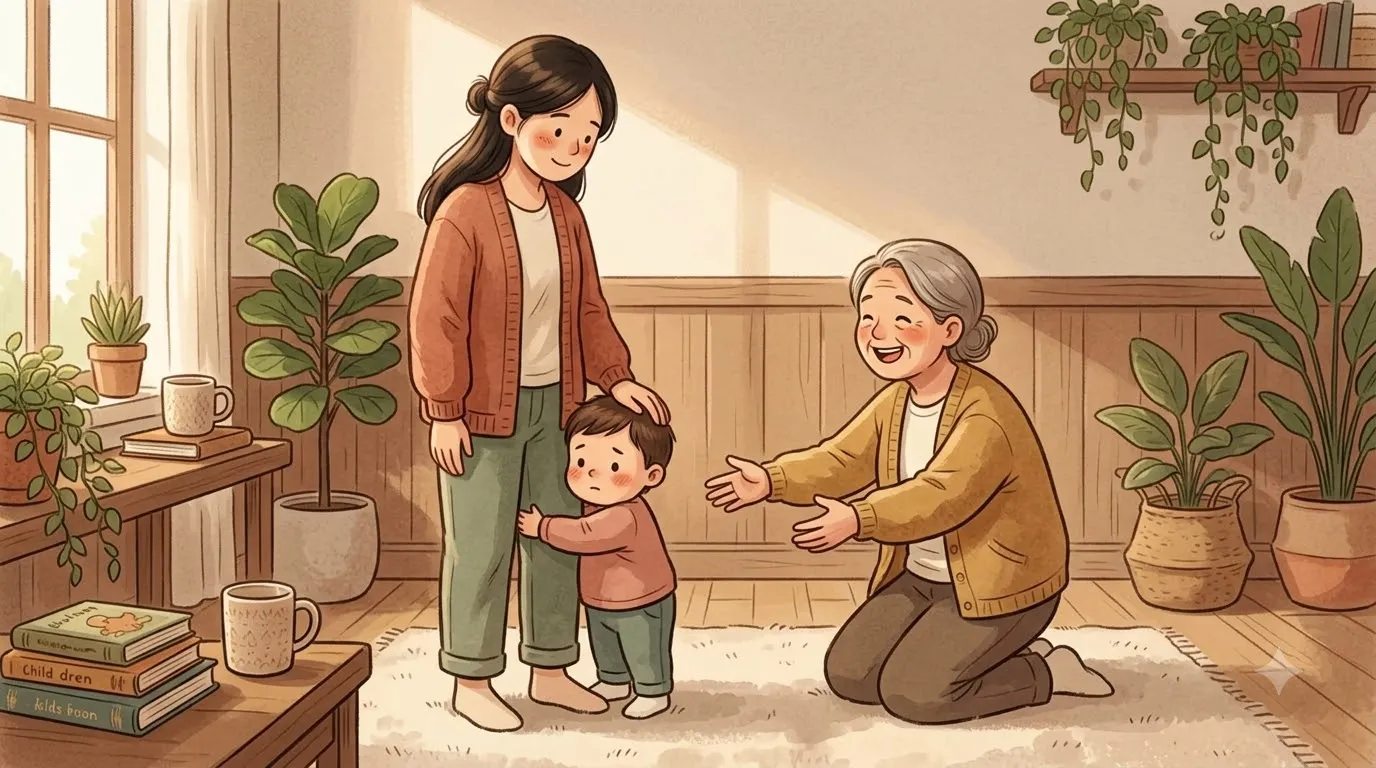
- Refusing to be held by familiar people — grandparents, a regular caregiver
- Clinging or freezing in new environments
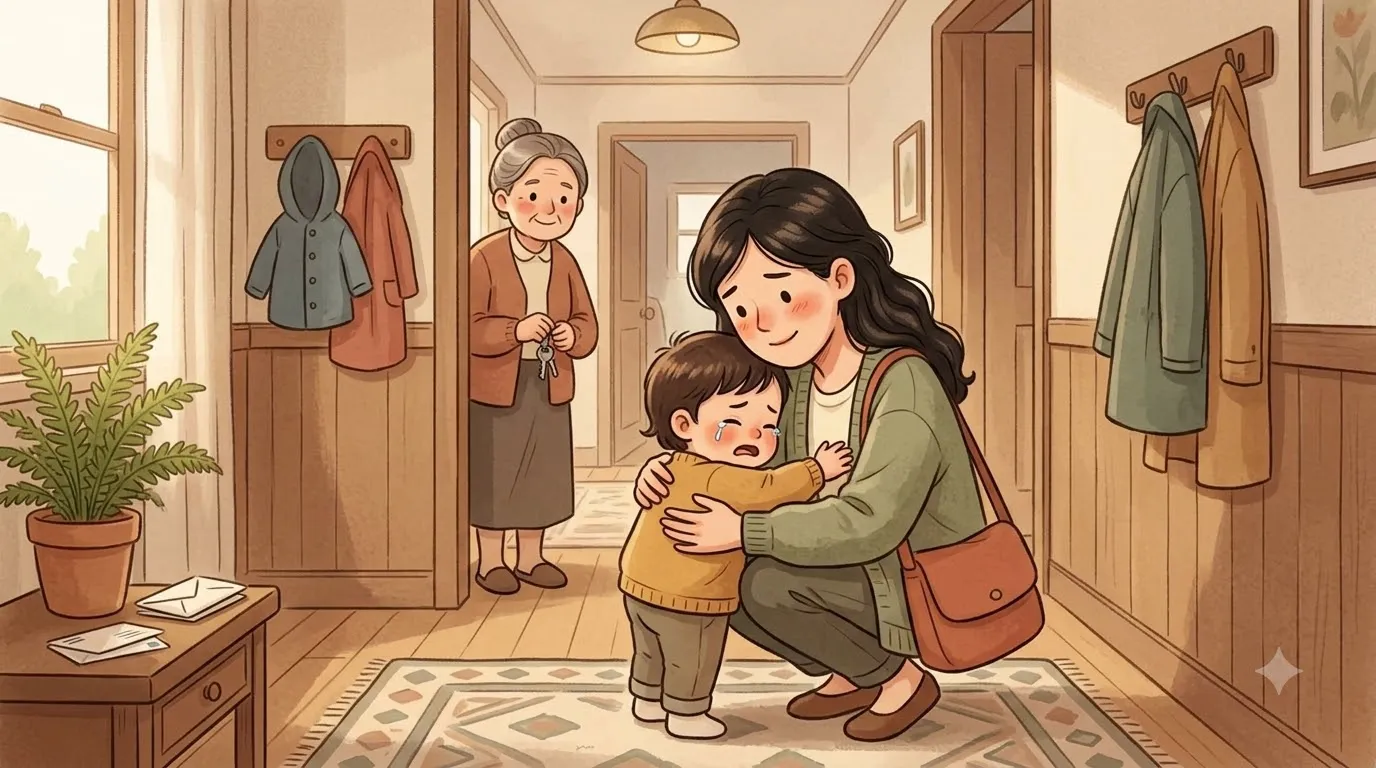
- Crying at drop-off but settling within minutes once you’re gone (very common, and often reported by daycare staff)
That last point is worth sitting with. Many children who are distraught at goodbye recover surprisingly quickly afterward. The intensity of the goodbye isn’t always a reliable measure of how the rest of their day goes.
What Actually Helps
Practice short separations at home. Leave the room for ten or twenty seconds while narrating — “I’m going to the kitchen, I’ll be right back” — then return. Repeating small, predictable separations helps build the internal expectation that you always come back. Gradually extend the time.
Always say goodbye. Never sneak out. Slipping away while your child is distracted feels easier in the moment, but it teaches them that you might vanish at any time — which typically makes clinginess worse, not better. A brief, confident goodbye is harder in the short term and far more effective in the long term.
Keep goodbyes short and consistent. Long, drawn-out farewells tend to escalate distress rather than soothe it. A predictable ritual — the same phrase, a hug, a wave at the window — gives your child a clear signal that the transition is happening and it’s normal.
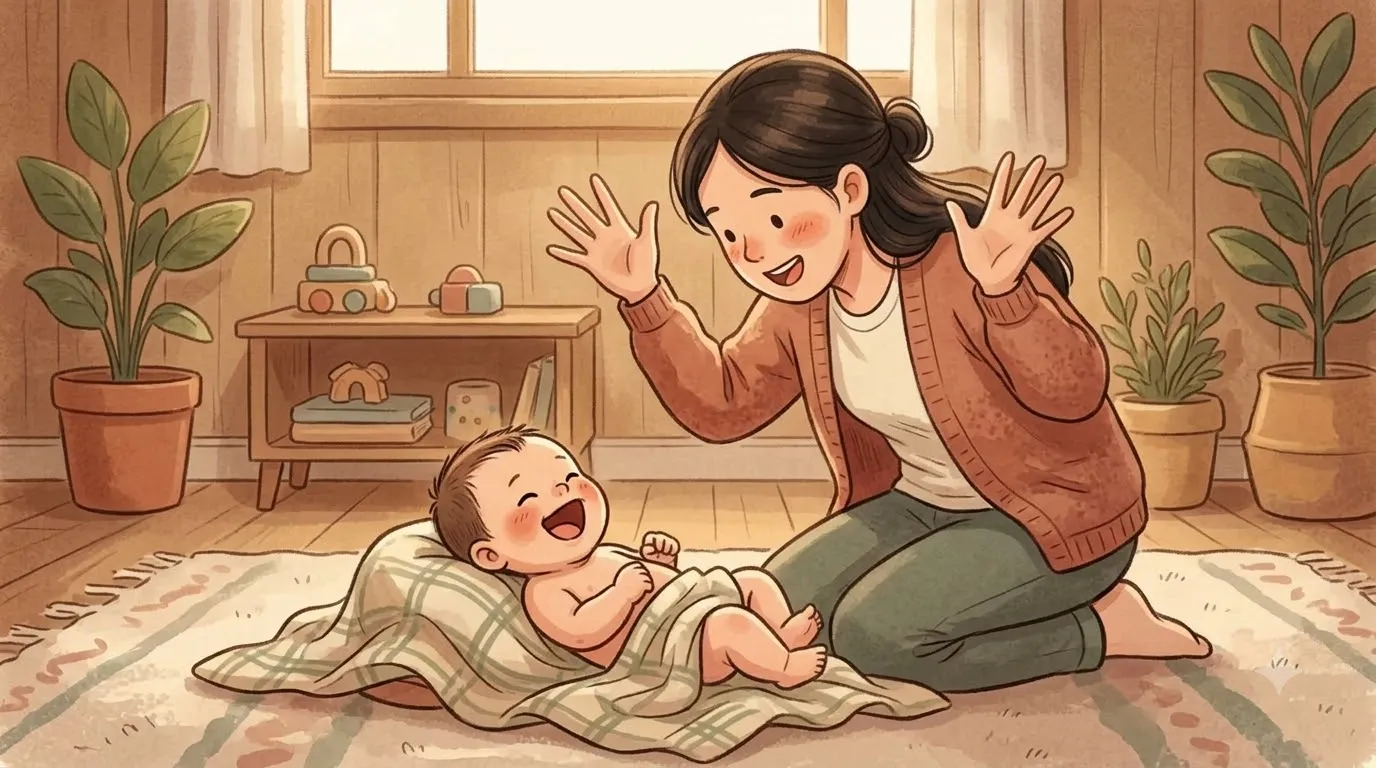
Play peekaboo and hide-and-seek. These aren’t just games. They’re low-stakes practice in exactly the skill your child is developing: things disappear, and then they come back. Object permanence gets rehearsed through play far more comfortably than through real separations.
Introduce a comfort object. A specific blanket, soft toy, or even a worn t-shirt of yours can act as a bridge during separations, giving your child something tangible to hold onto when you’re not there.
Let new caregivers warm up slowly. Rather than handing your child straight over, stay nearby for a few minutes while they interact. A brief overlap makes the handover far less abrupt.
Keep your own tone calm. Children read anxiety far more accurately than we assume. If your goodbye sounds worried or apologetic, they take that as evidence that something about this situation genuinely warrants worry.
What Tends to Backfire
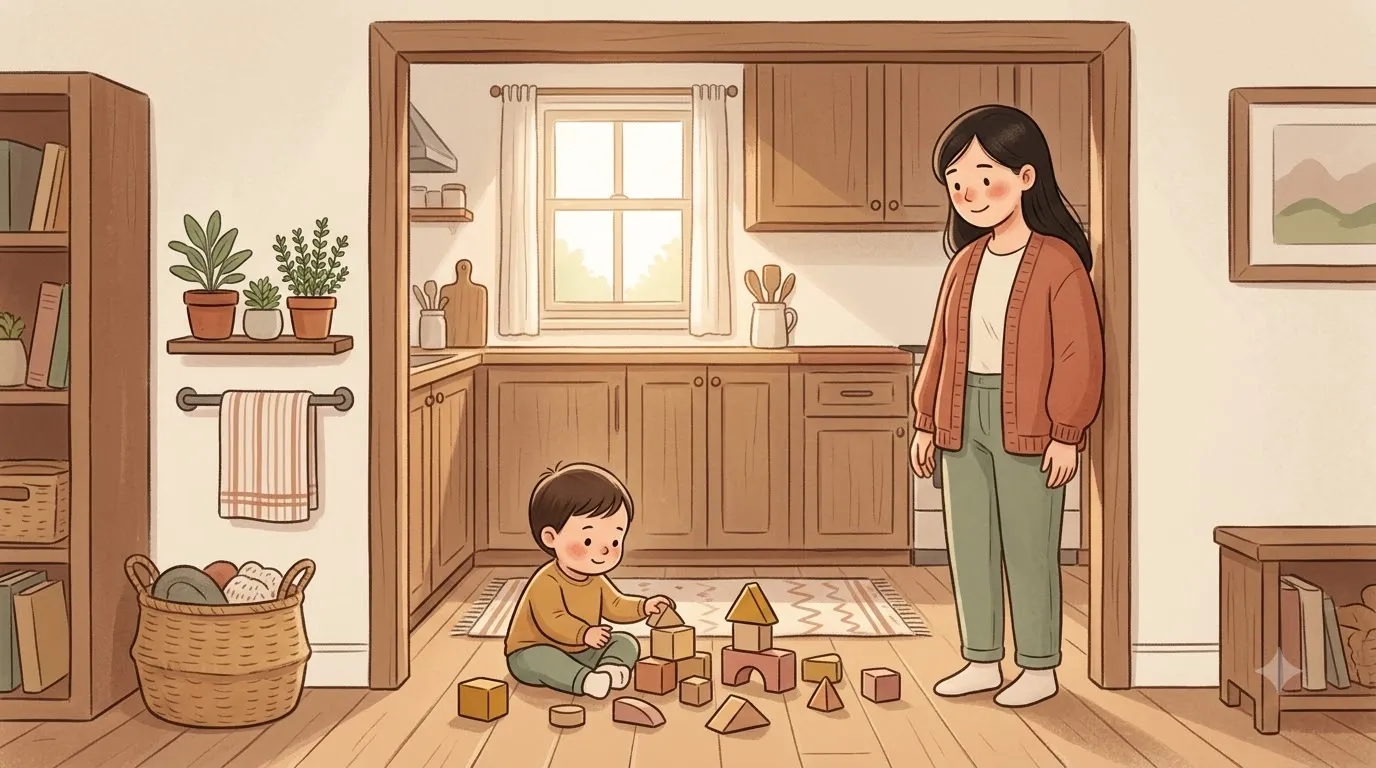
Sneaking out. Worth repeating, because it’s the most common shortcut and the one that most reliably makes things harder.
Returning repeatedly after saying goodbye. Coming back “just one more time” resets the goodbye and teaches your child that crying brings you back — extending the distress rather than resolving it.
Punishing or scolding the clinginess. Separation anxiety isn’t manipulation or a behavior problem. It’s a developmental stage, and treating it as misbehavior adds shame to an already difficult feeling.
Avoiding separations entirely. Understandable, but it removes the practice a child needs. Small, manageable separations are how tolerance gets built.
When to Talk to Your Pediatrician
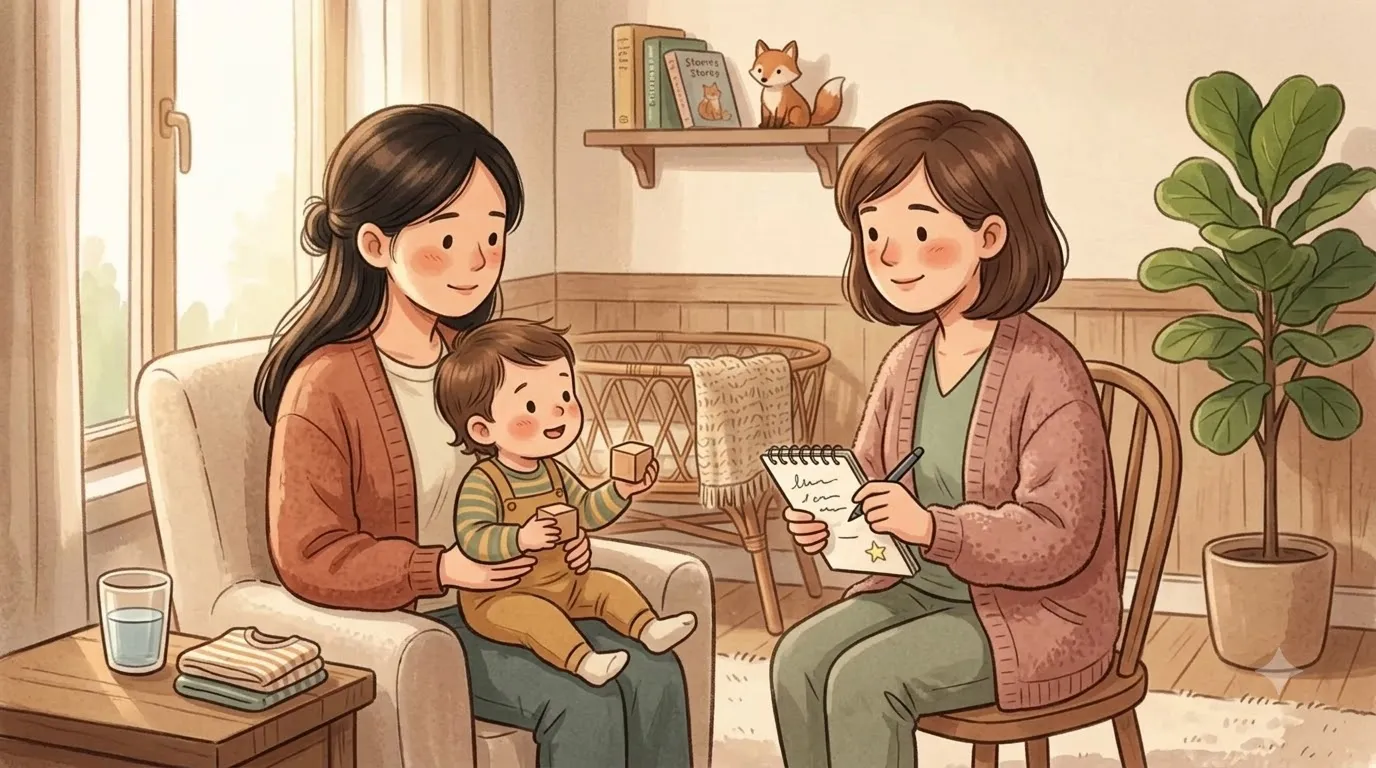
Separation anxiety is a normal developmental phase, but it’s worth mentioning to a doctor if:
- The intensity doesn’t ease at all past around age 3, or significantly interferes with daily life
- Your child cannot be soothed by any caregiver at all, for extended periods
- It’s accompanied by physical symptoms — persistent stomachaches, headaches, or vomiting around separations
- There’s a broader loss of previously acquired skills alongside it
For most families, these concerns don’t apply. But if something feels beyond typical for your child, that instinct is worth raising rather than sitting with alone.
A Phase That Ends Quietly
Nobody tells you that separation anxiety ends the same way it began — without announcement. One day you’ll walk into the next room and realise, several minutes later, that nobody followed you. Nobody cried. The house was simply quiet.
It rarely feels like a milestone in the moment. But it is one — and in the meantime, the fact that your child protests when you leave is really just evidence of how completely they’ve attached to you. It’s exhausting. It’s also, in its own way, the whole point.