




From the moment the news is out, advice arrives from every direction. Your mother has a list. Your mother-in-law has another version while your distant auntie who swears by a particular sinseh has a third list that contradicts both of them. Half of it is about what to eat. The other half is about what you absolutely must not eat under any circumstances, sometimes with consequences described in alarming detail.
For many of us, Traditional Chinese Medicine sits somewhere in the background of how we think about health — not always front and centre, but present. Referenced during pregnancy. Recommended by older family members. Considered alongside whatever the gynaecologist said at the last appointment.
TCM dietary advice during pregnancy can feel overwhelming, especially when it seems to conflict with modern nutritional recommendations. Rather than taking sides between TCM and Western medicine, this guide explains the thinking behind common TCM food recommendations, highlights what many practitioners advise, and shows how families across Southeast Asia often apply these traditions in everyday life.
How TCM Thinks About Food During Pregnancy

Most doctors talk about food in terms of nutrients like protein, iron, and calcium. TCM takes a different approach. Instead of focusing mainly on nutrients, it looks at how different foods affect the body’s balance and energy.
The two most relevant concepts during pregnancy are:
Warming and cooling foods. Every food in TCM has a thermal nature. Its literal temperature, its effect on the body’s internal energy as well as warming foods generate heat and stimulate circulation. Cooling foods reduce heat and have a calming effect. Neither is inherently good or bad. Balance is what matters.
Qi and Blood. TCM views pregnancy as a state that places significant demands on a woman’s Qi and Blood. Supporting and nourishing both is a central concern throughout pregnancy and especially during the postpartum period.
From this framework, TCM dietary advice during pregnancy generally aims to:
- support Qi and Blood
- maintain internal warmth without creating excess heat
- support digestion, which TCM considers important to overall health
- avoid foods that may affect the pregnancy or create imbalance
First Trimester — Settling and Nourishing
The first trimester is known as a delicate period of early pregnancy and early development. The focus is on foods that are gentle, easy to digest, and supportive of the body without being overly stimulating.
What TCM Recommends
Congee and rice-based foods. Easy on the digestive system, warming, and considered grounding. Plain congee with simple toppings — a little lean pork, some ginger, a soft-boiled egg — is a classic first trimester recommendation across many Southeast Asian TCM traditions.
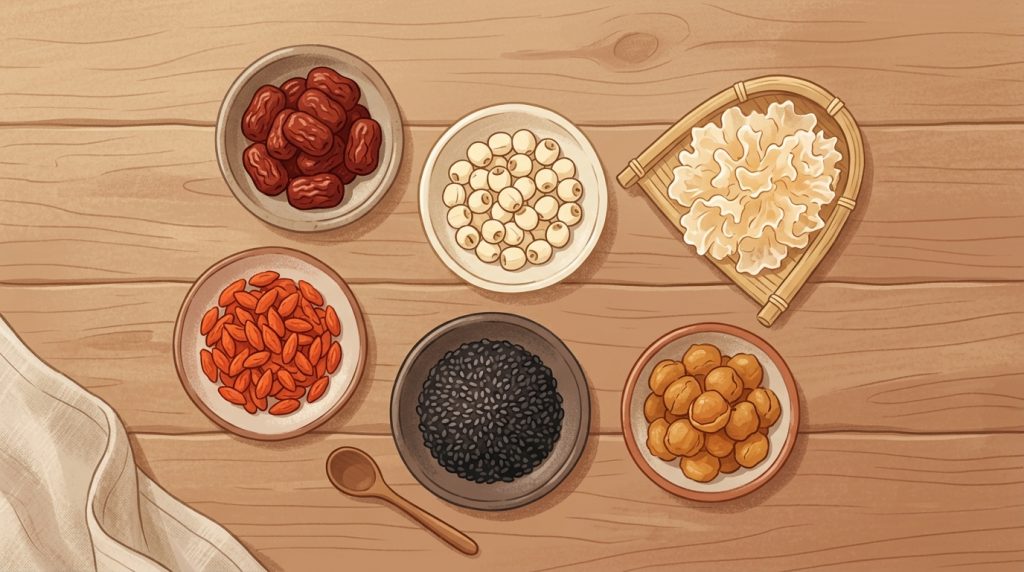
Red dates (hong zao). One of the most commonly recommended TCM foods during pregnancy throughout the region. TCM practitioners believe red dates nourish Blood and calm the mind. You can find them in soups, teas, and congee. Simply simmering a handful of red dates in water is one of the most practical ways to incorporate them daily.
Ginger in moderate amounts. Warming, supportive of digestion, and widely used to manage nausea in the first trimester. Most TCM practitioners consider moderate ginger in cooking, in tea, in soups considered safe and beneficial during pregnancy.
Lean pork and chicken. Considered neutral to mildly warming in TCM terms, easy to digest, and supportive of Qi and Blood. Try to steam or slow-cooked for a healthier alternative.
Wolfberries (goji berries). Commonly added to soups and teas. Understood in TCM to nourish the liver and Blood. Used in moderation throughout pregnancy by many Southeast Asian families.
What TCM Generally Cautions Against in the First Trimester
Large amount of cooling food: Watermelon, winter melon, bitter melon, and barley water in large quantities are traditionally cautioned against in the first trimester, particularly if the mother has a constitution understood as cold or deficient. The concern is that strongly cooling foods may weaken the digestive system or, in traditional belief, affect the stability of early pregnancy.
Raw and cold foods. Cold drinks, raw salads, and food taken directly from the refrigerator are generally discouraged in TCM during pregnancy, particularly in the first trimester based on the belief that cold temperatures weaken digestive Qi.
Food considered to have a strong downward-moving or blood-activating effect such as large amounts of hawthorn (shan zha), crab, or certain herbal preparations are traditionally avoided in early pregnancy due to concerns about stimulation of the uterus.
Second Trimester — Building and Strengthening
The second trimester is generally considered a more stable period in TCM. The focus shifts toward actively building Blood and Qi to support the baby’s rapid growth.
What TCM Recommends
Black sesame (hei zhi ma). Highly regarded in TCM for nourishing the liver and kidneys and supporting Blood. Frequently used in desserts, incorporated into congee, or taken as black sesame paste. Black sesame soup is a common recommendation for pregnant women across Singapore, Malaysia, and other parts of Southeast Asia.
Longan (long yan rou) — with nuance. Longan is understood to nourish blood and calm the mind. However, it is also considered warming, and some TCM practitioners advise moderation during pregnancy — particularly for women with a warmer constitution or those experiencing pregnancy heat symptoms. Worth discussing with a TCM practitioner if you are unsure.
Lotus seeds (lian zi). Considered calming and supportive of digestion. Commonly used in soups and desserts. Lotus seed soup with red dates and wolfberries is a classic Southeast Asian preparation consumed throughout pregnancy.
Black beans and kidney beans. Understood to nourish the kidneys, which TCM considers central to pregnancy health and foetal development. Used in soups, desserts, and slow-cooked preparations.
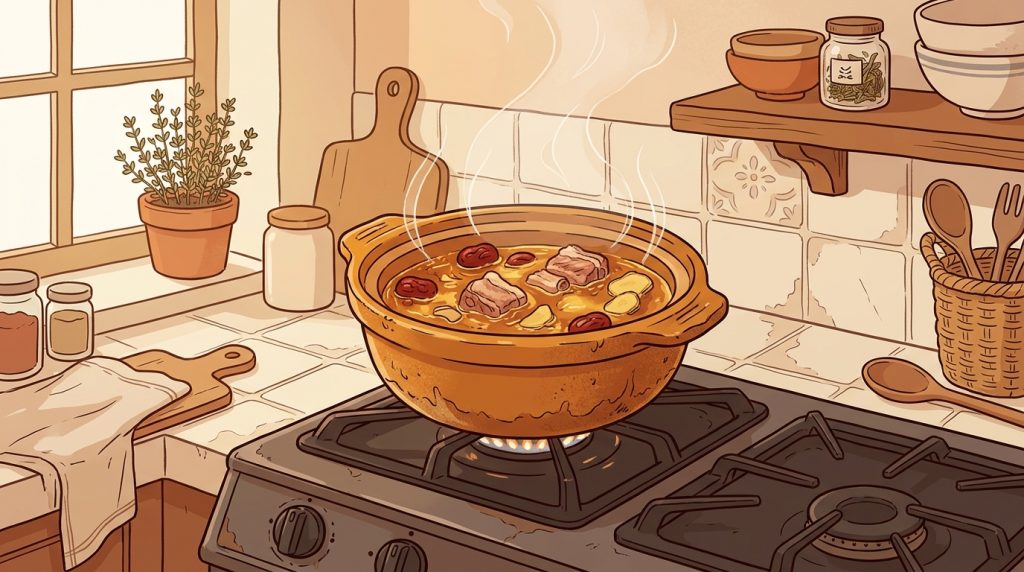
Fish soups and lean meat soups. Slow-cooked soups are a cornerstone of TCM pregnancy nutrition across Southeast Asia. TCM practitioners believe the long cooking process makes nutrients easier for the body to absorb. Papaya fish soup, pork rib soup with red dates, and chicken soup with herbs are among the most commonly consumed.
Snow fungus (bai mu er). Used in soups and desserts. Considered nourishing and moistening — useful for pregnant women experiencing dryness or heat symptoms. Snow fungus with red dates and rock sugar is a simple, widely available preparation.
Third Trimester — Preparing and Moderating
The third trimester in TCM involves a shift in focus — from building to preparing. As the due date approaches, some practitioners advise moderating heavily nourishing or warming foods to avoid excessive internal heat, which is thought to complicate labour.
What TCM Recommends
Continued lean soups and easily digestible foods. As the baby grows and stomach space reduces, lighter and more frequent meals become more comfortable. Soups, congee, and steamed preparations remain practical and appropriate.
Lotus root soup. Considered cooling and nourishing in the third trimester. Lotus root with pork ribs is a common preparation consumed in the lead-up to delivery across many Southeast Asian households.
Moderate amounts of warming foods. Many TCM practitioners advise reducing very warming foods. Large amounts of longan, lychee, ginger in excess — in the final trimester, particularly for women already experiencing heat symptoms such as frequent thirst, constipation, or skin breakouts.
A Note on Barley Water
Barley water occupies an interesting position in Southeast Asian TCM pregnancy advice. It is strongly cooling, which is why it is often cautioned against in the first trimester. However, in the third trimester — particularly in Singapore’s heat — In contrast, others consider moderate amounts appropriate for women experiencing excess heat symptoms. This is one area where your individual body type matters more than a general rule.
Foods Commonly Cautioned Against Throughout Pregnancy in TCM
| Food | TCM Concern | Practical Note |
|---|---|---|
| Crab | Strongly cooling, traditionally believed to affect uterine stability | Most commonly cautioned against in first trimester |
| Hawthorn (shan zha) | Strong blood-moving properties | Often avoided throughout pregnancy |
| Raw or cold foods | Weaken digestive Qi | General caution, especially in first trimester |
| Excess spicy food | Creates internal heat | Moderation rather than elimination for most |
| Alcohol-based herbal preparations | Obvious concerns | Avoid entirely |
| Strongly laxative herbs | Downward-moving effect | Avoid without practitioner guidance |
Practical Ways to Incorporate TCM Foods Daily
You do not need to overhaul your entire diet to apply TCM principles during pregnancy. Most of the commonly recommended foods are already part of everyday Southeast Asian cooking.
Red date tea. Simmer eight to ten red dates in water for twenty to thirty minutes. Drink warm. Simple, inexpensive, and easy to make in batches.
Soups two to three times a week. A slow-cooked soup with lean pork or chicken, red dates, wolfberries, and lotus seeds covers multiple TCM recommendations in a single meal. Many Southeast Asian families already eat this way without thinking of it as TCM.
Black sesame in breakfast. A spoonful of black sesame paste in warm water or added to congee is one of the easiest daily additions with genuine TCM backing.
Warm drinks over cold. Swapping cold drinks for room temperature or warm water throughout the day aligns with TCM principles around protecting digestive Qi and costs nothing.
A Note on Seeing a TCM Practitioner

TCM dietary advice is not one-size-fits-all. A qualified TCM practitioner will assess your individual constitution — whether you run warm or cold, whether your Qi or Blood tends toward deficiency, how your digestion is functioning — before making specific recommendations.
General guidelines like those in this article are a useful starting point. But if you are considering TCM supplements or herbal preparations during pregnancy — rather than just food — always consult a qualified practitioner and inform your obstetrician. Some herbal preparations are unsafe during pregnancy, and TCM herbs can interact with prescription medicines, so professional advice is important.
Food, on the other hand, is generally lower risk and deeply woven into the everyday eating patterns of most Southeast Asian families. Eating a bowl of red date and wolfberry soup is not a medical intervention. It is just dinner — and a very good one.
One Last Thing
There is something quietly comforting about TCM food traditions during pregnancy. Your grandmother’s red date tea and your gynaecologist’s iron supplements are not opponents. For most healthy pregnancies, they coexist easily.
Eat the soup. Take your prenatal vitamins. Ask your mother what her mother told her.
All of it, in its own way, is nourishment.