


Before my baby was born, I imagined the crib in a very particular way. A tiny pillow. A folded blanket. A soft toy waiting in the corner. Maybe one of those padded bumpers that made everything look neat and finished, the way nursery photos always seemed to look online.
Then I learned that the safest baby sleep space looks almost unfinished.
A firm mattress. A fitted sheet. Nothing else.
At first, it felt strange. Too bare, almost. I remember standing beside the crib and wondering whether my baby would feel lonely in all that empty space. It took me a while to understand that safe sleep is not supposed to look cozy in the adult sense. It is supposed to be clear, flat, and boring in the best possible way.
If you are trying to understand the safe sleep rules for baby without feeling frightened by every headline, this is the part worth holding onto first: safe sleep is not about creating the prettiest nursery. It is about removing the things a baby is too little to move away from on their own.
The Rule That Comes First
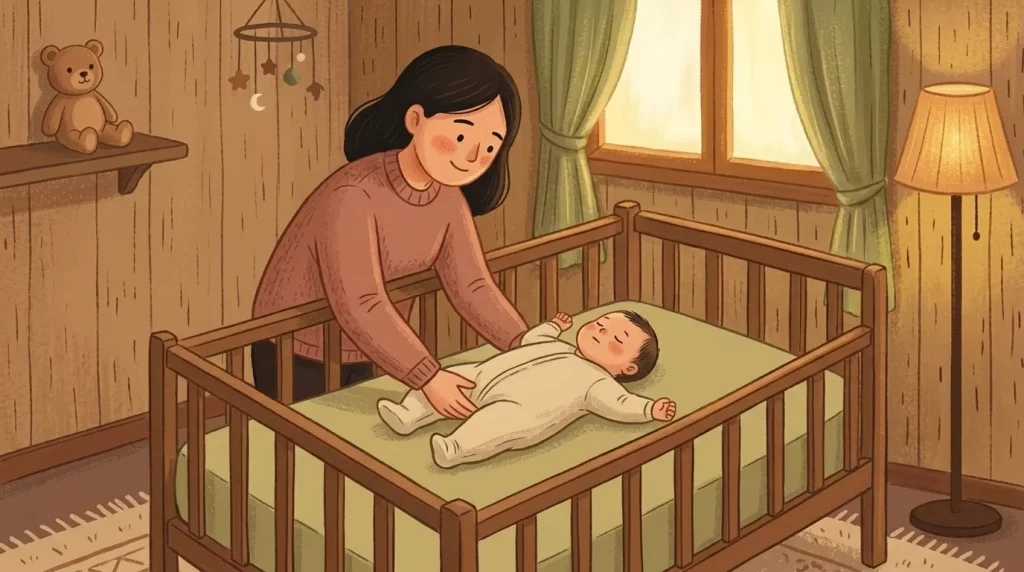
The simplest safe sleep rule is also the one parents hear most often: place your baby on their back for every sleep, both naps and night sleep. The American Academy of Pediatrics and CDC both recommend back sleeping for infants because it lowers the risk of sleep-related infant deaths, including SIDS.
I remember worrying about spit-up at first. It seemed logical, in a tired-parent way, that a baby on their back might choke more easily. But CDC explains that babies are not more likely to choke when sleeping on their backs, because their anatomy and gag reflex help protect them if they spit up.
That reassurance mattered to me because safe sleep can feel counterintuitive at first. Your instinct may be to make the baby more comfortable, warmer, more tucked in, more surrounded by softness. But newborns do not need the same kind of sleep environment adults like.
They need space to breathe.
The Crib Should Look Almost Empty
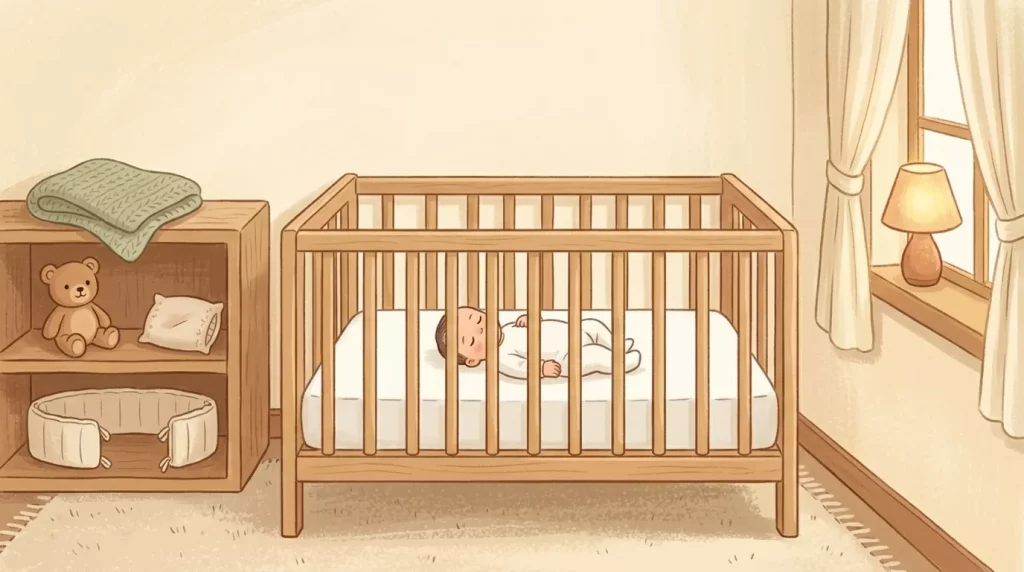
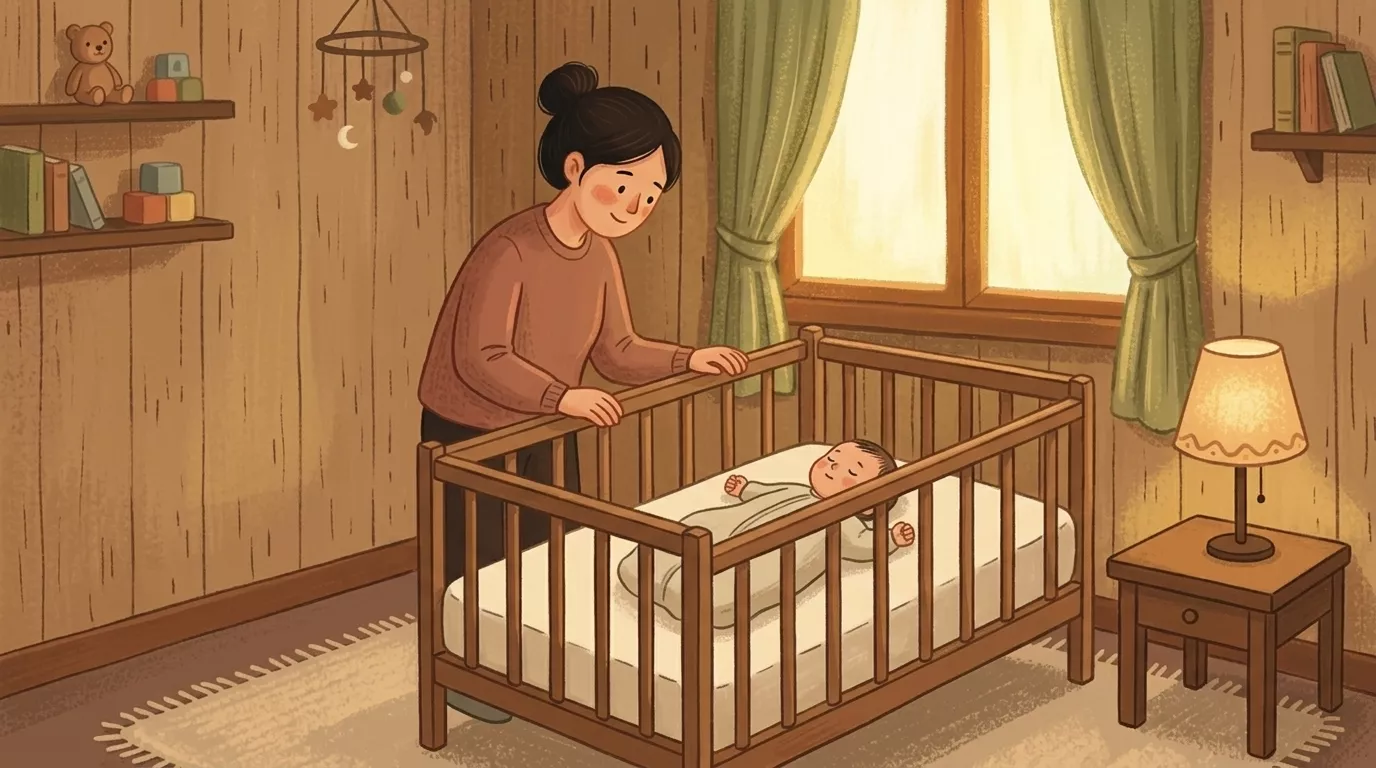
A safe sleep space should be firm, flat, level, and covered only with a fitted sheet. That means a crib, bassinet, or portable play yard with an appropriate mattress, not an inclined sleeper, sofa, adult bed, cushion, nursing pillow, or lounger. The AAP advises keeping loose blankets, pillows, stuffed toys, bumpers, and other soft items out of the sleep space.
This is the part that can feel surprisingly emotional.
Because baby things are often sold to us through softness. Soft blankets. Soft nests. Soft bumpers. Soft pillows shaped like clouds. Everything seems to whisper that a loved baby should be surrounded by comfort.
But for sleep, love often looks like less.
HealthHub in Singapore gives similar advice for young babies: let babies sleep on their backs and, for babies under 6 months, do not place blankets, pillows, cot bumpers, soft toys, or other items in the crib because these can increase the risk of SIDS.
There is something very quiet about a bare crib. It does not photograph as beautifully as the nursery you may have imagined. But it is doing exactly what it needs to do.
Same Room, Separate Sleep Space
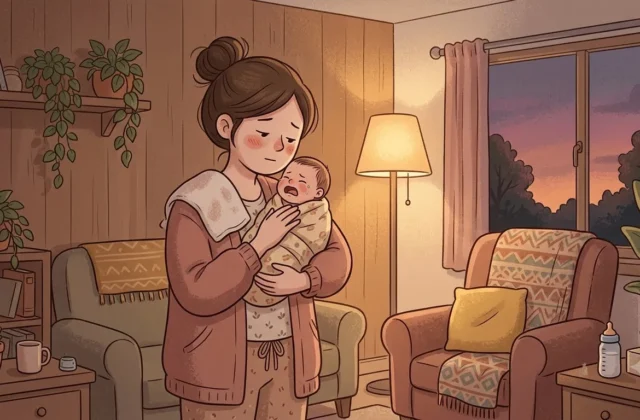
For many new parents, the first nights at home feel like a strange kind of listening exercise. Every tiny grunt, sigh, stretch, and squeak feels important. You may find yourself waking even when the baby is asleep, just to check that they are still breathing.
Room-sharing can help.
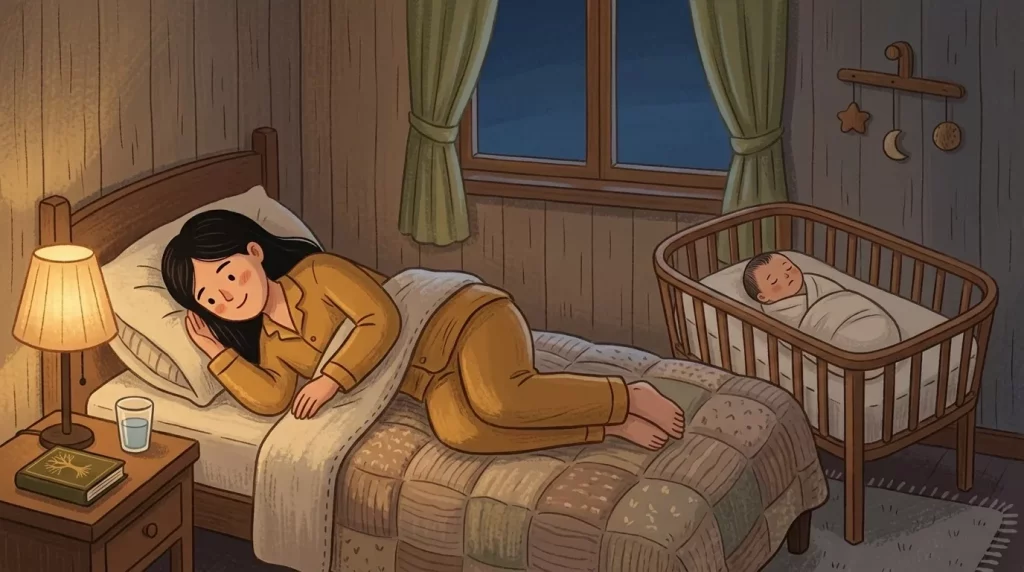
The AAP recommends that babies sleep in the parents’ room, close to the parents’ bed, but on a separate sleep surface designed for infants, ideally for at least the first 6 months. HealthHub also advises letting your baby sleep in your room, but not in your bed.
This distinction matters. A baby can be close enough for feeding, comforting, and checking, without sharing the same mattress, pillows, blankets, or adult bedding. It may not feel as convenient at 3:00 AM, especially when everyone is exhausted, but separate sleep space is one of the clearest parts of safe sleep guidance.
The NHS gives similar advice: the safest place for a baby to sleep during the first 6 months is in a cot, lying on their back, in the same room as the parent.
No one makes perfect decisions in the middle of newborn exhaustion. That is why it helps to plan the safest possible version of an imperfect night before the night begins.
Blankets, Swaddles, and the Question of Warmth
One of the most common worries is whether the baby is warm enough.
I understood this one deeply. I would touch my baby’s hands and worry they felt cool. I would look at the empty crib and wonder whether a light blanket tucked carefully around the mattress could really be so bad.
But loose blankets can move. A baby cannot always move away from them.
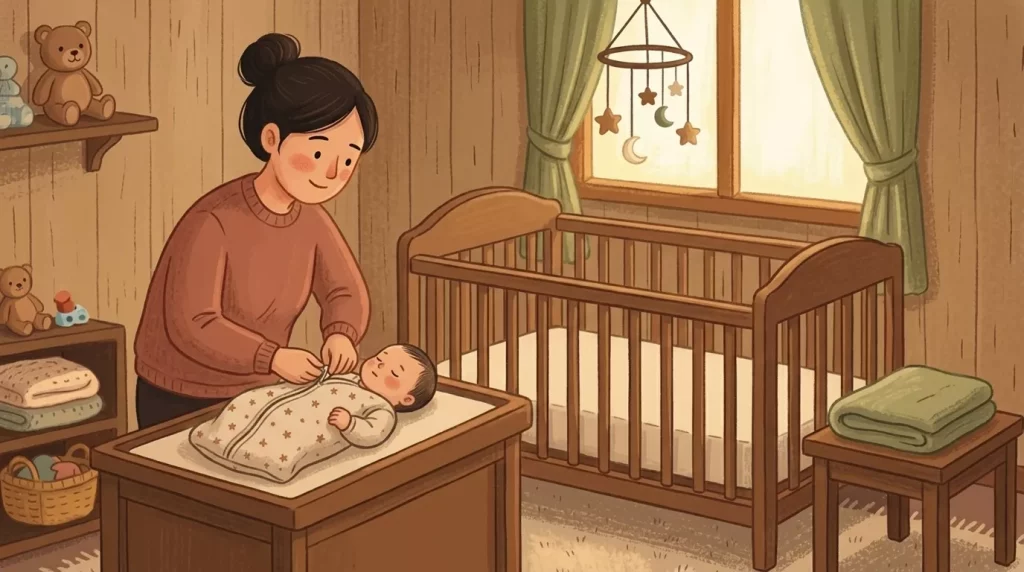
That is why many parents use a wearable blanket or sleep sack instead of loose bedding. The goal is to keep the baby warm without adding fabric that can cover the face or become tangled. The sleep space itself should still stay clear.
Swaddling is a separate decision. Some newborns settle better when swaddled, but it should be done safely and stopped once a baby shows signs of trying to roll, because they need their arms free if they roll during sleep. The AAP also recommends against weighted swaddles, weighted sleepers, and weighted blankets for infants.
It can be helpful to remember that a baby does not need to feel warm in the exact way an adult does under a duvet.
They need to be comfortably dressed for the room, not buried under layers.
The Places That Are Not for Sleep
Some of the hardest safe sleep moments happen when the baby finally falls asleep somewhere that is not safe.
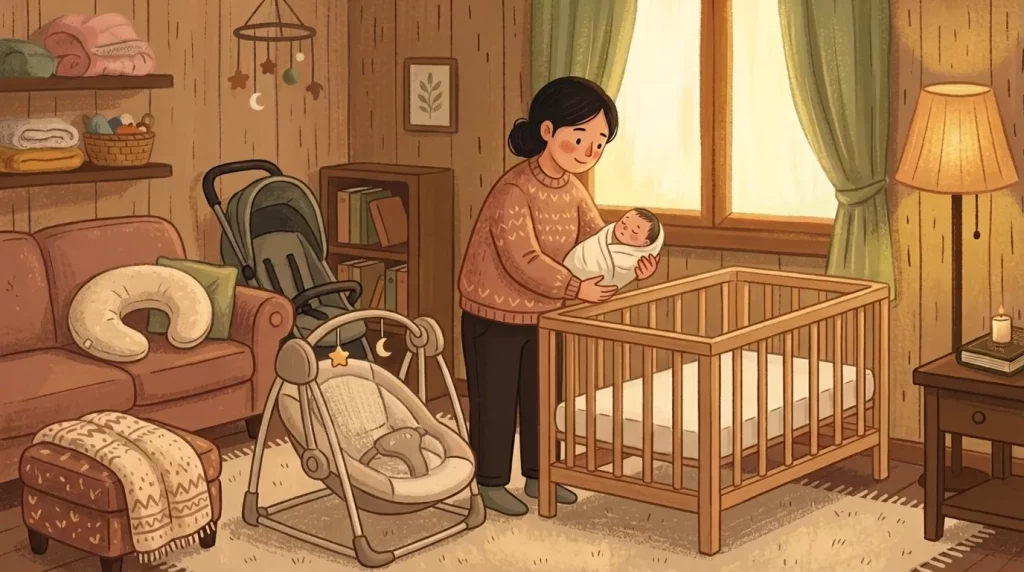
In the car seat after a walk. In the stroller. In the swing. On your chest while you are sitting on the sofa. On a nursing pillow after a feed.
There is a kind of desperation that comes with newborn sleep, especially when you have spent an hour trying to settle a baby who wakes every time you lower them down. It can feel almost cruel to move them when they are finally peaceful.
But many baby products are meant for awake time, travel, or soothing under supervision, not unattended sleep. The AAP warns against routine sleep on couches, armchairs, or in sitting devices such as swings and car safety seats, except while riding in the car. HealthHub also warns not to place babies to sleep on sofas, armchairs, nursing pillows, or pillow-like lounging pads because their airway may become blocked.
This does not mean you have to panic every time your baby dozes off in the stroller on the way home.
It means that their regular sleep place, especially when you are not actively watching them, should be boring and safe: back, firm surface, clear space.
Smoking, Overheating, and Other Quiet Risks
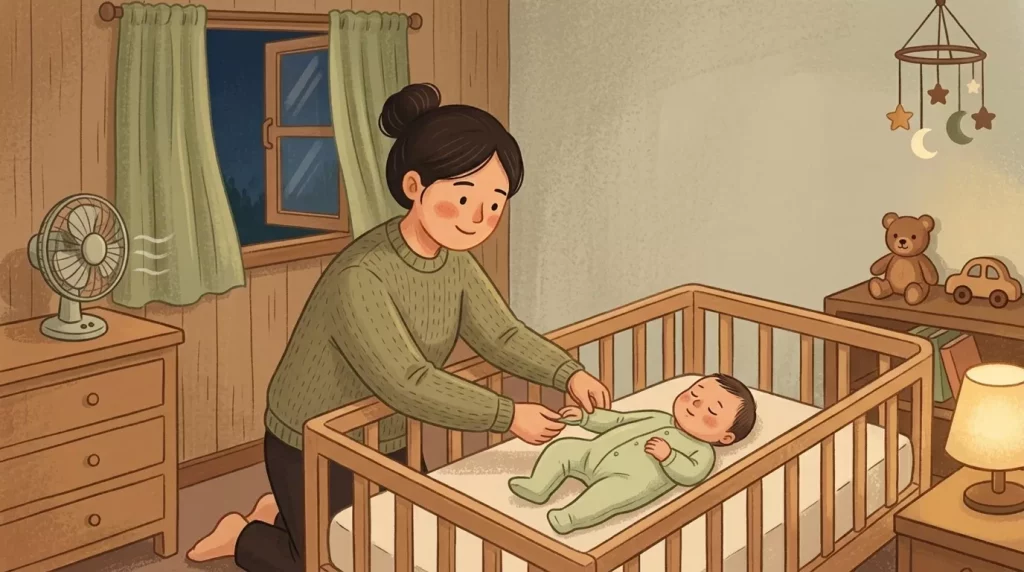
Safe sleep is not only about the crib.
It is also about the environment around the baby.
HealthHub advises that no one should smoke around the baby, and CDC also includes smoke-free surroundings as part of reducing sleep-related risks. Babies should also not be overdressed or allowed to overheat during sleep. A room does not need to feel cold, but babies generally do not need heavy layers, hats indoors, or extra blankets piled over them.
Breastfeeding, when possible, is also associated with a lower risk of SIDS, and both AAP and HealthHub mention breastfeeding as one of the protective steps parents can take.
This does not mean every parent’s feeding journey will look the same, or that parents who use formula are doing something wrong. It simply means breastfeeding is one protective factor among several, not a moral test.
Safe sleep should never become another way for parents to feel judged.
It should be information that helps families make the safest choices they realistically can.
When Real Life Feels Messier Than the Guidelines
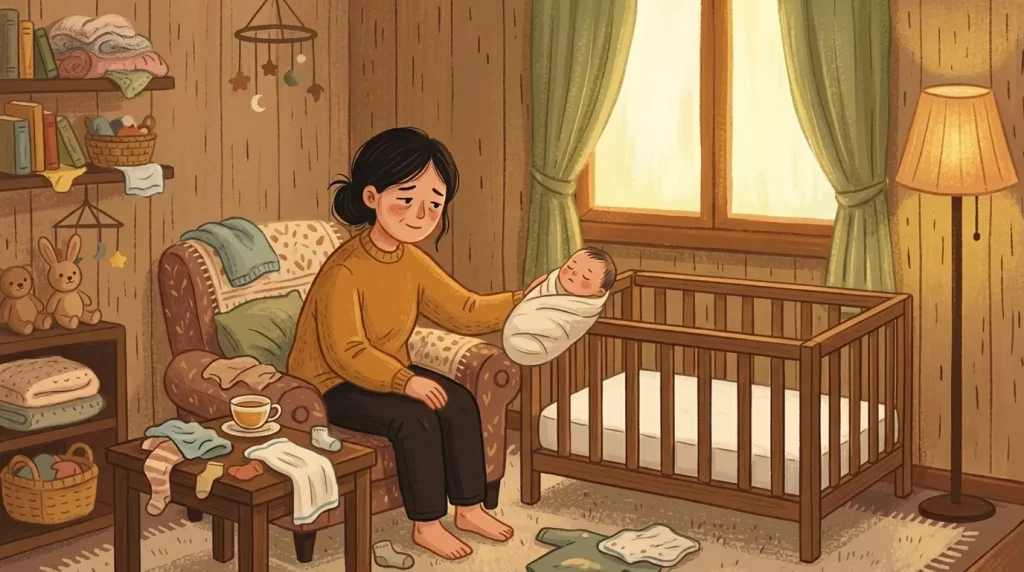
The guidelines sound simple when written down.
Back. Firm mattress. Fitted sheet. No pillows, blankets, bumpers, or toys. Same room, separate sleep space.
Then real life arrives.
A baby with reflux who hates lying flat. A grandparent who insists babies slept on their stomachs years ago and were fine. A beautiful blanket from someone you love. A baby who only seems to sleep while touching you. A parent so tired they cannot remember whether they put the bottle in the fridge or the laundry basket.
This is where safe sleep can feel less like a checklist and more like a daily practice.
You do the next safe thing. You move the blanket out of the crib. You place the baby back on their back. You transfer them from the swing when you can. You ask your partner to take over if you feel yourself falling asleep on the sofa. You keep the cot plain even when it looks bare.
Not because you are scared of everything.
Because your baby is still too small to create safety for themselves.
What Parents Need to Know Most
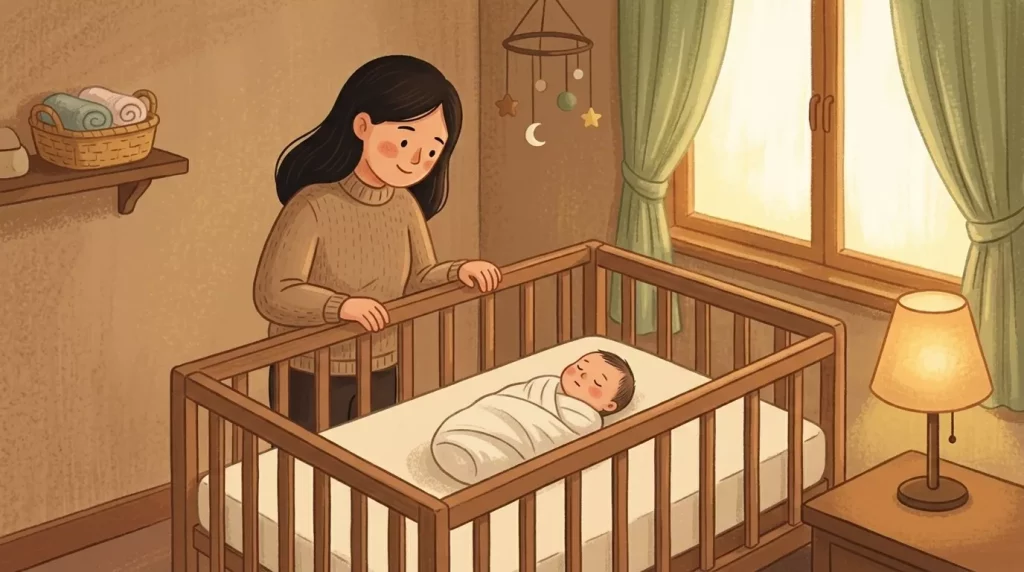
If I could go back to the version of myself arranging the nursery before my baby arrived, I would tell her not to worry that the crib looked empty.
I would tell her that empty was not cold.
Empty was safe.
I would tell her that the soft toys could wait, the blanket could be used during awake cuddles, and the tiny pillow was never needed. I would tell her that safe sleep was not about buying more things, but about trusting the simple things that reduce risk.
A baby’s safe sleep space may look plain.
That does not mean it is lacking love.
Sometimes love is the fitted sheet pulled tight. The toy moved to the shelf. The bassinet beside the bed instead of the baby under your blanket. The quiet decision to place them on their back one more time, even when you are tired.
It is not glamorous work.
But it is protective work.
And in those early months, that matters more than the prettiest nursery ever could.