


Then Singapore weather humbled me very quickly.
One morning in my first trimester, I decided I would go for a gentle walk before work. Nothing ambitious. Just a slow loop around the neighbourhood to prove to myself that pregnancy had not turned me into someone who needed to lie down after brushing her teeth.
I made it downstairs, crossed the drop-off point, and immediately felt the heat sit on my skin.
Not sunshine in the pretty sense.
The heavy, damp, Singapore kind of heat that makes even standing still feel like effort. My body already felt unfamiliar from nausea and fatigue, and suddenly the idea of “staying fit” sounded much less like a wellness goal and much more like a negotiation.
That was when I began to understand that pregnancy exercise is not about proving your body has not changed.
It is about learning how to move with the body you have now.
If you are looking for pregnancy safe exercises you can do in Singapore heat, the answer is usually not about doing more. It is about choosing gentler movement, cooler timing, and listening sooner when your body says enough.
Before You Start, Check What “Safe” Means for You
The word safe can feel comforting, but it is not the same for every pregnancy.
For many people with uncomplicated pregnancies, regular physical activity can be beneficial. HealthHub Singapore says keeping active during pregnancy can improve stamina, strength, and endurance, while ACOG says regular exercise during pregnancy benefits both mother and pregnancy and usually carries few risks when the pregnancy is healthy.
Still, this is not the season to quietly ignore your own medical context.
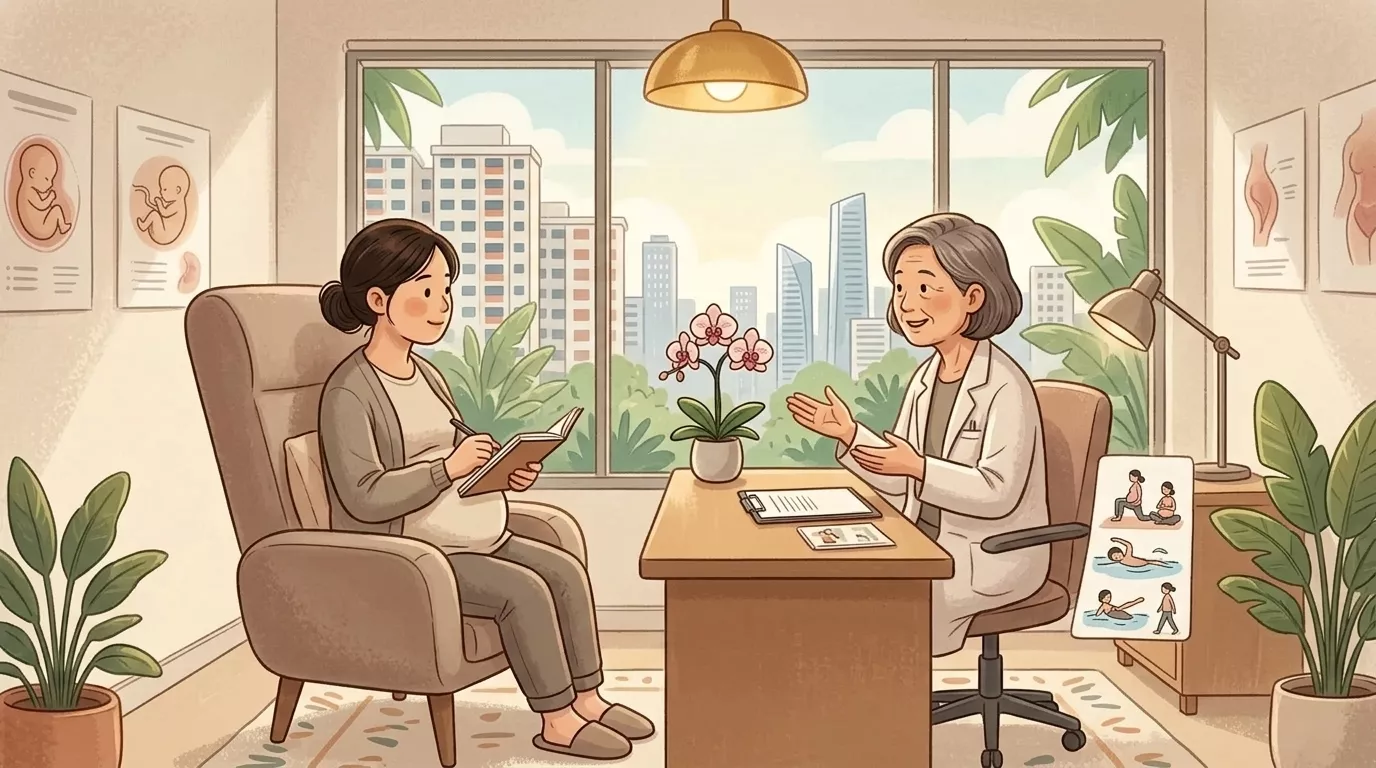
If you have high blood pressure, serious heart disease, a history of pregnancy complications, bleeding, pain, placenta concerns, dizziness, or anything your doctor has already told you to monitor, ask your gynae before starting or continuing an exercise routine. HealthHub specifically advises checking with your doctor before starting an exercise regime, especially if you have a medical condition or past or current pregnancy problems.
I used to think asking first made me sound nervous.
Now I think it is simply sensible.
Pregnancy already comes with enough guessing. Exercise should not become another thing you quietly worry about while trying to look relaxed.
The Singapore Heat Changes the Way You Exercise
Heat changes everything.
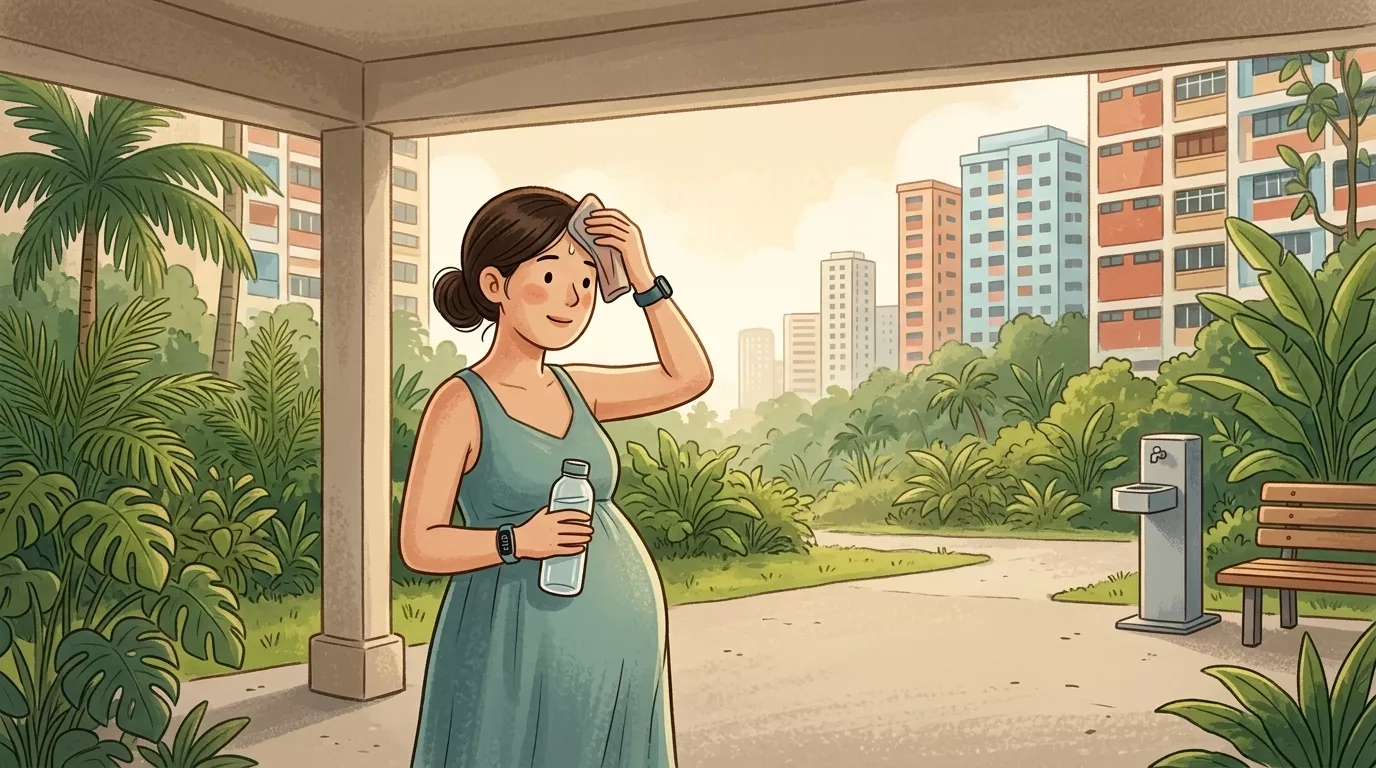
A walk that feels gentle on a cool evening can feel completely different at 12:30 PM on a pavement with no shade. A route that seemed easy before pregnancy may suddenly feel too exposed, too humid, too far from water, or too short on places to sit down.
That does not mean you are weak.
Your body is already working harder. Heart rate, body temperature, and metabolism change during pregnancy, and HealthHub advises drinking water before, during, and after exercise, choosing the coolest time of day, warming up, cooling down, and keeping intensity at a level where you can still hold a conversation.
That last part is helpful because it removes the need to obsess over numbers.
If you cannot speak comfortably while moving, slow down.
If the heat makes you lightheaded, stop.
If the idea of outdoor exercise feels miserable, move indoors without turning it into a character flaw.
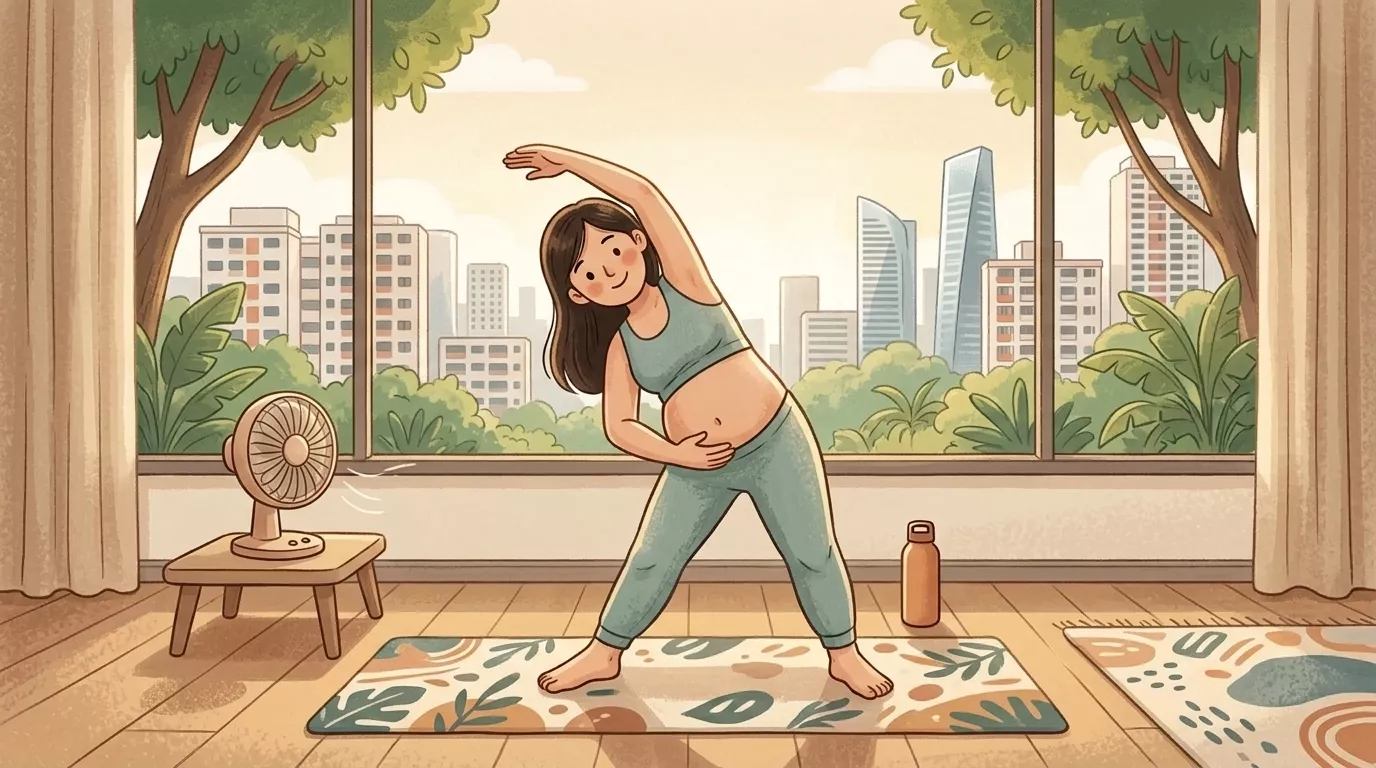
In Singapore, pregnancy-safe exercise may look like walking inside a mall, swimming, doing gentle stretches at home with a fan on, choosing an air-conditioned prenatal class, or walking early in the morning before the day becomes too heavy. HealthHub also advises avoiding hot weather such as the mid-day sun because overheating is easier during exercise, and NHS gives similar advice to avoid strenuous exercise in hot weather and choose early morning or late afternoon if exercising outdoors.
Sometimes the safest workout is not the most impressive one.
It is the one you can finish feeling steady.
First Trimester: Gentle Movement When You Feel Like Yourself, or Not at All
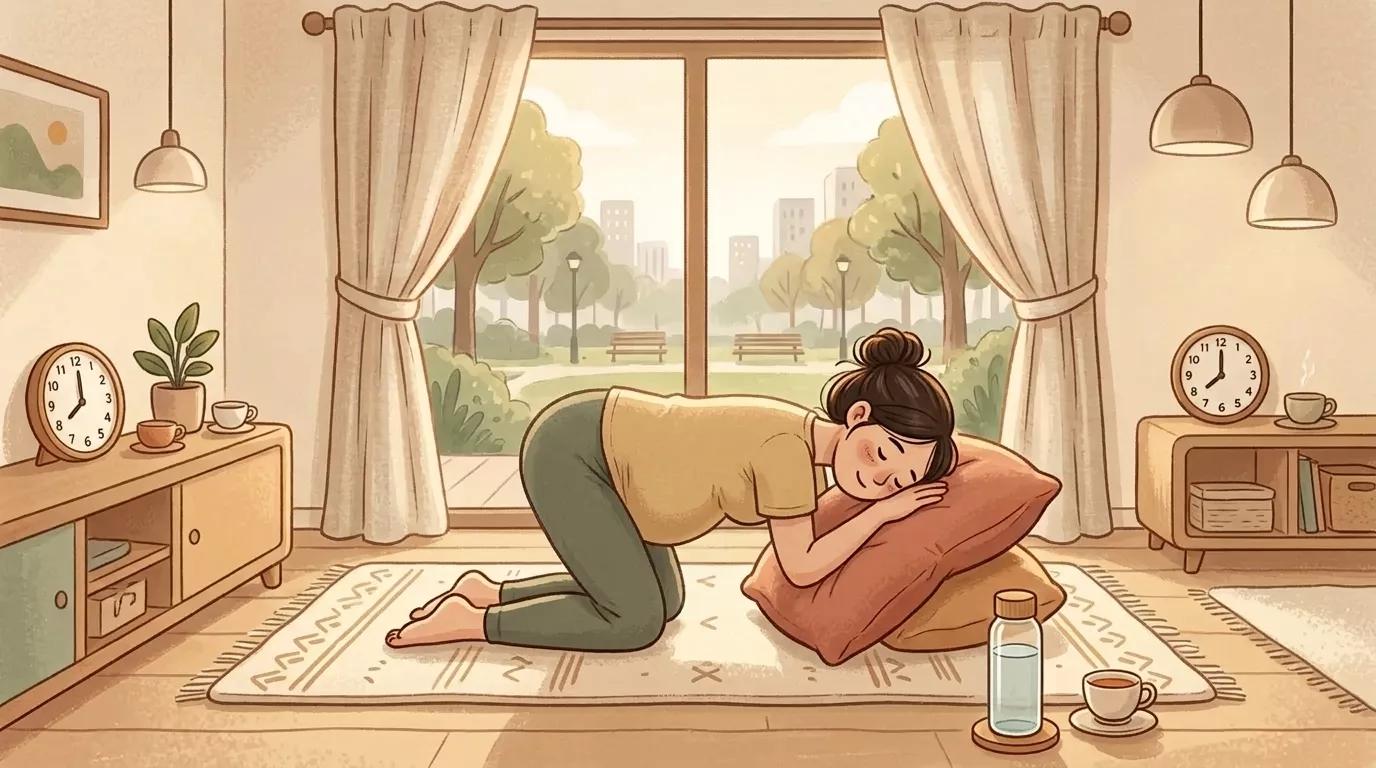
The first trimester can be strange because you may not look pregnant yet, but your body already feels like it belongs to a different person.
You may be nauseous. Exhausted. Hungry and unable to eat. Suddenly sensitive to smells. Sore in places you did not expect. Some mornings you may feel almost normal, then by afternoon need to lie down as though the day has personally defeated you.
This is not always the trimester for grand routines.
If you feel well enough to move, gentle walking, easy stretching, breathing work, pelvic floor exercises, and light swimming can all be good places to start. If you were active before pregnancy and your doctor has cleared you, you may be able to continue many familiar activities with modifications. If you were not active before, HealthHub suggests not starting strenuous exercise suddenly and starting slowly, even with as little as five minutes of physical activity before gradually increasing.
That “five minutes” matters.
Because some days, five minutes is what you have.
A slow walk after dinner counts. Stretching your shoulders while sitting on the edge of the bed counts. Breathing through nausea and doing nothing else may be the wisest choice on certain days.
The first trimester is not the time to prove that pregnancy cannot slow you down.
Sometimes it will.
That does not mean you are doing it wrong.
Second Trimester: The Window Where Movement May Feel Easier

For many people, the second trimester feels a little more forgiving.
Not always, of course. Pregnancy is not polite enough to follow a perfect schedule. But for some, nausea settles, energy returns in small pieces, and movement begins to feel less impossible. The bump may be growing, but the heaviness of late pregnancy has not fully arrived yet.
This can be a good time to build a gentle rhythm.
Walking is still one of the simplest options. Swimming can feel especially kind in Singapore because the water supports some of your increased weight. HealthHub describes swimming as safe and gentle during pregnancy because it is non-weight bearing, and the water reduces injury risk by relieving load on the joints.
Prenatal yoga, light strength work, wall push-ups, supported squats, pelvic tilts, cat-cow, and side-lying leg lifts can also help you stay connected to your body without needing to chase intensity. NHS includes walking, swimming, prenatal yoga, low-impact classes, and pelvic floor or abdominal exercises among suitable forms of exercise during pregnancy.
This is also the stage when modifications start to matter more.
After about 16 weeks, avoid lying flat on your back for long periods during exercise, especially if you feel dizzy or unwell. NHS explains that the weight of the bump can press on the main blood vessel returning blood to the heart, which can lower blood pressure and make you feel dizzy.
Pregnancy exercise is not about refusing to modify.
Modifying is often the whole point.
Third Trimester: Moving Smaller, Not Giving Up
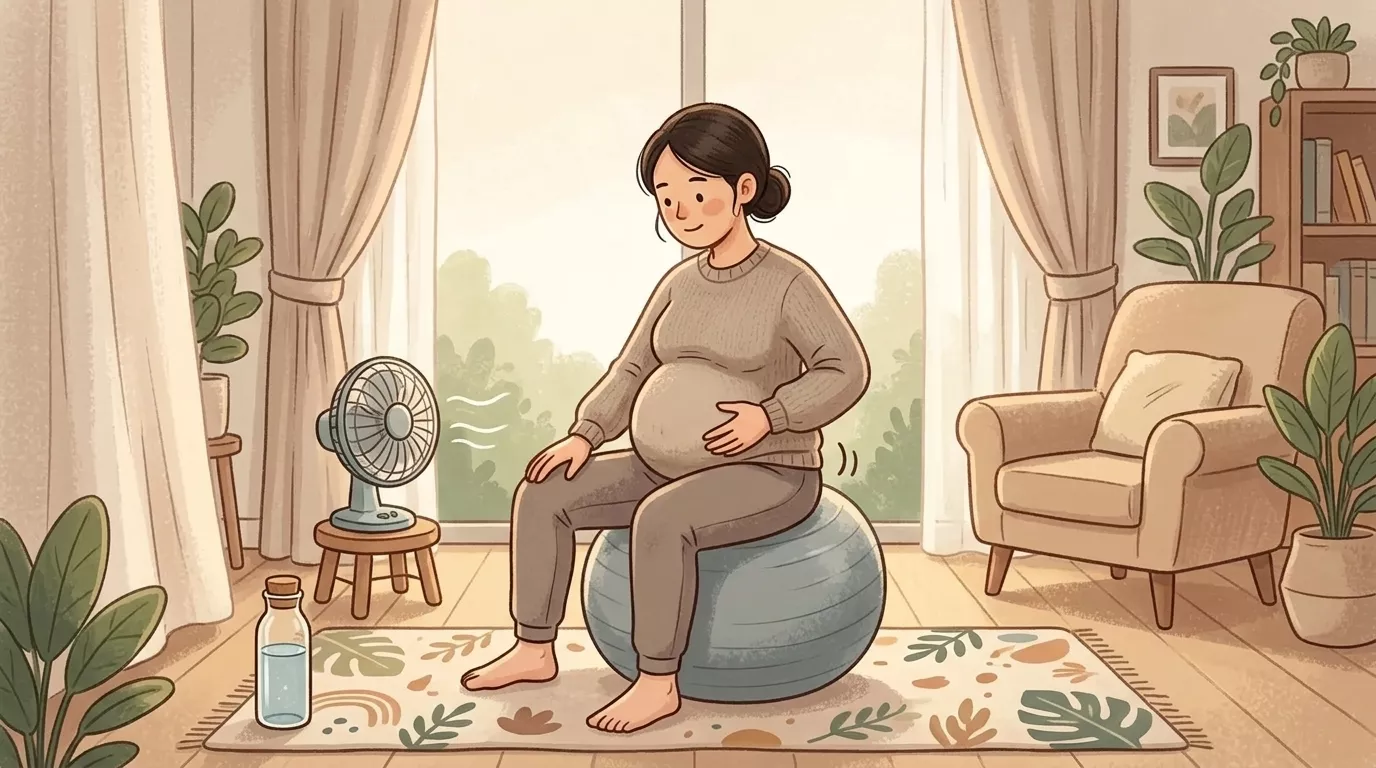
By the third trimester, movement often becomes less graceful.
Your belly feels heavier. Your bladder seems to have entered every decision. Your back may ache. Your hips may complain. Walking from the carpark to the clinic can feel like an event if the weather is hot enough and the baby has chosen that exact moment to press under your ribs.
It is easy to think that if you cannot move the way you did before, there is no point moving at all.
But smaller movement still matters.
Slow indoor walking, water walking, gentle swimming, prenatal stretching, hip circles on a birth ball, cat-cow, breathing, pelvic floor work, and supported mobility can all be useful if they feel comfortable and your doctor has not advised against them. HealthHub notes that in the third trimester, tiredness, shortness of breath, back discomfort, looser joints, and higher fall or injury risk may appear, and it advises reducing exercise volume and intensity if you feel tired or uncomfortable.
That sentence feels almost too obvious until you are the pregnant person trying to finish the workout you planned before your body changed again.
Reduce if you need to.
Stop if you need to.
Choose the pool instead of the park. Choose the mall instead of the pavement. Choose ten minutes instead of thirty. Choose a chair stretch instead of a mat flow if getting up from the floor now requires its own strategy.
Gentle is not the same as pointless.
Sometimes gentle is exactly right.
Exercises That Usually Work Well in Singapore
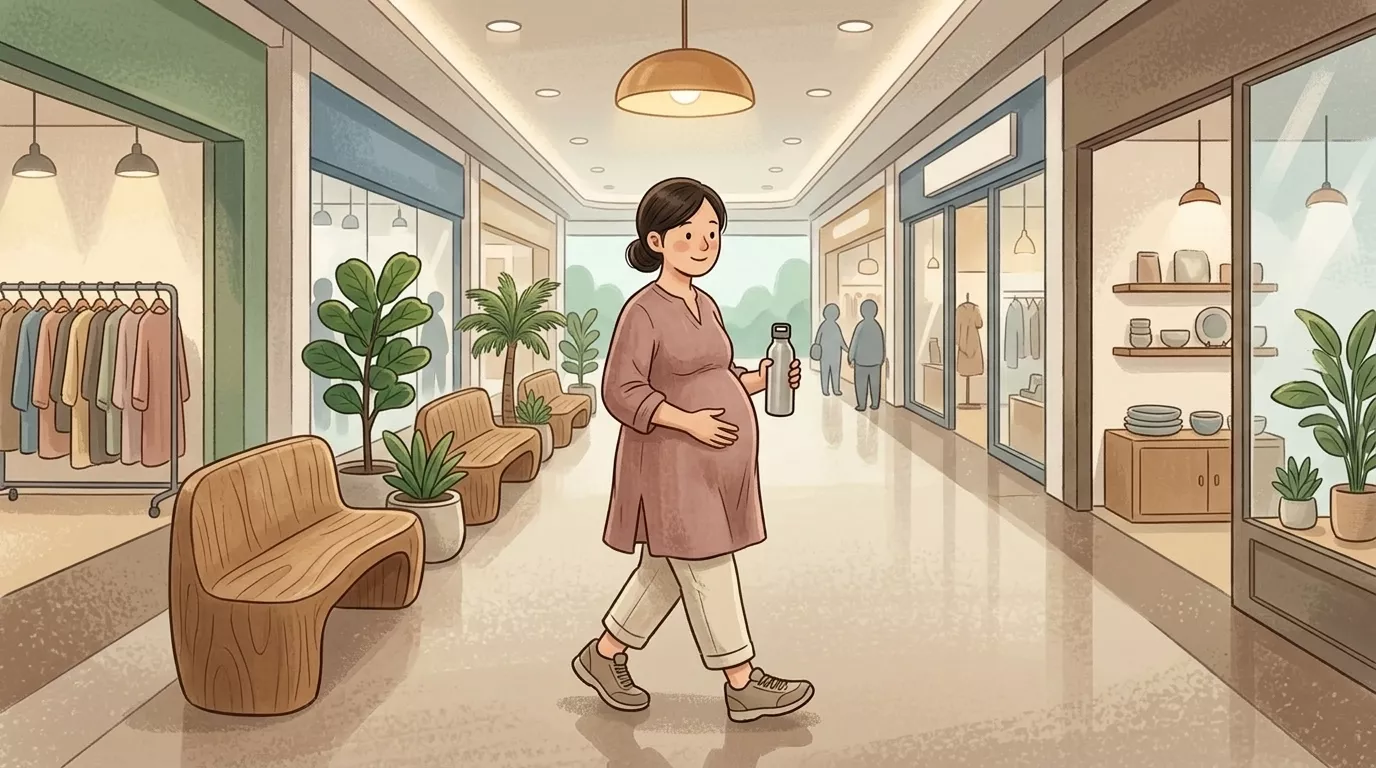
The best pregnancy-safe exercises in Singapore are often the ones that respect the climate instead of pretending it is not there.
Mall walking is underrated. It is flat, air-conditioned, easy to pause, and usually close to toilets, water, and somewhere to sit. It may not look like a proper workout from the outside, but if your heart rate rises gently and you feel better afterwards, it counts.
Swimming is another strong option. It keeps you cooler than outdoor walking, supports your changing body, and is easier on the joints. HealthHub specifically recommends swimming as a low-impact option and reminds pregnant swimmers to walk carefully around wet surfaces, step slowly into the pool instead of diving or jumping, keep breathing steady, and stay hydrated.
Prenatal yoga can help with stretching, breath, posture, and body awareness. Light strength work can support the legs, back, arms, and shoulders that will be doing a lot more carrying than you might expect later. Pelvic floor exercises matter too; HealthHub explains that pregnancy and childbirth can stress the pelvic floor muscles and that strengthening them can reduce the risk of urine leakage during and after pregnancy.
At-home movement also deserves more credit.
A ten-minute routine with the fan on, water nearby, and no need to commute anywhere may be far more realistic than the class you keep intending to book.
The movement that actually happens is often more useful than the ideal routine that lives in your calendar untouched.
What to Avoid or Modify

Pregnancy does not mean wrapping yourself in bubble wrap.
But it does mean choosing differently.
Avoid activities with a high risk of falling, being hit, or losing balance. HealthHub lists contact sports, outdoor cycling, scuba diving, high-altitude exercise before acclimatisation, and lying flat on your back after 16 weeks as activities or positions to avoid because of risks such as impact, falls, decompression sickness, altitude sickness, or feeling faint. NHS gives similar guidance, advising against sports where the bump could be hit, activities with a fall risk, scuba diving, high-altitude exercise before acclimatisation, and exercises involving lying flat on the back for more than a few minutes after 16 weeks.
In Singapore, I would also be very cautious with anything that combines pregnancy and heat intensity.
Hot yoga, hot pilates, outdoor HIIT under the afternoon sun, or a workout that leaves you dizzy and unable to speak comfortably is not the kind of “discipline” pregnancy is asking for. NHS advises avoiding strenuous exercise in hot weather because it is easier to overheat, and HealthHub warns against over-exercising and recommends keeping cool and hydrated.
This is not about giving up the parts of fitness you used to enjoy.
It is about meeting your body where it is now, not where it was six months ago.
Warning Signs to Stop
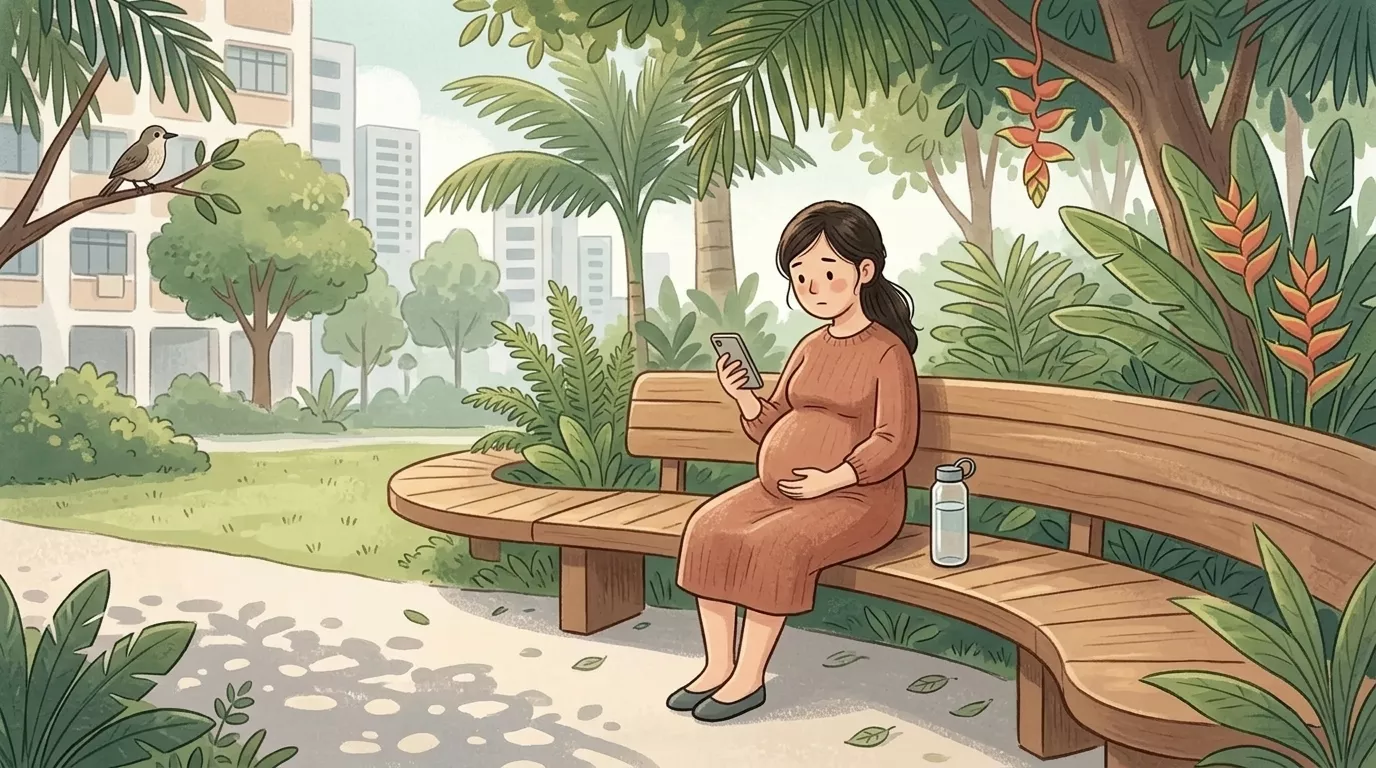
There are times when pushing through is not brave.
It is simply not safe.
Stop exercising and contact your doctor if you experience vaginal bleeding, fluid leaking from the vagina, decreased baby movements later in pregnancy, painful contractions, chest pain, irregular or rapid heartbeat, dizziness, shortness of breath, headache, calf pain or swelling, excessive fatigue, or anything that feels worrying or unusual. HealthHub lists these as symptoms that should prompt stopping exercise and seeing a doctor.
This is not meant to scare you away from movement.
It is meant to help you trust the difference between ordinary effort and your body asking for attention.
Pregnancy can make you second-guess yourself. You may wonder whether you are being dramatic, whether everyone feels this way, whether you should wait and see.
If something feels wrong, ask.
You do not need to be certain before you deserve care.
A Simple Weekly Rhythm That Does Not Feel Like a Fitness Plan
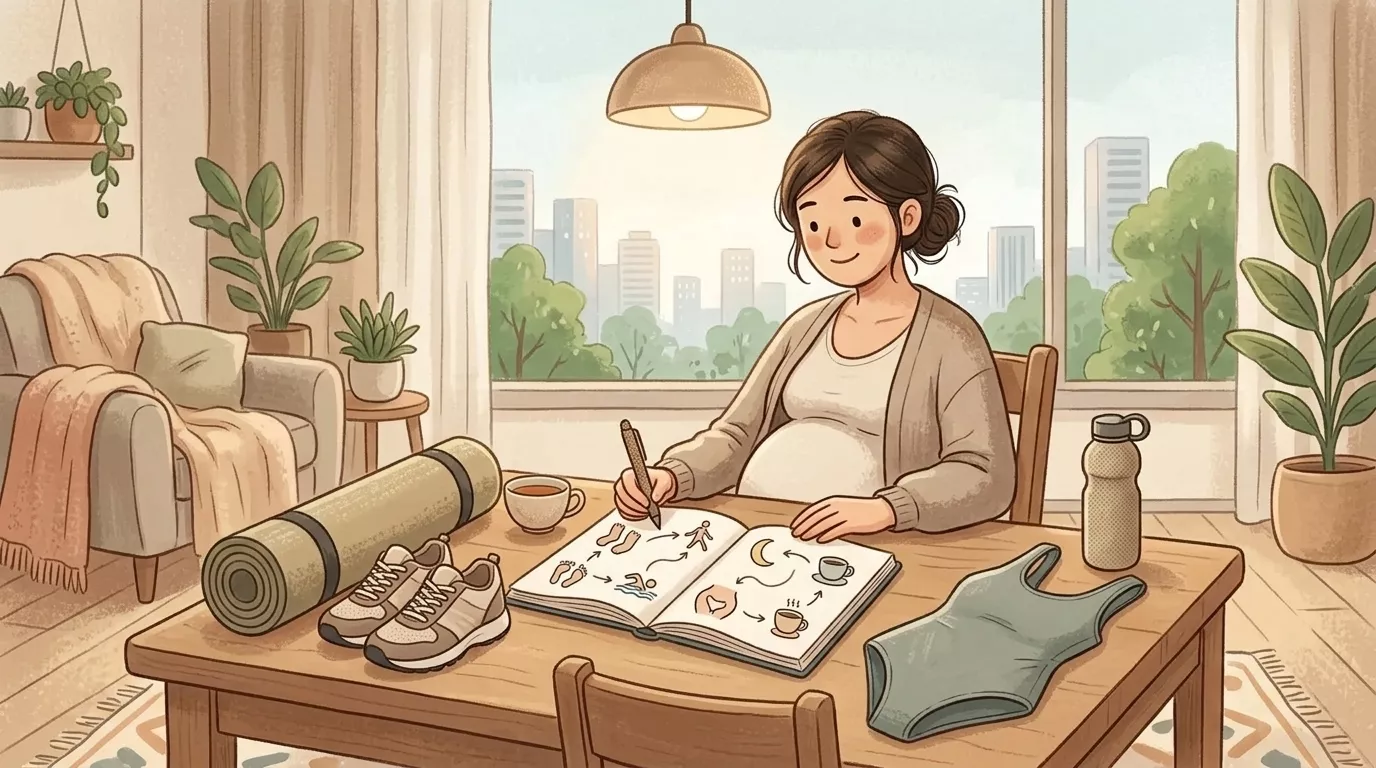
A pregnancy movement routine does not have to look like a fitness plan.
It can look like two or three gentle walks a week in a cool place. One swim if you enjoy the water. A few minutes of pelvic floor work most days. A short prenatal yoga or stretching session when your hips feel tight. Ten minutes of light strength work with support nearby. Rest on the days when your body asks for rest.
NHS says 150 minutes of exercise each week can have benefits during pregnancy, and even 10-minute spells can make a difference. It also says exercise does not have to be strenuous to be beneficial, and you should be able to hold a conversation while exercising.
That is the part worth remembering.
It does not have to be all at once.
It does not have to look impressive.
It does not have to match what you did before pregnancy.
Some weeks will be better than others. There may be weeks when you move often and feel strong, and weeks when nausea, work, appointments, sleep, or life make the gentlest routine feel out of reach.
A missed week is not failure.
It is just a week.
The Point Is Not to Stay the Same
The more my body changed, the more I had to change the way I thought about movement.
At first, I wanted exercise to reassure me that I was still myself. Still capable. Still strong. Still able to do the things I used to do, even if slower. But pregnancy did not ask me to stay the same. It asked me to pay closer attention.
To stop sooner.
Drink more water.
Choose shade.
Accept the air-conditioned route.
Let a five-minute stretch count.
Understand that strength can look quieter now.
Pregnancy-safe exercise is not about holding on tightly to the body you had before. It is about caring for the body that is carrying you through something enormous.
Some days that care may look like swimming.
Some days it may look like walking slowly through a mall.
Some days it may look like sitting on the mat, breathing deeply, and deciding that today is not the day.
All of it belongs.
Movement in pregnancy is not about proving your body has not changed.
It is about learning to be gentle with the body that is changing every day.