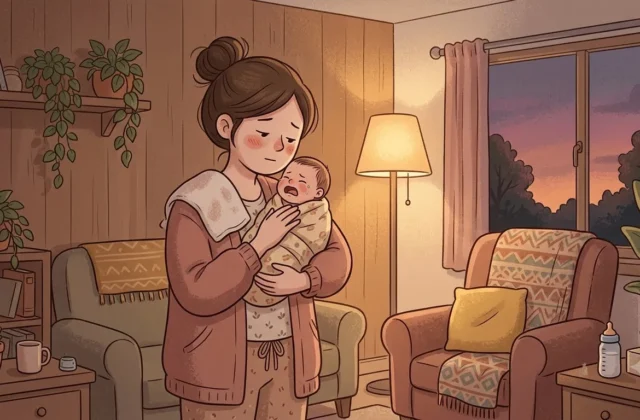



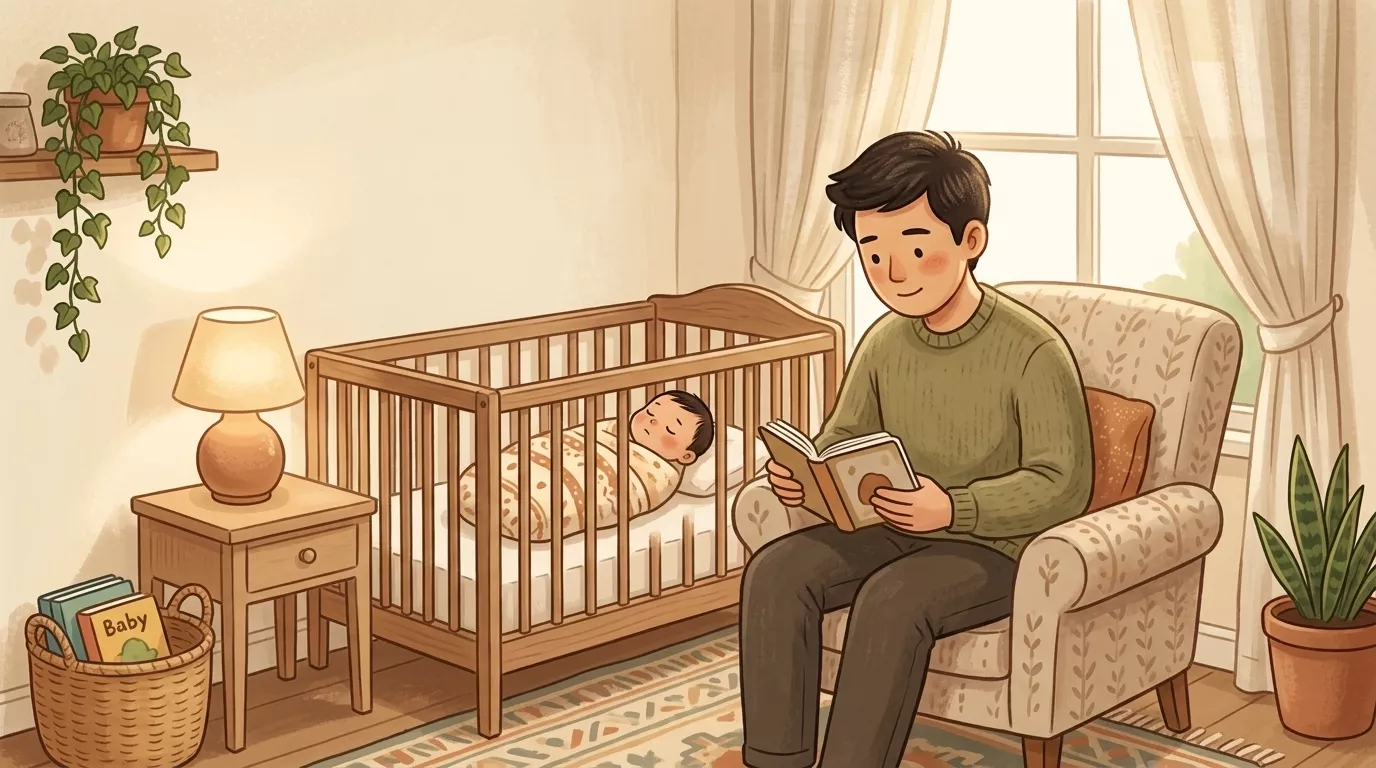
He was only a few days old, wrapped in a swaddle that made him look like a very serious parcel, staring somewhere past my shoulder as though the ceiling had more interesting things to say than I did.
I was sitting beside the crib with a board book in my hand, trying to read in a soft, cheerful voice while running on almost no sleep. The book had about six words on each page. A bear. A moon. A tree. Nothing complicated, and still I found myself wondering whether there was any point to it.
He could not follow the story.
He could not point at the pictures.
He could not even stay awake for the second half of the book.
For a moment, I felt silly, like I was performing a tiny play for someone who had not agreed to attend.
If you have ever wondered how early should you read to a baby does it actually help, the answer is gentler than most parents expect. You do not read to a newborn because they understand the story. You read because your voice is already one of the most familiar places they know.
Start Before It Feels Like It Matters
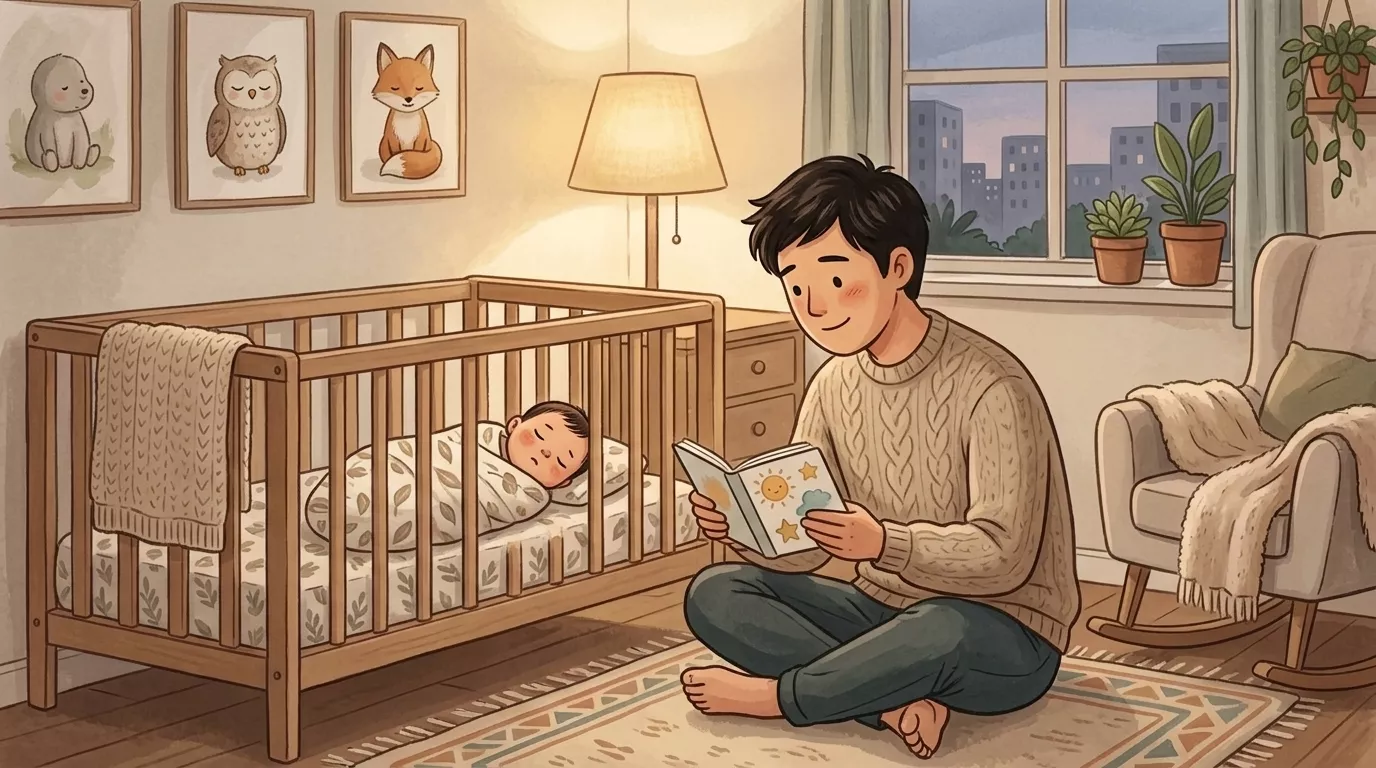
Reading to a baby can begin before it looks useful.
That is the strange part.
So much of early parenting feels invisible at first. You feed them, and they cry again. You rock them, and they wake as soon as you sit down. You talk to them, and they blink back at you with the mysterious seriousness of someone who has just arrived on earth and is not yet impressed.
Reading can feel like that too.
A newborn may not react in a way that makes you feel rewarded. They may yawn halfway through the first page. They may turn their head. They may fall asleep before the animal noises begin. None of that means the moment did not count.
The American Academy of Pediatrics encourages reading aloud with newborns and young children because shared reading supports nurturing relationships during an important stage of brain development, not simply because it teaches letters early.
That helped me stop waiting for my baby to “get it.”
At the beginning, the habit was not really his.
It was mine.
A few minutes after a feed. One tiny book before a nap. Half a page while he lay on the mat. It did not look like much, but slowly, reading became one of the ordinary ways I knew how to be close to him.
Why Reading Helps Even When They Do Not Understand the Words
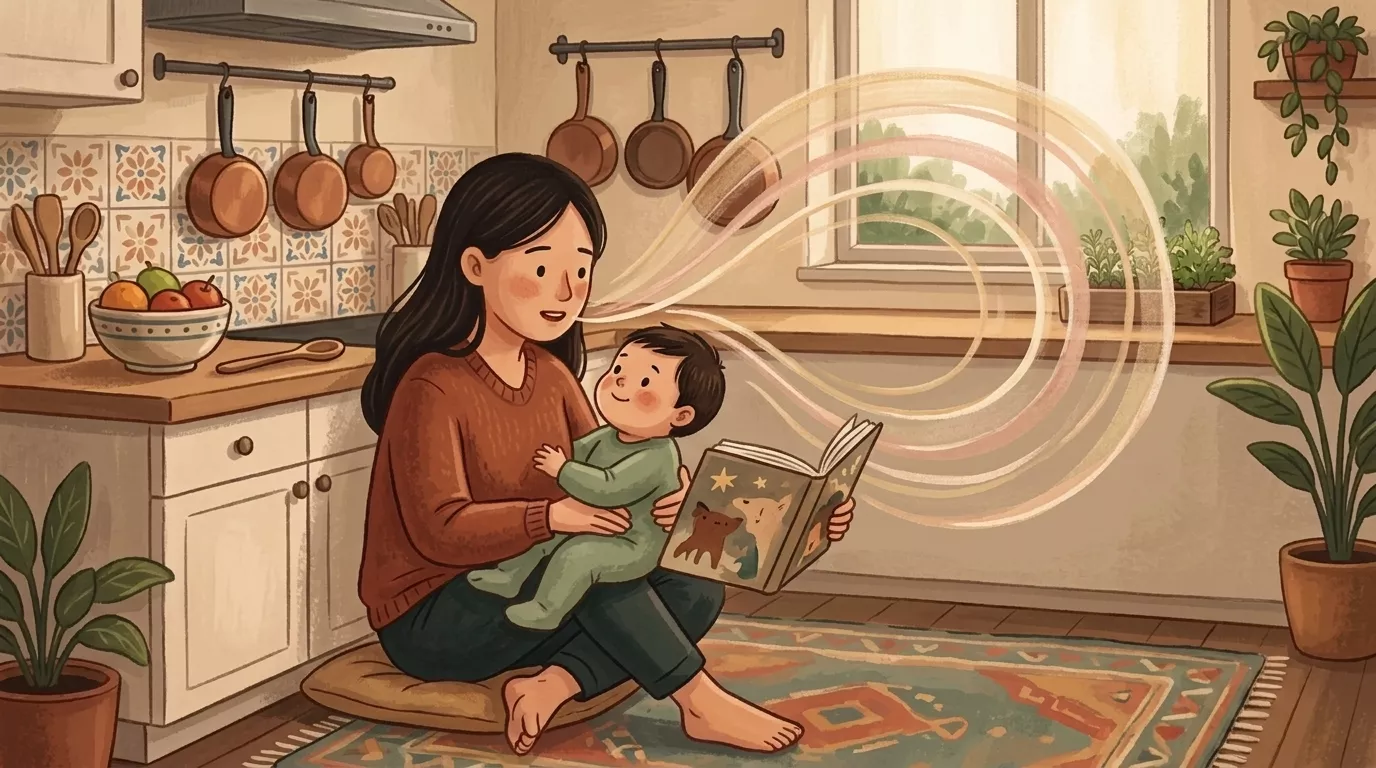
It is easy to think reading only matters once a child can understand words.
But babies are listening long before they understand.
They hear rhythm. Tone. Pauses. Repetition. The rise in your voice when the bear is surprised, even if they have no idea what a bear is. They learn that language has shape and music. They learn that your voice can be playful, soothing, excited, slow, silly, and safe.
That is not a small thing.
The AAP says reading together with infants and young children strengthens relationships with parents and caregivers, supports early brain development and attachment, and helps lay the groundwork for later learning. The CDC also encourages parents to talk, read, and sing to babies, noting that reading helps babies develop and understand language and sounds.
The point is not to create a baby who can identify letters before they can sit.
The point is connection.
Your baby hears you. Your baby feels your body holding them. Your baby learns that books belong in warm laps, quiet corners, silly voices, and the familiar rhythm of being with someone who loves them.
That is where the habit begins.
Not in literacy.
In safety.
Choose Books That Can Survive Babyhood
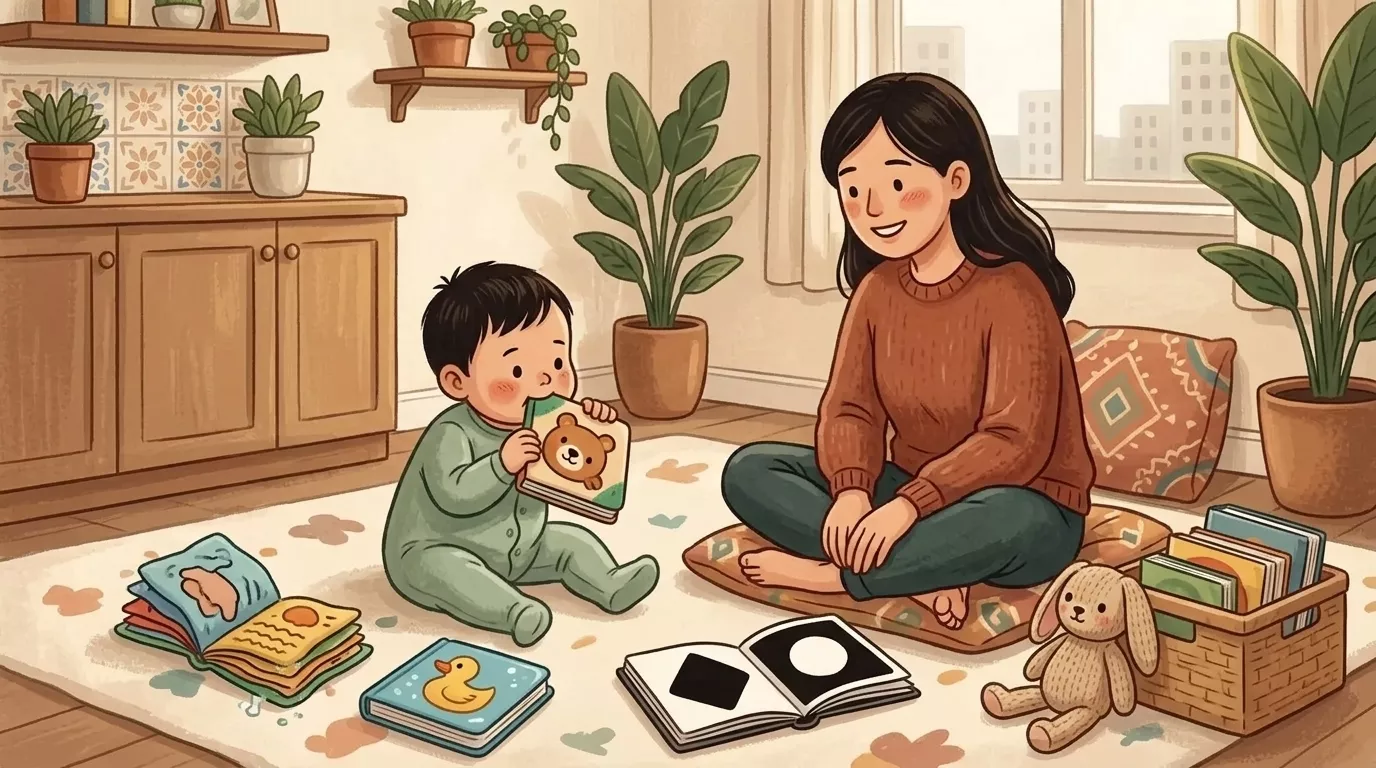
The first books do not need to be beautiful in a delicate way.
In fact, delicate books are often a mistake.
Babies are not respectful readers. They chew corners. They slap pages. They close the book exactly when you are trying to turn it. They may show more interest in licking the cover than looking at the picture inside.
This is not a failure.
This is babyhood.
Board books, cloth books, bath books, high-contrast books, and simple books with clear pictures tend to work better than fragile paper books in the beginning. For newborns, strong contrast, simple shapes, and rhythmic language can be more engaging than a complicated story. As they grow, touch-and-feel books, lift-the-flap books, and books with familiar objects can become more interesting because babies begin to recognize pieces of their world on the page.
A book that gets chewed is still part of the habit.
A book that gets thrown is still part of the habit.
A book that never makes it past page three but somehow becomes the one your baby reaches for every night is doing its job.
Sometimes we imagine a reading habit as a calm child sitting still while a parent reads every word in order.
With babies, it is often messier than that.
It should be.
Make Reading Part of Something You Already Do
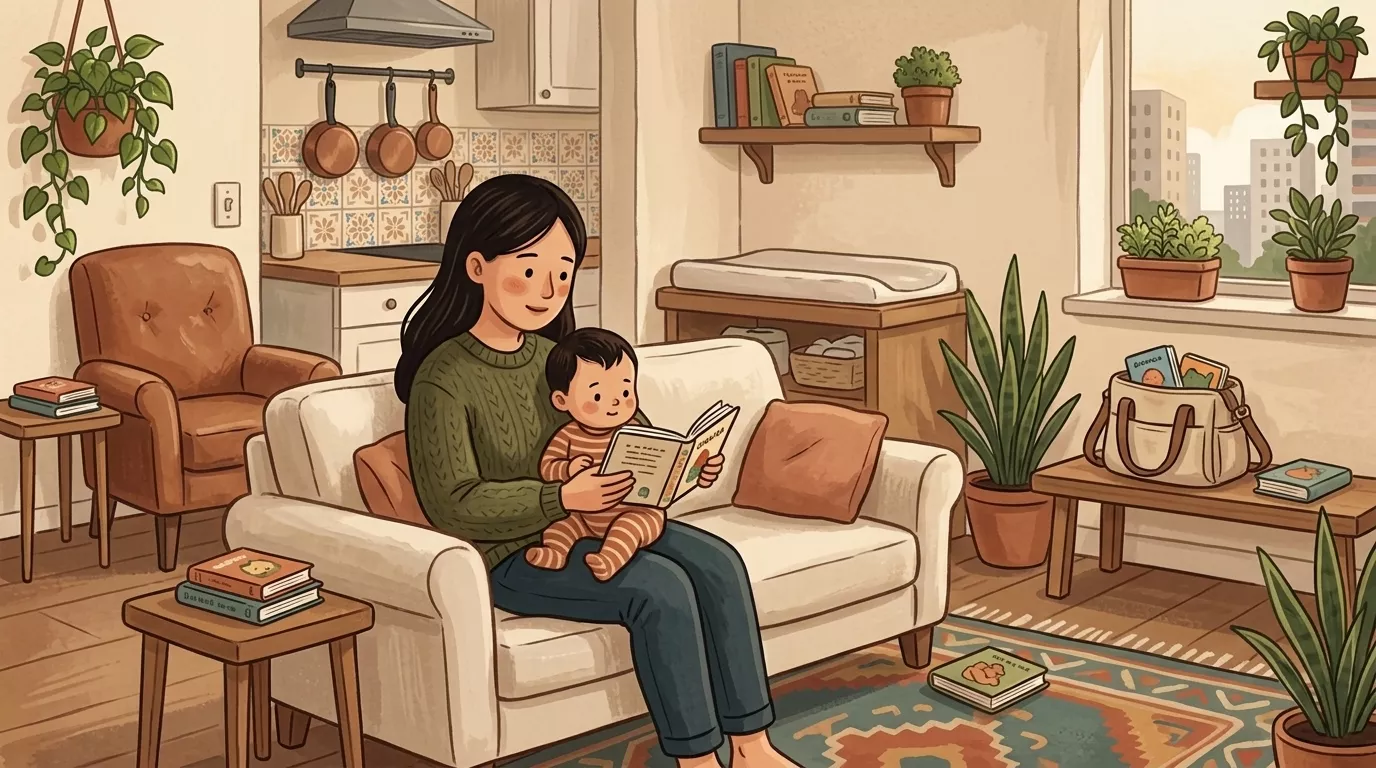
The easiest reading habits are the ones that do not require a whole new life.
New parents are already carrying enough.
If reading becomes another task to complete perfectly, it will probably start to feel heavy. But if it attaches itself to something you are already doing, it becomes much easier to return to.
One small book after the morning feed.
One page after a diaper change.
A bedtime book after the bath.
A cloth book on the play mat during tummy time.
A board book near the sofa, where you already sit for half the day in the early months.
The habit does not need to begin as a formal “reading session.” It can begin as a small pause inside the day. A familiar book in a familiar place. A voice your baby already knows. Two minutes that happen often enough to become part of the rhythm of home.
I found it helpful to keep books where life actually happened, not only on a shelf where they looked nice.
One beside the nursing chair.
One near the changing mat.
One in the stroller.
One in the diaper bag, mostly for the illusion that I was a prepared parent.
The more visible the books were, the less effort it took to begin.
Let It Be Messy and Short
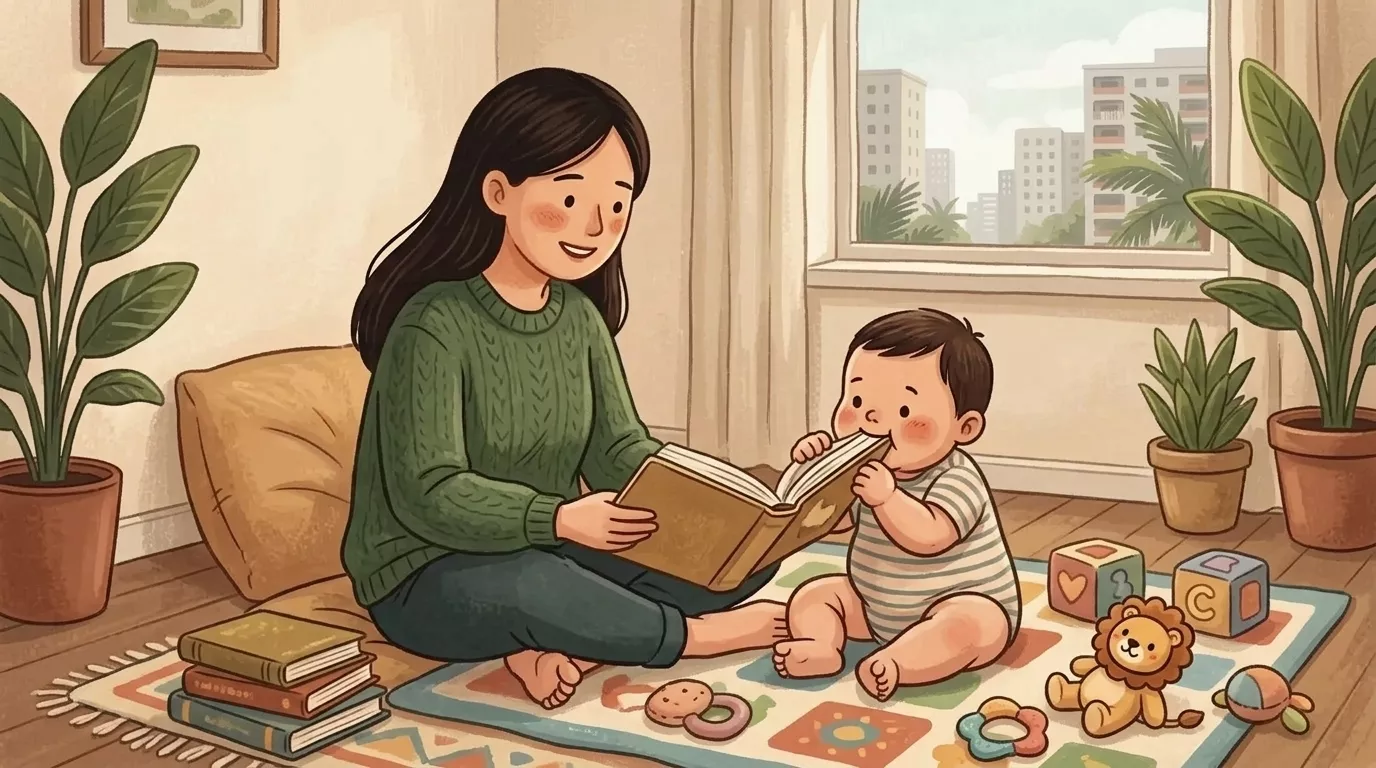
There is a special kind of disappointment that happens when you imagine a peaceful reading moment and your baby responds by trying to eat the book.
Or crying.
Or arching away.
Or turning the pages so quickly that the story becomes nonsense.
That is when it helps to remember that reading with a baby is not a performance. You do not have to finish the book. You do not have to read every word. You do not have to make the voices good. You do not even have to hold the book the right way up, at least not at first.
You can point to one picture and say, “That’s a dog.”
You can say, “The baby is sleeping,” and kiss their head.
You can repeat the same line three times because your baby smiled once and you are now emotionally committed to the moment.
You can stop when they are hungry, tired, overstimulated, or simply done.
A short reading moment is still a reading moment.
This was something I had to learn slowly. I used to feel that if we did not finish the book, it did not count. But babies do not build habits through tidy completion. They build them through repetition, warmth, and the feeling of returning to something again and again.
Even thirty seconds can become part of that.
Use Your Voice More Than the Story
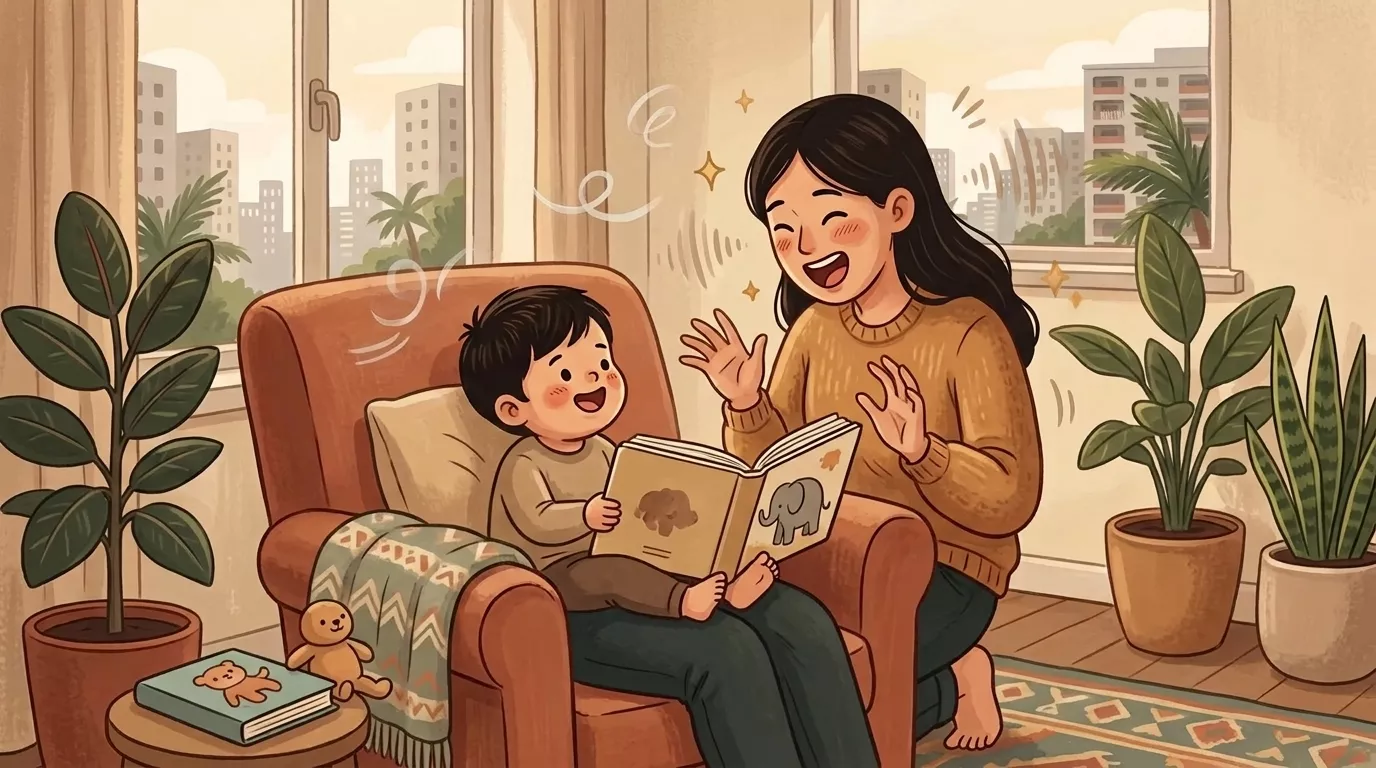
For a baby, your voice may matter more than the book itself.
That is freeing, especially on days when you are too tired to read with enthusiasm.
You can read slowly. You can sing one page. You can use a silly voice for the duck if you have the energy, and your normal exhausted voice if you do not. You can pause and let your baby look at your face. You can answer their little sounds as though the two of you are having a conversation no one else can translate.
The CDC encourages parents to respond when babies make sounds by repeating the sounds and adding words, which helps them learn to use language. It also recommends talking, reading, and singing to babies as part of everyday interaction.
That means the book does not have to carry the whole moment.
You are allowed to wander.
If the page shows a ball, you can say, “We have a ball like that.”
If there is a cat, you can meow.
If your baby grabs the page, you can say, “You found it.”
This is still reading.
It is not less valuable because it looks casual. In many ways, that is what makes it work. Books become part of real life, not a lesson separate from it.
Build a Tiny Home Library Without Overbuying
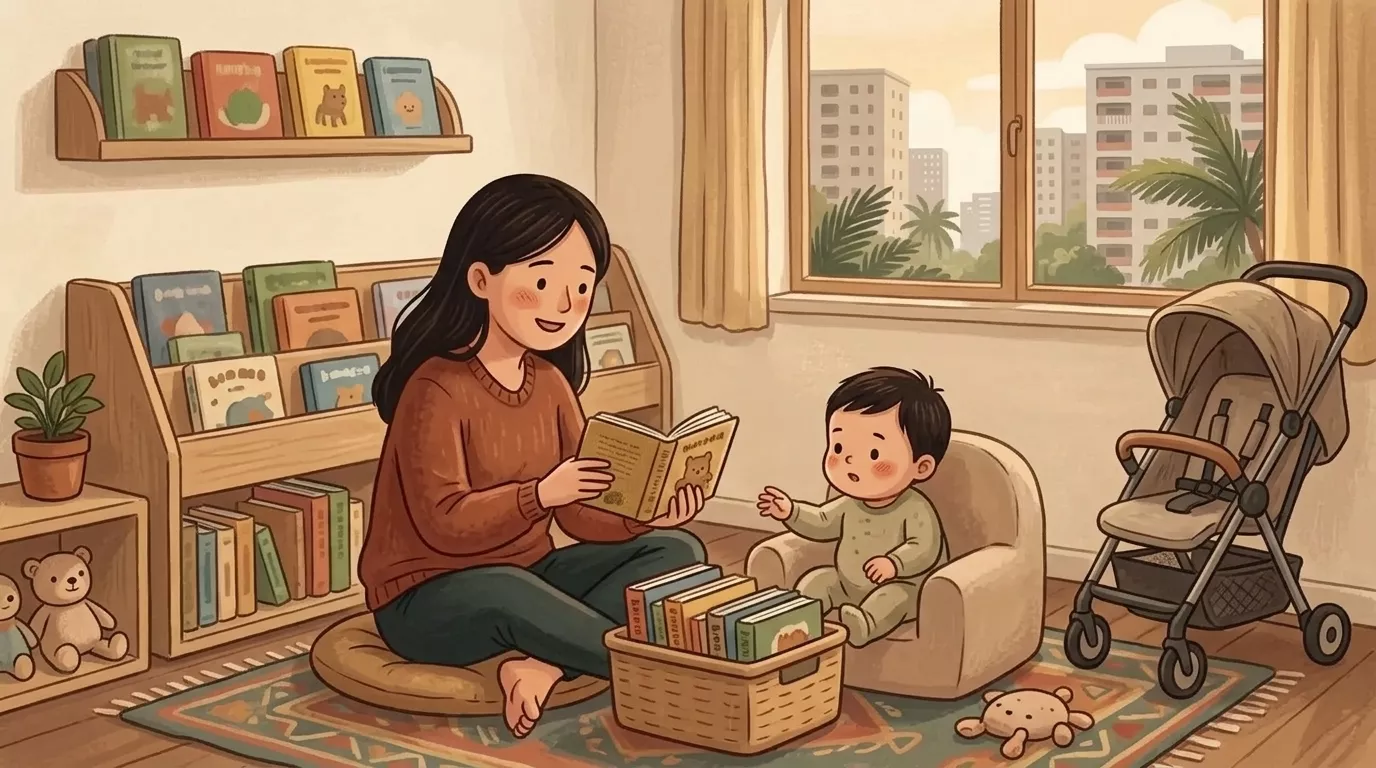
It is very easy to overbuy baby books.
They are small. They are sweet. They make you feel like the kind of parent who is investing in the future, which is a dangerous emotional category when you are sleep-deprived and shopping online.
But babies do not need a huge library at the beginning.
A few sturdy books are enough. Five to ten books that can be reached often, repeated often, and survive drool are more useful than a beautiful shelf of books no one wants to touch. Repetition may feel boring to adults, but babies often enjoy familiarity. The same pictures, the same rhythm, the same ending, the same voice arriving at the same part of the day.
If you are in Singapore, the library can become part of the habit too. The National Library Board runs programmes for children aged 0 to 6, including Storytelling, Baby Lapsit, Baby Songs and Rhymes, Toddler Songs and Rhymes, and Jiggle, Read & Rhymes. Baby Lapsit sessions, for example, are designed for children aged 0 to 1 and include songs, rhymes, and finger plays for bonding with babies.
You do not have to do everything.
You do not have to attend every programme or borrow a tower of books.
But it can help to know that reading does not have to stay inside your house. Sometimes it becomes easier when there are places, people, and routines that gently support it.
What to Do When Your Baby Seems Uninterested
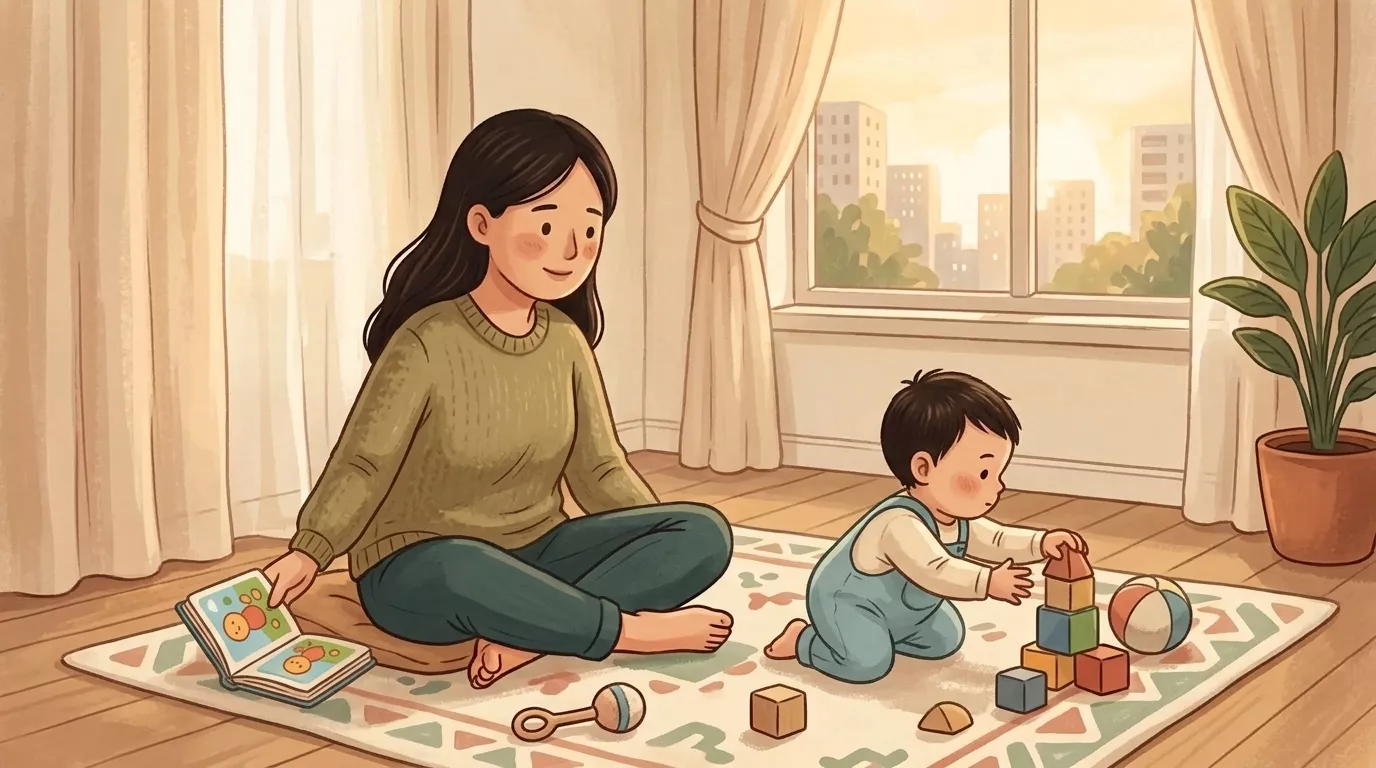
Some babies seem to love books early.
Others seem deeply unimpressed.
Both are normal.
A baby who looks away is not rejecting reading. A baby who wiggles is not failing early literacy. A baby who listens for half a minute and then wants to chew the corner may still be learning that books are objects worth returning to.
If your baby seems uninterested, try changing the timing before deciding they dislike books. A tired baby may not want a story before a nap. A freshly fed baby may be more settled. Some babies enjoy books during tummy time because it gives them something to look at. Others prefer being held in your lap, where the book is less important than your closeness.
You can also try shorter books, clearer images, stronger contrast, more repetition, or simply talking about the pictures instead of reading the words.
The habit does not need your baby to be impressed every time.
It only needs you to keep offering the invitation gently.
There will be days when the book is ignored.
That is fine.
The book will still be there tomorrow.
Let Other People Read Too
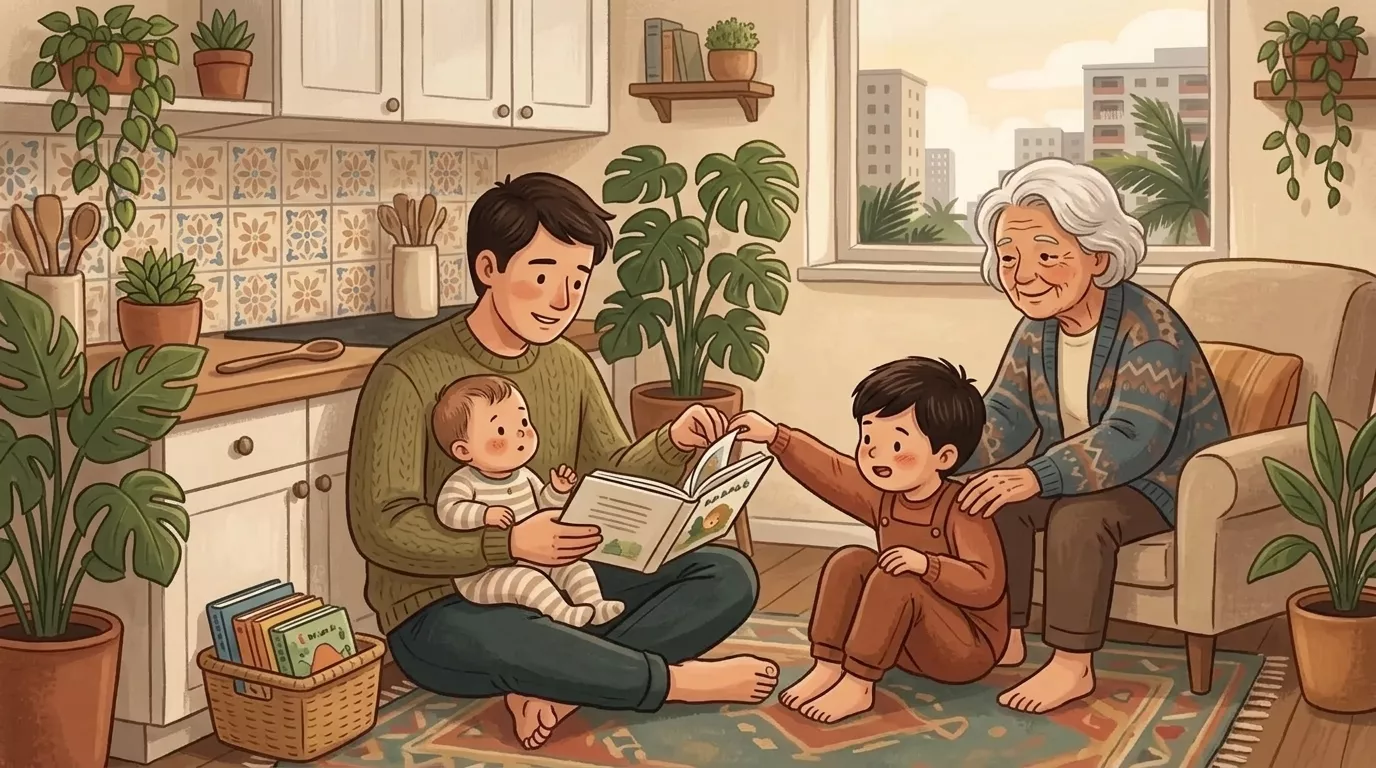
Reading does not have to belong only to one parent.
In fact, it can become a beautiful way for other people to build their own relationship with the baby. A father reading in a deeper voice. A grandparent singing half the lines instead of reading them. A caregiver pointing at pictures in another language. An older sibling proudly turning pages too quickly and calling it helping.
None of these versions need to match yours.
That can be hard if you are the parent who likes things done a certain way. I understood this especially when someone skipped pages, changed words, or read the book in a tone I would not have chosen. But babies do not need every reader to sound the same.
They benefit from hearing loving voices return to them in different ways.
Shared reading is also not only about books. Songs, rhymes, finger plays, and simple back-and-forth sounds all help surround a baby with language and connection. That is why early literacy programmes often include more than storybooks alone; NLB’s baby programmes include rhymes, songs, and finger plays as part of bonding and early language experiences.
The goal is not perfect reading.
The goal is familiar voices.
The Habit Is Really About Returning
A reading habit is not built in one perfect evening.
It is built by returning.
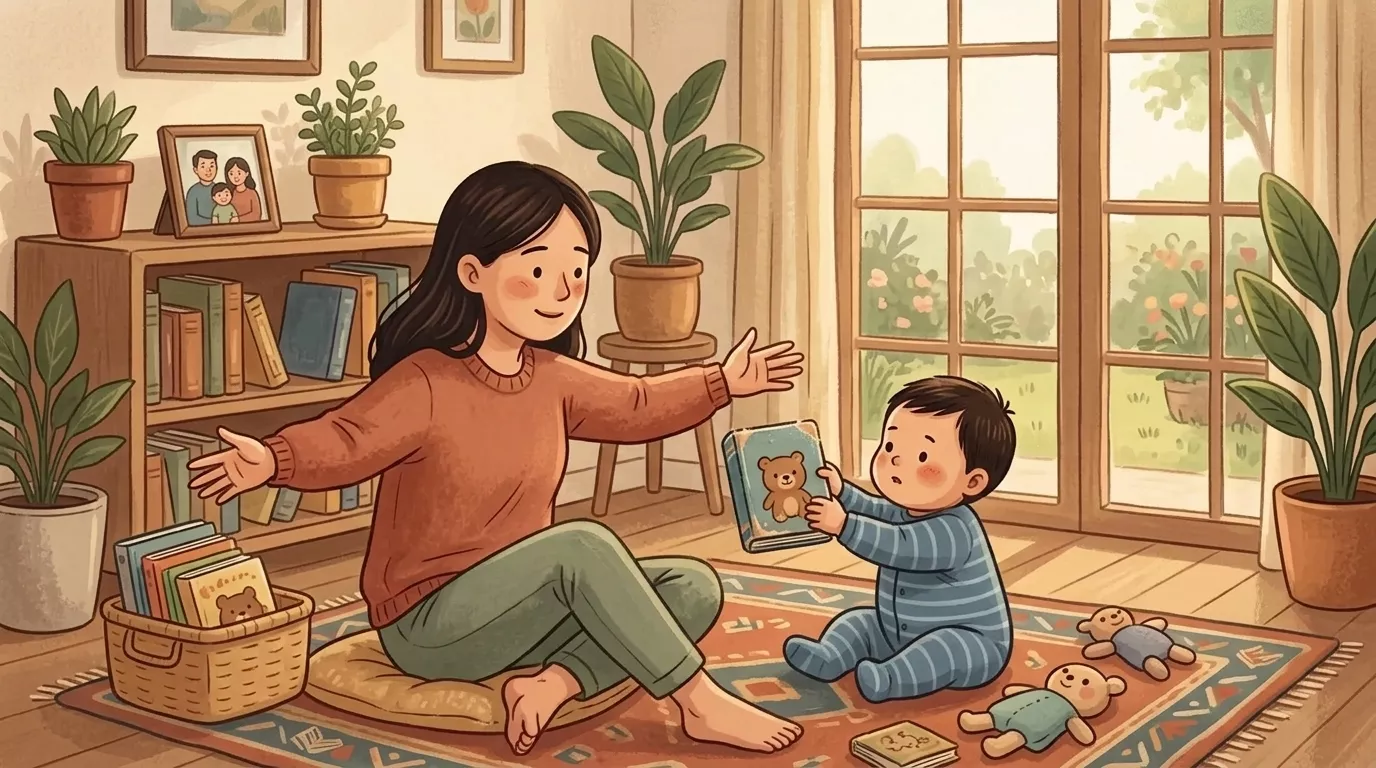
Returning to the same little book after a feed. Returning to the same rhyme during a diaper change. Returning after a week when everyone was sick and nothing happened the way you hoped. Returning when the baby is older and suddenly wants the same page again, and again, and again, until you can recite it without looking.
Some days, you will read three books.
Some days, one page.
Some days, none.
That is okay.
The habit is not fragile enough to disappear because life interrupts it. It becomes strong because you keep making it ordinary.
One day, the baby who once chewed the corner of the book may crawl toward you holding it out. Not because they understand every word. Not because they know this is good for their brain. Not because anyone turned reading into a project.
But because they remember the feeling.
Your lap.
Your voice.
The pause in the day where the two of you met inside a story, even before they knew what stories were.