



On the morning I went back, I stood in front of the mirror wearing a blouse I had not touched in months.
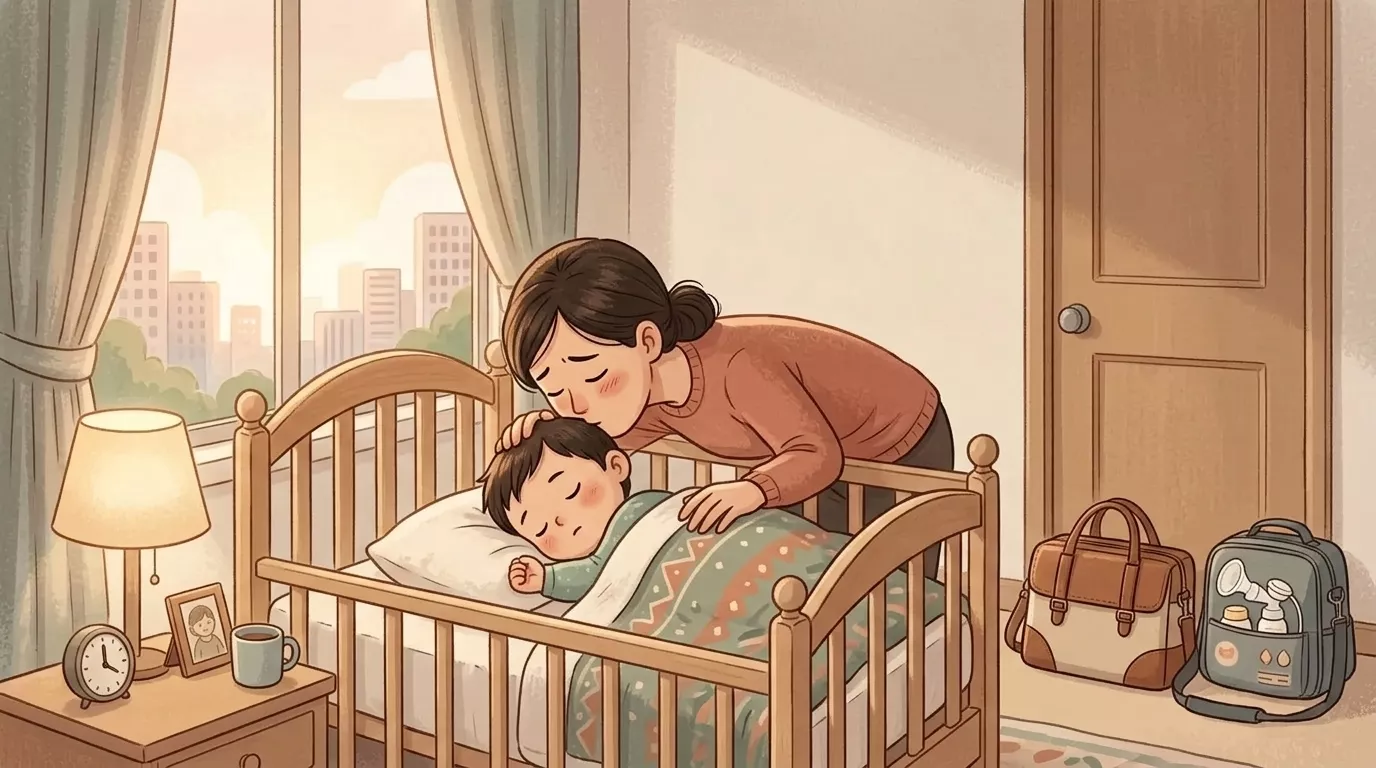
It still fit, technically. But nothing about it felt familiar. There was a faint milk stain near the cuff that I only noticed when the light caught it. That morning, I pulled my hair back in the same quick, practical way I had every day since the baby arrived. My laptop bag waited by the door, somehow feeling heavier than I remembered. Next to it sat another bag packed with pump parts, breast pads, snacks and countless little emergency items that had slowly become part of my new normal. Looking at the two bags side by side, I realised I wasn’t just returning to work—I was bringing an entirely different version of myself with me.
In the bedroom, my baby was still asleep.
That was the part that felt really unfamiliar. Not a dramatic goodbye, no crying baby reaching for me. Just the soft sound of breathing from the room I was about to leave.
I had spent the night before telling myself this was normal. Mothers go back to work. Babies adjust. Families find new rhythms. In Singapore, maternity leave has a clear shape on paper, a start and an end, forms and dates and policies that make the whole thing sound almost tidy.
But feelings do not follow the calendar that neatly.
I wanted to go, though part of me wanted to stay. Another part of me wanted someone to tell me I was still a good mother trying to get my life back.
The Morning I Went Back
The morning itself was strangely ordinary.
There was no time for a proper emotional moment because the baby needed a diaper change, the milk had to be labelled, and I was trying to remember whether I had packed the charger for my pump. My husband asked if I was okay, and I said yes in that automatic way people do when the real answer would take too long.
Then it was time to leave.
I kissed my baby’s forehead while he was still half-asleep, and for a second, I felt almost foolish for being so emotional. He was safe and deeply loved. My mom resigned from her job to care for her first grandchild because we wanted a different type of upbringing .Nothing terrible was happening.
And still, stepping out of the house felt like pulling a thread from something that had been tightly woven around me for months.
In the lift, I checked my bag three times. Laptop. Wallet. Phone. Pump. Milk storage bags. Wet tissue. More tissue, because I knew myself. By the time I reached the ground floor, I already felt like I had done an entire day’s worth of emotional labour before office hours had even begun.
I Thought I Would Feel More Ready

Before the end of maternity leave, I was really excited to be back at the office.
As my return to work drew closer, I assumed the emotions would arrive gradually, perhaps during the final two weeks of maternity leave. In my mind, I would simply begin to miss work in a clear, uncomplicated way. The thought of wearing real clothes again, sharing lunch with colleagues and having conversations that didn’t revolve around nap schedules or bottle measurements felt strangely comforting.
To some extent, those expectations came true. Yet what I missed wasn’t just my job. It was the part of myself that enjoyed solving problems unrelated to wet diapers, crossing something off a to-do list and knowing it would stay done. Conversations with other adults also became something I longed for, especially when every quiet moment at home came with one ear tuned to the possibility of a cry from the next room.
But missing work did not make leaving my baby easy.
That surprised me, although perhaps it shouldn’t have. In Singapore, the official maternity leave framework is clearly defined. According to the Ministry of Manpower (MOM), eligible working mothers may receive either 16 weeks of Government-Paid Maternity Leave or 12 weeks of maternity leave, depending on factors such as their child’s citizenship and other eligibility criteria. The GPML portal also states that employees generally need to complete at least three months of continuous service before their child’s birth to qualify.
On paper, a few months can look like a generous amount of time. In your body, it can feel like you have just begun to understand your baby when the world asks you to return.
The Guilt Came Before I Even Left the House
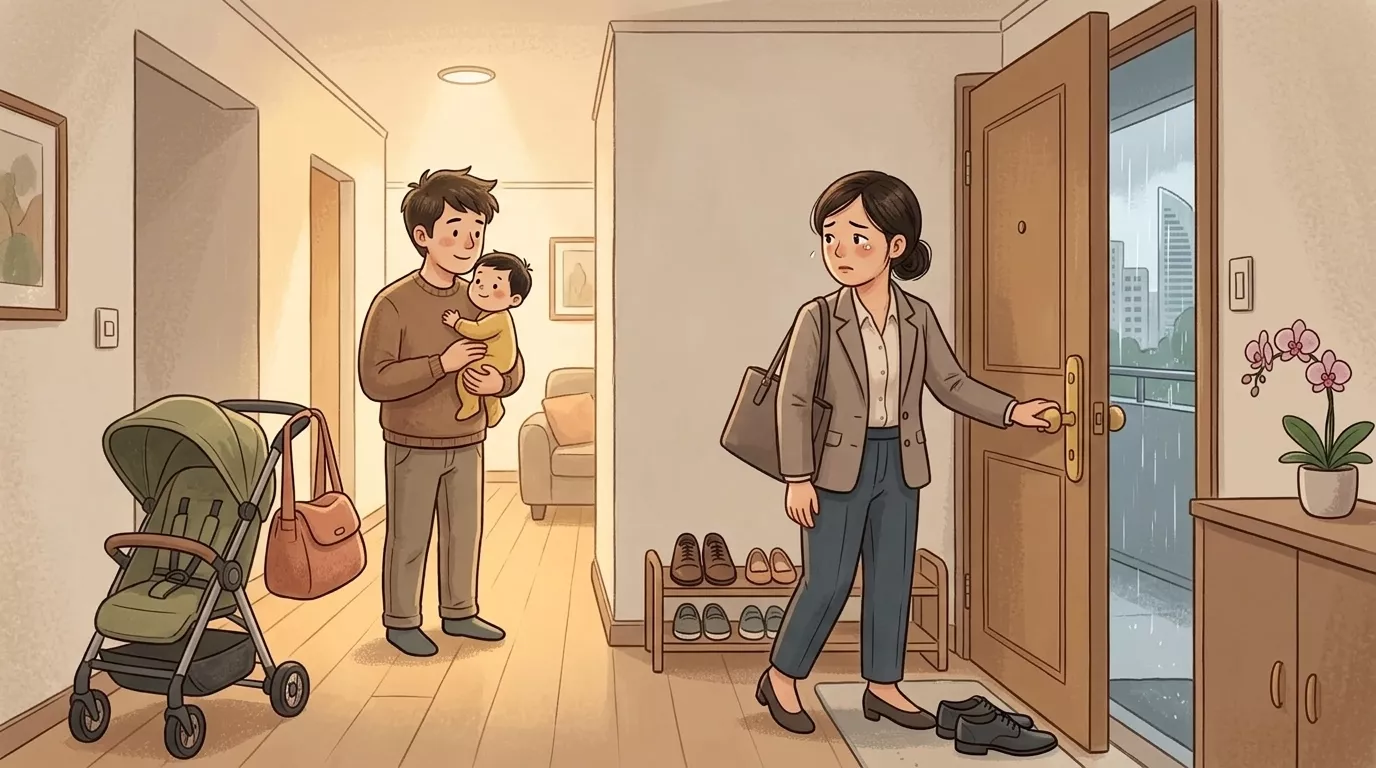
Guilt never existed until this little one came along. I really thought that would happen when I am at work.
I imagined it would come during meetings, or lunch breaks, or while looking at baby photos between emails. But the guilt started earlier than that. It began the week before, while I was folding tiny clothes and wondering whether my baby would notice my absence.
Then another kind of guilt appeared too. The guilt of wanting to go back.
That was the feeling I did not expect. There was a part of me that wanted to sit at a desk again. A part that wanted to answer a question and know the answer. Hanging out with colleagues was a huge motivation.
That part made me feel selfish.
It took me a while to understand that missing work did not mean I was eager to leave motherhood behind. It meant I was still a whole person inside motherhood.
Two things can be true at once. I loved my baby completely and it is so hard to tell someone who has never gone through parenthood that I missed myself.
Practical Things Were Harder Than I Expected
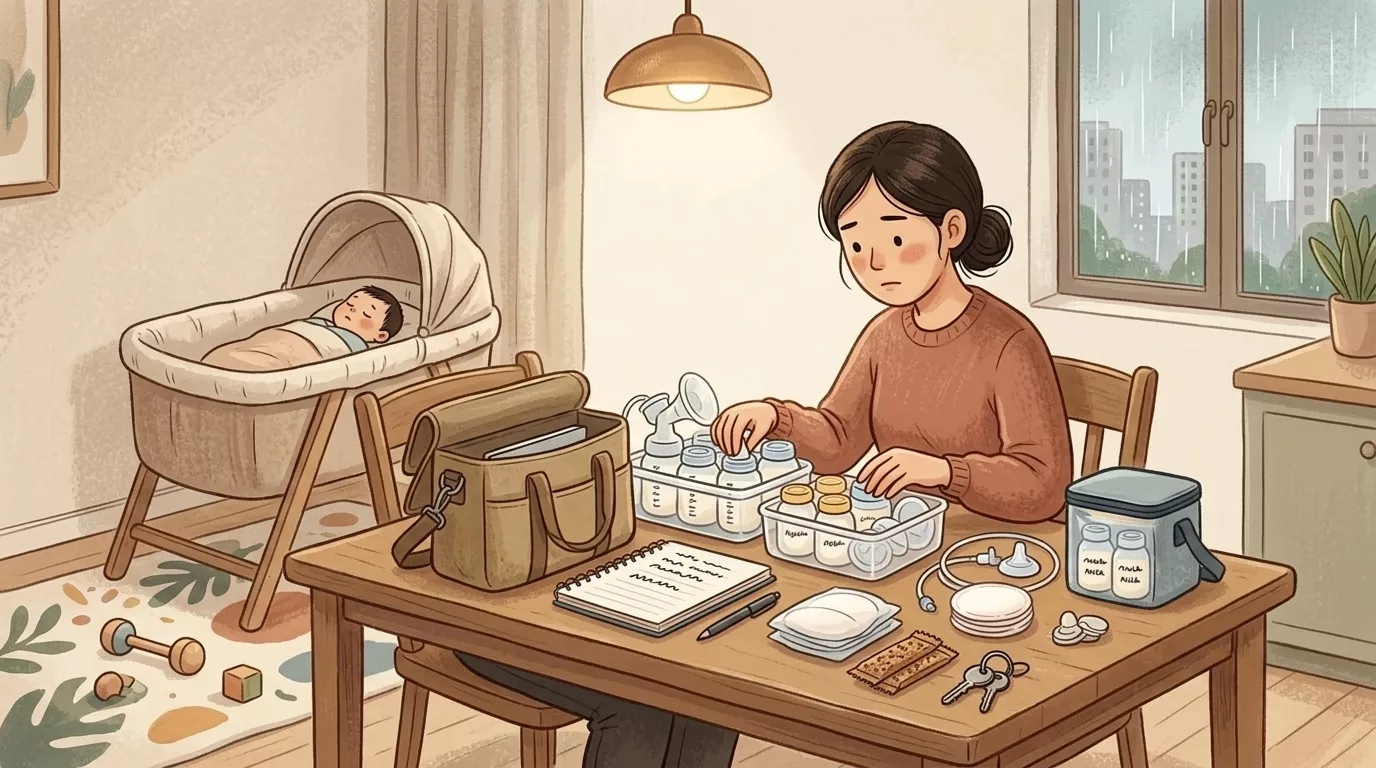
No one warned me how much admin came with going back to work.
It was not only the job. It was the choreography around the job. Pump parts drying on the rack, bottles labelled, clothes packed, care instructions written down in more detail than anyone probably needed. Messages from my mom on his progress, videos and messages throughout the day. Calendar reminders to meet clients, commute timing, backup plans for spit-up, leaks, late meetings, and the strange possibility that I might forget something essential because my brain was still operating on broken sleep.
The night before my first day back, I packed as though I were leaving for a short overseas trip.
What helped, eventually, was making the mornings require as little thinking as possible. I packed my bag at night, prepared milk labels in advance, kept extra breast pads and a spare top at work because learning this lesson once was enough. I wrote things down, not because I was naturally organized, but because my memory had become unreliable in the exact season I needed it most.
The practical things did not remove the emotional weight, but they stopped every morning from becoming a fresh emergency.
Sometimes that is the kindest thing a tired mother can do for herself.
Work Felt Familiar and Strange at the Same Time
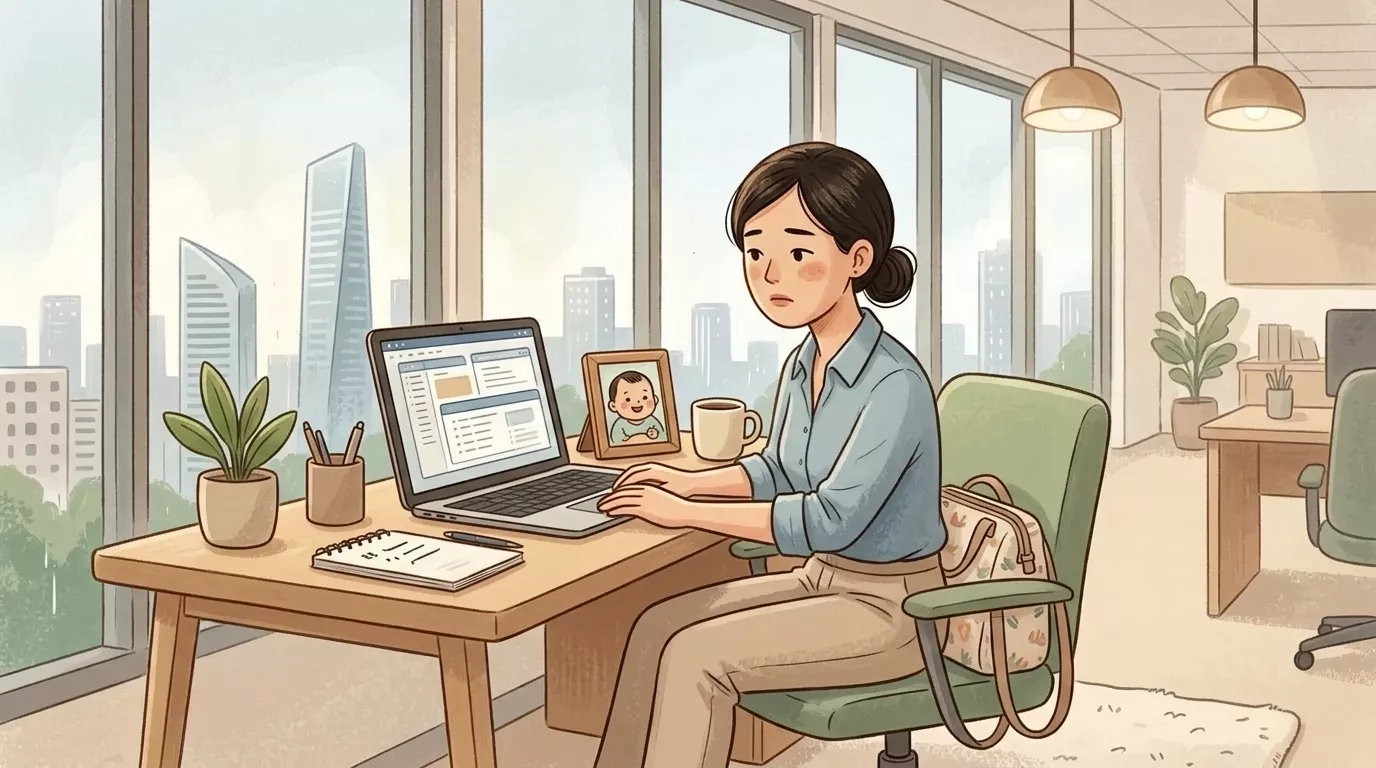
Walking into the office was one of the oddest parts.
Everything looked almost the same.
The same desks, the snack bar in the pantry, same old meeting rooms, the small talk near the water filter. People smiled, asked how the baby was, told me I looked good, and welcomed me back like I had returned from somewhere far away.
In a way, I had but I did not know how to explain that cause I was simply sleep deprived.
My laptop password came back to me. My inbox was still my inbox. Work had continued without me, which was both reassuring and slightly painful. There is a strange feeling that comes from realizing you were deeply missed at home, but perfectly replaceable at work. It is not always a bad thing. It is just humbling.
I wanted to prove I could still do everything. Terrible mistake.
I wanted to be sharp, useful, calm, responsive, and fully back. Instead, I read the same email three times. I forgot a colleague’s update almost immediately after hearing it. I checked my phone more than I meant to. When someone asked a simple question near the end of the day, I felt tears rise for no clear reason other than being tired of holding myself together.
Going back did not mean I was back to normal. It meant I was learning a new normal in public.
What Helped Me Feel Less Split in Half

The things that helped were not dramatic.
A trial run helped. Before the real first day, we practiced the morning routine once, badly and imperfectly, which was exactly why it helped. I learned how long the handover really took, identified the part that made me anxious. I learned that my baby could be held by someone else while I stepped out of the room and still be okay.
A predictable update helped too. Instead of checking my phone every few minutes, I asked for one or two updates at set times. A photo after the morning feed. A short message after nap. Enough to reassure me, not so much that I spent the whole workday halfway at home.
Lowering the bar helped most of all.
On the first day, I chose only a few things that truly needed my full attention. Everything else could wait. I stopped pretending the first week back was the week to prove my value. My value had not disappeared because I needed time to adjust.
If flexibility is possible, it is worth discussing before the return, not after you are already exhausted. A phased return, work-from-home arrangement, adjusted hours, or a clear pumping schedule may not be available to everyone, but asking early gives you more room than asking when you are already overwhelmed.
Support rarely appears by magic.
The Part Nobody Talks About Enough

There was one moment that hurt more than I expected.
My baby was fine.
Not just fine in the technical sense. Actually fine. He fed, napped, smiled, and did the ordinary baby things I had been afraid he would not do without me. The update came with a photo of him looking perfectly content in someone else’s arms.
I should have felt only relief.
I did feel relief, but underneath it, there was something else.
A small, private sadness.
For months, I had been the centre of his tiny world in a way that was exhausting but also deeply intimate. I knew the sounds, the timings, the way he liked to be held, the face he made before crying. Then suddenly I had proof that his world could stretch beyond me.
No one had replaced me. That was the part I had to remind myself. A baby being cared for by others does not mean a mother becomes less important. It means the baby’s circle of safety is growing.
Still, it is okay if that growth aches a little.
What I Wish I Had Told Myself

If I could go back to that first morning, I would tell myself not to spend so much energy trying to be composed.
I would tell her she was allowed to cry in the lift, or in the office bathroom, or not at all. There was no correct emotional performance for leaving a baby and returning to work. Some mothers feel devastated. Some feel relieved. Most feel a confusing mix of both, and that does not make them ungrateful, cold, weak, or confused about loving their children.
I would tell her not to measure love by hours.
The hours at work counted, and so did the way she packed milk with care. I would also tell her to be honest earlier, especially with her partner.
With her manager at work about flexibility and managed responsibilities where possible, and most importantly: with herself. She did not need to pretend she was fully fine in order to be capable because she could be capable and tender at the same time.
That is something many mothers learn the hard way.
Going Back Does Not Mean Leaving Motherhood Behind
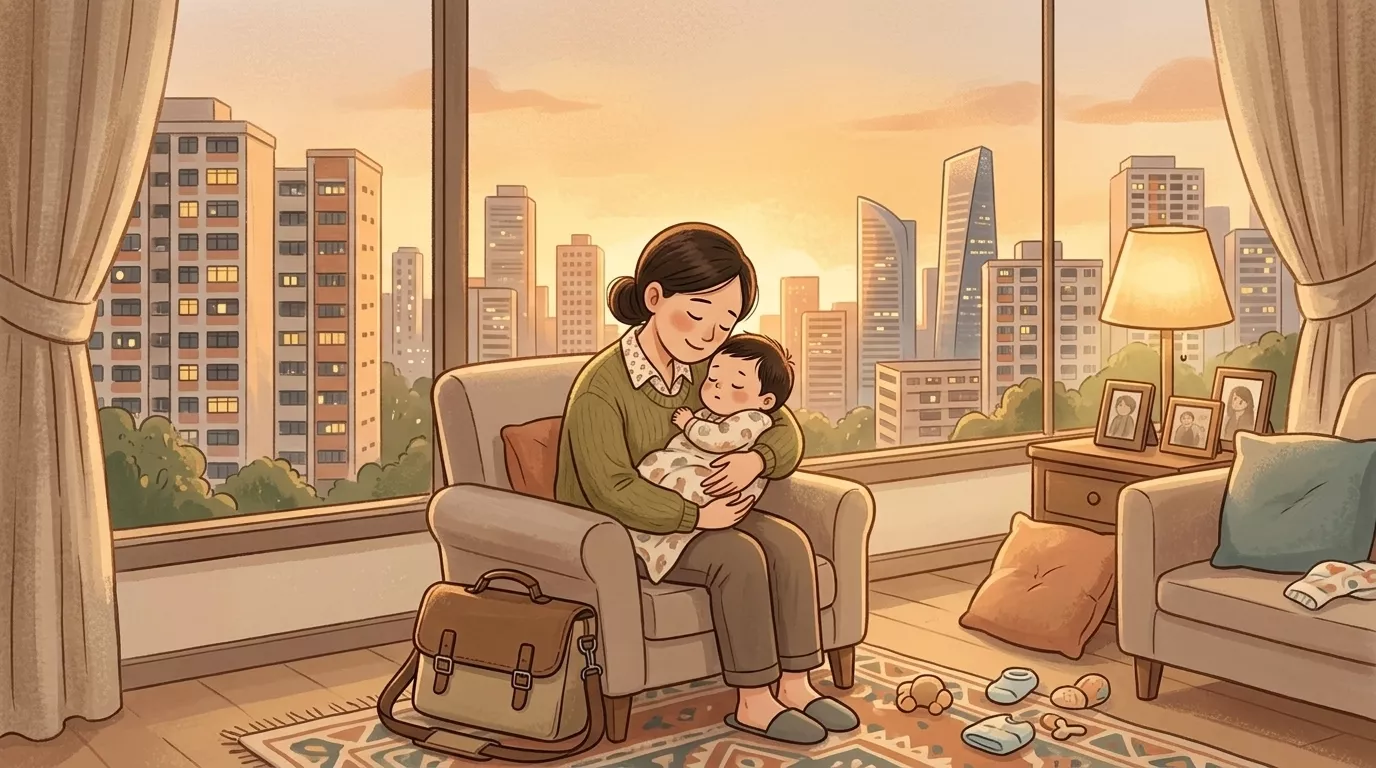
The first few weeks were not smooth.
Some mornings I left with a lump in my throat. There were days I was grateful to be at work. Some evenings I came home too tired to be the warm, present mother I had imagined being after missing my baby all day. Instead, I was overstimulated, hungry, and trying to transition from office mode to mother mode in the time it took to open the front door.
Slowly, it became less sharp.
The bag-packing became routine. The goodbye became familiar. The updates became comforting rather than urgent. My baby learned the rhythm of the day, and so did I. I stopped expecting the old version of myself to return exactly as she had been.
She was not coming back in that way. A woman learning to carry both identities without needing them to fit neatly into separate hours of the day.
Going back to work after maternity leave is often described as a return, but it did not feel like one to me. It felt more like crossing into a new season with one foot still in the old one, trying to balance a laptop bag, a milk bag, a phone full of baby photos, and a heart that had become permanently easier to split.
You are not choosing between work and your baby.
You are learning how to carry both.
One imperfect day at a time.