


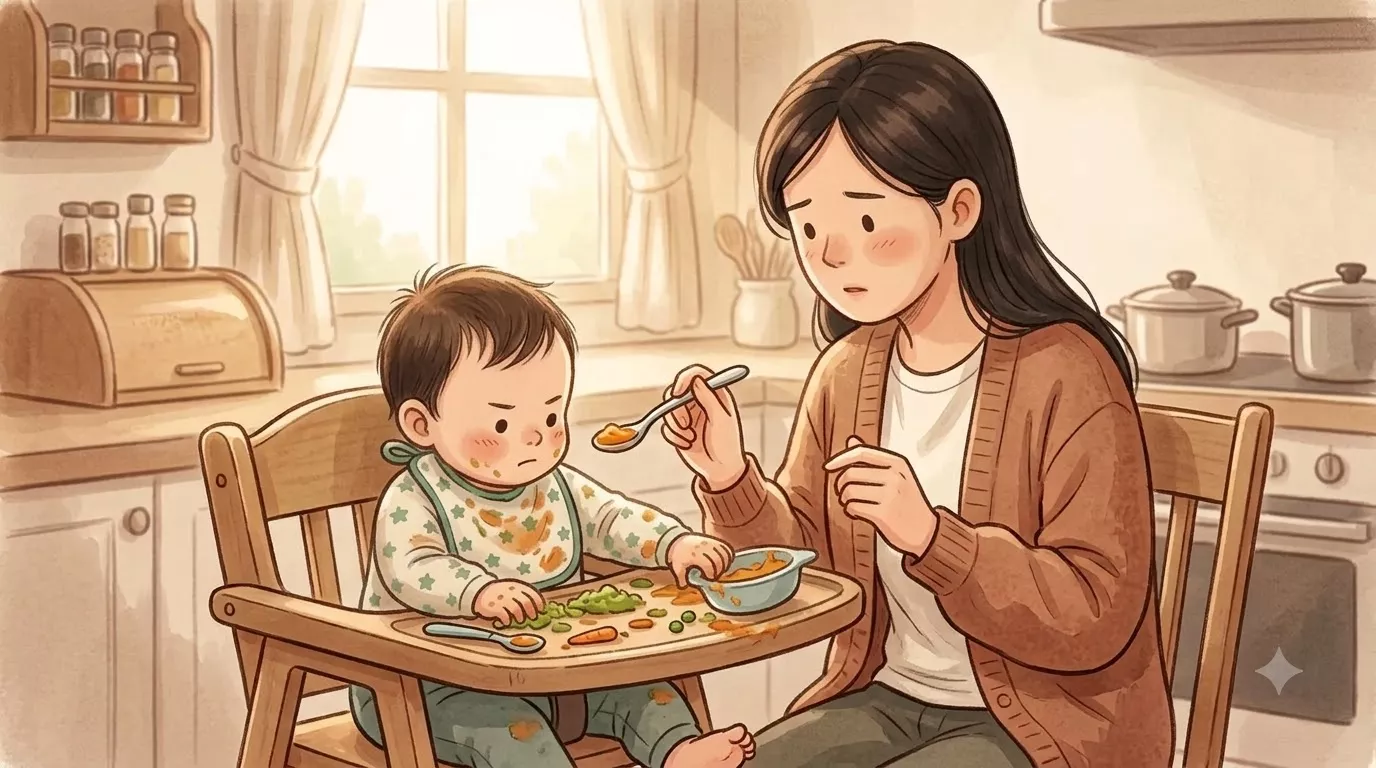
Last month, your baby may have opened their mouth happily for sweet potato puree, banana puree, or whatever careful little spoonful you prepared with too much hope. Then suddenly, at seven months, they turn their head away, clamp their lips shut, grab the spoon, smear food across the tray, or look far more interested in chewing the spoon than eating what is on it.
It can feel confusing because you thought you had finally found something that worked. Feeding already takes so much patience, and when your baby suddenly refuses the same purees they accepted before, it is easy to wonder whether something is wrong, whether you moved too fast, or whether your baby is somehow “failing” solids.
If you have searched why won’t my 7 month old eat purees anymore, you are probably not trying to force your baby into a perfect feeding schedule. You are just trying to understand why something that worked last week now feels impossible.
The good news is that seven months is a big transition month. Your baby is not only learning to eat; they are learning to sit, reach, grab, explore, babble, react, and make preferences known. Sometimes refusing purees is not a step backward. Sometimes it is your baby’s way of saying, in the only language they have, “I want to try this differently.”
First, Your 7-Month-Old Is in a Transition Month
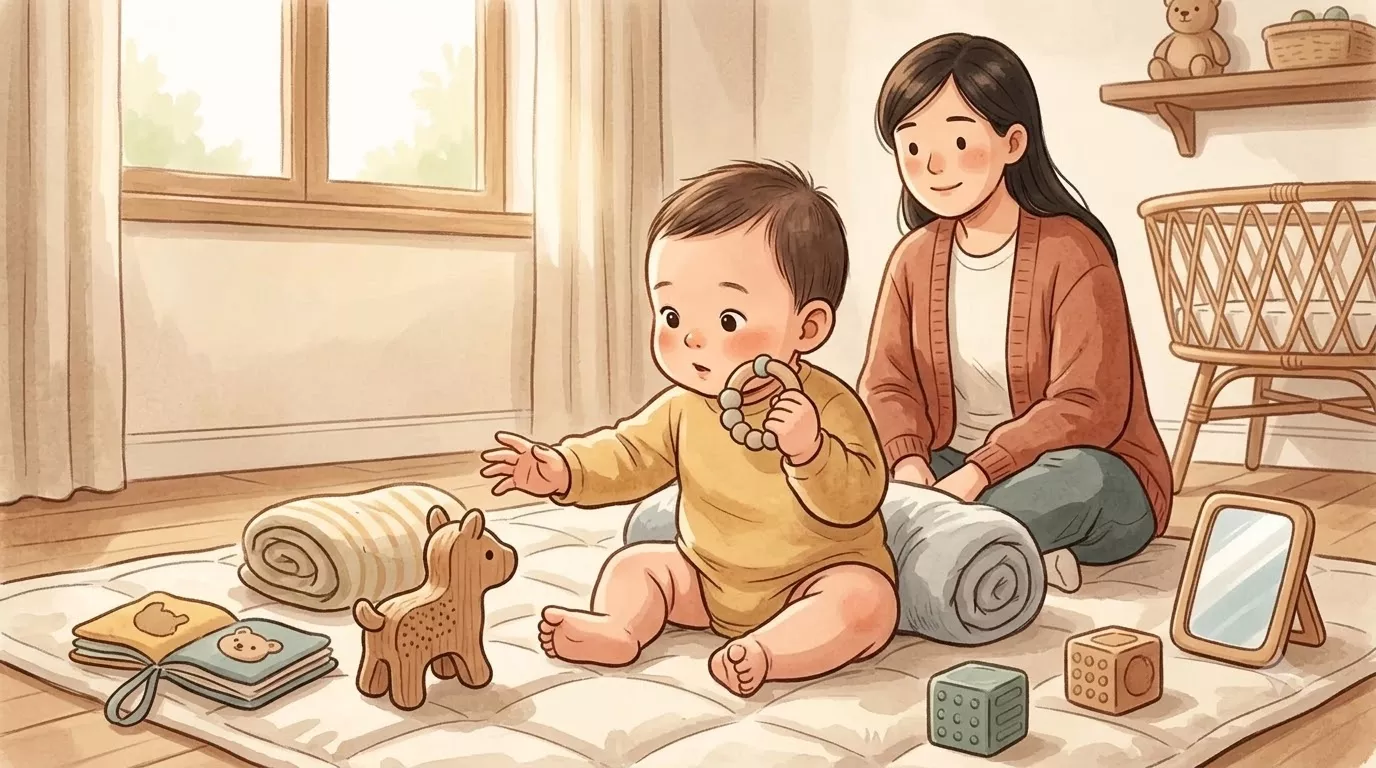
Seven months sits in a slightly awkward but beautiful middle space. Your baby is no longer brand new to the world, but they are also not yet a confident older baby. Many milestone charts focus on six months and nine months, so the seventh month often feels like a bridge between skills your baby has recently learned and skills they are still growing into.
The CDC explains that developmental milestones are things most children, meaning 75% or more, can do by a certain age, and these checklists are meant to guide observation rather than act as a daily test. At around six months, many babies are exploring by putting objects in their mouth, reaching for toys, taking turns making sounds, and leaning on their hands while sitting; by nine months, many are moving objects between hands, using fingers to rake food toward themselves, sitting without support, and making repeated sounds like “mamamama” or “babababa.”
This matters because a seven-month-old may be somewhere between those lists. They may sit well one day and topple over the next. They may seem excited about food at breakfast and completely reject it by dinner. They may be interested in the spoon, the bowl, the table, your water cup, and your face, while being much less interested in calmly swallowing puree.
That does not mean you should ignore concerns, but it does mean you can give your baby some room to be in progress. Month seven is often less about neat achievement and more about messy practice.
Why Your 7-Month-Old May Stop Wanting Purees
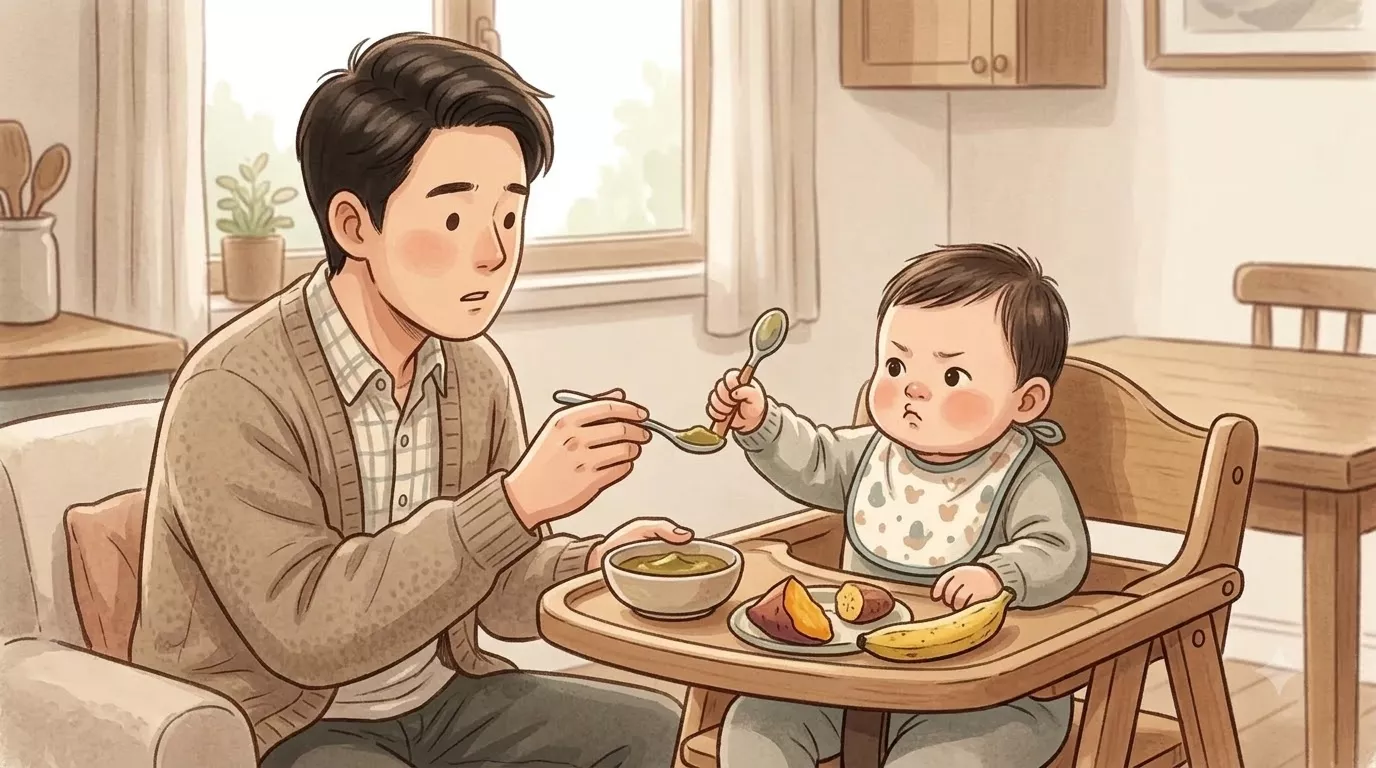
A 7 month old refusing purees can be frustrating, especially when those purees used to be the safe, easy option. But there are many ordinary reasons a baby may suddenly push them away.
Your baby may be ready for more texture. Smooth puree can be useful at the beginning, but as babies develop eating skills, they may become more interested in thicker, mashed, or slightly lumpy foods. They may also want to hold food, grab the spoon, or participate more actively in the meal instead of only being fed. NHS guidance for 7 to 9 months says babies may have days when they eat more, days when they eat less, and days when they reject everything, and it encourages parents to keep offering variety patiently while babies get used to foods, flavours, and textures.
There are also very normal timing reasons. Your baby may have had a milk feed too close to the meal and simply may not be hungry. They may be tired, teething, distracted, overstimulated, or more interested in what everyone else is eating. They may dislike the temperature, texture, or flavour that day, even if they accepted it before.
It helps to remember that babies are not machines. They do not wake up every day with the same appetite, mood, and willingness to practice. Refusing puree once, or even for several meals, does not automatically mean they have stopped eating solids forever.
Purees Are Not the Only Way to Learn Solids

Purees can be a gentle starting point for solids, but they are not the only way babies learn to eat. Many families begin with smooth purees because they feel manageable and easy to swallow, while others use more of a baby-led approach with soft finger foods. Many families do a combination of both, and that can be perfectly reasonable when done safely.
The CDC says that when babies first begin solids, mashed, pureed, or strained foods with a very smooth texture may be easier, but thicker and more lumpy foods can be introduced as the baby’s ability to eat develops. The same guidance notes that by seven or eight months, children can eat a variety of foods from different food groups, including vegetables, fruits, proteins, dairy without added sugars, and whole grains.
NHS guidance also encourages moving from purees or blended foods toward mashed foods, finger foods, and lumpier textures as soon as babies can manage them. It specifically notes that babies take different amounts of time to get used to lumps, and that some parents choose baby-led weaning, some choose spoon-feeding, and others combine both.
So if your baby no longer wants silky puree, it may not mean they are rejecting food. They may simply be ready for food to become more interesting, more textured, or more hands-on.
What Feeding Can Look Like at 7 Months

At seven months, feeding can look surprisingly messy and still be normal. A meal might involve two spoons swallowed, one spoon spat out, one handful squished, a lot of food on the bib, and a baby who seems proud of the experience even though very little ended up in their stomach.
That is because early solids are gradual. HealthyChildren, from the American Academy of Pediatrics, reminds parents that when babies are starting solids, they still get most of their nutrition from breast milk, formula, or both, and that solid foods are introduced step by step. It also says not to force a baby to eat if they cry or turn away; instead, parents can return to breast or bottle feeding for a time before trying solids again.
This can be reassuring if you are staring at an unfinished bowl and feeling as if the meal has failed. At this age, success is not always “finished the portion.” Success may be touching food, smelling it, bringing it toward the mouth, tasting one small amount, or staying calm in the high chair for a few minutes.
Your baby is not only learning nutrition. They are learning texture, coordination, timing, swallowing, self-feeding, and trust around food. That kind of learning is rarely tidy.
Signs Your Baby May Be Ready for More Texture
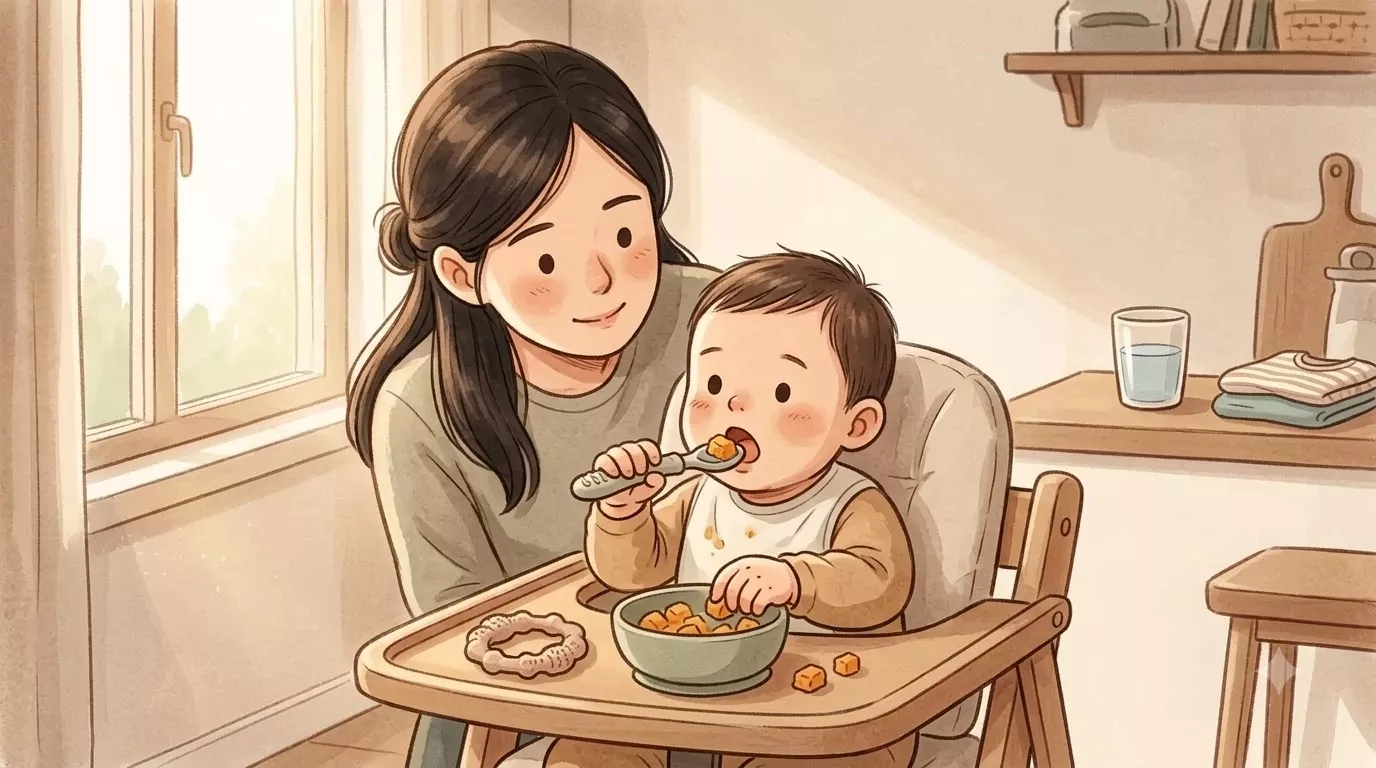
If you are wondering whether to move beyond smooth purees, watch your baby more than the calendar. Some babies are ready for more texture around this time, while others need a slower transition. The signs are often practical: your baby can sit alone or with support, control their head and neck, open their mouth when food is offered, swallow food instead of pushing it all out, bring objects to their mouth, try to grasp small objects, and move food from the front to the back of the tongue to swallow. These are readiness signs listed by the CDC for starting and progressing with foods other than breast milk or formula.
You may also notice your baby leaning toward your plate, grabbing the spoon, chewing on toys, or trying to rake soft pieces of food toward themselves. These do not mean you must abandon purees completely. They simply suggest your baby may enjoy a little more participation.
A gentle next step might be making a puree thicker, mashing food with a fork instead of blending it completely smooth, offering pre-loaded spoons, or letting your baby touch a safe soft food while you continue spoon-feeding. You do not have to choose between purees and finger foods as if they are two parenting teams. Your baby can learn from both.
How to Offer Food Without Turning It Into a Battle
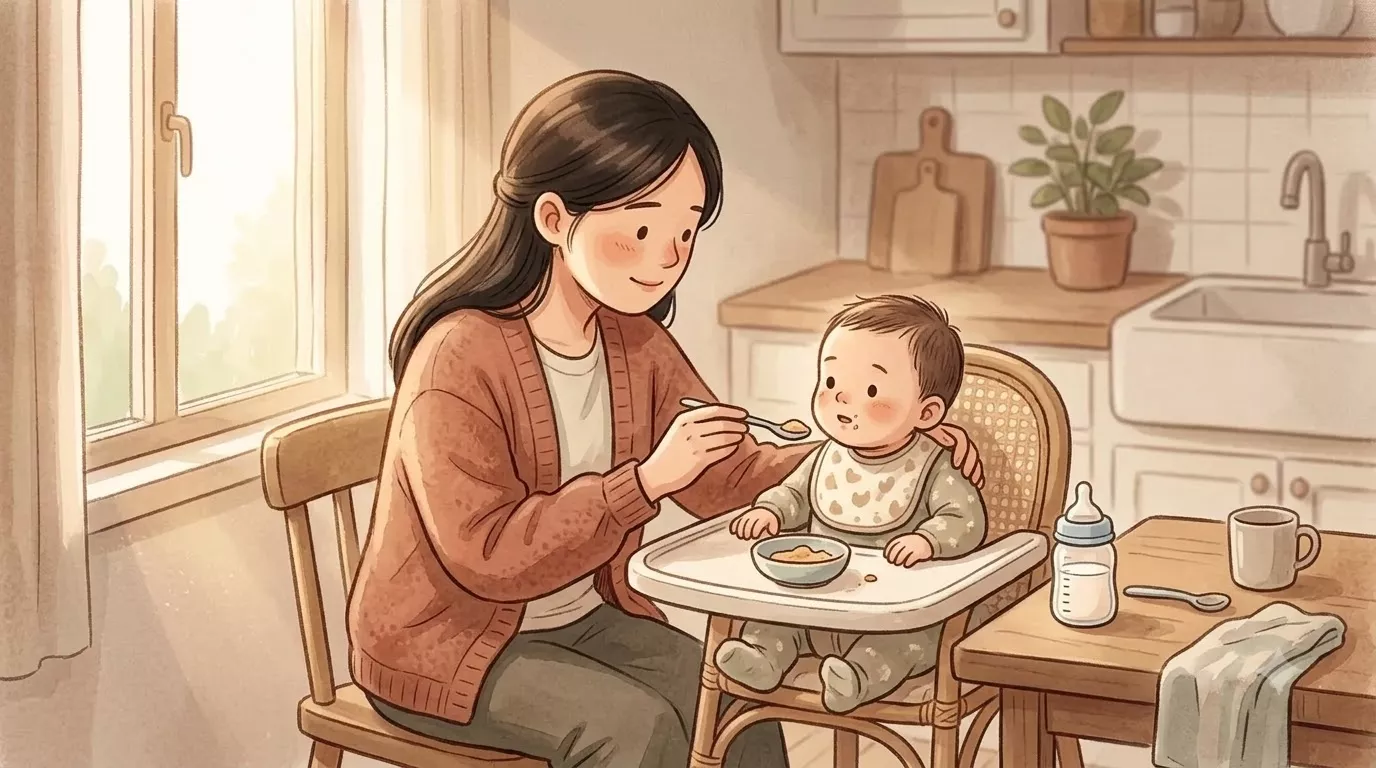
Feeding can become emotional very quickly because it touches something deep in parents: the need to know our child is okay. When a baby refuses food, it can feel personal, even though it usually is not. The hardest but most helpful shift is to see your role as offering safe, appropriate food calmly, while your baby’s role is deciding how much to explore or eat.
Timing helps. If your baby is extremely hungry, they may be too frustrated to practice solids. HealthyChildren suggests that one way to make solids easier is to offer a little breast milk or formula first, then try a very small amount of food, and finish with more milk or formula so the baby is not trying to learn a new skill while already upset.
Keep meals short and low-pressure. Offer a small amount, watch your baby’s cues, and stop if they are turning away, crying, clamping their mouth shut, or becoming distressed. You can try again later or another day. Pressure may make feeding feel like a fight, while repeated calm exposure helps your baby build trust.
It may also help to let your baby join family meals when possible. Babies learn a lot from watching you eat, and NHS specifically encourages eating together as much as possible during the 7 to 9 month stage because babies learn by watching.
Safe Finger Foods and Texture Changes
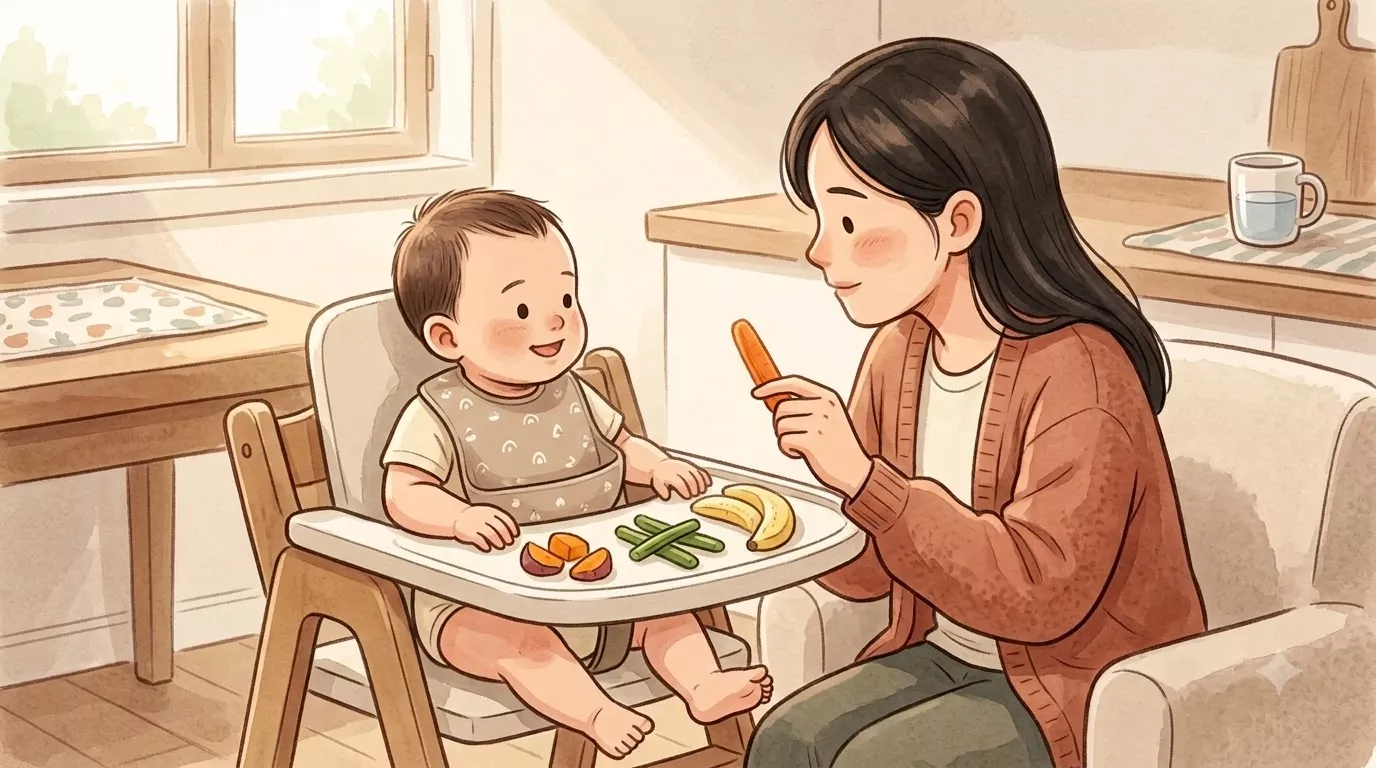
If you decide to introduce more texture or soft finger foods, safety matters more than trend. Your baby should be sitting upright in a safe high chair or supported seat, supervised closely, and offered food prepared in a shape, size, and texture that fits their development.
The CDC warns that the way food is prepared can increase choking risk, and recommends cooking and preparing food to the right shape, size, and texture for the child’s development. It also advises avoiding small, sticky, or hard foods that are difficult to chew and swallow, keeping children seated while eating, avoiding distractions and rushing, and watching children at all times while they eat.
Soft foods such as mashed avocado, very ripe banana, steamed sweet potato, soft cooked vegetables, or softly scrambled egg may be easier for some babies to explore, depending on what you have already introduced and what is appropriate for your child. The key is not whether a food looks “baby-led” or “traditional.” The key is whether it is safe, soft enough, and offered with close supervision.
Gagging can happen as babies learn texture, but frequent choking, repeated coughing, breathing difficulty, or distress during feeds should not be brushed off. If feeding feels unsafe or your baby seems to struggle with swallowing, bring it up with your pediatrician.
Other Month 7 Milestones You May Notice

Food is only one part of month seven. Around this age, many babies are becoming more active, more opinionated, and more socially responsive. HealthyChildren describes the four-to-seven-month period as a time when babies coordinate their senses with growing motor abilities, developing skills like grasping, rolling, sitting up, and possibly crawling. It lists common seven-month milestones such as rolling both ways, sitting with and then without hand support, reaching with one hand, transferring objects from hand to hand, responding to their name, babbling chains of consonants, exploring with hands and mouth, and enjoying social play.
This can explain why meals suddenly look different. A baby who is learning to reach may want to grab the spoon. A baby who is exploring with hands and mouth may want to touch the food more than be fed. A baby who is more socially aware may want to eat with the family instead of being fed separately. A baby who is practicing independence may turn away from the spoon simply because they have discovered that turning away is an option.
These changes can be inconvenient at the table, but they are also signs of a baby becoming more engaged with the world. Your quiet little eater is becoming a curious participant.
Simple Ways to Support Development This Month
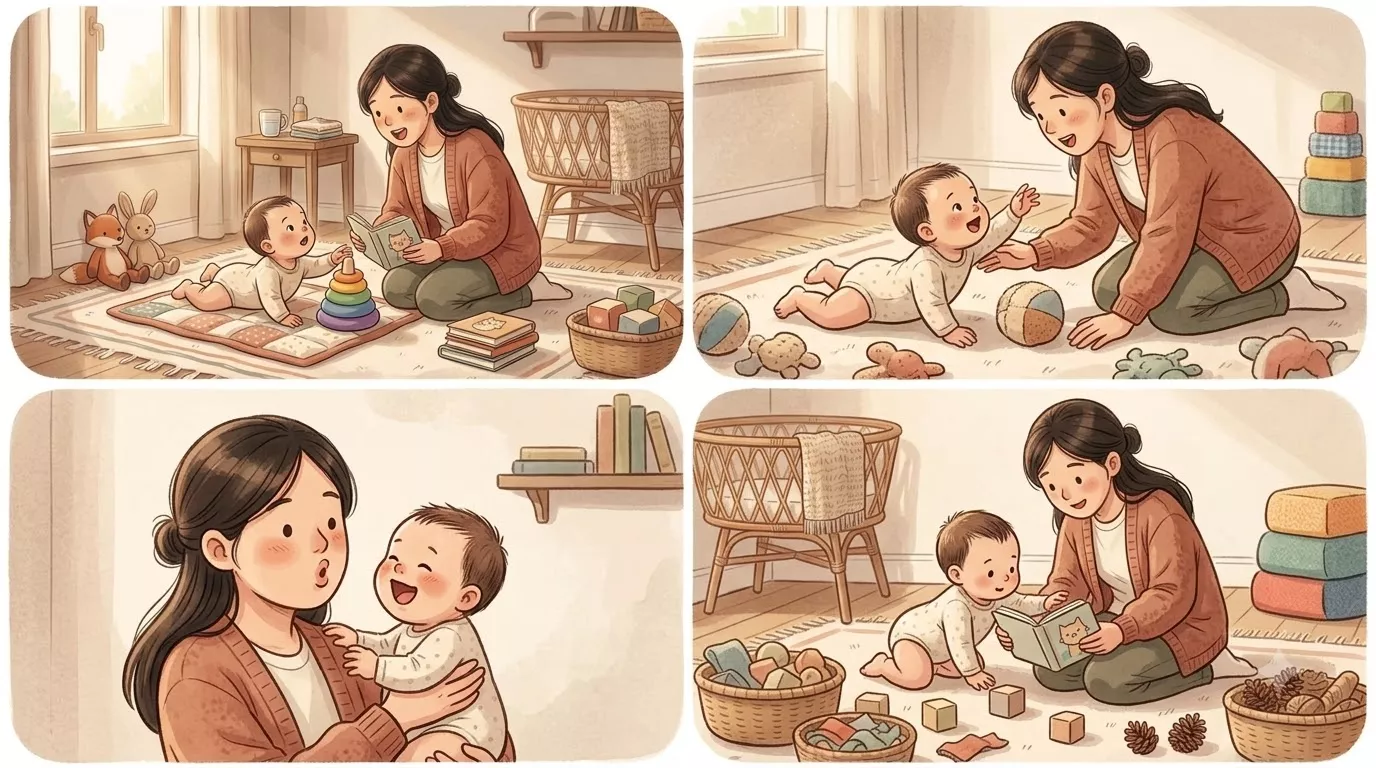
Supporting your seven-month-old does not require expensive toys or complicated activities. Much of what helps development at this age looks simple: floor time, safe reaching practice, songs, books, face-to-face play, and chances to explore objects with hands and mouth while supervised.
For six-month-olds, the CDC suggests back-and-forth play, copying your baby’s sounds, reading every day by looking at colourful pictures and talking about them, and pointing out and naming things during walks. For nine-month-olds, it suggests repeating baby sounds and adding simple words, placing toys slightly out of reach to encourage movement, and playing games like peekaboo. A seven-month-old may enjoy many of these same kinds of interactions as they move between those stages.
Mealtimes can also support development when they are calm and responsive. Let your baby watch you chew, hold a spoon, touch a safe texture, or practice drinking small sips of water from an appropriate cup if your healthcare provider has said that is okay for your baby’s stage. You do not need to turn every meal into a lesson, but you can treat it as practice.
The ordinary things count: talking while you change a diaper, naming the food on the tray, singing during cleanup, letting your baby reach for a toy, and giving them safe time on the floor to move. Development is built in repetition, not performance.
When to Ask the Pediatrician

Most seven-month-old feeding weirdness is just that: weirdness. Still, there are times when it is better to ask rather than wait and worry. You know your baby best, and a pediatrician can help you sort out what is normal variation and what needs more support.
Ask your pediatrician if your baby is not controlling their head and neck well, seems very floppy or very stiff, does not respond to sounds, does not bring objects to their mouth, does not try to reach for things, or loses skills they once had. HealthyChildren’s seven-month developmental guidance specifically says to alert the pediatrician if a baby shows possible signs of developmental delay for this age range, and CDC guidance also says parents should not wait if a child has lost skills, is not meeting milestones, or if there are other concerns.
For feeding specifically, ask for help if your baby has a sudden major drop in intake, fewer wet diapers, signs of dehydration, poor weight gain, frequent vomiting, repeated coughing or choking with feeds, or strong distress around eating. It is also worth asking if you feel something is not right, even if you cannot yet explain it clearly.
Getting support does not mean you are overreacting. It means you are paying attention.
Your Baby Is Not Failing Solids
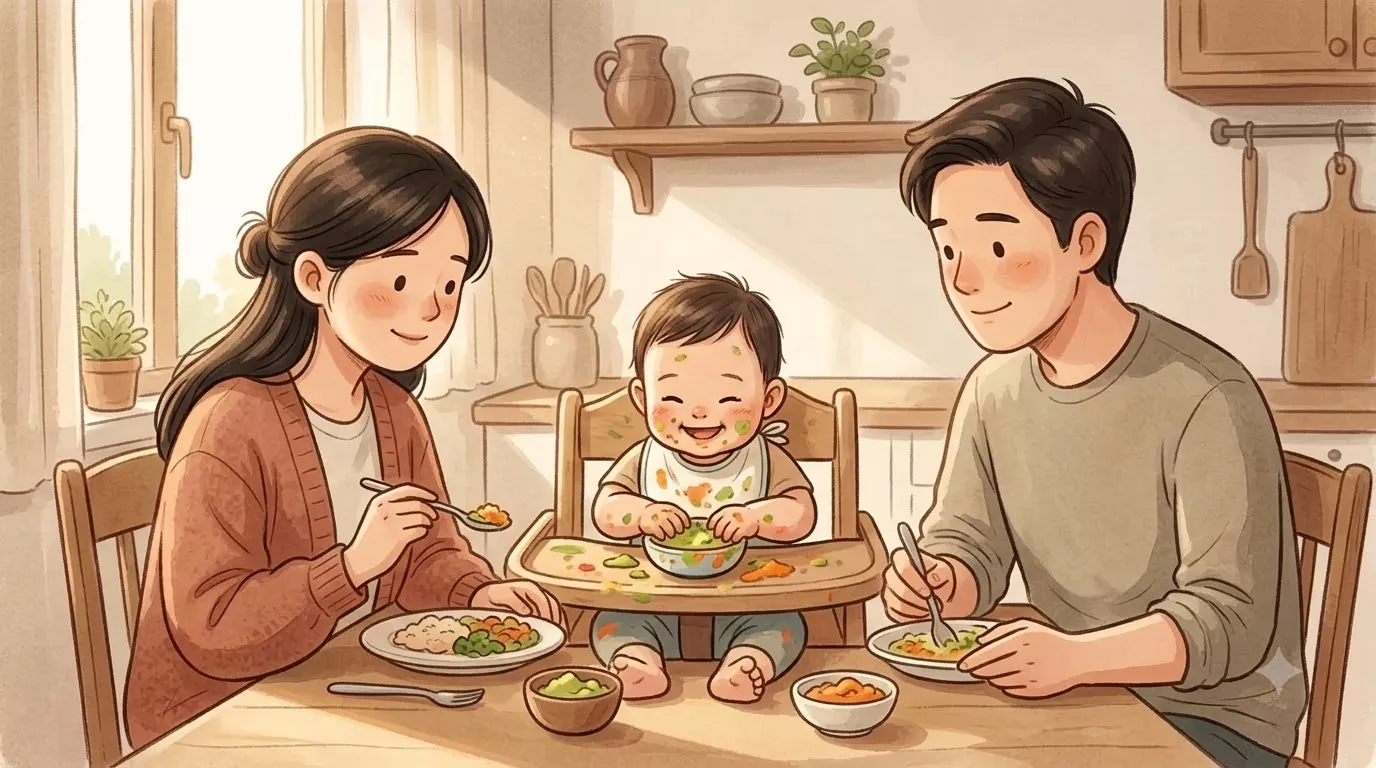
If your seven-month-old no longer wants purees, it can feel like the routine you trusted has disappeared overnight. But your baby may not be rejecting food as much as asking for a new way to learn it. They may want more texture, more control, more time, more variety, or simply a break because they are tired, teething, distracted, or not very hungry.
At seven months, eating is still partly nutrition, partly practice, and partly messy discovery. Your baby may swallow some food, spit some out, squish some between their fingers, and wear the rest on their sleeves. That does not mean the meal had no value. It means your baby was learning.
So offer the puree again if you want. Make it thicker. Try a mashed texture. Offer a safe soft finger food. Let your baby hold the spoon. Eat together when you can. Stop before the meal becomes a battle.
You do not need to win every feeding. You are building trust around food, one small, sticky, imperfect meal at a time.