


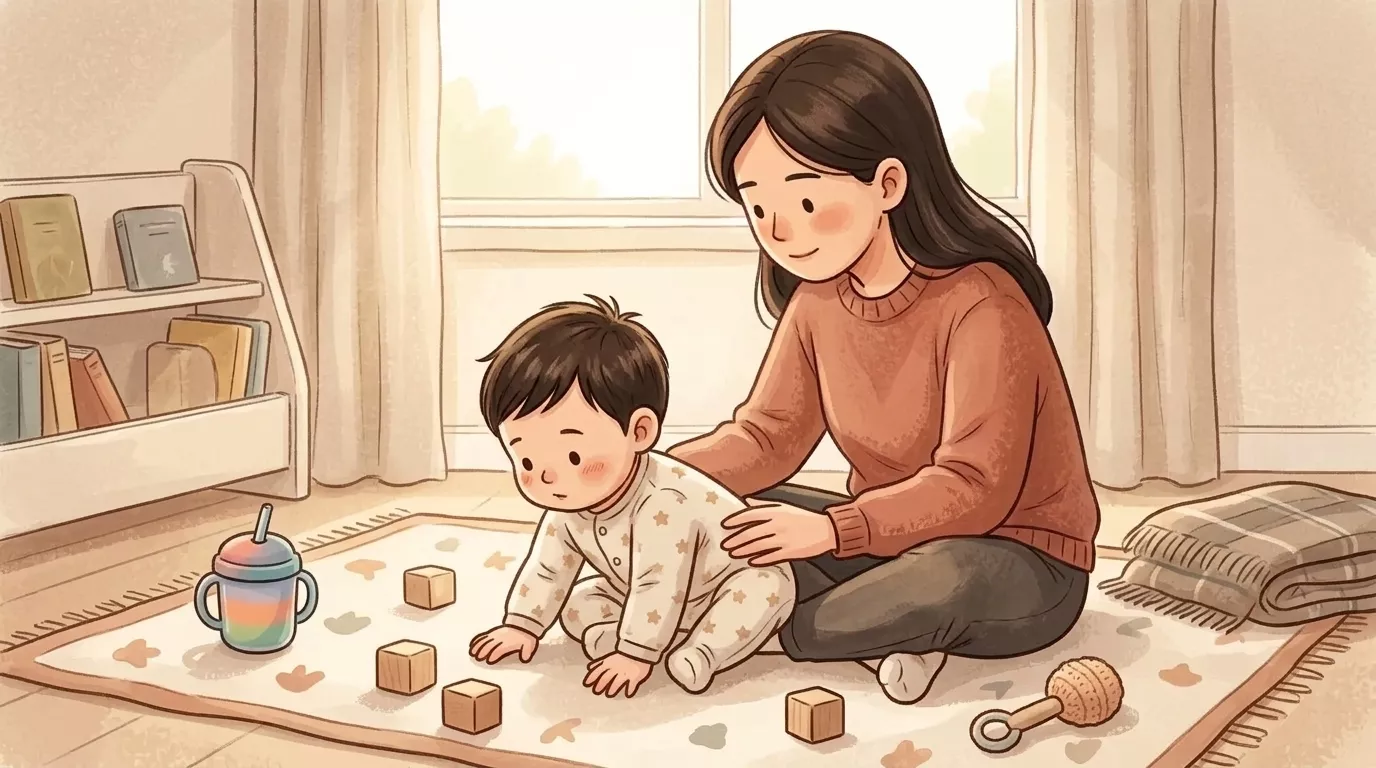
The first time I tried to sit my baby upright, I arranged pillows around him as though I were preparing a very small king for his throne.
For a second, he looked steady.
Then I moved my hand.
He folded forward, leaned heavily on both arms, and slowly tipped to one side with an expression that suggested sitting had never been his idea in the first place.
Later that day, I opened my phone and saw another baby the same age sitting perfectly upright, holding a toy with both hands. Suddenly, a funny little moment on the play mat became a question I could not stop thinking about.
Was my baby behind?
That is how milestone anxiety often begins. Not with something obviously wrong, but with one small comparison. One baby sitting. One baby rolling. One baby making a sound yours has not made yet.
If you have ever searched why won’t my 6 month old sit up yet, should I worry, you are probably not only watching your own baby. You are watching every other baby too.
Milestones can help us notice how a baby is developing, but they are not a calendar of tasks that every child completes on the same day. At six months, development is often wobbly, unfinished and happening in several directions at once.
Six Months Is a Window, Not a Deadline

A baby does not wake up on the morning they turn six months old with a complete set of six-month skills.
Development does not work that neatly.
Some babies reach certain milestones slightly earlier. Others spend more time strengthening the movements that come before them. One baby may be eager to roll across the room but show little interest in sitting. Another may sit with support while barely attempting to roll.
The CDC describes developmental milestones as things most children—about 75% or more—can do by a particular age. They are tools for monitoring development, not standalone diagnostic tests.
HealthHub Singapore offers a similar reminder: developmental milestones are guides, every baby is unique, and development may vary by a few months. Parents who have concerns should still discuss them with their child’s doctor.
This does not mean milestones should be ignored.
It means they should be used as part of a larger picture.
Instead of asking only, “Can my baby sit?” it may help to notice how your baby is moving overall. Are they gaining better head control? Pushing through their arms during tummy time? Reaching for toys? Turning their body toward something interesting? Trying movements that were difficult a few weeks ago?
Progress is not always a finished skill.
Sometimes it is simply a stronger attempt.
Should a 6-Month-Old Be Sitting Independently?
A six-month-old does not necessarily need to sit upright independently without any support.
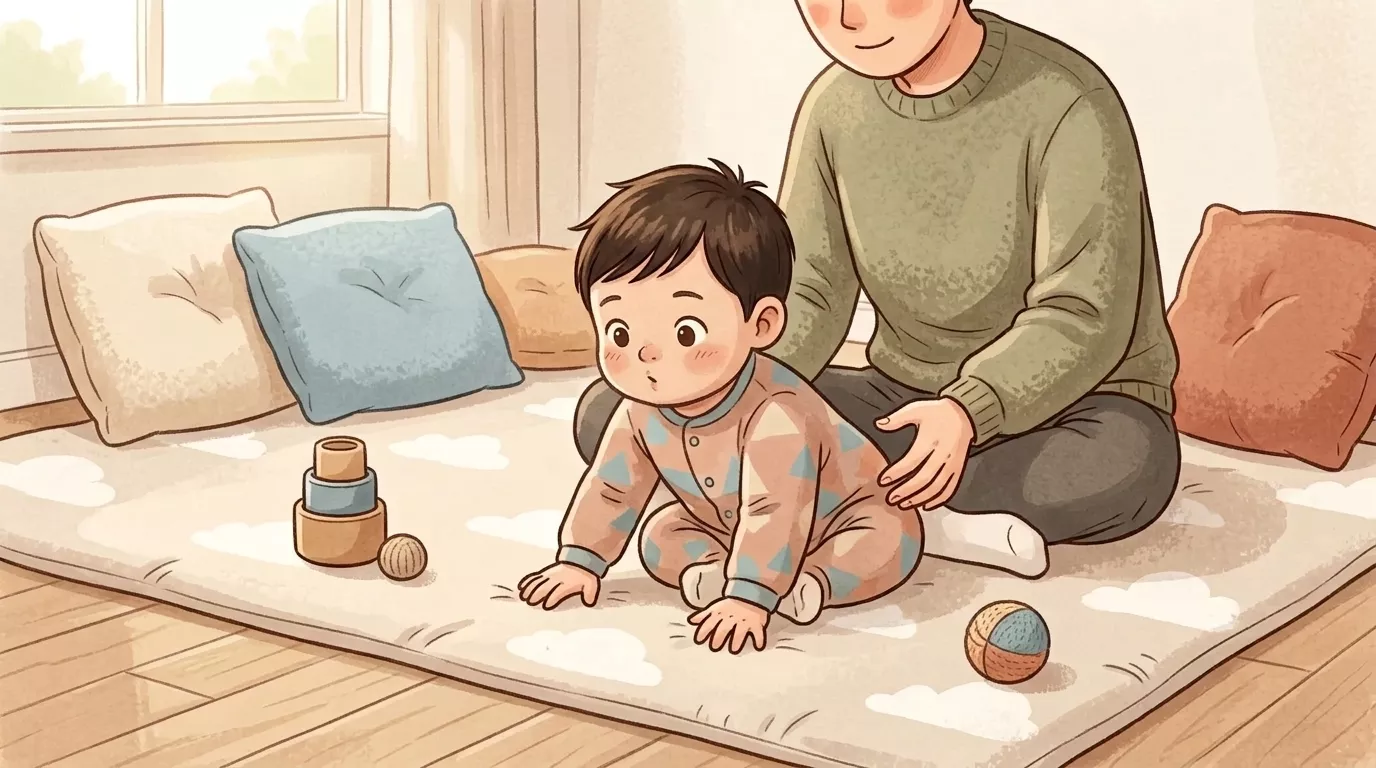
At this age, sitting may still look quite unsteady. Your baby may need to be placed in the sitting position rather than getting there alone. They may lean forward and support themselves with both hands, a position often called tripod sitting. They may sit for a few seconds and then slowly fall sideways.
The CDC’s current six-month movement milestones include leaning on the hands for support while sitting. Independent, hands-free sitting is not listed as the required six-month milestone.
The American Academy of Pediatrics explains that sitting develops as a baby’s head, neck, back and trunk control become stronger. During the four-to-seven-month period, babies are working toward skills such as rolling and sitting, but these abilities develop gradually rather than appearing fully formed at one precise age.
So if your baby has just turned six months and still needs support, that alone does not automatically mean there is a developmental delay.
At six months, sitting may still look folded forward, wobbly and heavily supervised.
It does not have to look polished to be progress.
The Movement Skills You May Notice This Month
Sitting receives a lot of attention because it is easy to compare, but it is only one part of physical development at six months.
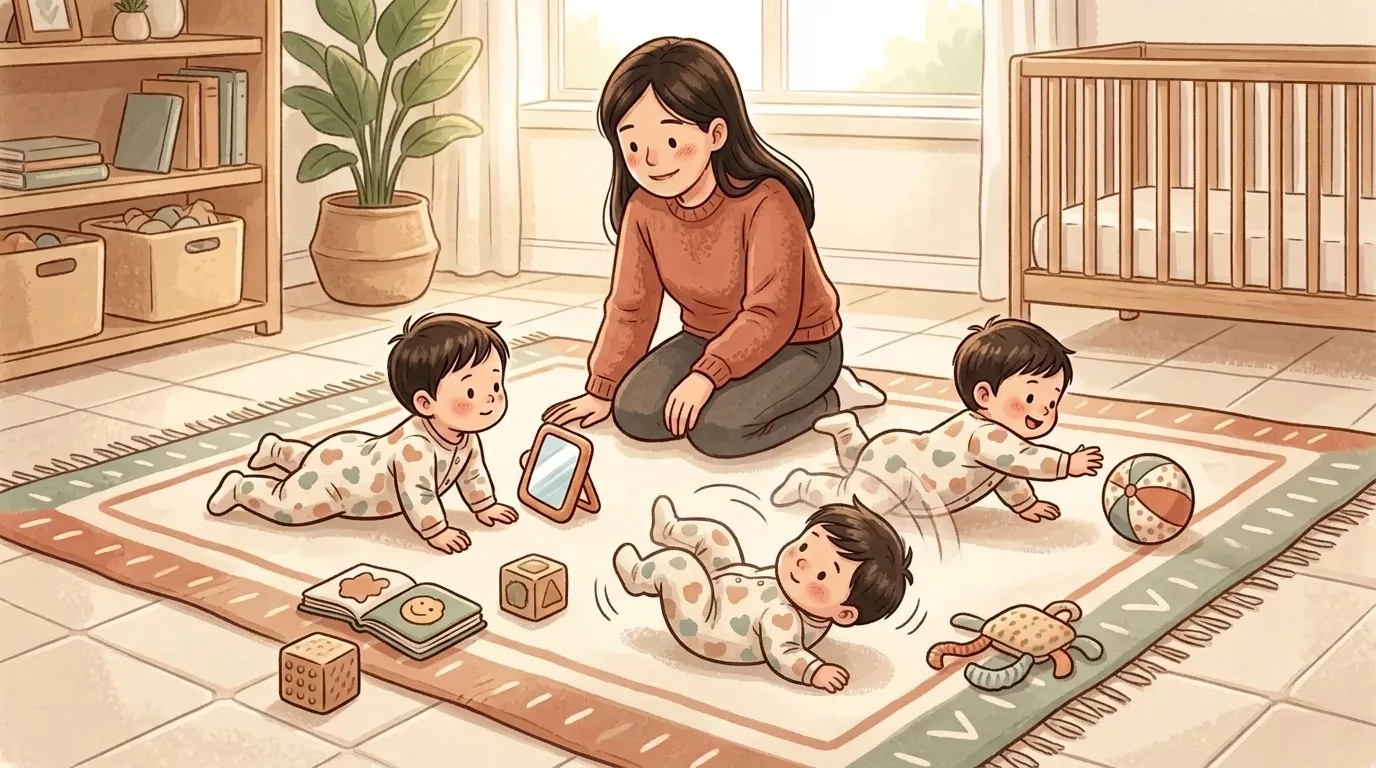
According to the CDC, common movement milestones by six months include rolling from the tummy to the back, pushing up with straight arms while lying on the tummy, and leaning on the hands for support while sitting.
You may also notice your baby becoming more purposeful in the way they move.
During tummy time, they may lift their chest higher than before. They may pivot or turn slightly to reach a toy. They may push with their legs when their feet touch your lap. They may roll confidently in one direction while still struggling with the other.
Some babies begin trying to reach everything nearby. Others seem more interested in practising the same movement repeatedly until their bodies understand it.
It can be tempting to look only for the big achievement: the first independent sit, the first roll, the first crawl.
But many smaller movements come first.
The arm that stays straight for a little longer.
The head that no longer drops forward.
The hand that reaches down to prevent a fall.
The body that begins to understand where balance lives.
These attempts may look ordinary, but they are how larger skills are built.
Their Hands Are Getting Much Busier
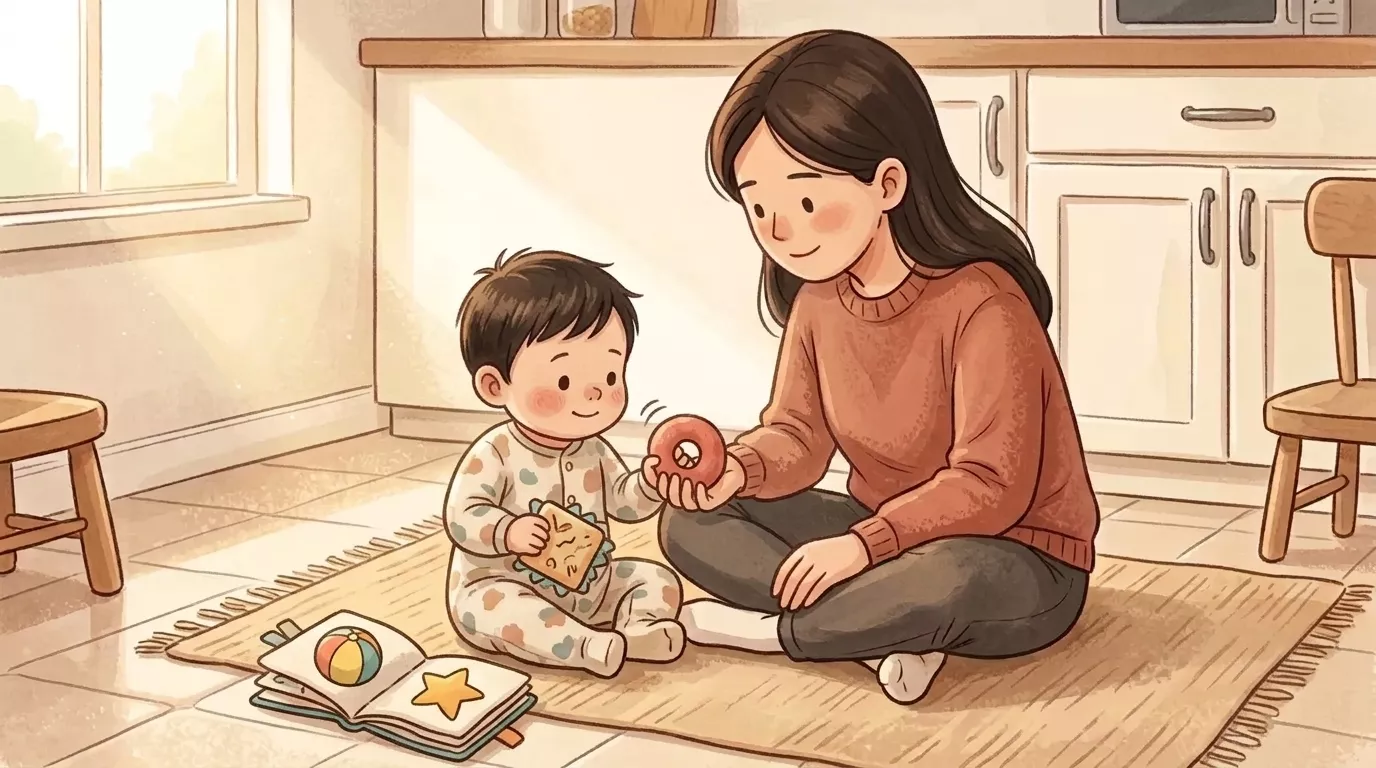
At six months, your baby’s hands may suddenly seem involved in everything.
They reach.
They grab.
They shake.
They pull.
They bring almost every interesting object directly to their mouth.
The CDC lists reaching for a desired toy and exploring objects with the mouth among common cognitive milestones at six months.
Putting objects in the mouth is not simply a habit parents need to stop. It is one of the ways babies explore texture, shape and sensation. Of course, it also means the environment needs a fresh safety check.
Anything small enough to become a choking hazard should stay well out of reach. Objects that were safely sitting on a coffee table a month ago may no longer be safe once your baby learns how far an determined little arm can stretch.
Your baby may begin holding a toy with more control, passing it between their hands or using both hands together. The AAP notes that coordination skills such as grasping and transferring objects develop through this period as babies become better at combining movement with what they see and feel.
A simple toy can become a long experiment.
What happens if I shake it?
What happens if I drop it?
What happens if I drop it again and make a parent pick it up for the sixth time?
To the baby, this is discovery.
To the parent, it is also a lesson in patience.
The Sounds Are Starting to Feel Like a Conversation
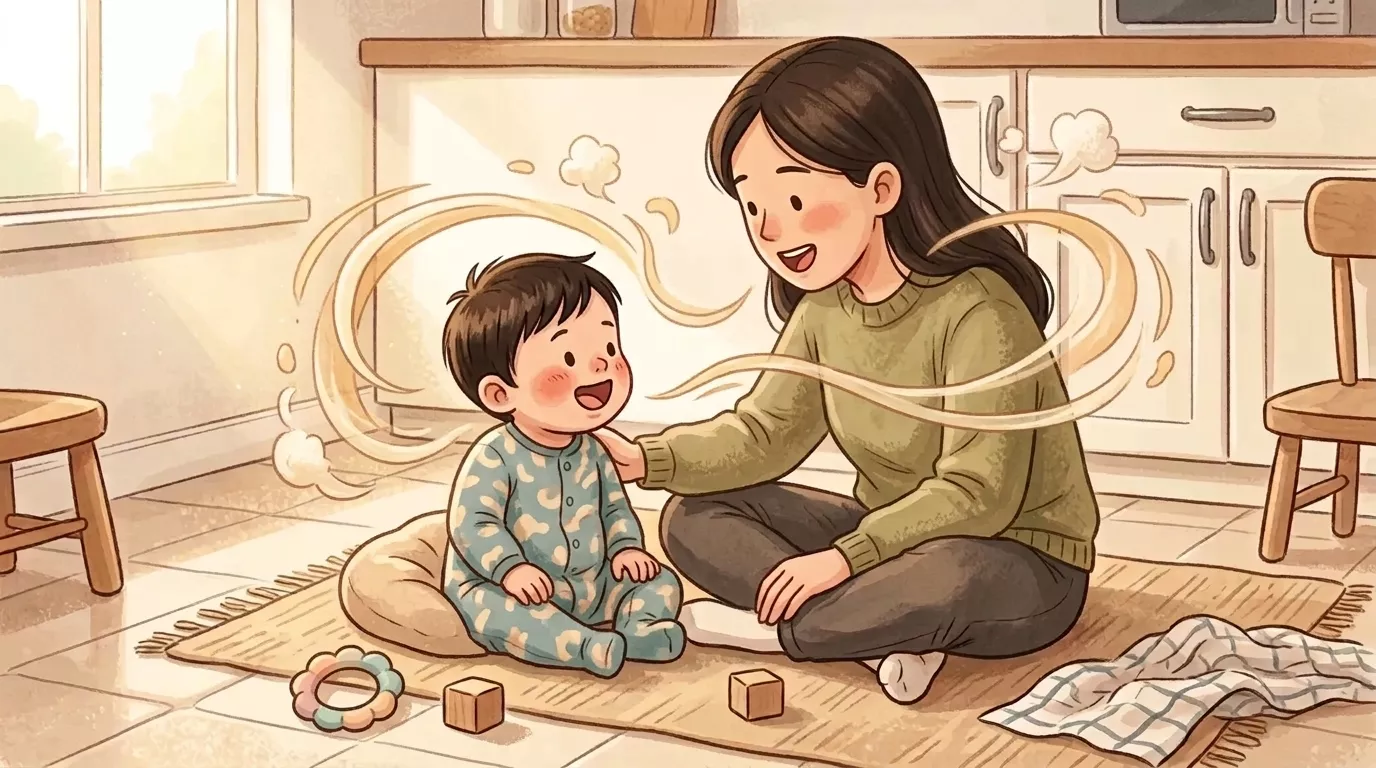
At six months, your baby may not be saying words yet, but their sounds can begin to feel much more social.
They may squeal when excited.
They may blow raspberries.
They may laugh loudly or experiment with different pitches. They may make a sound, pause while you respond, and then make another sound as though the two of you are having a conversation neither of you needs to translate.
The CDC lists taking turns making sounds, blowing raspberries and making squealing noises among common language and communication milestones at six months.
You can support this by responding as though those sounds matter.
Repeat the noise.
Smile.
Pause and wait.
Talk about what your baby is looking at.
“You see the light.”
“That toy made a sound.”
“You’re telling me something.”
You do not need flashcards or formal lessons. Everyday interaction is enough. Reading, singing and answering your baby’s sounds all give them opportunities to experience the rhythm of communication.
At first, it may feel like you are talking to yourself.
Then one day, your baby will wait for your response.
And suddenly, it feels like a conversation.
Your Baby Is Becoming More Social and Curious

Six months can be a wonderfully social stage.
Your baby may recognise familiar people and react differently to someone they do not know. They may laugh, study faces, enjoy looking at themselves in a mirror or become determined to reach something that has caught their attention.
The CDC’s six-month social and cognitive milestones include recognising familiar people, laughing, enjoying looking in a mirror, reaching for a wanted toy and using the mouth to explore objects.
This is also when differences in temperament may become clearer.
Some babies smile at almost everyone.
Others need time to observe before engaging.
Some are loud, active and eager to touch everything.
Others are quieter and seem to study the room before deciding what they think about it.
These differences do not mean one baby is developing better than another.
Milestones tell us what skills are emerging. They do not tell us what kind of personality a baby should have.
Your baby is not only learning how to move.
They are beginning to show you how they meet the world.
How to Support Sitting Without Trying to Rush It
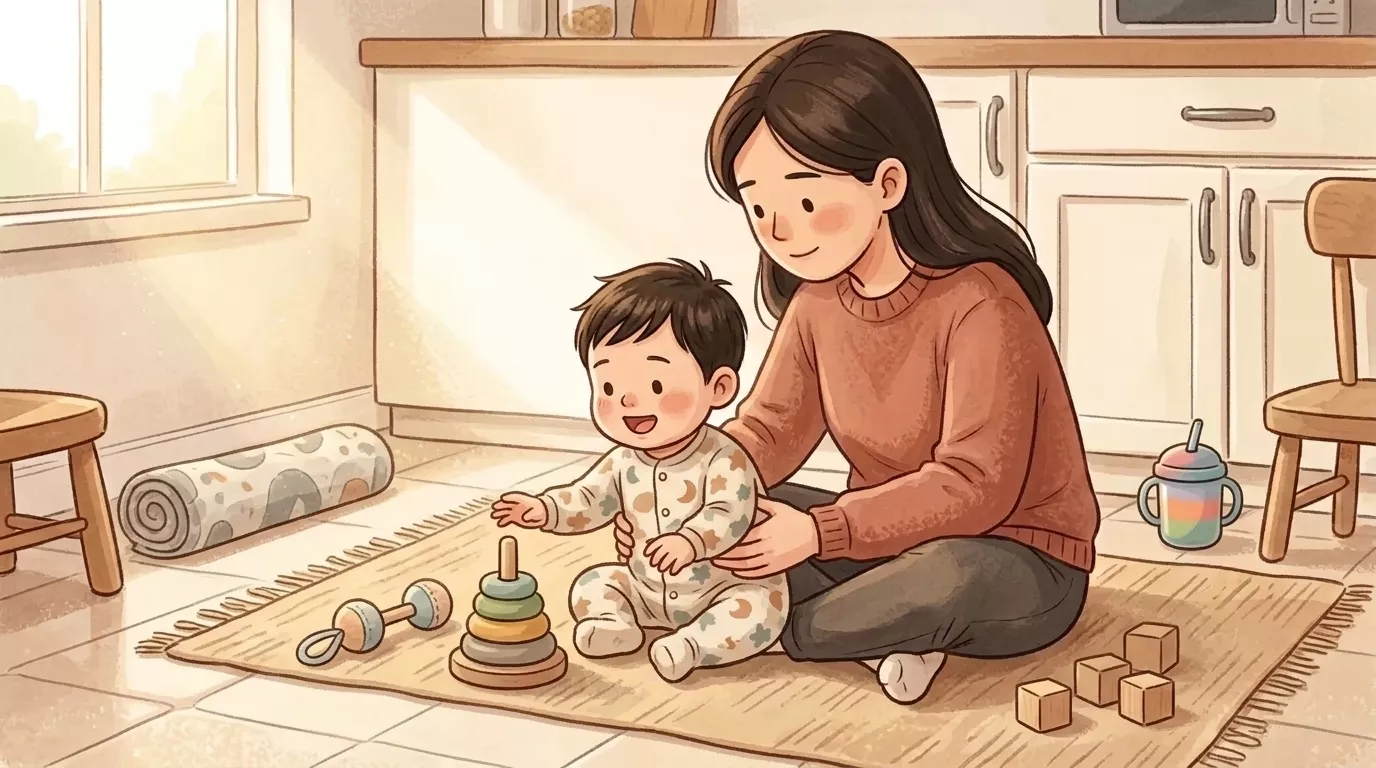
You do not need to force your baby into sitting for long periods to help the skill develop.
Much of the strength needed for sitting is built during ordinary floor play.
Supervised tummy time helps babies practise lifting the head, pushing through the arms and strengthening the neck, shoulders, back and trunk. Reaching for toys encourages weight shifting and body control. Rolling helps babies coordinate movements across the body.
The CDC recommends giving babies daily opportunities to move and play on the floor, placing toys nearby to encourage reaching, and supporting them while they practise sitting. HealthHub also encourages safe, unrestricted play rather than leaving babies in strollers or infant seats for extended periods, since free movement supports physical development.
You can sit on the floor behind your baby and support their trunk with your hands. Place a toy in front of them so they have a reason to look forward and use their arms for balance.
Keep the practice short and playful.
If your baby becomes tired, curls forward or grows frustrated, give them a break.
Avoid propping a baby between pillows and walking away. Pillows do not make sitting practice unsupervised or safe, especially when a baby can slump forward or become trapped in a position they cannot escape.
Your job is not to make the milestone happen faster.
It is to give your baby safe opportunities to practise the movements that lead toward it.
Remember Corrected Age for Premature Babies
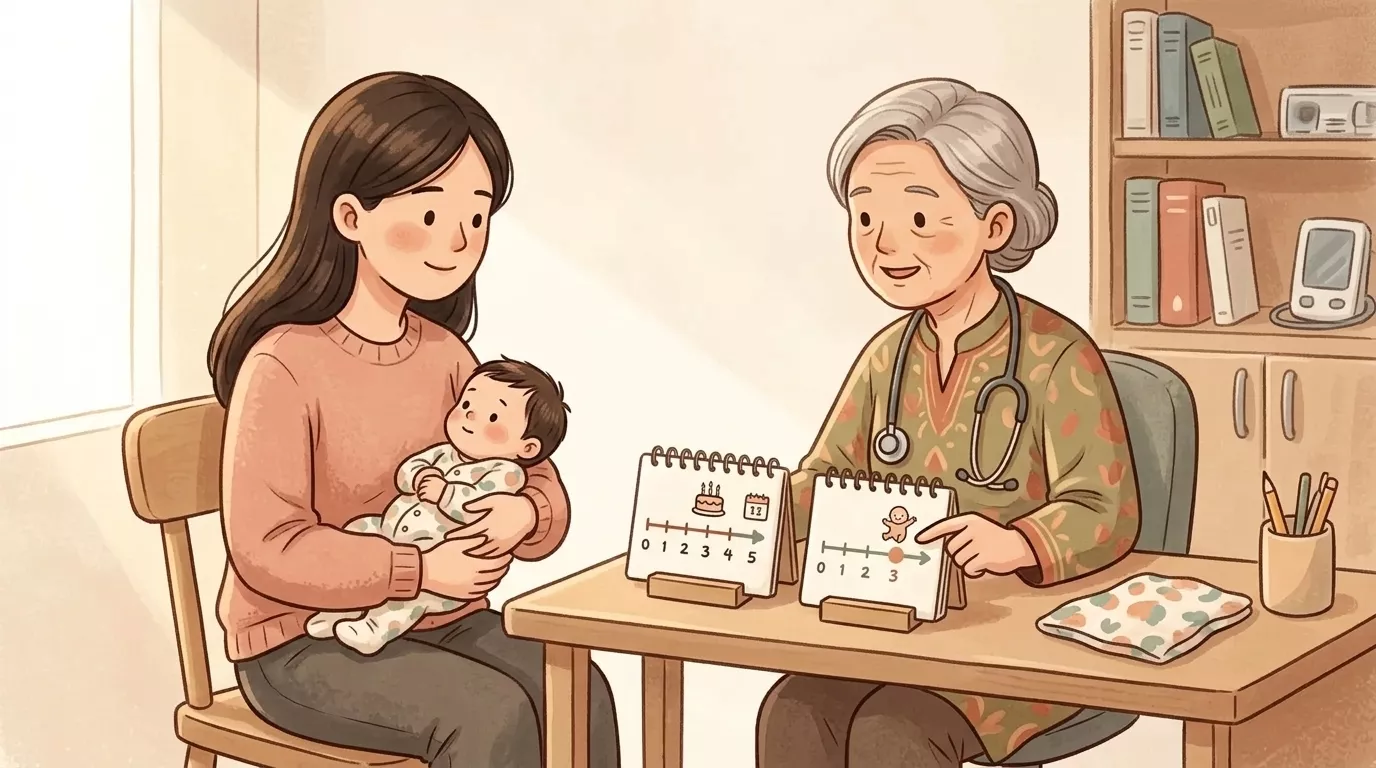
If your baby was born early, it may be more useful to look at milestones according to their corrected age rather than their chronological age.
Corrected age adjusts for the number of weeks a baby was born before their due date. The CDC recommends using corrected age for milestone tracking when a child was born more than three weeks prematurely.
For example, a baby who is six months old by birth date but arrived eight weeks early may be closer to four months in corrected developmental age.
That difference can change how milestones such as sitting, rolling, reaching and communication are interpreted.
Your doctor can help you calculate corrected age and explain how long it should be considered when monitoring development.
This is another reason comparisons can be misleading.
Two babies may share the same birthday month and still be working from very different starting points.
When It Is Worth Talking to Your Doctor

Most milestone differences are not emergencies, but parents should not feel they have to wait quietly when something worries them.
Speak with your baby’s doctor if your baby has lost a skill they previously had, is not meeting one or more milestones, appears to use one side of the body very differently from the other, or if something about their movement, communication or behaviour concerns you.
The CDC advises parents to act early rather than wait when a child has lost skills, is not meeting milestones or when the parent has concerns. Developmental milestone checklists can be shared with a healthcare professional, but they do not replace formal developmental screening.
For sitting specifically, the AAP advises letting a paediatrician know if a baby is not sitting independently by nine months. That does not mean every baby who is not sitting at nine months has a serious problem. It means the skill deserves a closer look in the context of the baby’s overall development.
You do not need to wait for a concern to become dramatic before mentioning it.
You can bring a short video of how your baby moves.
You can show the doctor a milestone checklist.
You can ask, “Does this look appropriate for my baby’s age and history?”
Asking is not overreacting.
It is part of paying attention.
Your Baby Is More Than One Milestone
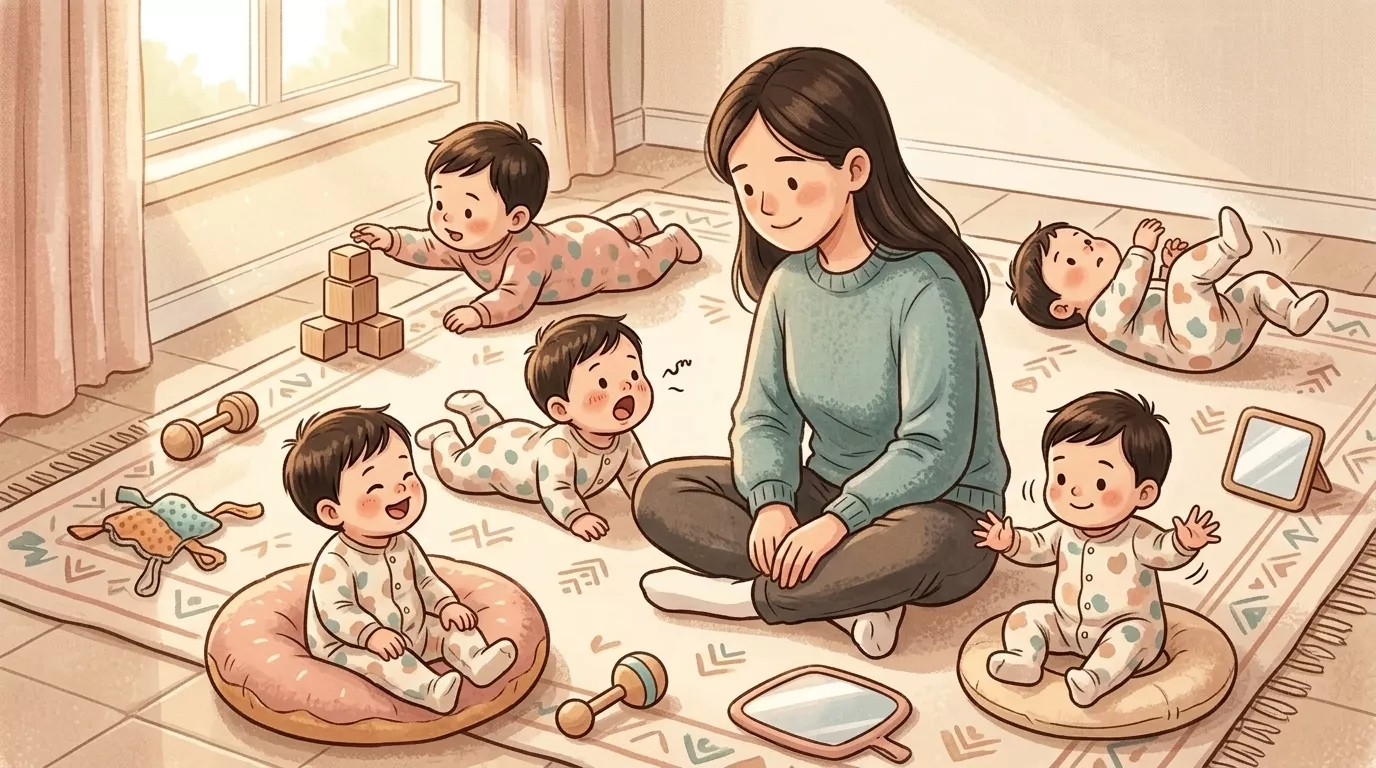
When we become worried about one skill, it can start to cover everything else.
The baby who is not sitting yet may be laughing loudly, reaching accurately, rolling across the mat or taking turns making sounds. The baby who is sitting early may still be working on another skill that comes easily to someone else.
Development is not a single race with every baby moving through the same lane.
It is a collection of changes happening across movement, communication, thinking, relationships and play.
This does not mean concerns should be dismissed with “every baby is different.” Differences still deserve to be observed. Questions still deserve answers.
But one unfinished milestone does not tell the whole story of your baby.
Today, they may tip sideways the moment you remove your hand.
Tomorrow, they may steady themselves for three seconds.
A week later, they may reach for a toy and catch their balance without anyone noticing that this was the exact movement their body had been practising all along.
Development often arrives like that.
Not as a performance.
Not on command.
But as a hundred quiet attempts finally holding together.