


Nobody tells you that the third trimester is less about preparing for the baby and more about surviving your own body.
You spend the first half of pregnancy reading about what is developing — the heartbeat, the fingers, the first kicks. The third trimester is different. By this point the baby is real and present and you know they are coming. What occupies your mind is something else entirely: why does my back feel like this. Why can I not breathe properly. Why is sleeping suddenly impossible when I am more exhausted than I have ever been in my life.
I spent the final eight weeks of my pregnancy doing a rotating inventory of discomforts. Something would ease up and something else would announce itself. My back. Then my hips. Then the heartburn that had been manageable in the second trimester decided to escalate significantly. Then the sleep. Then the swelling that appeared in my feet around week 34 and stayed until after the birth.
Looking back, I wish I had known which things were normal and which things warranted attention, and — more practically — what actually helped versus what sounded helpful but did not do much.
That is what this is.
Back Pain — The One That Sent You Here
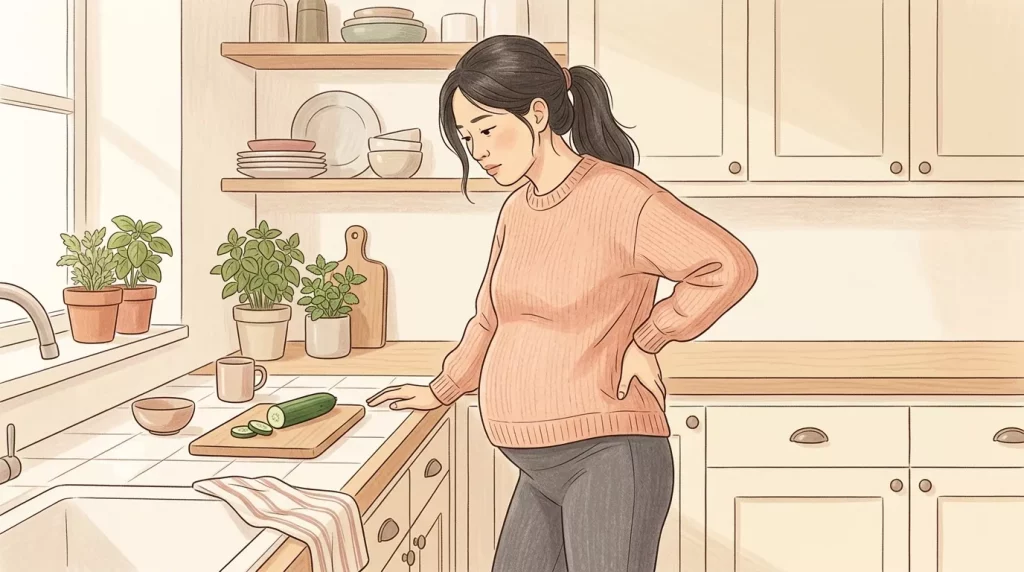
Back pain is the most searched third trimester complaint and for good reason. By the third trimester your centre of gravity has shifted significantly forward, your posture has compensated in ways your lower back was not designed for indefinitely, and the hormone relaxin — which loosens ligaments in preparation for birth — has been working on your joints for months.
The result is that the lower back, hips, and pelvis carry an enormous amount of stress in the final weeks.
What actually helps:
Prenatal massage. Not a luxury. For many women in the third trimester, regular prenatal massage from a qualified therapist is the single most effective thing for back pain relief. In Singapore there are numerous postnatal and prenatal massage services — many offering home visits — that are worth the investment if back pain is significantly affecting your quality of life.
A pregnancy pillow. Specifically a full-length or U-shaped pillow that supports the bump from below and provides something for the top leg to rest on when sleeping on your side. This reduces the rotational strain on the lower back and hips during sleep. I resisted buying one until week 32 and was immediately furious at myself for waiting that long.
Warm compress or warm shower on the lower back. Heat increases circulation and reduces muscle tension. Ten minutes with a warm pack against the lower back provides genuine temporary relief. Not a fix but a meaningful one.
Gentle movement — specifically swimming or walking in water. The buoyancy removes weight from the joints while keeping the body moving. If you have access to a pool, water-based exercise in the third trimester is one of the most consistently recommended approaches for back and joint pain.
Check your posture and footwear. Wearing supportive flat shoes rather than flip flops, being conscious of not arching the lower back excessively, and avoiding standing for prolonged periods without support all reduce the daily load on the lower back. Simple but genuinely cumulative.
See a physiotherapist. If back pain is severe or affecting mobility, a physiotherapist who specialises in prenatal care can assess your specific situation and provide targeted exercises and support. This is not something to push through if it is significantly impairing your daily function.
What does not help as much as people say: Bed rest for back pain is generally counterproductive — prolonged inactivity tends to worsen it. Gentle movement is almost always better than none.
Sleep Difficulties
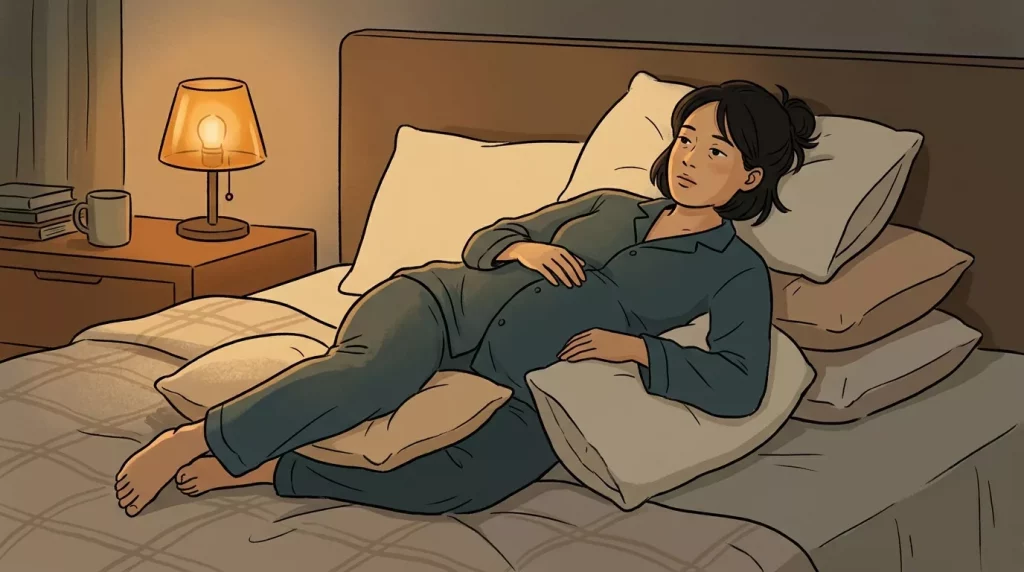
Sleeping in the third trimester is one of the great ironies of pregnancy. You are profoundly exhausted. You cannot get comfortable. And when you finally do get comfortable something wakes you up — a kick, a bathroom trip, your own heartburn, a cramp in your calf, the inexplicable 3am alertness that many pregnant women experience in the final weeks.
What helps:
The pregnancy pillow, again. Worth mentioning twice because it genuinely changes sleep quality for most women who use it. Between the legs, supporting the bump, behind the back — use as many pillows as the bed will accommodate.
Left side sleeping. Sleeping on the left side improves blood flow to the placenta and reduces pressure on the vena cava — the large vein that returns blood to the heart. Most doctors recommend it. If you wake up on your right side or back, do not panic — simply reposition. The concern is prolonged periods, not momentarily rolling.
Reducing fluid intake in the two hours before bed. Staying hydrated during the day and then tapering off in the evening reduces the number of bathroom trips overnight without compromising overall hydration.
A consistent wind-down routine. The same principles that apply to settling a baby later apply to you now. Reducing screen exposure, dimming lights, warm shower before bed — these signal the nervous system that sleep is approaching and can genuinely help with the 3am alertness problem.
Accepting the fragments. Sleep in the third trimester is often fragmented and that is simply what it is. Resting with eyes closed even without sleeping has physiological benefit. Removing the pressure of needing eight uninterrupted hours — which is not available — helps with the anxiety that compounds sleeplessness.
Heartburn and Indigestion
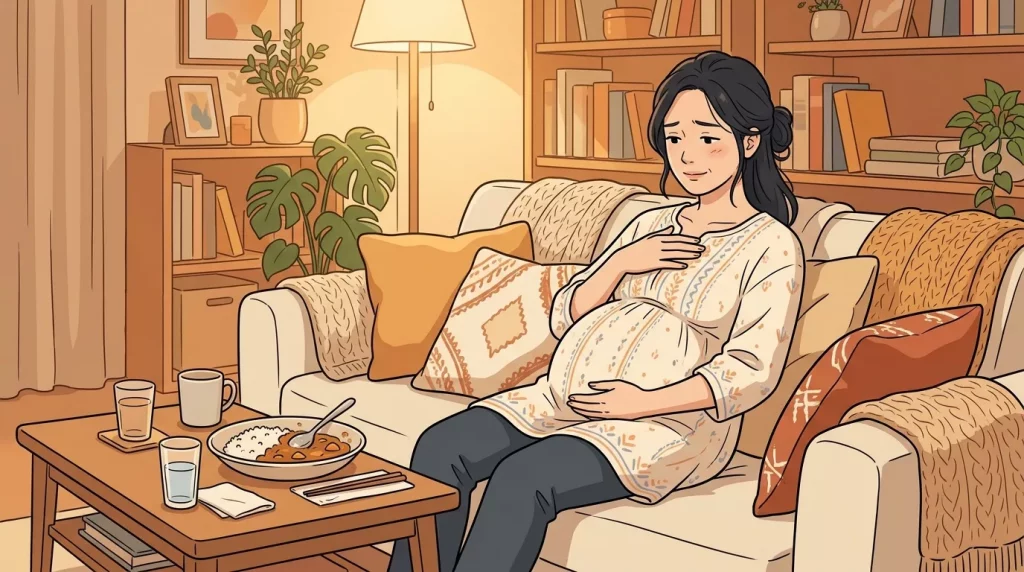
The heartburn that may have appeared in the second trimester typically intensifies in the third as the growing uterus pushes upward against the stomach, leaving less room and making acid reflux easier.
What helps:
Smaller more frequent meals. Five or six small meals rather than three larger ones puts less pressure on a stomach that has very little room to expand.
Staying upright after eating. At least thirty to forty-five minutes. The third trimester is not the time for post-dinner horizontal television. Gravity is your ally.
Elevating the head of the bed slightly. A few extra pillows under your head and shoulders — not just your head — can reduce nighttime heartburn significantly by using gravity to keep acid where it belongs.
Avoiding the known triggers. Spicy food, fried food, citrus, caffeine, carbonated drinks, large meals close to bedtime. You likely already know your specific triggers by the third trimester. Take them seriously.
Antacids. Safe antacids during pregnancy — such as calcium carbonate-based options — can provide meaningful relief. Confirm which specific products are appropriate with your doctor or pharmacist. Avoid antacids containing sodium bicarbonate or aspirin.
Pelvic Girdle Pain and Round Ligament Pain
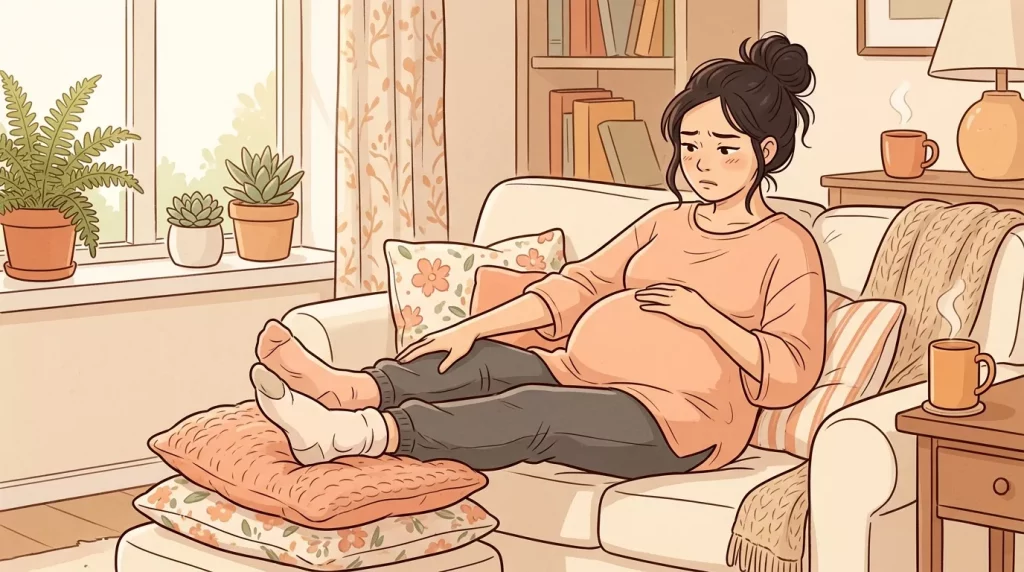
Pelvic girdle pain — a sharp, aching, or stabbing pain in the pelvic region, groin, hips, or inner thighs — is caused by the loosening of pelvic ligaments under relaxin and the increased weight and pressure of the third trimester.
It can range from mild discomfort to significantly debilitating, and it tends to worsen with certain movements — rolling over in bed, climbing stairs, getting in and out of cars, walking for extended periods.
Round ligament pain — a sharp or stabbing pain on one or both sides of the lower abdomen — is caused by the ligaments supporting the uterus stretching as it grows. It often appears suddenly with movement, rolling over, or coughing.
What helps for pelvic girdle pain:
- A pelvic support belt worn during the day reduces the load on the pelvic joints
- Moving symmetrically — keeping legs together when getting in and out of bed or cars, sitting to put on shoes rather than standing on one leg
- Physiotherapy specifically for pelvic girdle pain — this is worth pursuing if it is affecting mobility
- Sleeping with a pillow between the knees to maintain pelvic alignment
What helps for round ligament pain:
- Moving slowly and deliberately rather than making sudden movements
- Bending slightly toward the pain when it occurs — counterintuitive but effective
- Warm compress on the affected side
- It typically resolves on its own within a few minutes
Swelling — Feet, Ankles, Hands
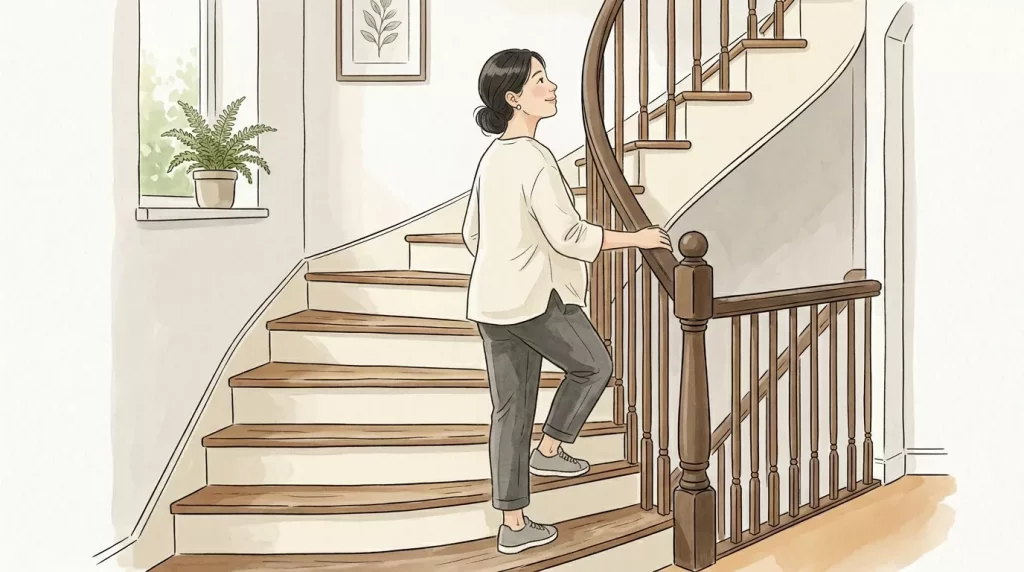
Mild swelling of the feet and ankles — oedema — is common in the third trimester, particularly toward the end of the day and in Singapore’s heat. It is caused by increased blood volume and the pressure of the uterus on the pelvic veins, which slows circulation in the lower limbs.
What helps:
- Elevating the feet when sitting or resting — above hip level if possible
- Avoiding standing for prolonged periods
- Gentle walking to encourage circulation — movement helps more than rest for mild swelling
- Compression socks, which improve venous return and reduce swelling effectively
- Reducing sodium intake
- Staying hydrated — counterintuitive but adequate hydration actually reduces fluid retention
When to seek medical attention: Sudden significant swelling — particularly in the face or hands — alongside headache, visual disturbances, or upper abdominal pain can be a sign of pre-eclampsia, which requires immediate medical attention. Swelling that is asymmetrical — one leg significantly more swollen than the other — also warrants prompt evaluation to rule out deep vein thrombosis.
Gradual, symmetrical, mild swelling that worsens through the day and improves overnight is generally normal. Any swelling that concerns you is worth a call to your doctor.
Breathlessness

As the uterus grows upward it pushes against the diaphragm, reducing lung capacity. Many women in the third trimester feel short of breath with activities that were previously effortless — walking up stairs, carrying things, sometimes even just speaking.
What helps:
- Sitting and standing tall — slumping compresses the lungs further
- Sleeping propped up slightly — extra pillows supporting the upper body
- Slowing down and accepting a reduced pace for physical activity
- Belly breathing — consciously breathing into the lower chest rather than shallow chest breathing
Around weeks 36 to 38 for many women, the baby drops lower into the pelvis in preparation for birth — this is called lightening or engagement. When it happens, breathlessness often reduces significantly as pressure on the diaphragm eases. Many women describe this as being able to breathe properly for the first time in weeks.
Sudden severe breathlessness, chest pain, or rapid heart rate are different and require immediate medical attention.
Braxton Hicks Contractions
Braxton Hicks are practice contractions — the uterus tightening and releasing in preparation for labour. They become more noticeable in the third trimester and can occasionally feel alarming if you are not expecting them.
They are typically:
- irregular — no consistent pattern or timing
- not progressively intense — they do not build in strength over time
- brief — usually lasting thirty to sixty seconds
- relieved by changing position, walking, or drinking water
True labour contractions are regular, progressive, and do not ease with position changes or hydration.
Braxton Hicks that become frequent, painful, or regular — particularly before 37 weeks — warrant a call to your doctor.
The Mental Weight of the Final Weeks
The third trimester has a psychological dimension that does not always get enough space in the practical guides.
The anticipation. The waiting. The uncertainty about when and how labour will begin. The anxiety that arrives in the middle of the night thinking about every possible thing that could go wrong. The strange suspended quality of those final weeks when you are no longer the person you were before pregnancy but not yet on the other side of birth.
Many women describe the third trimester as the hardest part not because of any single physical discomfort but because of the accumulation — the interrupted sleep, the limited mobility, the weight of waiting, and the knowledge that something enormous is approaching.
This is worth acknowledging. Not to dwell in it but to be honest that if the final weeks feel harder than expected, that is not weakness or ingratitude. It is a legitimate response to a genuinely demanding experience.
Talk to someone. Your partner, a friend who has been through it, your doctor. The mental load of the final trimester is real and it benefits from being shared rather than carried quietly.
A Quick Reference
| Discomfort | Most Effective Relief |
|---|---|
| Back pain | Prenatal massage, pregnancy pillow, physiotherapy, warm compress |
| Sleep difficulties | Pregnancy pillow, left side sleeping, wind-down routine |
| Heartburn | Smaller meals, stay upright after eating, elevate head of bed |
| Pelvic girdle pain | Pelvic support belt, physiotherapy, symmetrical movement |
| Swelling | Elevate feet, compression socks, gentle walking |
| Breathlessness | Sit tall, sleep propped up, slow down |
| Braxton Hicks | Change position, walk, hydrate |
The third trimester is hard. It is also temporary. Every week brings you closer to the other side of it — and to the person you have spent nine months waiting to meet.
Hold on. You are nearly there.