


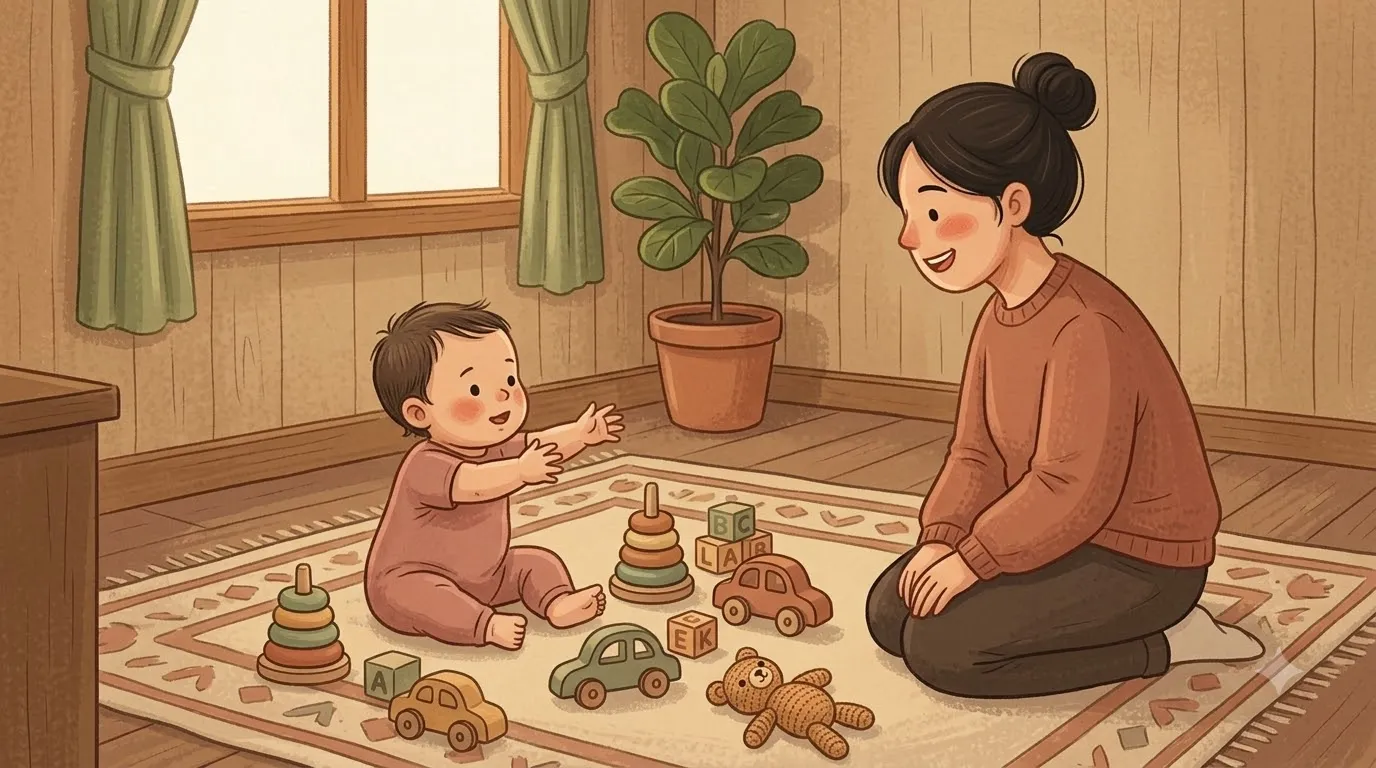
Not dramatically, and usually not all at once. But somewhere in here, your baby figures out that the world extends past the edge of the play mat, and they develop just enough mobility to go find out what’s over there. Drawers become interesting. So do power sockets, the dog’s water bowl, and every single thing you left on a low shelf.
It’s also the month a lot of parents start quietly worrying, because this is when babies begin moving at visibly different speeds from one another. Here’s what’s typical at eight months, and what the differences usually mean.
My 8-Month-Old Isn’t Crawling Yet — Is That a Problem?
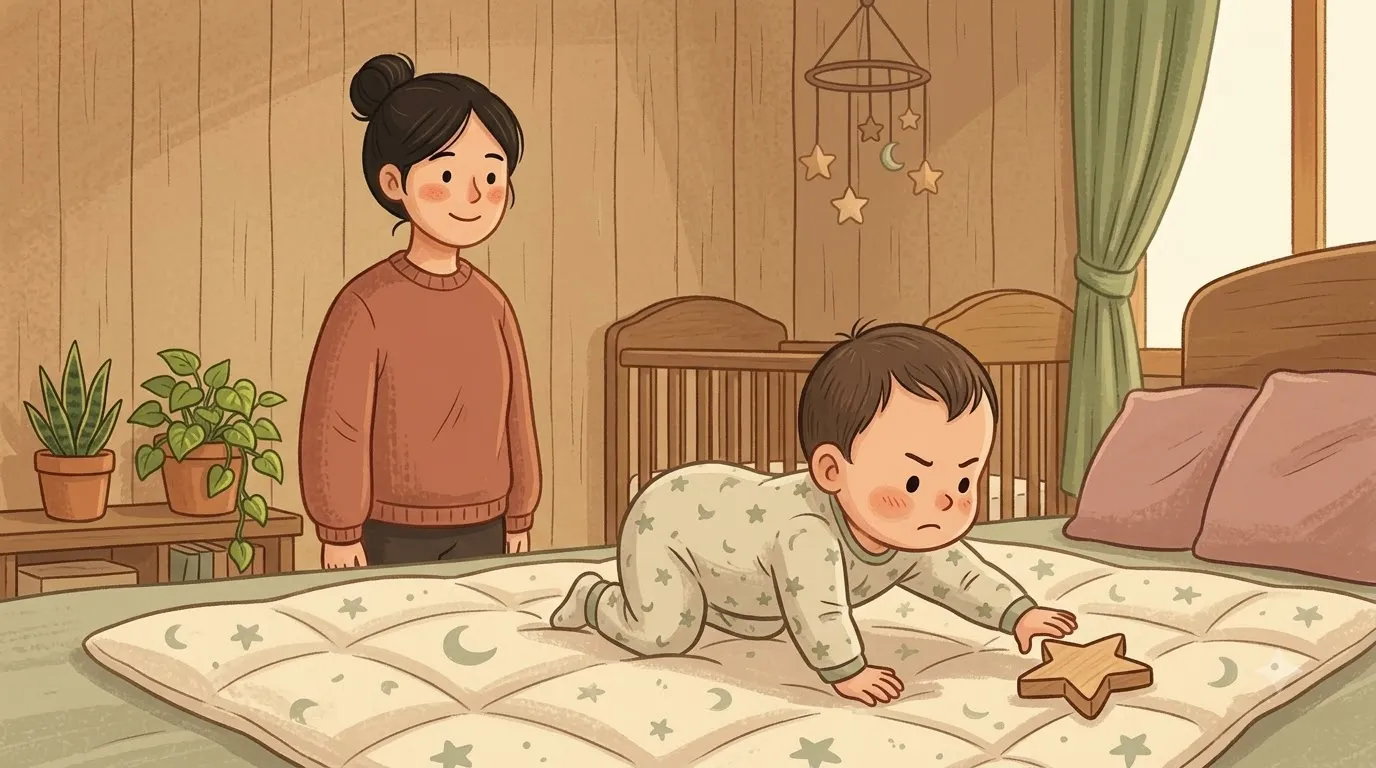
Almost always, no.
Crawling has a surprisingly wide normal range. Most babies start somewhere between 7 and 10 months, but plenty don’t crawl until 11 or 12 months — and a meaningful number of babies never crawl at all. They bum-shuffle, roll, commando-crawl on their forearms, or simply skip straight to pulling up and walking. None of those are considered delays. Crawling isn’t actually a required milestone in most developmental checklists; it’s a common route, not a mandatory one.
What matters more at this age than crawling specifically is whether your baby is finding some way to move and explore, and whether they’re using both sides of their body roughly equally.
So the more useful questions than “is she crawling?” are:
- Can she get herself into a sitting position, or sit steadily without support?
- Does she push up on her arms during tummy time and try to reach for things just out of range?
- Does she use both hands and both legs, rather than consistently favouring one side?
- Is she rolling, scooting, pivoting on her tummy, or moving toward something she wants in any fashion?
- Is she bearing some weight on her legs when you hold her upright?
If most of those are happening, a non-crawler at eight months is almost certainly just taking a different route.
Two things genuinely worth mentioning to your pediatrician: consistent one-sided movement (always dragging the same leg, always reaching with the same hand), or a baby who shows no interest in moving toward anything at all and stays exactly where you put them. Those are less about the crawling itself and more about what’s underneath it.
One practical note: babies who spend a lot of time in walkers, bouncers, or propped seating often crawl later, simply because they’ve had less floor time to practise. If that sounds like your setup, more unrestricted floor time is usually the whole fix.
Movement and Physical Development
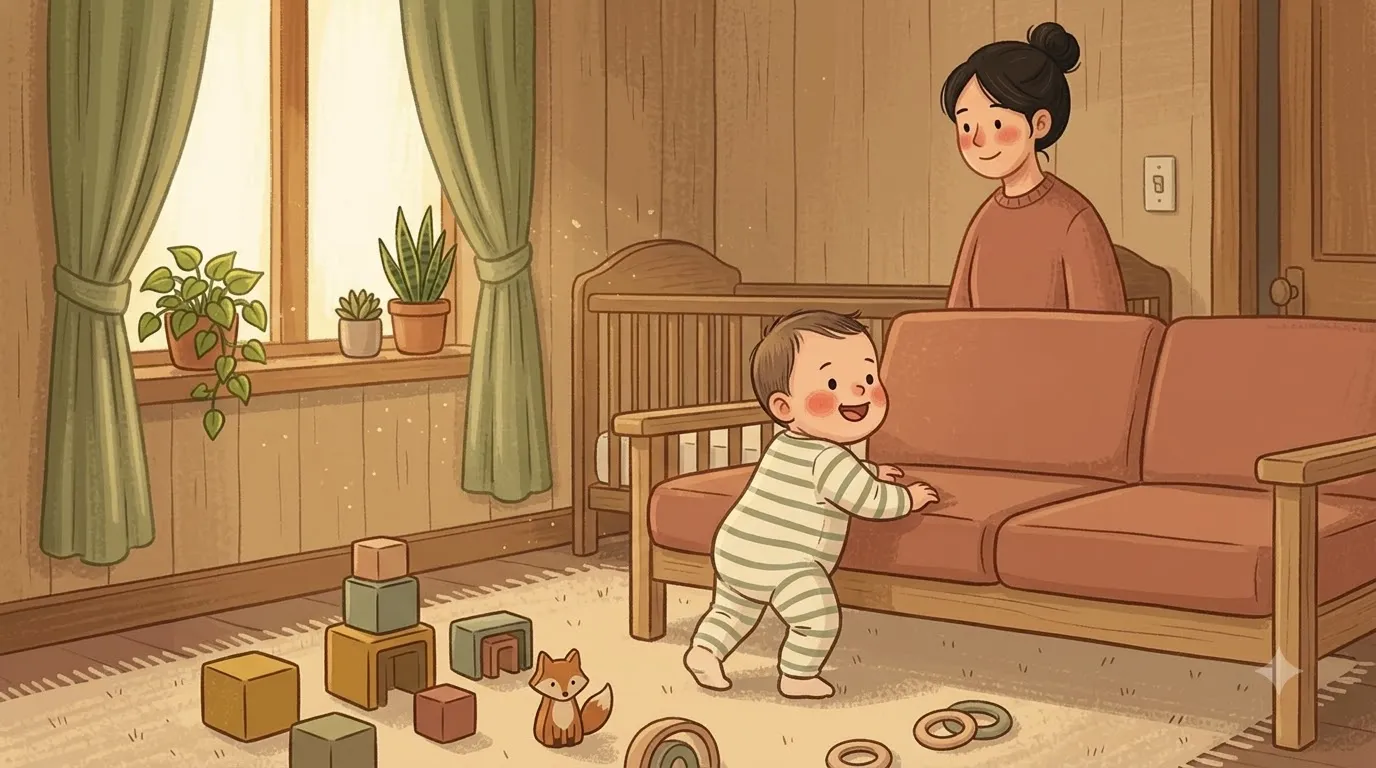
Beyond the crawling question, eight months usually brings:
- Sitting independently, often for long stretches, and reaching sideways for toys without toppling
- Pulling up to stand against furniture, or at least trying to
- Transferring objects confidently from one hand to the other
- The early pincer grasp — picking up small items between thumb and forefinger rather than raking with the whole hand
- Banging, dropping, and throwing things, repeatedly, mostly to see what happens
That last one isn’t misbehaviour, though it certainly feels like it by the fiftieth time you retrieve a spoon from the floor. It’s cause-and-effect learning, and it’s one of the more important things happening this month.
Communication and Social Development
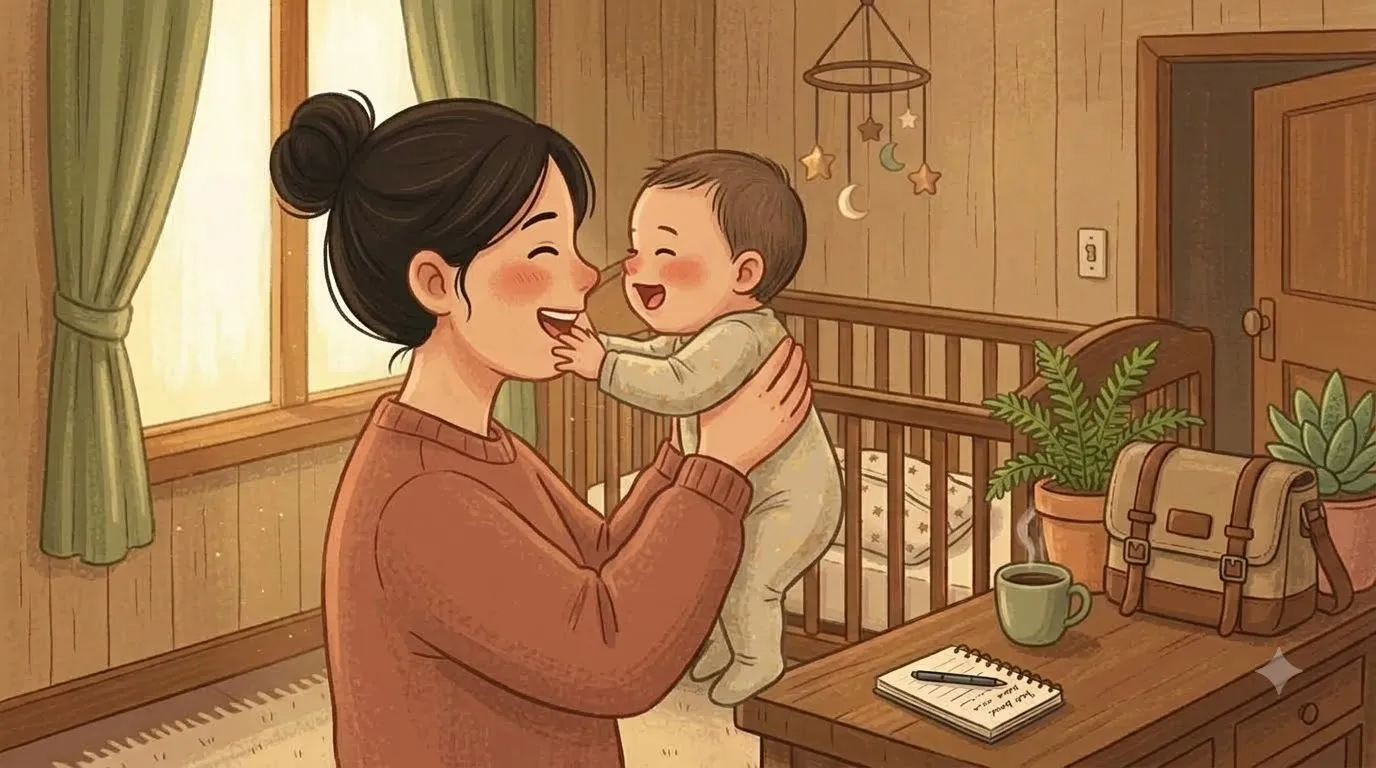
Eight-month-olds are usually noisy in a new way. Babbling becomes more consonant-heavy — “bababa,” “dadada,” “mamama” — though these usually aren’t yet attached to specific meanings. That comes closer to the one-year mark.
You’ll likely also see:
- Responding to their own name
- Copying sounds, expressions, and simple gestures
- Understanding “no,” even if they continue doing the thing anyway
- Stranger wariness, which often intensifies around now alongside separation anxiety
- Looking toward you to check how to react to something unfamiliar
Sleep and Feeding at Eight Months
Most babies this age are on two naps and sleeping longer stretches at night, though the eight-to-ten-month window is a common one for sleep to temporarily fall apart — often tied to new mobility, separation anxiety, or teething.
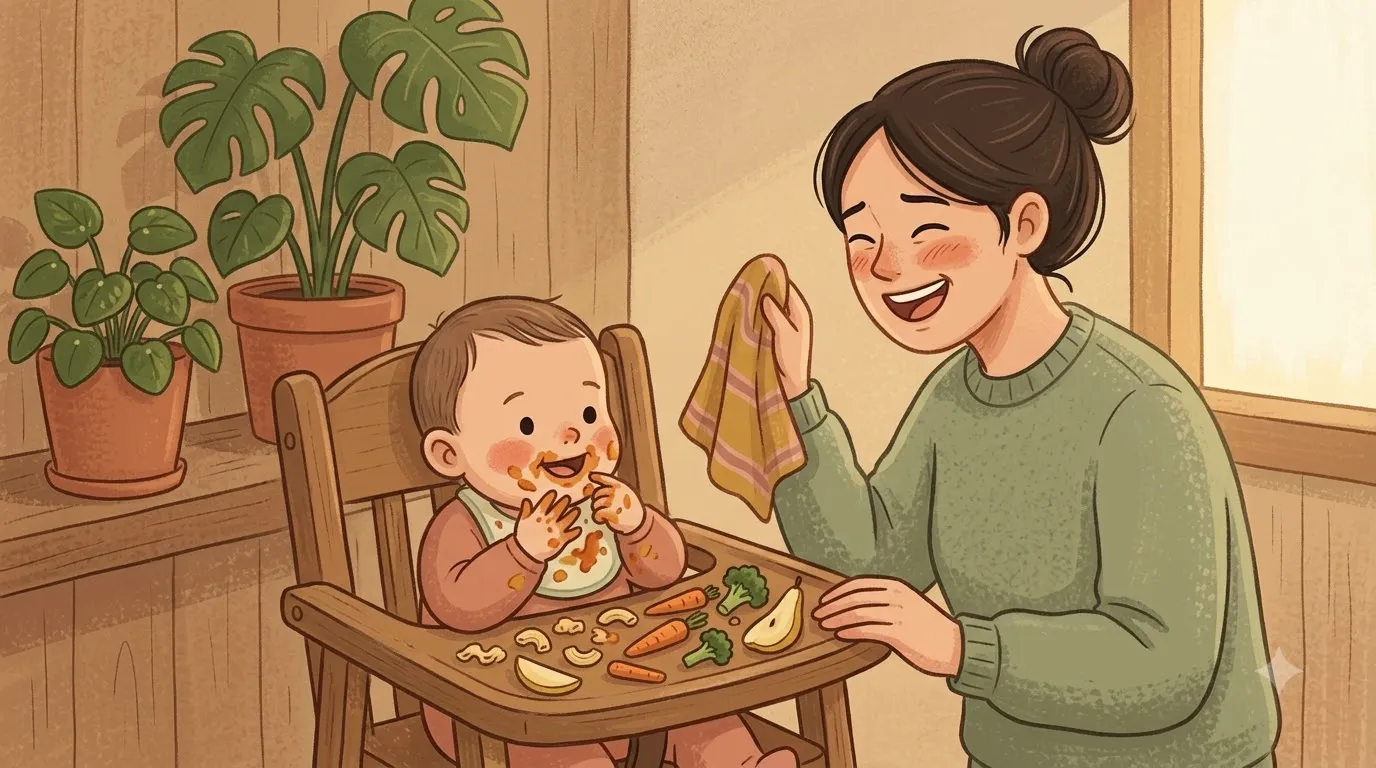
On food, babies at this stage are typically managing thicker textures and soft finger foods, and are noticeably more interested in feeding themselves. Milk (breast or formula) is still the main source of nutrition at this age; solids are for practice, exposure and learning, not for replacing milk feeds yet.
Expect significantly more mess. It’s developmentally useful mess, but it’s still mess.
What to Mention at the Checkup
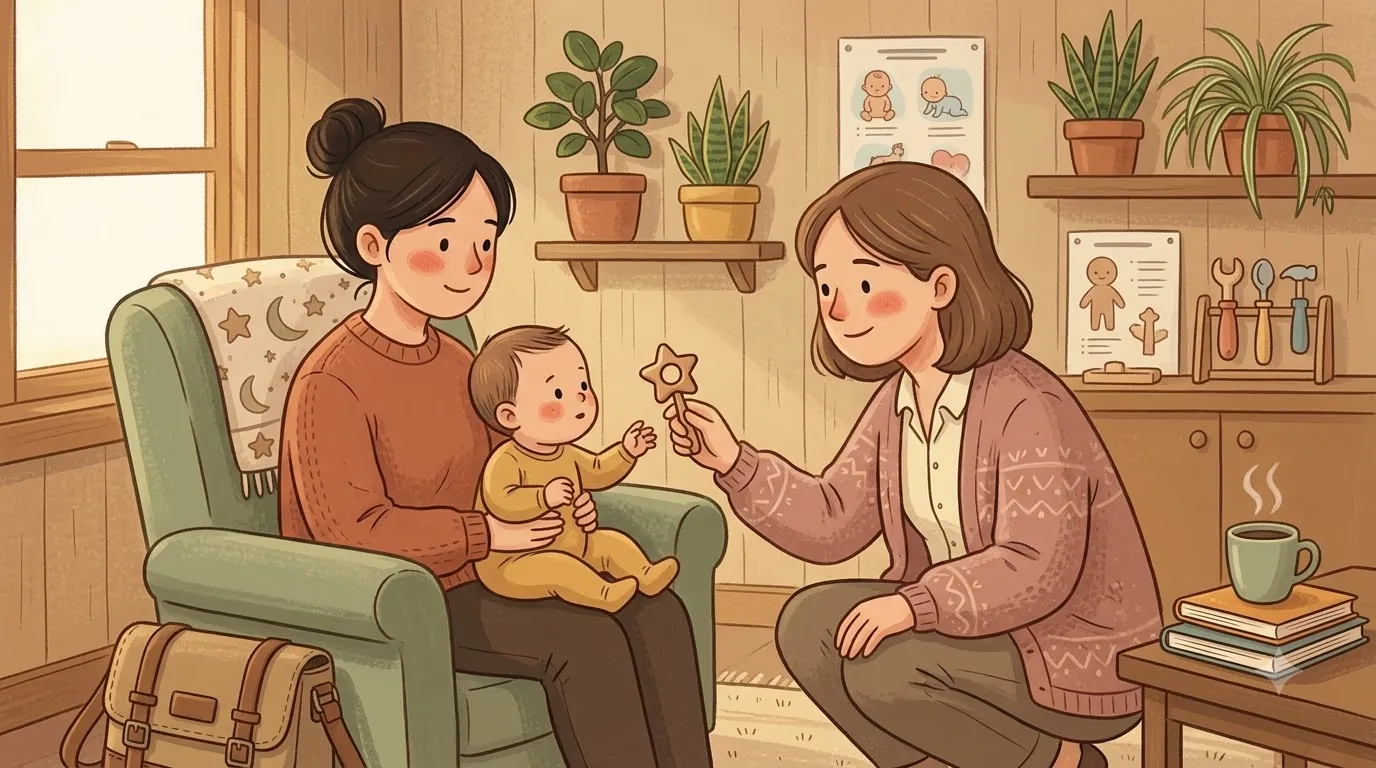
Most eight-month differences are just variation. A few things are worth raising:
- Not sitting without support at all
- Not bearing any weight on the legs when held upright
- Not babbling or making consonant sounds
- Not responding to their name or to familiar voices
- Consistently using only one side of the body
- Loss of skills they previously had
That last point is the one worth paying attention to most. Slower progress is usually fine; going backwards is what warrants a conversation.
A Month of Uneven Progress
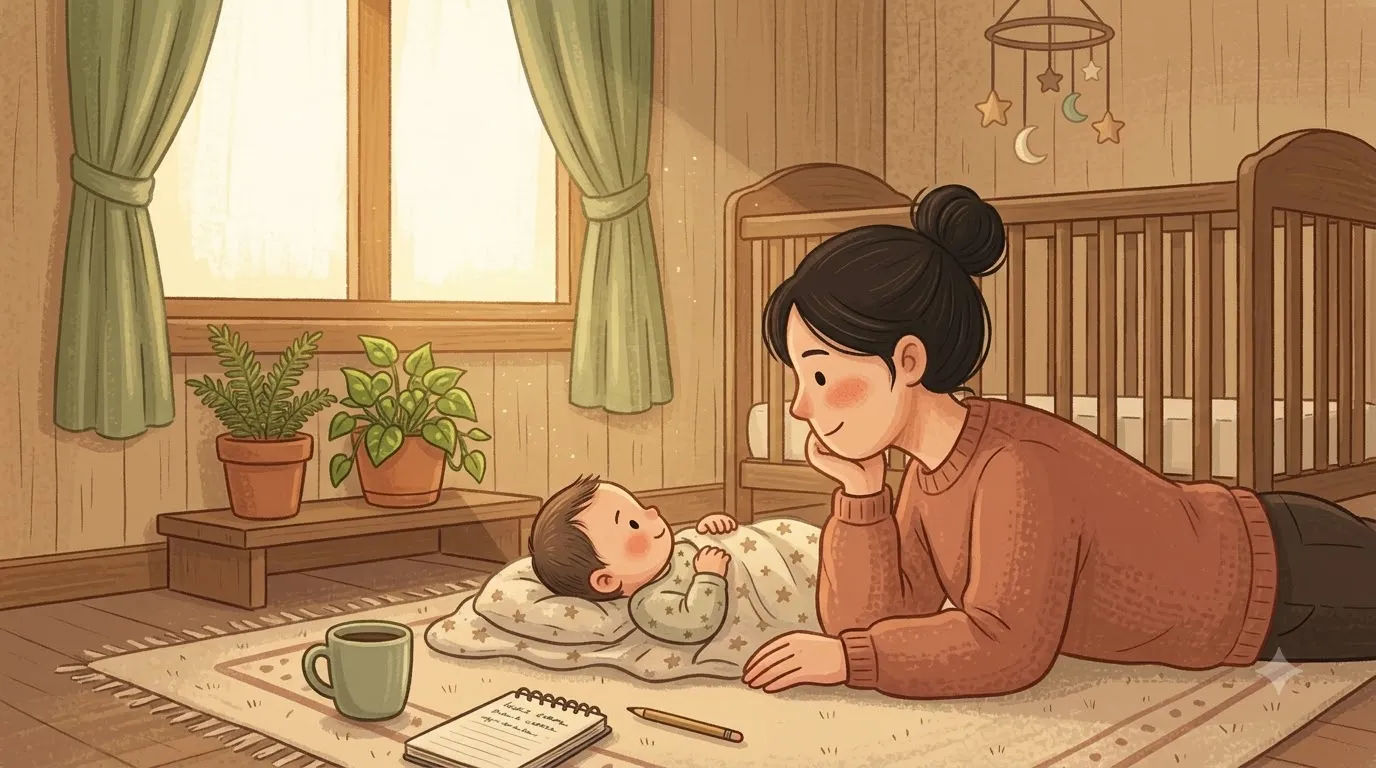
If there’s one thing worth holding onto at eight months, it’s that development at this age is lumpy. Babies frequently pause in one area while sprinting ahead in another — the early crawler who babbles less, the chatty sitter who has no interest in moving yet. Both are normal, and both tend to even out.
The chart in your head is a much narrower thing than the actual range of normal. Your baby is almost certainly somewhere inside it, getting there their own way.