



It felt like a narrow strip of mattress we were allowed to borrow from a very small person who somehow took up more space than both adults combined. I slept curled near the edge. My partner slept stiffly. Our child slept sideways, arms open, completely certain that the middle of the bed belonged to them.
And the strange thing was, for a season, it worked.
Not perfectly.
Not restfully.
But enough.
Enough to get through the nights when everyone was exhausted. Enough to stop counting wake-ups. Enough to survive the stage when the only thing that seemed to help was closeness.
Then, slowly, the thing that had helped us started to make us tired in a different way.
If you have ever searched how we finally stopped cosleeping what actually worked, you probably already know this is not only about sleep. It is about habit, comfort, guilt, exhaustion, and a tiny person who has learned that your body is the safest place in the world.
This is not a story about judging co-sleeping families. It is simply the story of how we stopped co-sleeping when it no longer worked for us, and what made the transition feel possible.
We Did Not Start Co-Sleeping With a Big Plan
We did not sit down one day and decide, “This is how our family will sleep for a long time.”
It began the way many parenting habits begin.
With one difficult night.
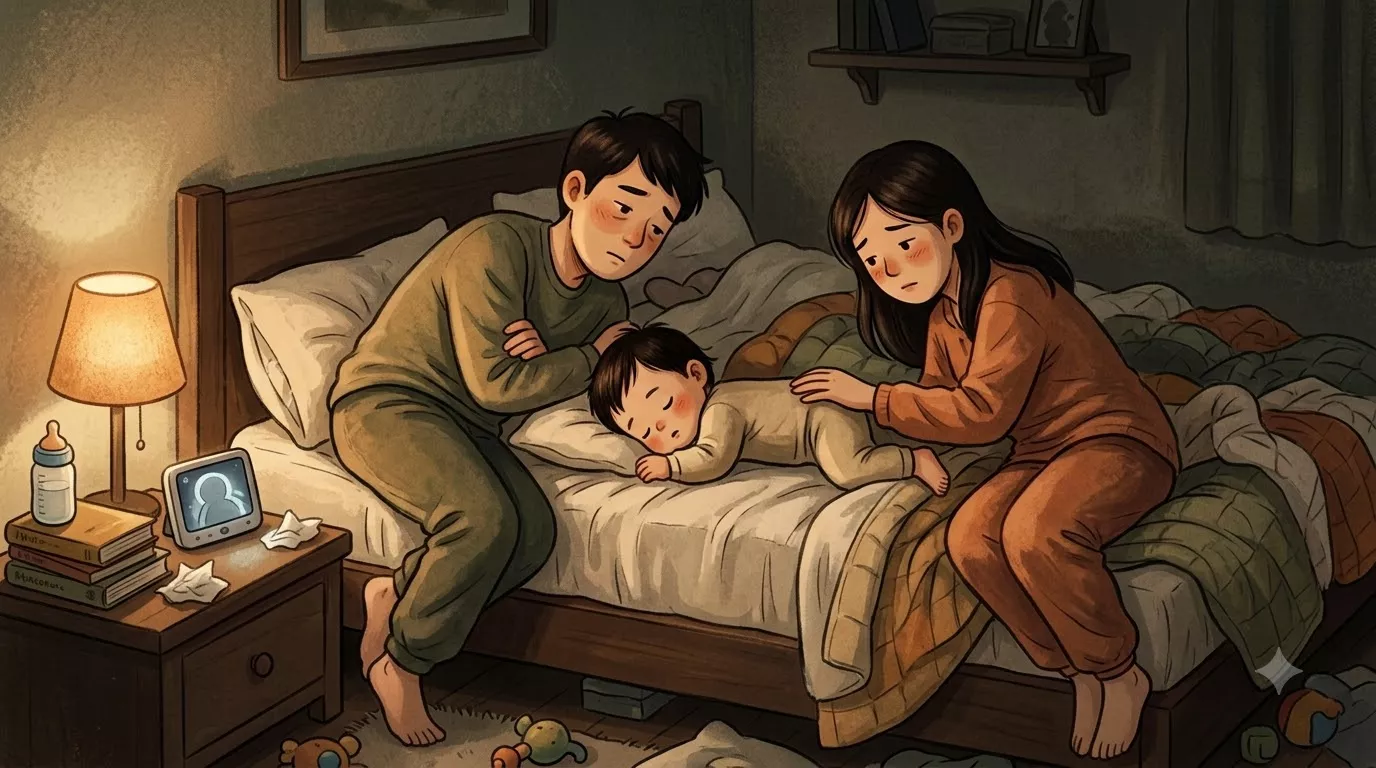
Our child would not settle. I was too tired to think clearly. Every transfer failed. Every time I placed them down, their eyes opened as if the mattress had personally offended them. At some point, I chose the thing that let everyone sleep a little.
Just tonight, I told myself.
Then another night happened.
Then a harder week.
Then a stretch of broken sleep where doing the “right” thing felt less urgent than doing the thing that got us through until morning.
That is the part I wish we spoke about more honestly. Many families do not begin co-sleeping because they are careless or lazy. Sometimes they begin because they are exhausted, feeding through the night, trying to keep a baby settled, or simply doing what allows the whole house to function the next day.
At first, I felt guilty admitting that.
Later, I realized guilt was not useful.
We had made a sleep habit out of survival. The next step was not to shame ourselves for it, but to decide whether it still served us.
The Moment We Knew It Was No Longer Working
There was no dramatic moment.
No one shouted, “That’s it, this ends tonight.”
It was quieter than that.
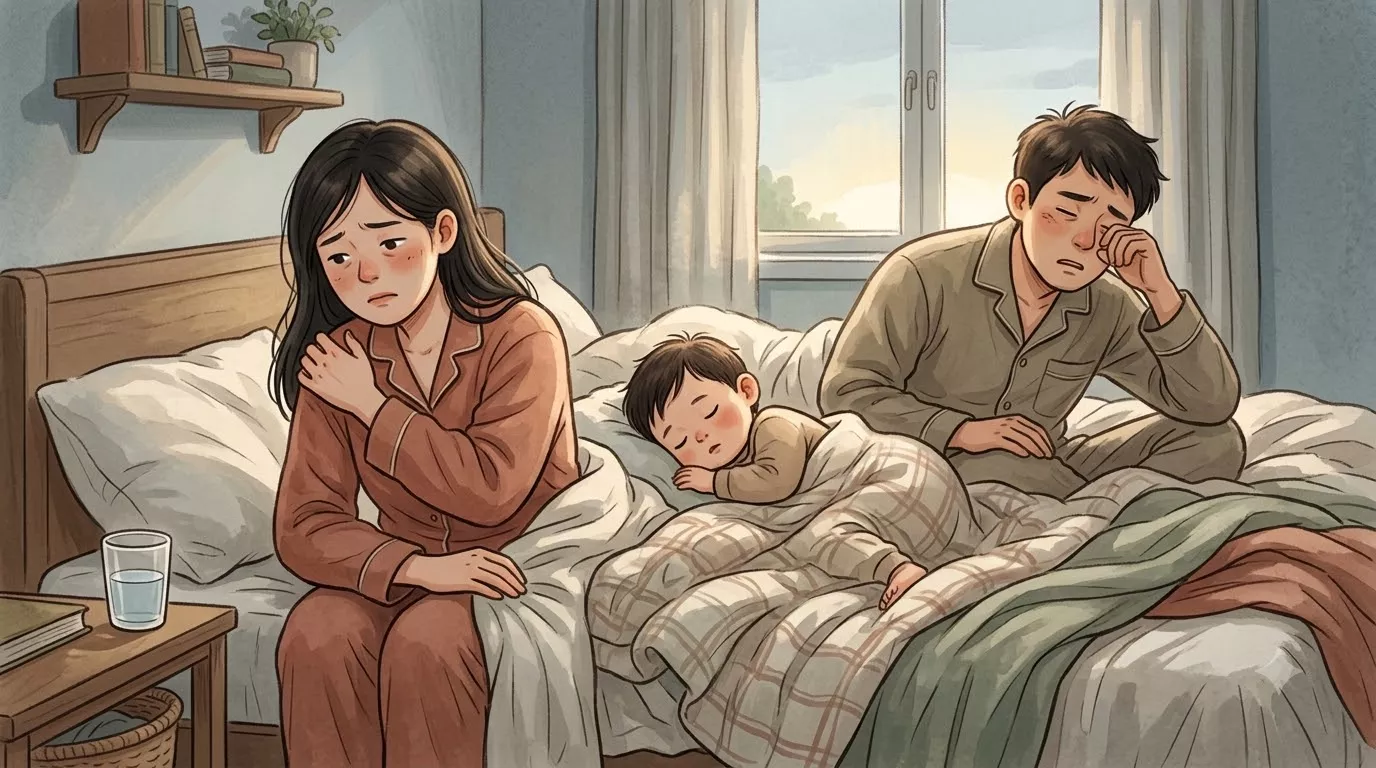
I woke up one morning with an aching shoulder, my body folded into a shape that did not feel human. My partner looked just as tired. Our child had slept, but only because we had become part of the sleep setup.
They needed one of us close to fall asleep.
They needed one of us close to stay asleep.
They needed one of us close every time they stirred.
And I realized that although we were technically sleeping, we were not really resting.
Co-sleeping had once given us more sleep. Now it was taking space from everyone.
There was also the emotional part I did not expect. I missed having my body to myself at night. I missed turning over without fear. I missed lying next to my partner without a small foot between us. I missed the feeling that bedtime ended with rest, not with another round of careful positioning.
It did not mean I loved my child less.
It meant the arrangement had stopped working.
That was enough reason to change.
We Started With Safety, Not Shame
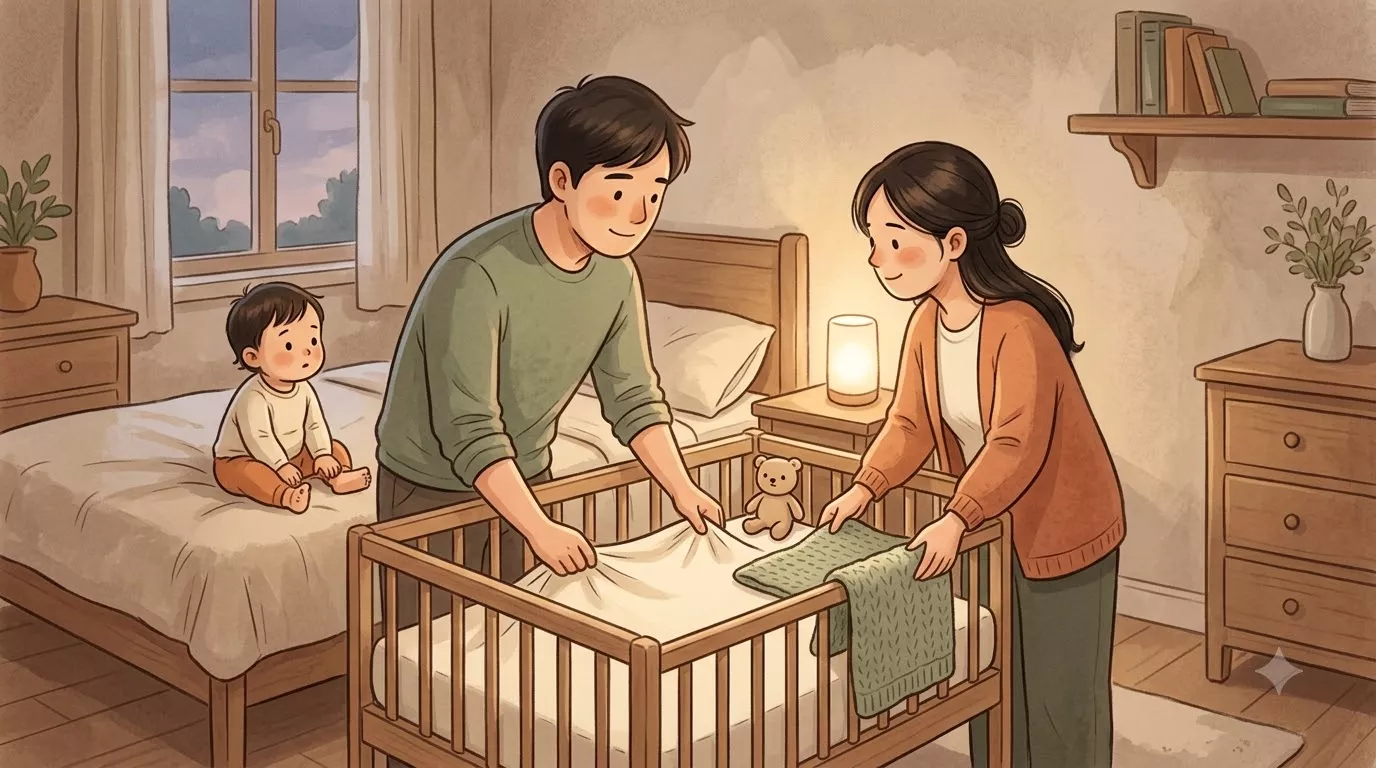
Before we changed anything, we had to separate two things: shame and safety.
Shame says, “You did this wrong.”
Safety says, “What does our child need now, and what sleep setup is safest from here?”
For infants, safe sleep guidance is clear. The American Academy of Pediatrics recommends that babies sleep on their backs, on a firm, flat, non-inclined surface, in the parents’ room but on a separate infant sleep surface, ideally for at least the first six months. It also recommends keeping pillows, blankets, quilts, soft toys, and loose bedding out of the baby’s sleep area.
The CDC gives similar guidance: babies should be placed on their backs for naps and night sleep, on a firm, flat sleep surface, with no soft bedding, blankets, pillows, bumper pads, or soft toys in the sleep area. It also says room-sharing is safer than bed-sharing and recommends keeping the baby’s sleep area in the same room where parents sleep, ideally until at least six months.
I am including this not to make anyone feel worse, but because safety matters more than pride.
If your child is still an infant, or you are unsure whether your current sleep setup is safe, it is worth asking your paediatrician for guidance. If your child is older, the transition may look different, but the principle is the same: create a sleep space that fits your child’s age, development, and safety needs.
We did not want to move our child because we were embarrassed.
We wanted everyone to sleep more safely and more peacefully.
That felt different.
We Chose a Transition That Matched Our Child
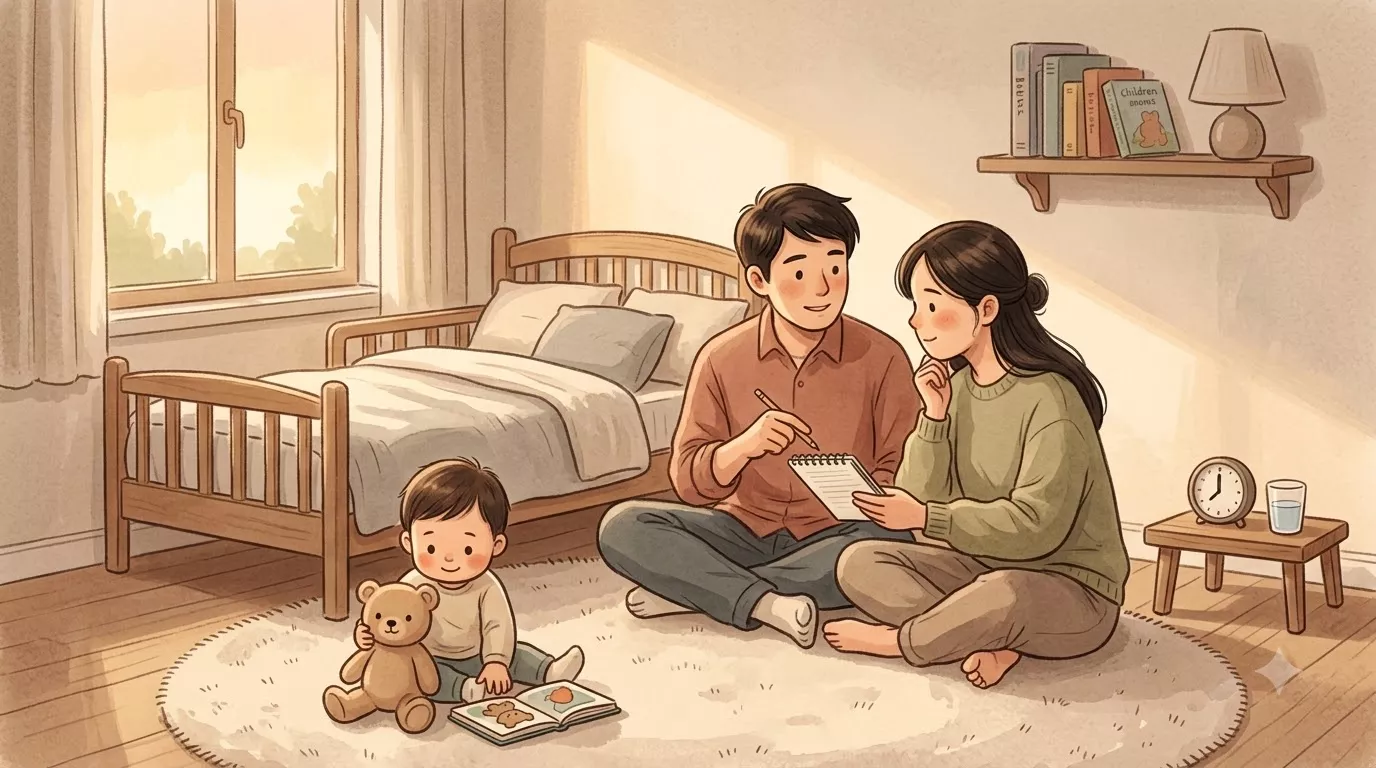
The biggest mistake I almost made was choosing a method because someone else said it worked in three nights.
I wanted that, of course.
Who would not want a three-night solution?
But our child was not a three-night-solution child. They needed connection, predictability, and time to trust that sleep could happen without being pressed against us all night.
So we chose a gradual transition.
Not because gradual is morally better.
Not because fast methods never work.
But because gradual was something we could repeat calmly.
That became our rule: the method had to be something we could actually sustain when we were tired.
For us, that meant staying nearby at first. It meant putting our child down in their own sleep space but not disappearing immediately. It meant using the same bedtime routine every night. It meant changing one thing at a time instead of trying to fix every sleep habit in one exhausting week.
The method matters.
But consistency matters more.
And consistency is much easier when the method fits the child and the parents.
We Made the New Sleep Space Familiar Before Bedtime
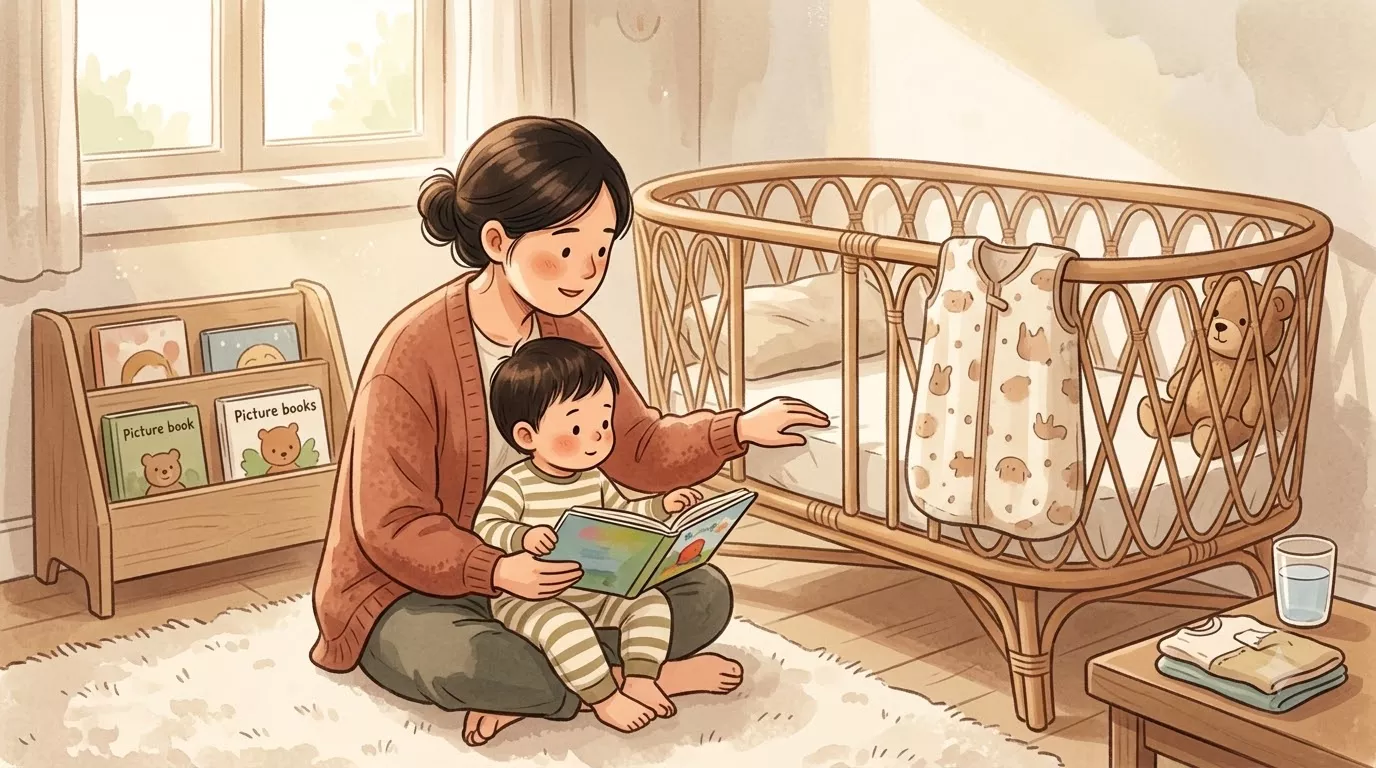
We did not introduce the new sleep space only when everyone was tired.
That would have made it feel like a punishment.
Instead, we made it familiar during the day.
We played nearby.
Read books there.
Let our child climb in and out if age-appropriate.
Placed a favourite sleep sack or bedtime item there, depending on what was safe for their age.
We talked about it casually, without making it sound like a big emotional event.
“This is your bed.”
“This is where you sleep.”
“We will read here tonight.”
For younger babies, the safe sleep space should stay simple. AAP guidance says soft objects and loose bedding should be kept away from an infant’s sleep area, including pillows, pillow-like toys, quilts, comforters, mattress toppers, loose blankets, and nonfitted sheets.
So when I say “make it familiar,” I do not mean filling an infant crib with cosy things.
I mean helping the space feel known.
The room.
The routine.
The smell of the sheet.
The sound machine.
The same phrase at bedtime.
The same calm adult nearby.
Familiarity mattered more than decoration.
We Kept the Bedtime Routine Almost Boring
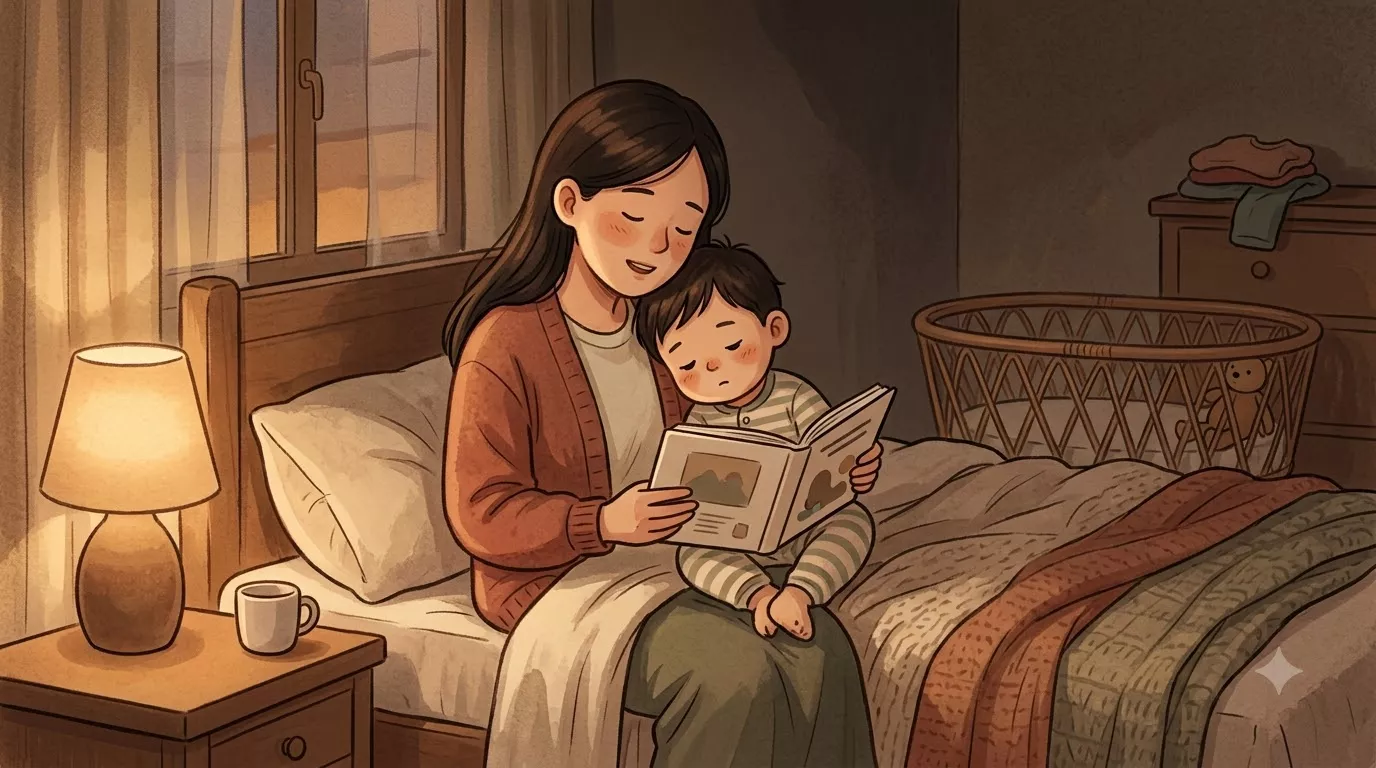
Our bedtime routine became almost boring on purpose.
Bath.
Pajamas.
Milk or feed.
Book.
Song.
Same phrase.
Into bed.
That was it.
I had to resist the urge to keep adding things. One more song. One more cuddle. One more explanation. One more little ritual that felt loving in the moment but made bedtime longer and harder to repeat.
A good bedtime routine does not need to be impressive.
It needs to be predictable.
We used the same simple words every night:
“It’s sleep time. I’m here. You’re safe.”
At first, I said it mostly for my child.
Then I realized I was saying it for myself too.
Because transitions can bring up guilt. When your child cries for the old way, even if the old way was no longer working, it is easy to feel cruel. The routine gave me something to return to when my emotions got loud.
Same order.
Same words.
Same calm ending.
Not perfect.
But steady.
The First Nights Were Not Smooth
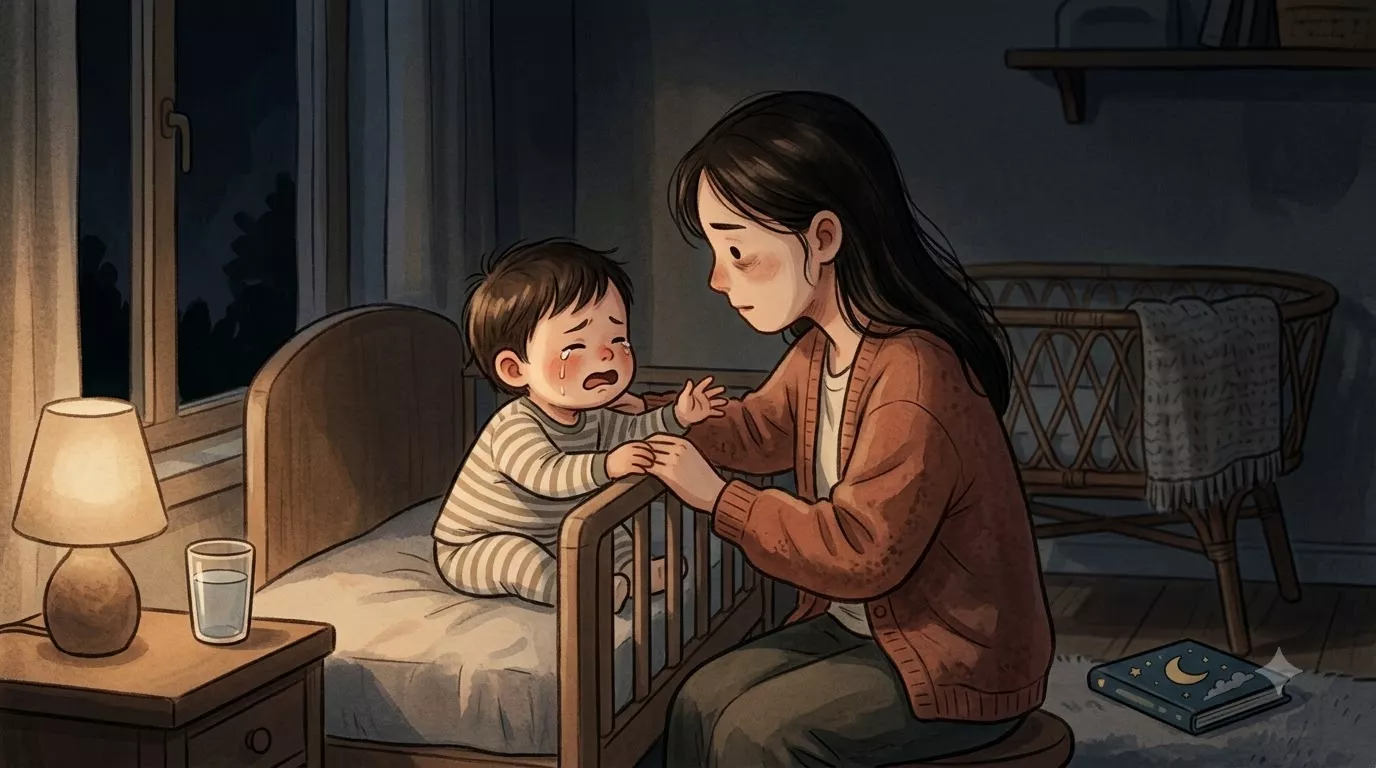
I wish I could say the first night was peaceful.
It was not.
There was crying.
There was sitting up.
There was reaching for me.
There was a lot of me wondering whether we had made a mistake.
This is the part many sleep stories skip. The transition may be right and still be hard. A child can be safe, loved, supported, and still upset that the old habit has changed.
We tried not to panic every time our child protested.
That was hard.
I wanted to fix the feeling immediately. I wanted to scoop them up and return to the thing they knew. But I also knew that if we went back to the old setup every time the new one became hard, we would only make the new setup more confusing.
So we comforted.
We stayed close.
We repeated the bedtime phrase.
We offered touch when it helped.
We picked up and settled when needed, then placed them back down.
We tried not to negotiate with exhaustion at 2am.
Some nights were better than others.
Illness, teething, travel, overtired days — all of these could make things wobble again. Progress did not move in a straight line.
But slowly, the new pattern became less strange.
What Actually Worked for Us
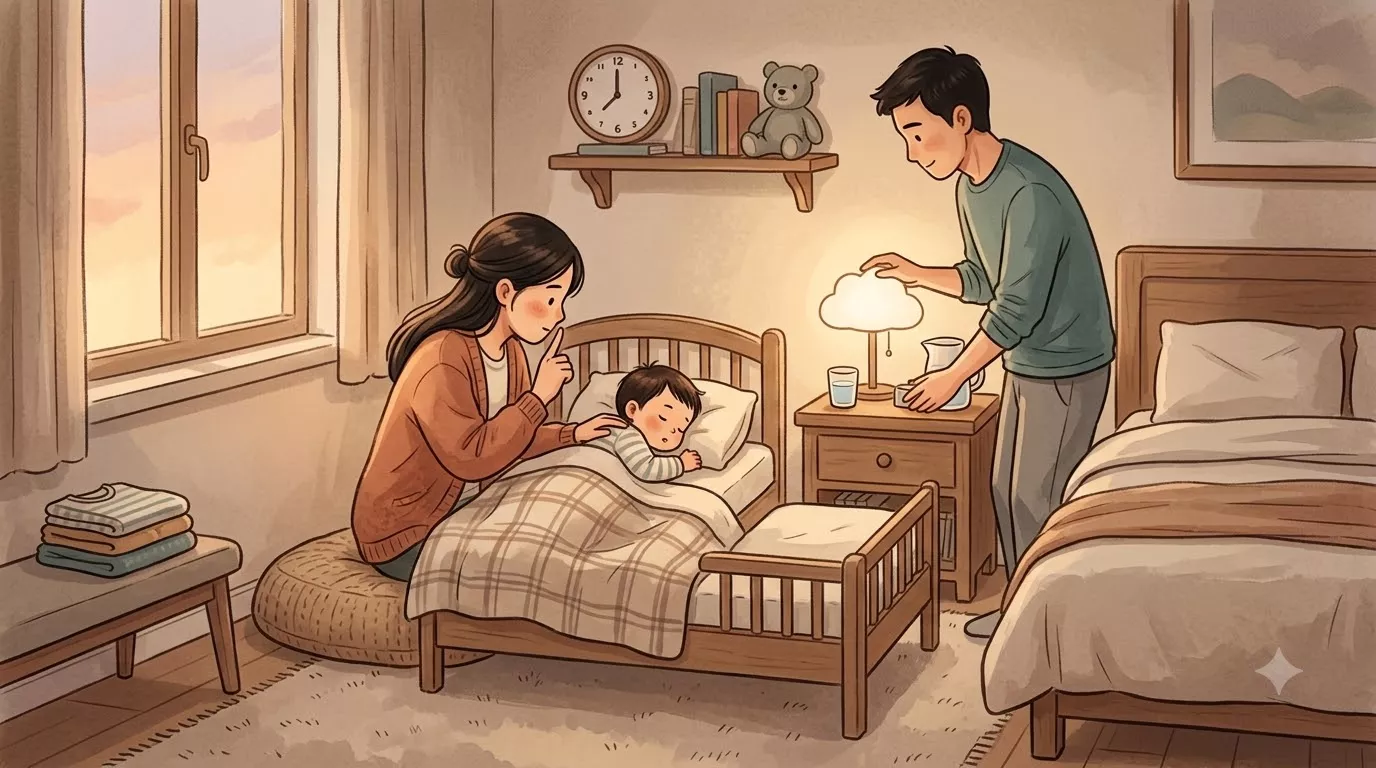
What worked was not one magical trick.
It was a collection of small choices we could keep repeating.
We chose a time when life was not already in complete chaos. Not during illness. Not the night before travel. Not during a week when everyone was already stretched too thin.
We talked about the change during the day, once our child was old enough to understand simple language. Nothing dramatic. Just calm repetition: “Tonight you will sleep in your bed. I will help you.”
We kept bedtime short and predictable.
We stayed nearby at first, then slowly reduced how much help we gave.
We did not bring our child back into our bed every time they cried, because our goal was to teach that their bed was now the place where sleep happened.
We celebrated tiny progress.
A few minutes alone.
One longer stretch.
A night with fewer wake-ups.
A morning where they woke in their own space.
We also shared the work when possible. If one parent is always the one responding, resentment can grow quickly. When my partner took some of the settling, it helped our child learn that comfort did not only come from one person, and it helped me not feel like the entire transition lived on my body.
Mostly, what worked was accepting that this was a process.
Not a single night.
Not a parenting performance.
A process.
What Did Not Work
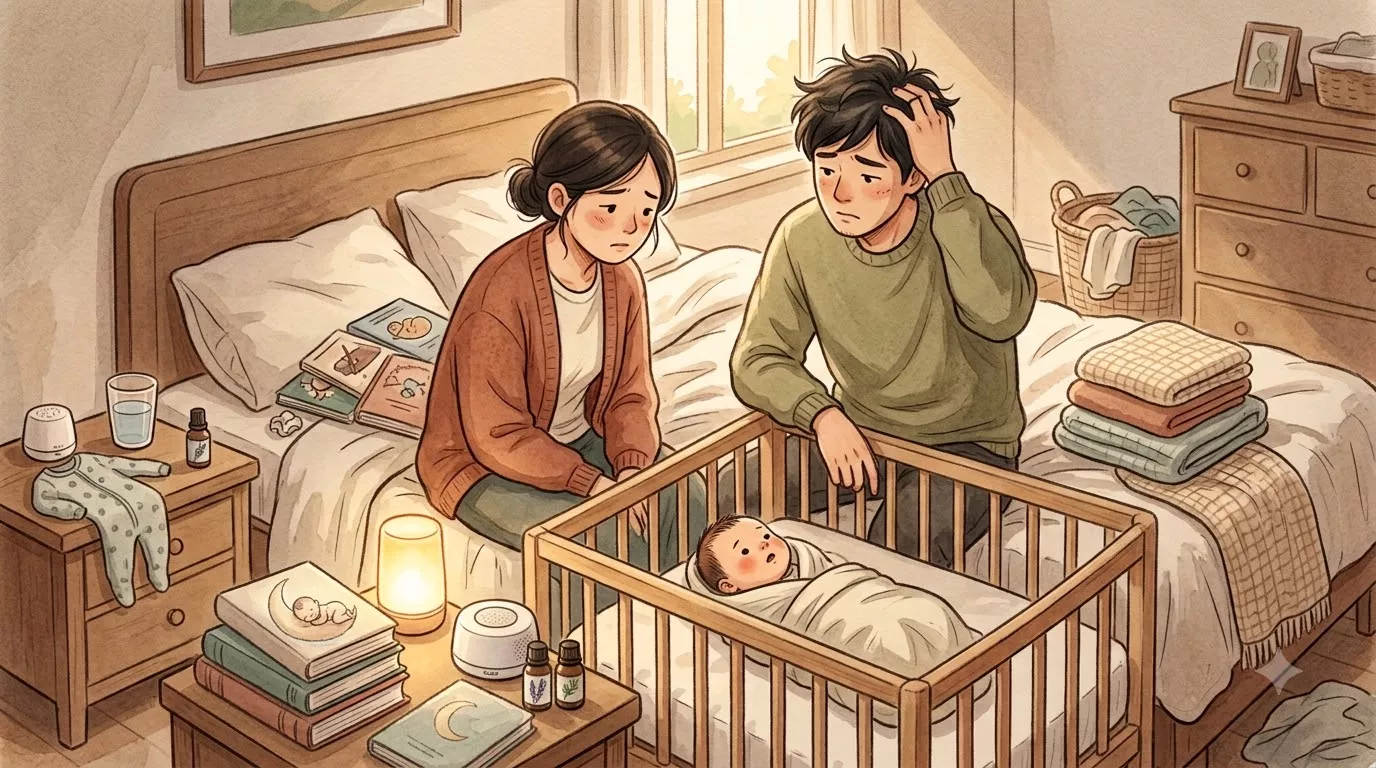
A few things made it harder.
Too much explaining at bedtime did not help. Once our child was tired and upset, long speeches only created more noise. Simple words worked better.
Starting on the wrong week did not help. If there was sickness, travel, major schedule change, or unusual stress, the transition felt heavier than it needed to.
Buying new sleep things did not fix the habit by itself. A new bed, sheet, night light, or sleep sack can support a transition, but it cannot replace consistency.
Changing strategies every fifteen minutes did not help either.
This was probably the hardest one for me.
When your child is crying, every part of you wants to find the fastest way to stop it. But if we rocked, then left, then came back, then stayed, then brought them to our bed, then tried again tomorrow, the message became unclear.
We did not need a perfect plan.
But we did need a steady one.
The last thing that did not work was self-blame.
Every hard night made me want to replay everything we had done before. Why did we start this? Why did we wait so long? Why is this so difficult?
None of those questions helped at midnight.
The better question was simpler:
What is the next calm thing we can do?
The First Night It Felt Different
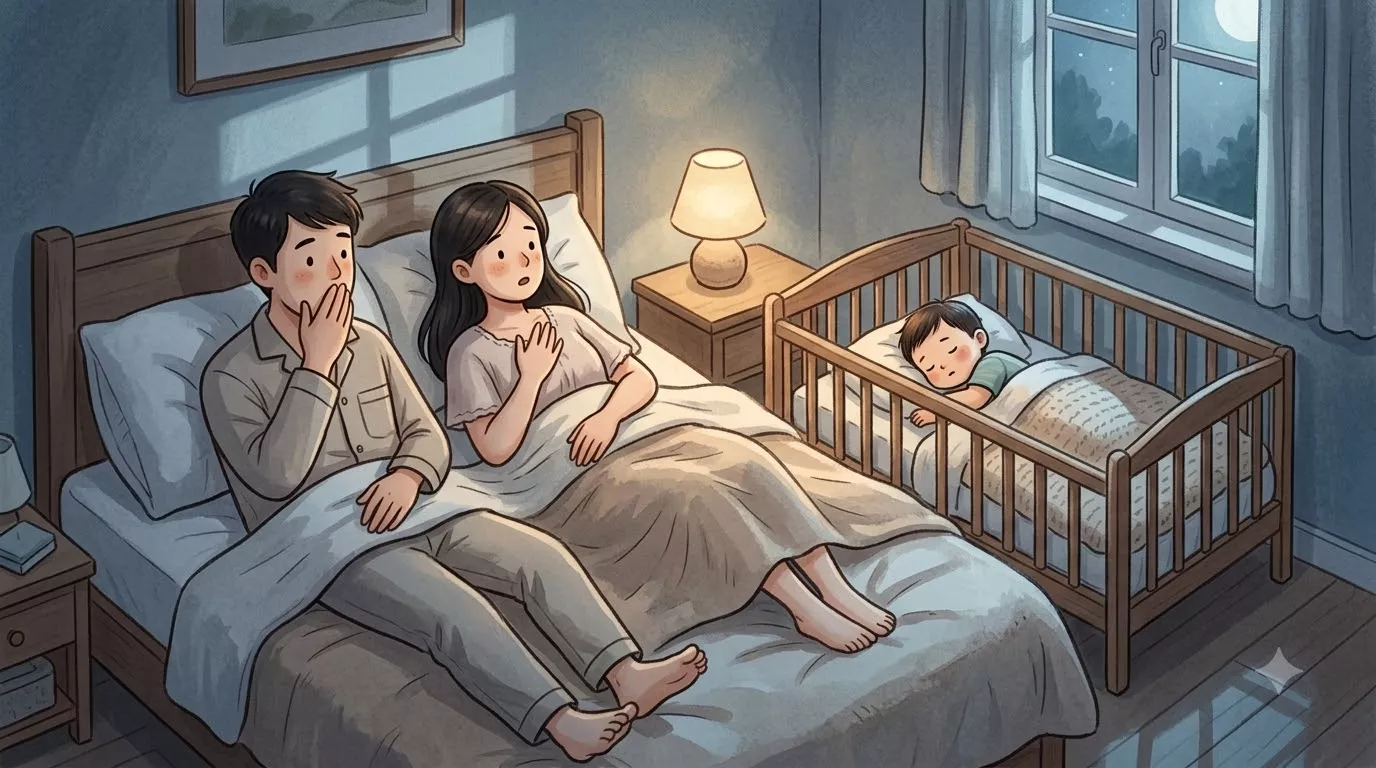
I remember the first night that felt different.
Not perfect.
Just different.
Our child woke, stirred, made a sound, and then settled again without fully needing us.
I lay there waiting.
Surely they would call out.
Surely I would need to get up.
But the room stayed quiet.
For the first time in a long time, I noticed the space around my own body. I could move my arm. Turn slightly. Breathe without calculating whether I would wake someone.
It felt like a small miracle.
And also, strangely, a little sad.
There was a tenderness to being needed so intensely at night, even when it was exhausting. Letting go of co-sleeping meant letting go of that version of closeness too.
But it also gave us something back.
Rest.
Space.
A little more ease between my partner and me.
A child beginning to trust their own sleep space.
That first different night did not mean the work was over.
But it showed me the new thing was possible.
If You Are Still Co-Sleeping and Not Ready to Stop
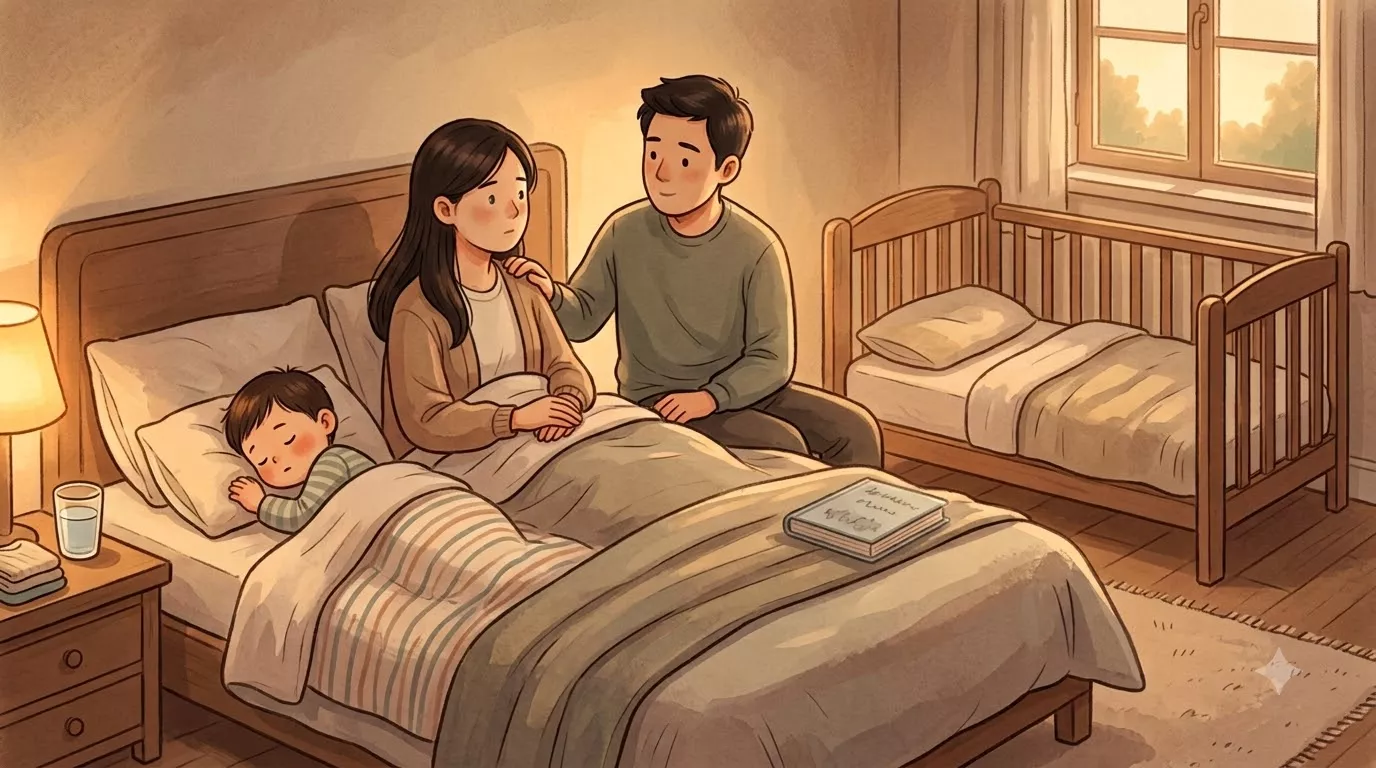
If you are still co-sleeping and not ready to stop, this is not me telling you that you have failed.
Some families are not ready.
Some children are not ready.
Some situations are complicated.
Some parents are doing the best they can with sleep deprivation, feeding, space, culture, support, and survival.
But if you do want to stop, you can begin smaller than you think.
You can begin by checking the safety of your current sleep setup.
You can begin by moving toward room-sharing on a separate sleep surface if your child is still an infant.
You can begin by making the crib, cot, or bed more familiar during the day.
You can begin with one part of the night.
You can begin with one parent sitting nearby.
You can begin with a bedtime routine that is short enough to repeat.
Also, some situations make bed-sharing especially risky for babies. NHS guidance says not to share a bed with a baby if either parent has drunk alcohol, taken drugs or medicine that causes drowsiness, smokes, or if the baby was born premature or with low birth weight; it also says parents should never sleep with a baby on a sofa or armchair. (BSW ICB)
If any of this applies to you, please ask a healthcare professional for safer sleep support.
You deserve help, not shame.
Stopping Co-Sleeping Was Not the End of Closeness
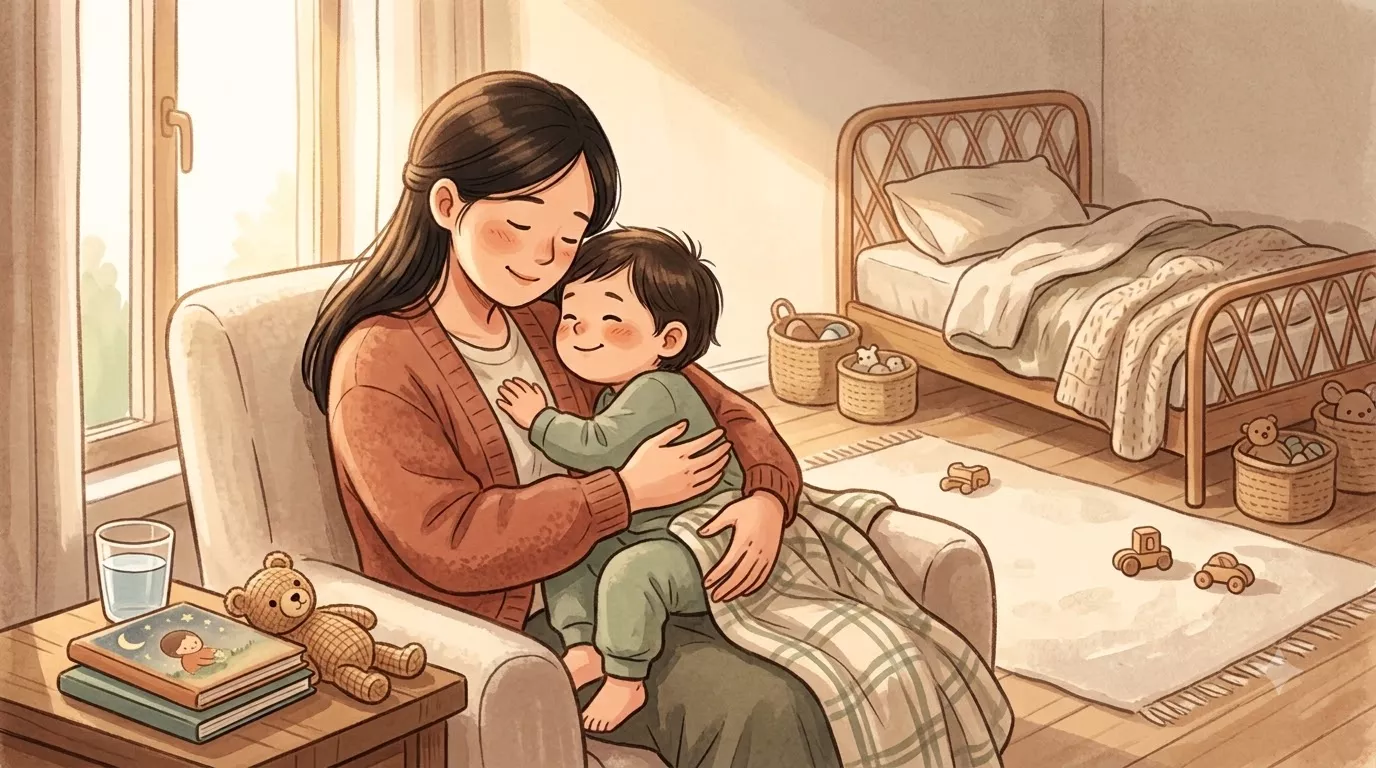
I was afraid stopping co-sleeping would make our child feel pushed away.
It did not.
The closeness changed shape.
We still cuddled before bed.
Still read books.
Still sang the same song.
Still held hands through crib bars or sat beside the bed when needed.
Still had morning snuggles.
Still had the kind of days where a small body climbed into my lap as though it had always belonged there.
What changed was that closeness no longer had to mean giving up rest every night.
That was the lesson I needed.
We did not stop co-sleeping because we wanted less connection.
We stopped because we needed connection to include sleep, space, safety, and the quiet trust that our child could rest without being pressed against us all night.
It took time.
It took consistency.
It took a few nights where I wondered if we were doing it wrong.
But slowly, our child learned.
And so did we.
Closeness did not disappear when we changed where everyone slept.
It simply found new places to live.