


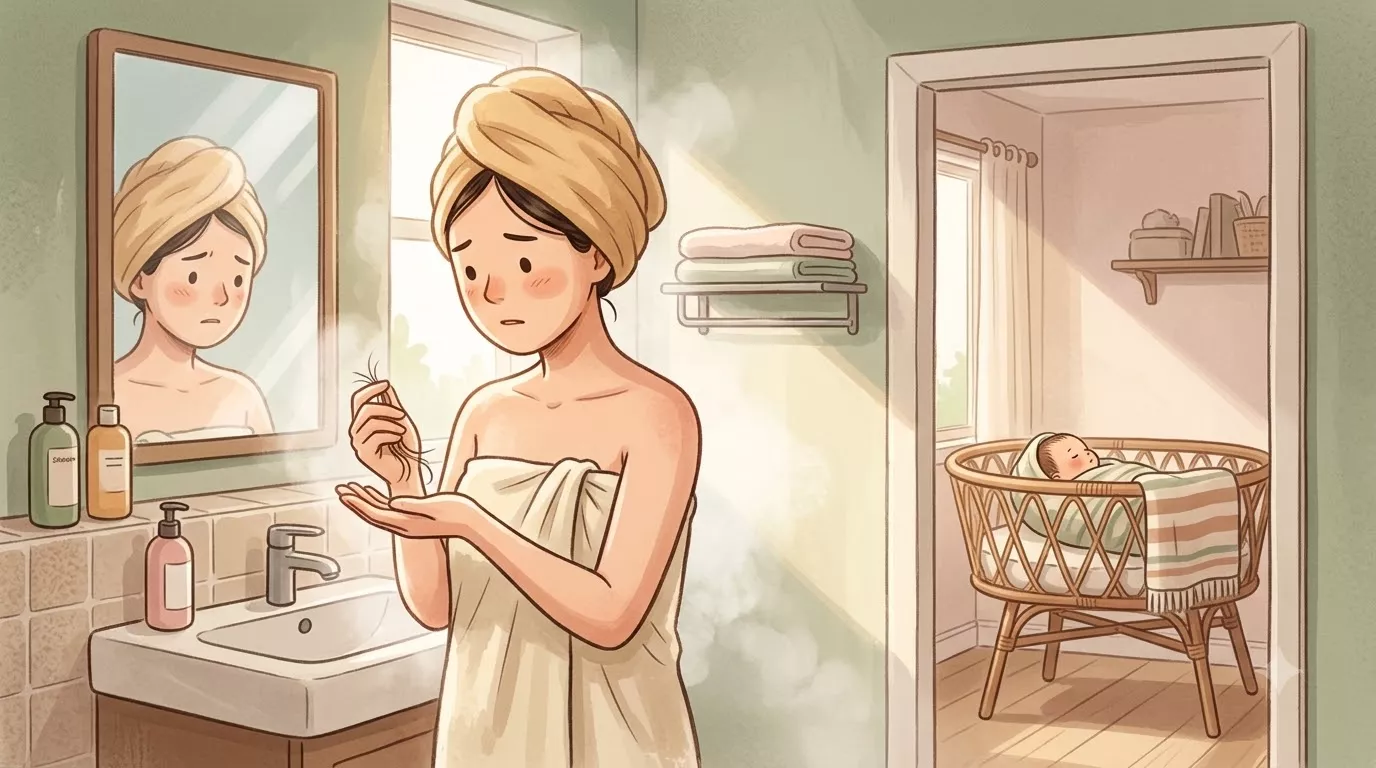
Not one or two strands.
A small handful.
Then more when I rinsed my hair. More when I ran my fingers through the ends. More in the drain than I was prepared to see on a morning when I already felt tired, soft, leaky, stretched thin, and not fully like myself.
I remember standing there with wet hair stuck to my hands, wondering whether something was wrong.
Postpartum had already changed so much. My sleep. My body. My skin. My patience. My sense of time. And then, just when I thought I was slowly learning this new version of myself, my hair started falling out too.
If you have ever searched is postpartum hair loss normal and how long does it last, you probably were not being vain. You were scared because the shedding looked too much to be normal.
The reassuring answer is that postpartum hair shedding is usually common, temporary, and linked to the hormonal shift after birth. But it is also okay to feel upset by it. “Normal” does not always mean easy.
Is Postpartum Hair Loss Normal?
Yes, postpartum hair loss is usually normal.
More accurately, dermatologists often call it excessive hair shedding rather than true hair loss. The American Academy of Dermatology explains that many new mothers notice visible shedding a few months after giving birth, and this is typically telogen effluvium, a temporary shedding pattern caused by falling estrogen levels after birth.
That distinction matters.
True hair loss can mean something is stopping the hair from growing. Postpartum shedding usually means more hairs than usual are entering the shedding phase at the same time. It can look dramatic, especially when the hair gathers in the shower, on the pillow, around your baby’s clothes, or in your brush.
But in many cases, the follicle is not permanently damaged.
The hair cycle is shifting back.
Still, being told “this is normal” does not always make it feel less frightening. When you are newly postpartum, even one more change can feel like too much. You may already be adjusting to a body that feels unfamiliar, and hair can be tied closely to identity, confidence, and feeling like yourself.
So yes, it is usually normal.
And yes, it can still feel emotional.
Why It Happens After Birth
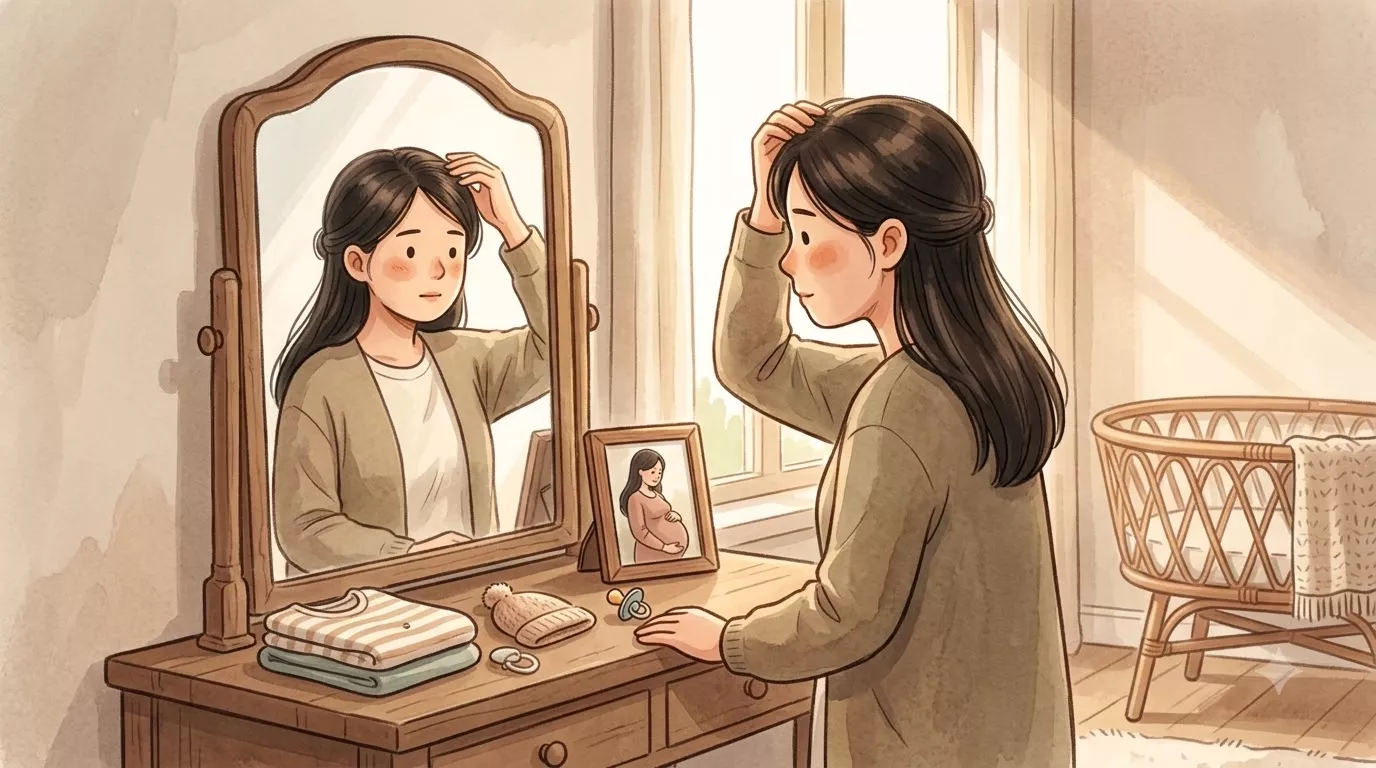
During pregnancy, many people notice thicker or fuller hair. That is not just imagination.
Higher estrogen levels during pregnancy can keep more hair in the growth phase for longer, so less hair sheds than usual. After birth, estrogen levels fall, and the hairs that were being held in that extended growth phase can shift into the shedding phase together. Johns Hopkins describes postpartum hair thinning, or telogen effluvium, as a common and temporary process that happens as hormones return to normal after childbirth.
So it can feel as though your hair is suddenly falling out.
But often, it is hair your body had been holding onto during pregnancy finally shedding at once.
That does not make it pleasant. It just helps explain why it can look so sudden.
One day your hair may still feel full. Then a few weeks later, the shower drain tells a completely different story. It is not that you did something wrong. It is not usually because you washed your hair too often or used the wrong brush. It is part of the postpartum hormone shift that many new mothers experience.
Your body is not betraying you.
It is readjusting.
When Does Postpartum Hair Loss Usually Start?
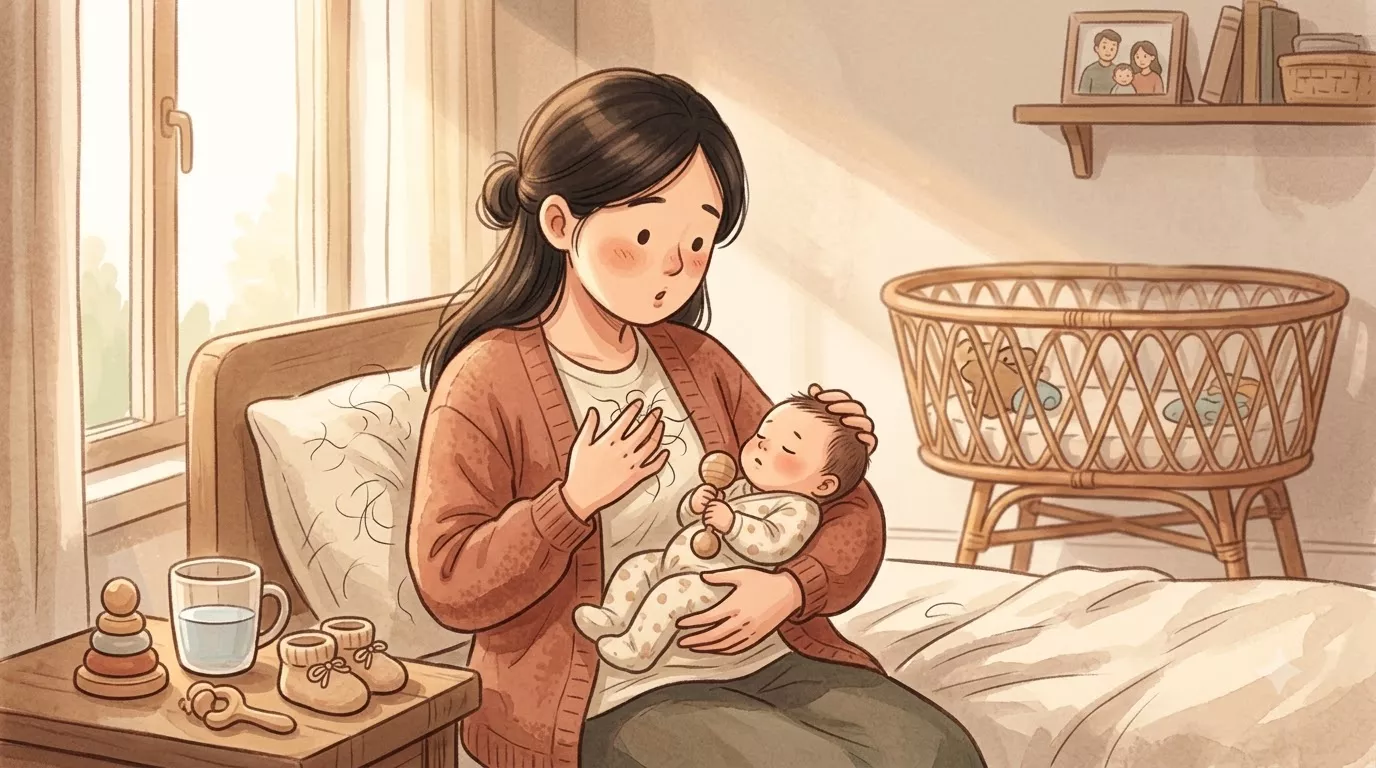
Postpartum hair shedding does not always begin immediately after birth.
That delay can make it more confusing.
You may get through the first few weeks thinking your hair seems normal. You may even feel as though you have already survived the biggest physical changes. Then, around the third or fourth month, the shedding suddenly becomes hard to ignore.
The AAD says many new mothers notice excessive shedding a few months after having a baby, and that shedding often peaks around four months after giving birth. Johns Hopkins also notes that postpartum hair loss usually starts about three months after delivery, which lines up with the natural timing of the hair growth cycle after hormone levels shift.
That timeline can be unsettling because it often arrives during another difficult stage.
Around three or four months postpartum, many parents are still sleep-deprived. Some are returning to work. Some are still figuring out feeding. Some are dealing with the emotional drop after the early newborn rush. Then the hair shedding begins, and it can feel like yet another thing to manage.
If this is where you are, it does not mean you missed a warning sign earlier.
For many people, this is exactly when postpartum hair shedding becomes visible.
How Long Does Postpartum Hair Loss Last?
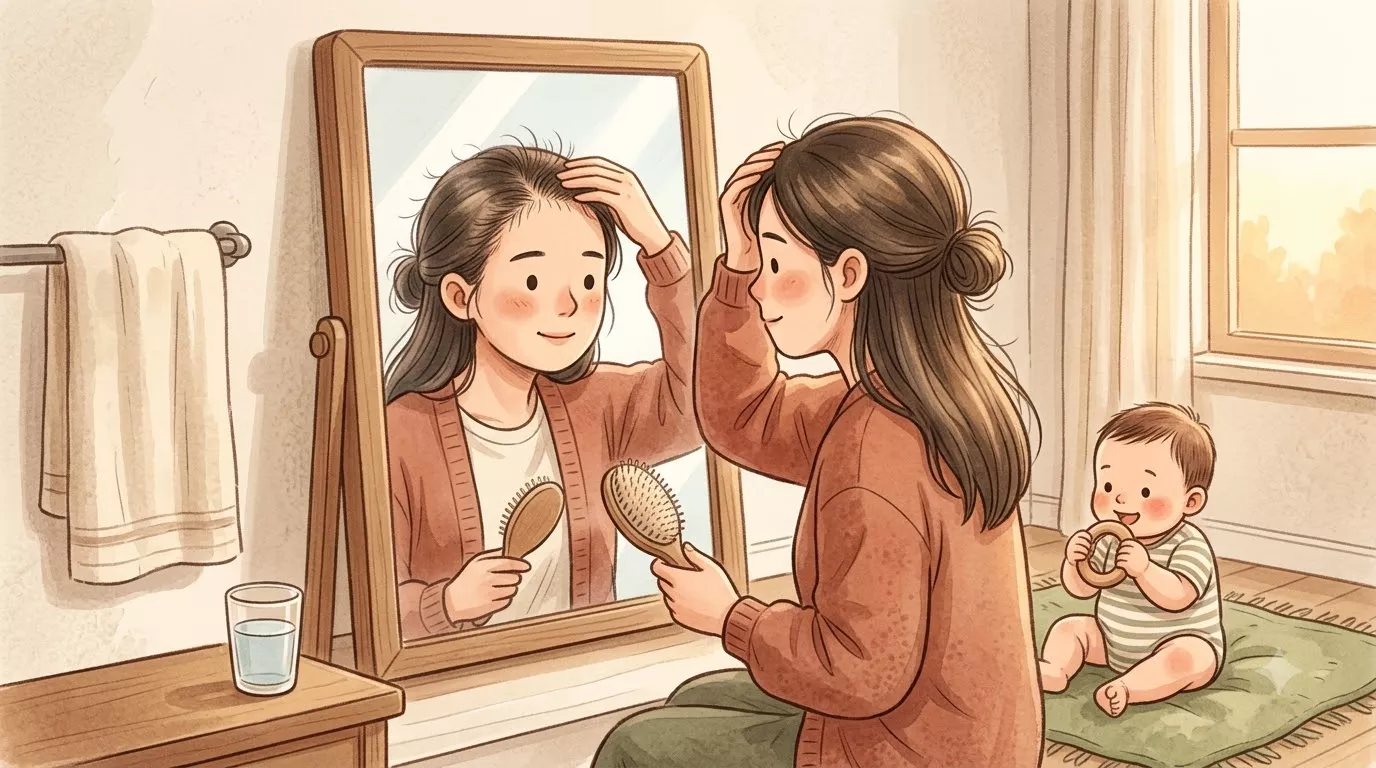
This is usually the question that matters most once the shedding starts.
How long will this last?
The general answer is that postpartum hair loss usually improves within months, though the timeline varies. The AAD says most women see their hair return to its normal fullness by their child’s first birthday, and many regain normal fullness earlier. It also notes that if hair has not regained normal fullness after one year, it may be worth seeing a dermatologist because something else could be contributing.
Johns Hopkins gives a similar range, saying hair typically returns to its normal growth cycle after about six to twelve months.
That means it may not stop in a week.
It may not stop just because you changed shampoo.
It may take time, which can be frustrating when the evidence is sitting in your hairbrush every day.
But for many new mothers, this is a temporary season. The shedding gradually slows. The drain looks less alarming. The hairline may begin showing little new hairs. Your ponytail may start feeling more familiar again.
It may not happen all at once.
But it can happen quietly, slowly, and without you noticing the exact day it began to improve.
What Postpartum Hair Shedding Can Look Like Day to Day
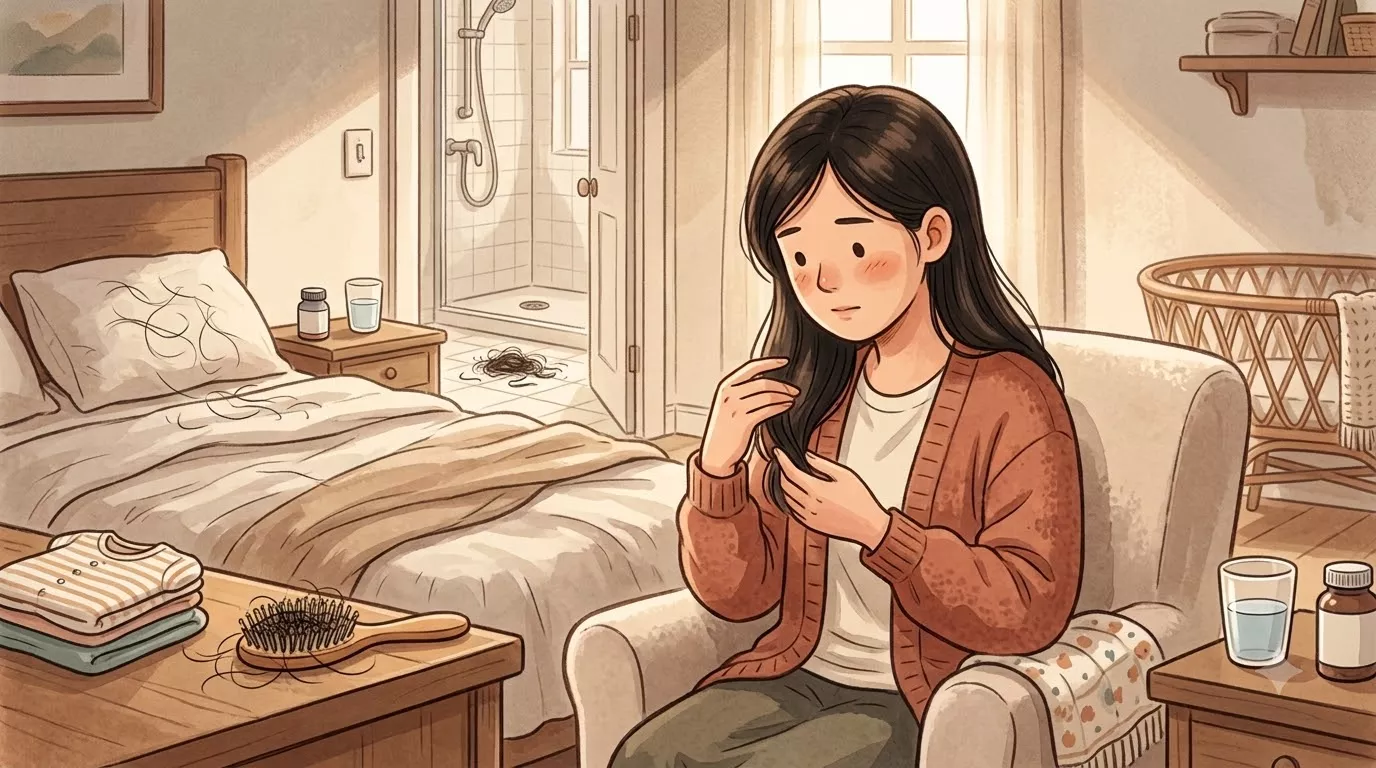
Postpartum hair loss can show up in very ordinary places.
The shower drain.
Your pillow.
The baby’s blanket.
Your shirt.
The bathroom floor.
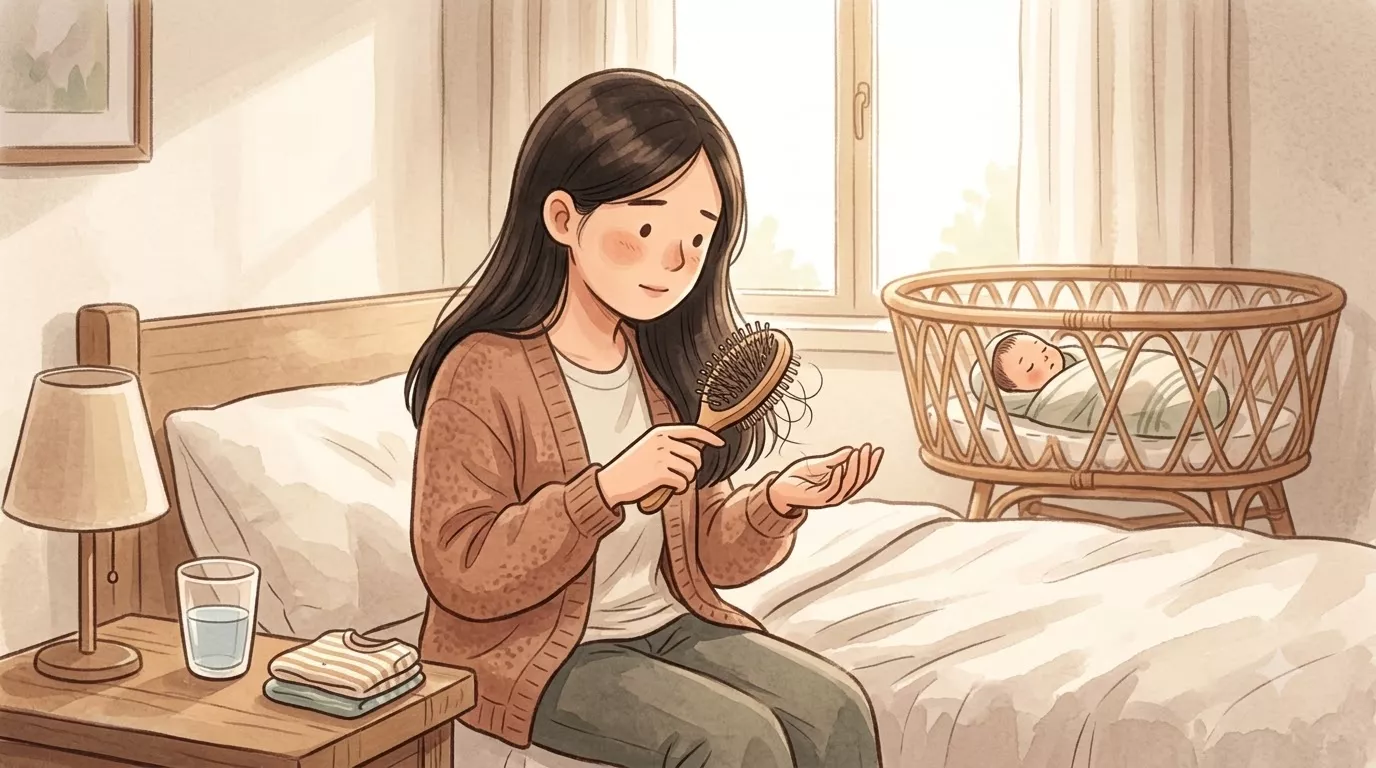
The hairbrush that suddenly looks as though it belongs to three people instead of one.
Some mothers notice thinning around the temples or hairline. Some notice their part looking wider. Some feel as though every time they wash their hair, a shocking amount comes away in their hands.
Later, when regrowth begins, you may see short “baby hairs” around your forehead. They may stick up strangely, refuse to lie flat, or create a fuzzy halo around your hairline.
It can be annoying.
It can also be reassuring.
Those tiny hairs may be a sign that the cycle is moving forward.
Still, the emotional part can be harder than people expect. It is not “just hair” when you are already trying to recognize yourself in a changed body. It can make you avoid mirrors, change how you tie your hair, or feel less like the person you remember from before pregnancy.
You are allowed to care.
Caring does not make you shallow.
What You Can Do While Waiting for It to Pass
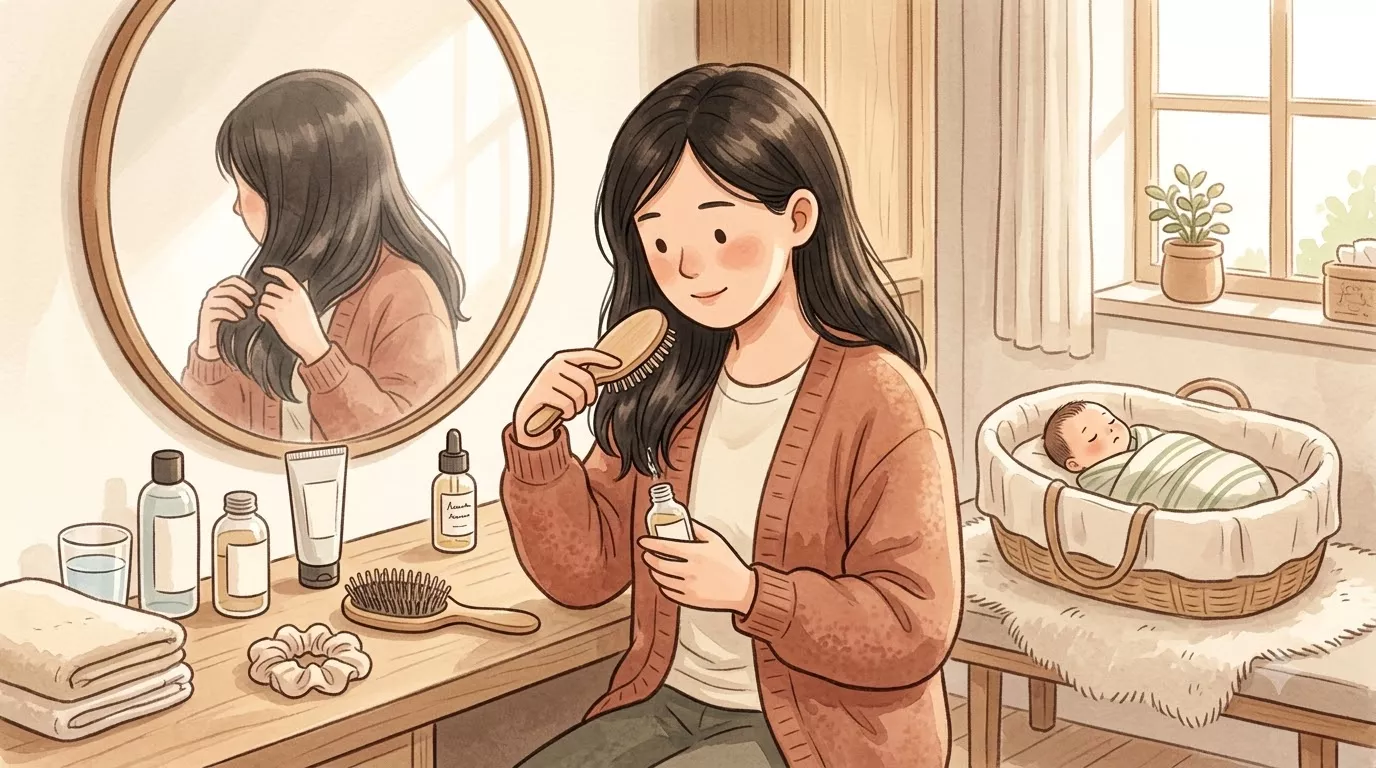
There is no magic trick that stops normal postpartum shedding overnight.
That can be disappointing, but also freeing. You do not have to chase every cure.
What you can do is make your hair look and feel a little better while the shedding runs its course, and reduce extra breakage where possible.
The AAD suggests using a volumizing shampoo, avoiding heavy conditioning shampoos that can weigh hair down, and choosing conditioners carefully so hair appears fuller while it regains normal fullness.
Gentle care can help too.
Use a soft touch when brushing. Avoid pulling hair back tightly every day. Try not to use high heat constantly if your hair feels fragile. Choose loose styles when possible. If your baby loves grabbing hair, a soft clip, loose braid, or gentle tie may help without creating too much tension.
This is not about stopping the hormonal shedding completely.
It is about not adding extra stress to hair that is already going through a temporary shift.
It may also help to eat as consistently as postpartum life allows. A balanced diet supports recovery in general, and Johns Hopkins notes that nutritional deficiencies can be one of the factors that may contribute to postpartum hair loss for some people.
But please do not turn this into another reason to judge yourself.
Some days, eating well with a baby is hard.
Do what you can.
Be Careful With Supplements and Quick Fixes
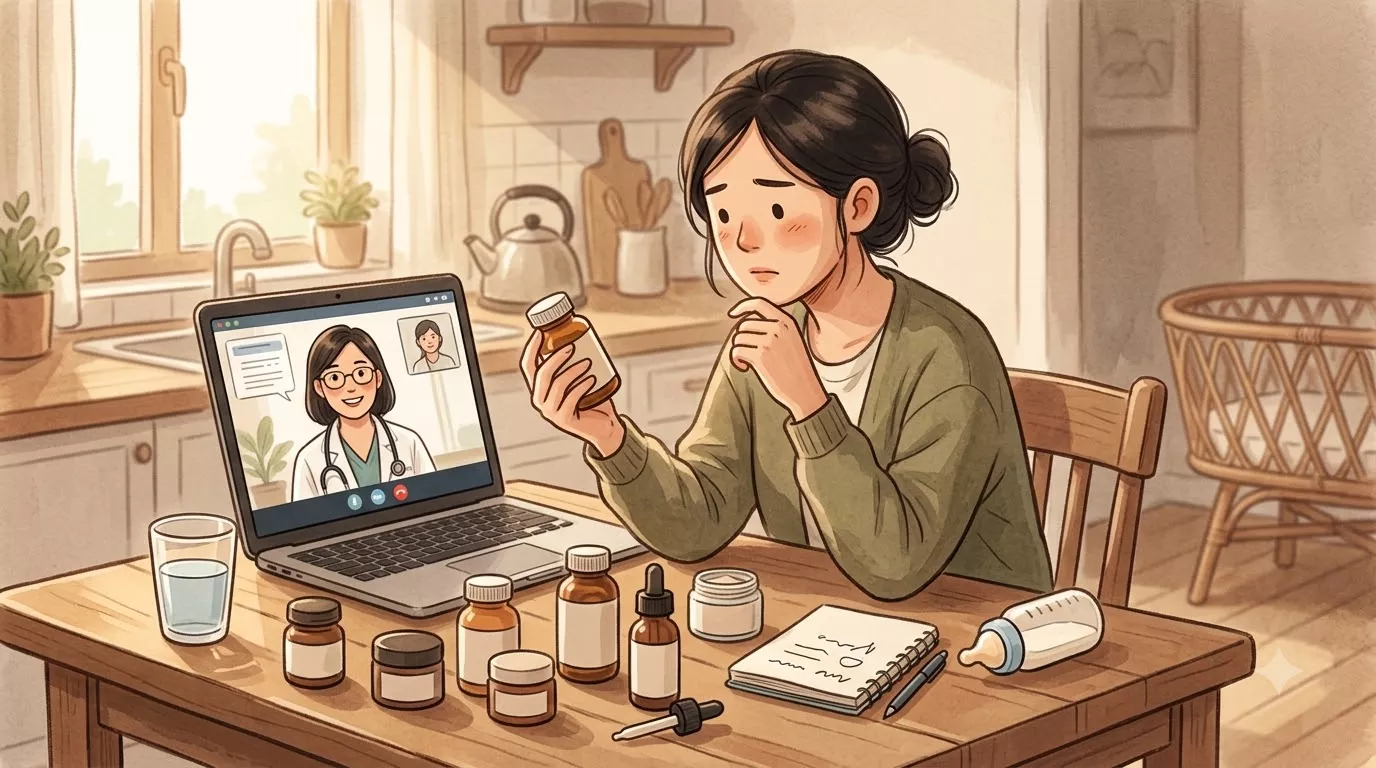
When hair starts falling out, it is very tempting to buy something.
Biotin.
Collagen.
Hair gummies.
Scalp tonics.
Anything that promises growth, thickness, or rescue.
The problem is that not every supplement is necessary, and “beauty support” does not automatically mean safe or useful for your situation, especially if you are breastfeeding, taking medication, or recovering from birth.
The AAD advises that dermatologists may check for things like low iron or other deficiencies when evaluating hair loss, and that accurate diagnosis matters because people lose hair for many different reasons. In other words, the better question is not “Which supplement is popular?” but “Is something actually missing, and is this safe for me?”
This is especially important with iron. Iron can be necessary if you are deficient, but taking too much can be harmful. So it is better to ask your doctor before starting high-dose supplements.
If you want to try something, bring it to your doctor, pharmacist, or dermatologist first.
Take a photo of the label.
Ask whether it is safe while breastfeeding.
Ask whether your symptoms suggest checking iron, thyroid, vitamin D, or other levels.
A supplement should not become one more thing you panic-buy in the middle of postpartum fear.
When to Talk to a Doctor or Dermatologist
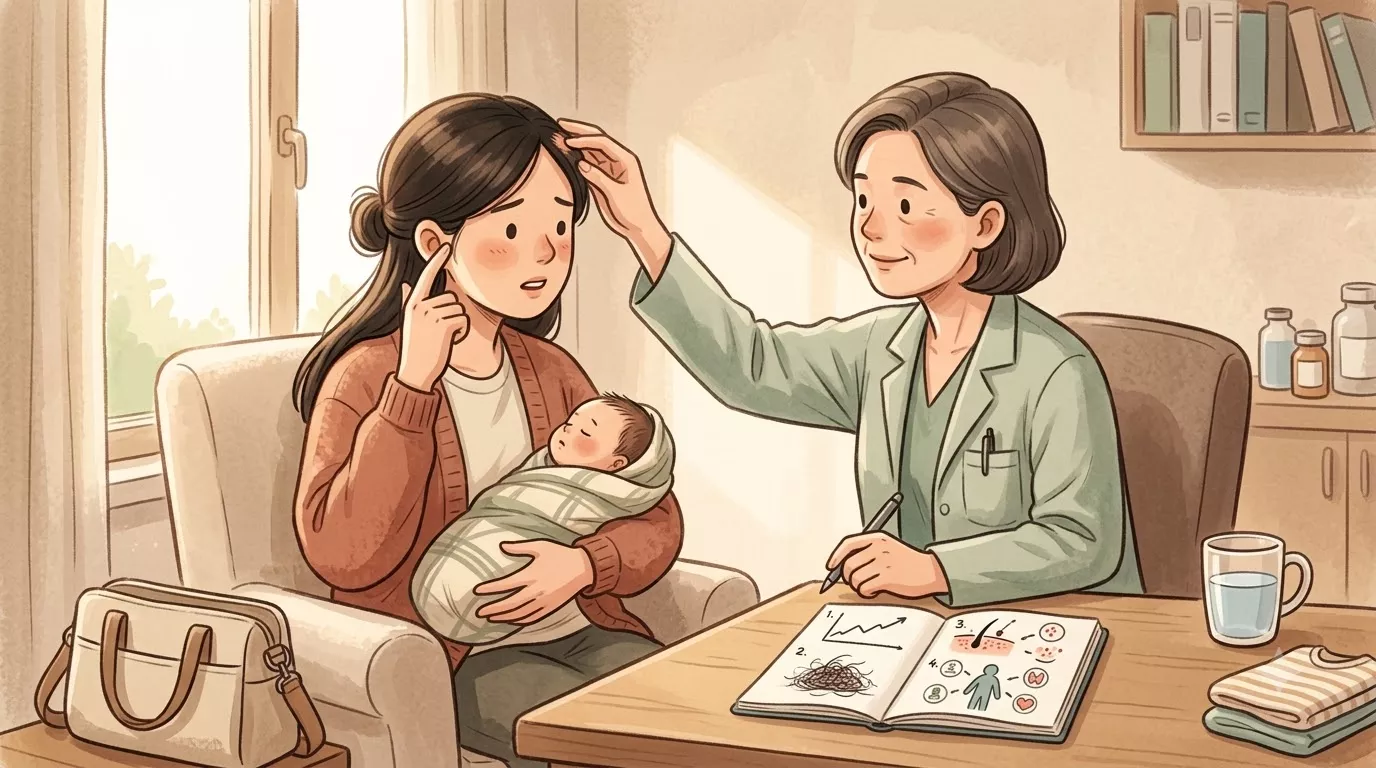
Most postpartum hair shedding is temporary, but there are times when it is worth getting checked.
Consider speaking with a doctor or dermatologist if your hair has not started returning to its normal fullness by about one year postpartum, if you notice round bald patches, if the thinning seems patterned or severe, or if your scalp is painful, red, itchy, scaly, or inflamed.
It is also worth asking for medical advice if the hair loss comes with other symptoms such as extreme fatigue, dizziness, heart palpitations, unexpected weight changes, cold intolerance, or feeling unusually unwell. Johns Hopkins notes that other possible contributors to postpartum hair loss can include nutritional deficiencies and thyroid disease that is untreated or not optimally treated.
The AAD also says that if hair does not regain normal fullness after one year, a dermatologist can help check whether something else is causing hair to fall out.
Asking does not mean you are overreacting.
It means you are paying attention.
If something feels off, you are allowed to bring it up. You do not have to wait until it feels dramatic enough to deserve care.
The Emotional Part Matters Too
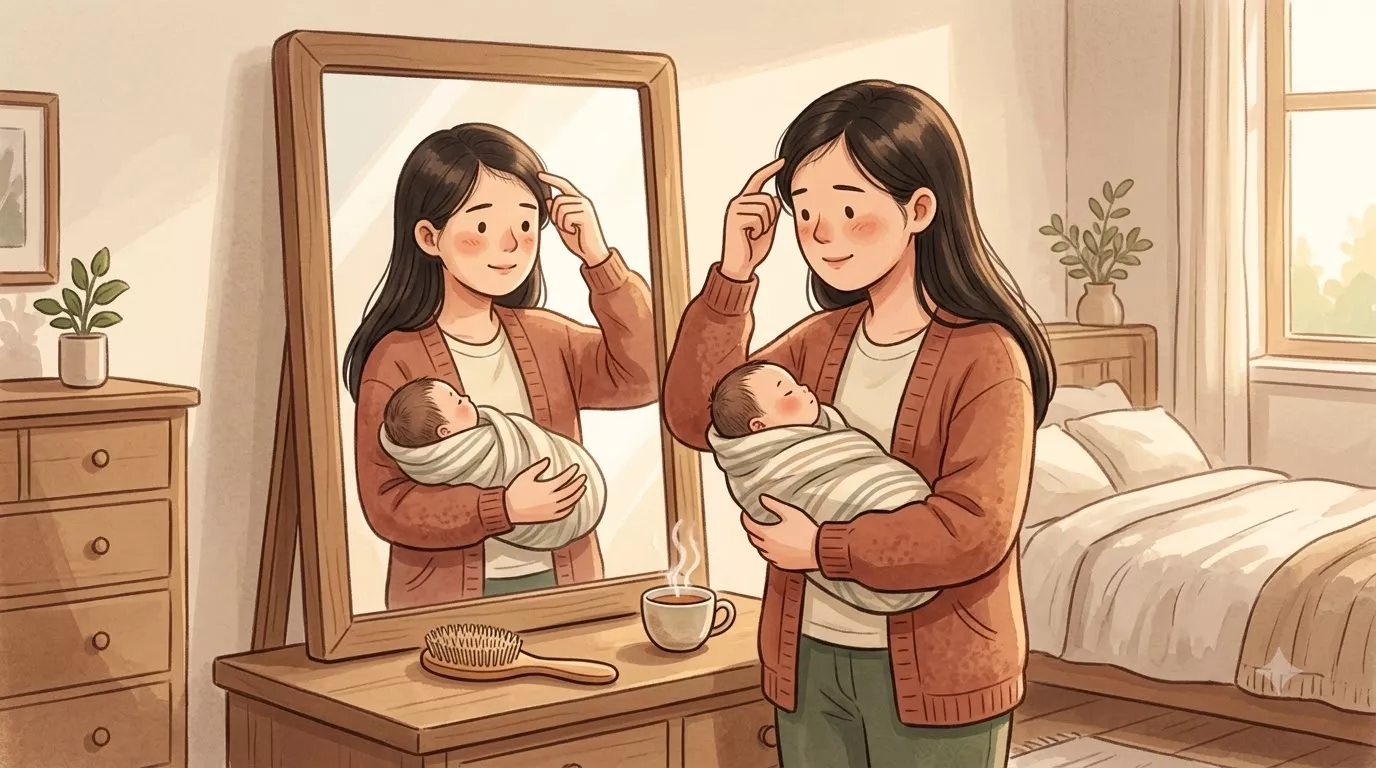
People may say, “It’s just hair.”
But postpartum is rarely about just one thing.
It is the hair in the drain on top of the broken sleep.
The thinning temples on top of the body changes.
The baby hairs on top of the identity shift.
The ponytail that feels smaller on top of the quiet question: Will I feel like myself again?
So no, postpartum hair loss is not usually dangerous.
But it can still hurt.
It can make you feel older, less attractive, less in control, or less recognizable to yourself. It can make you feel as though pregnancy and birth took another thing from you before you had fully recovered from the last change.
You do not have to pretend it does not matter.
You also do not have to believe it will always be this way.
One day, you may notice fewer hairs in the shower. Tiny regrowth along your hairline. A brush that does not scare you. A version of yourself slowly returning in the mirror.
Until then, this is not vanity.
It is one more postpartum change you are allowed to feel tender about.