


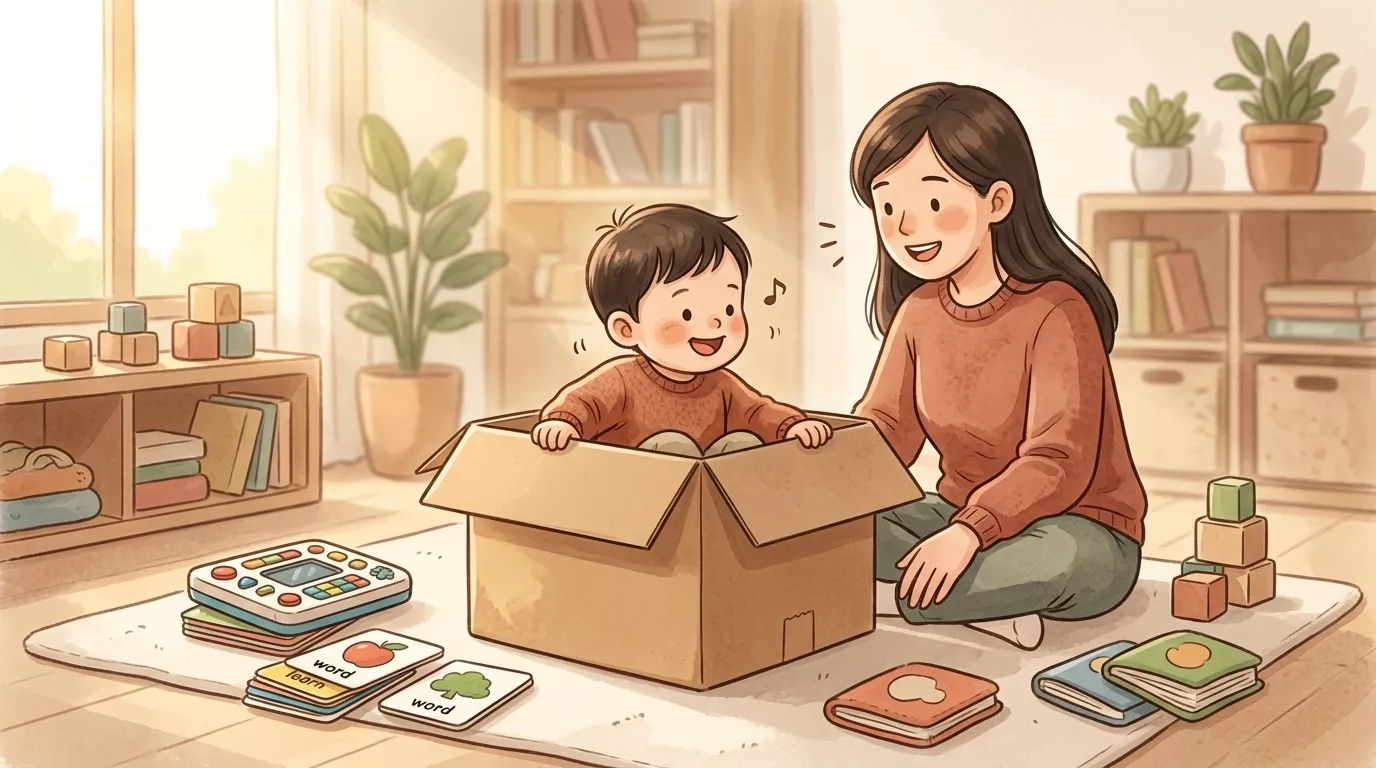
I once sat on the floor beside a small pile of things that promised to make my baby smarter.
Flashcards with bright pictures.
A toy that sang the alphabet.
A box that said “brain development” in confident letters.
A set of cards for colours, animals, numbers, shapes, and words my baby was nowhere near saying yet.
And while I was trying to decide which one to use first, my baby was busy playing with the cardboard box.
Not the toy inside.
The box.
He touched the corner. Hit it with his hand. Tried to lift it. Looked at me when it made a sound. Laughed when I tapped it back. Then did it again. And again. And again.
At first, I wondered if I should redirect him to something more “educational.”
Then I realized he was already learning.
If you have ever wondered why play matters more than flashcards for baby brain development, it may help to remember this: babies do not learn best by being tested. They learn by touching, moving, repeating, laughing, watching your face, hearing your voice, and trying again.
Play Is Not a Break From Learning
As adults, we often separate play from learning.
Learning sounds serious. Play sounds optional.
But for babies and young children, play is not what happens after the real learning is done. Play is the real learning.
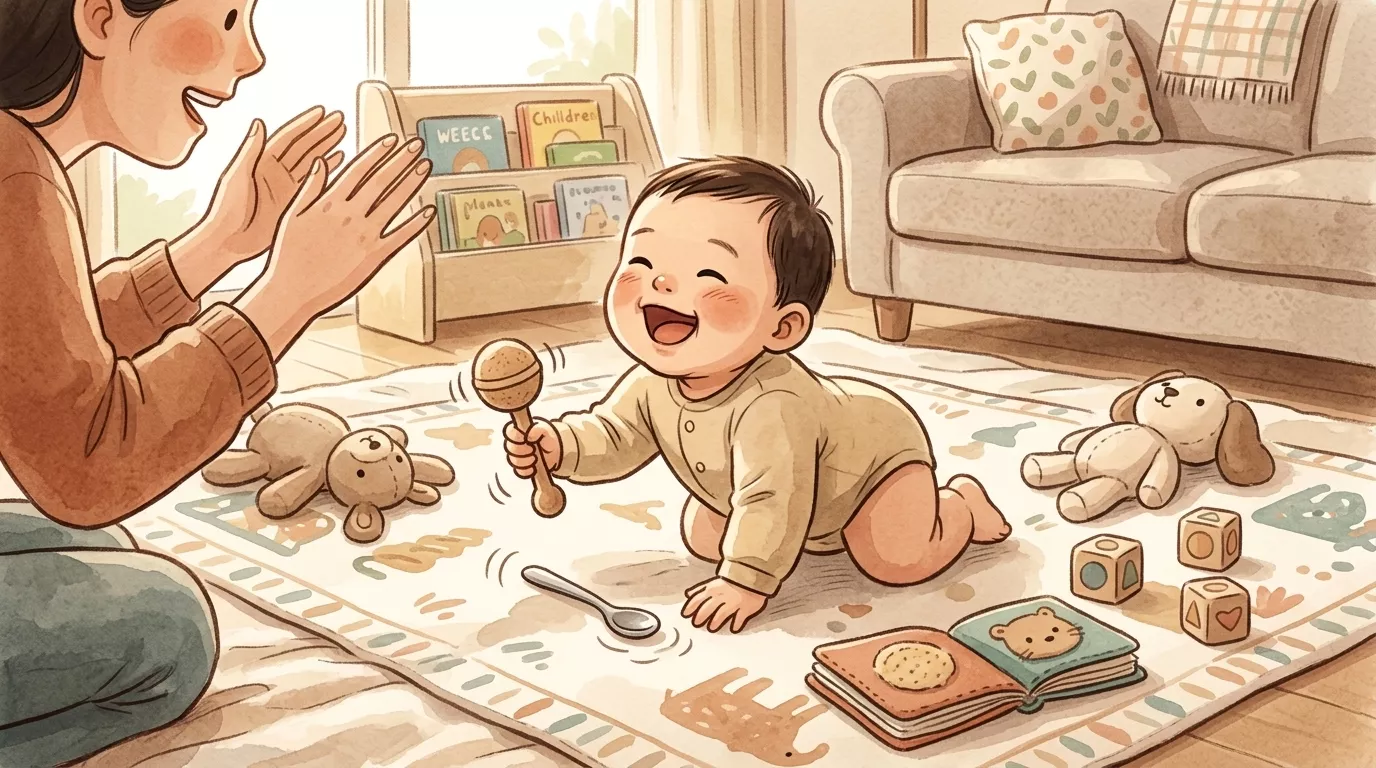
When a baby shakes a rattle, they are discovering sound and movement. When they drop a spoon again and again, they are learning cause and effect. When they crawl toward a toy, they are building strength, coordination, planning, and motivation. When they laugh during peekaboo, they are learning anticipation, connection, and surprise.
The American Academy of Pediatrics says play contributes to children’s cognitive, physical, social, and emotional well-being, and also gives parents a chance to engage fully with their children.
That means play is not the soft extra.
It is the foundation.
A baby does not need every moment to look academic. They do not need to be quizzed to be learning. They do not need a card held in front of them every time they see an animal, colour, or shape.
Sometimes the best learning looks like a baby banging two blocks together while you sit nearby and say, “That was loud.”
Why Babies Learn Better Through Real Interaction
A baby’s brain is not built by information alone.
It is built through relationship.
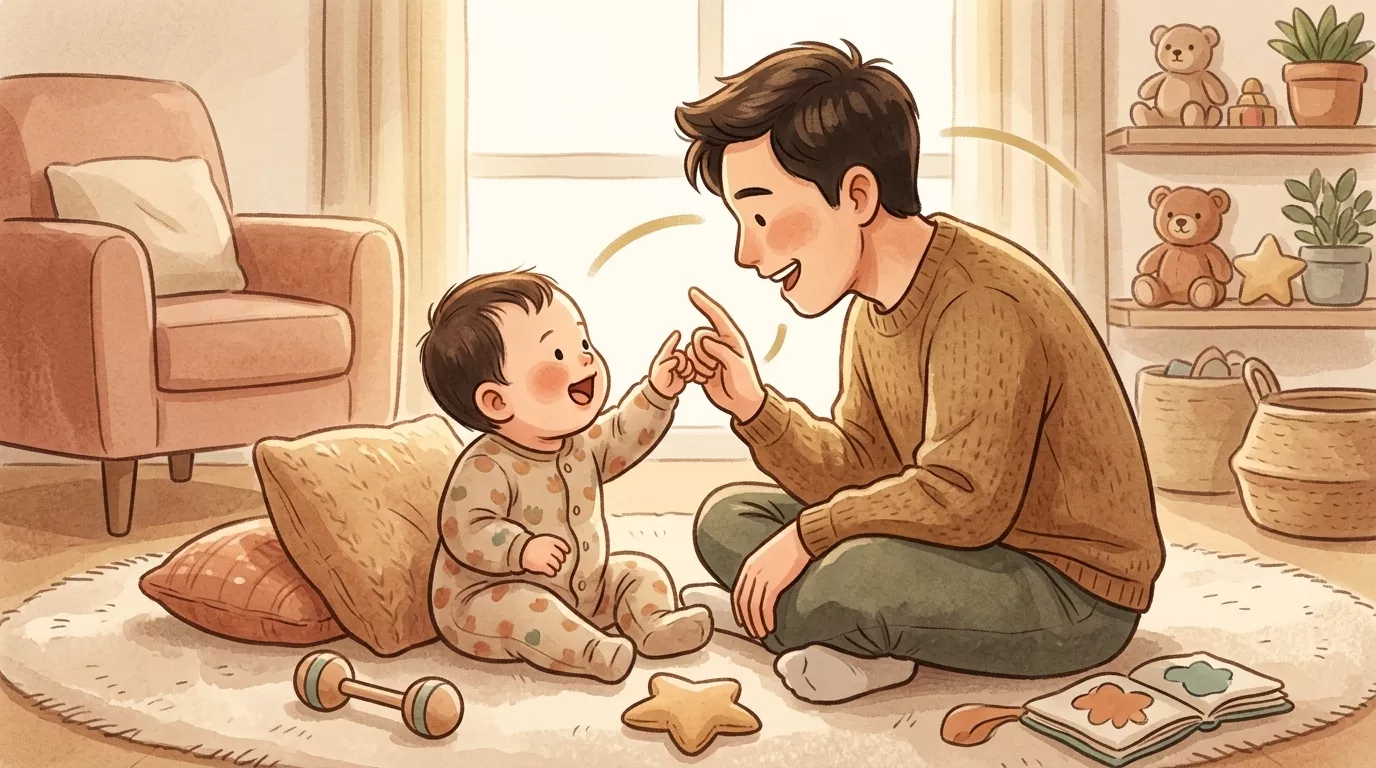
Your baby looks at you. You smile back. Your baby makes a sound. You answer. Your baby points, reaches, drops, laughs, or cries, and you respond. These tiny back-and-forth moments may look ordinary, but they are doing important work.
Harvard’s Center on the Developing Child describes playful interactions with adults as important from infancy, helping babies and toddlers build brain architecture, lifelong health foundations, and resilience. (
This is why a simple game of peekaboo can matter more than it looks.
Your baby is not only seeing your face disappear and return. They are learning rhythm. Expectation. Trust. Social attention. The joy of sharing a moment with someone who is fully there.
You do not have to turn every interaction into a lesson.
You do not have to say, “This is object permanence” while hiding behind a cloth.
You only have to be present enough to notice what your child is doing and respond.
That is where so much early learning begins.
Flashcards Can Name Things, But Play Helps Children Understand Them
Flashcards are not evil.
They can show pictures. They can introduce labels. They can be part of a short, fun moment with a child who enjoys them.
But flashcards have limits.
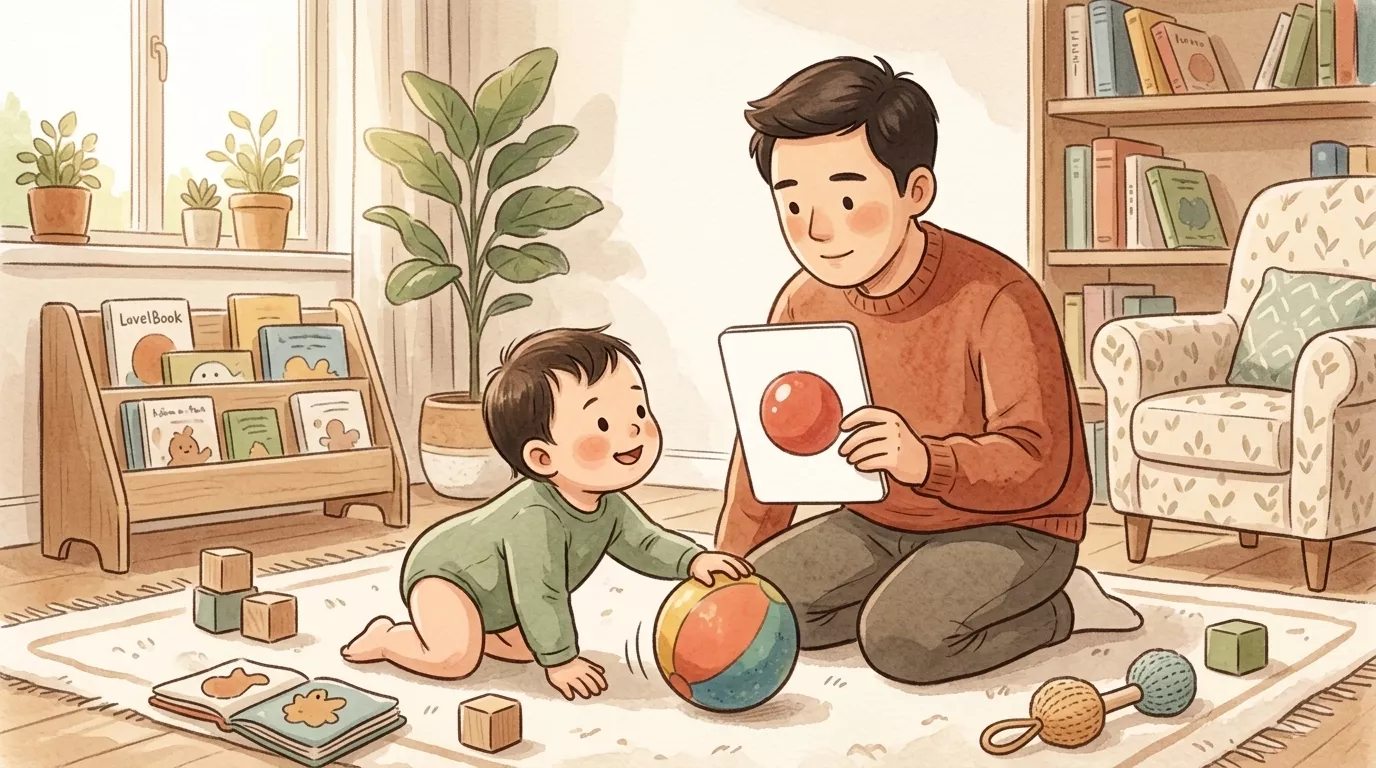
A flashcard can show a baby a picture of a ball. Play lets them discover what a ball does.
They can hold it. Roll it. Drop it. Chase it. Push it toward you and watch you push it back. Hear you say “ball” while the actual ball is moving across the floor. Feel its shape in their hands. Notice that it comes back when someone plays with them.
That is a much richer kind of learning.
Children learn through their senses, bodies, emotions, and relationships. A flat image can name a thing. Real play lets a child experience the thing.
This matters because young children are not just collecting vocabulary. They are building meaning.
A baby does not only need to know that a spoon is called a spoon.
They need to touch it, bang it, drop it, watch it fall, hear the sound, see your face react, and eventually learn that spoons are also for eating.
That kind of understanding is hard to fit on a card.
Repetition Is Not Boring to a Baby
One of the most humbling parts of parenting is realizing how much babies love repetition.
The same song.
The same book.
The same peekaboo.
The same block tower being knocked down.
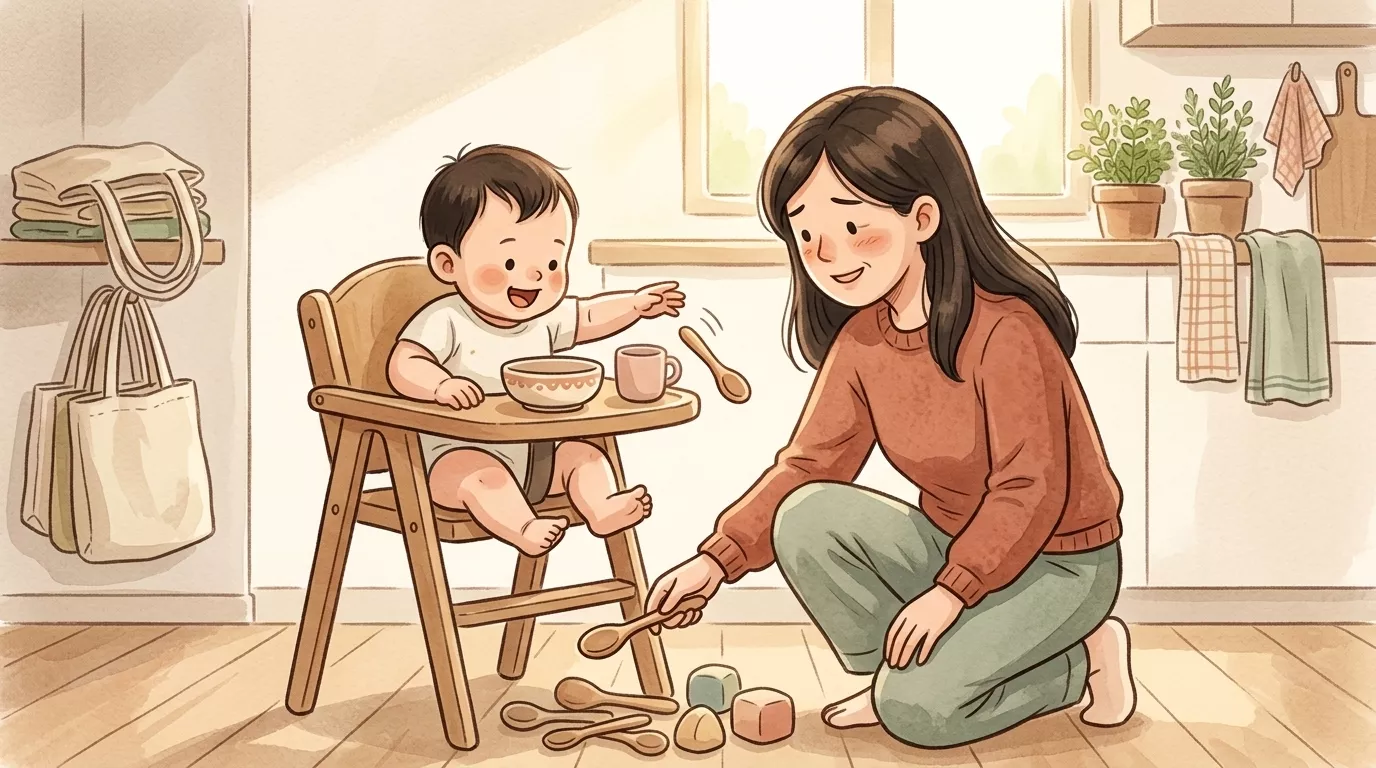
The same spoon dropped from the high chair as though it is part of a very serious scientific study.
To us, it can feel boring.
To them, repetition is how the world becomes understandable.
When a baby repeats an action, they are checking whether the result will happen again. If I drop this, will it fall? If I smile, will you smile? If I make this sound, will you answer? If you hide your face, will you come back?
Repetition helps babies predict. Prediction helps them feel safe. And when they feel safe, they are more able to explore.
This is why you do not need to invent a new game every day.
The game your baby wants to play for the fifteenth time may be doing more than keeping them occupied. It may be helping them build memory, confidence, attention, and connection.
You are allowed to get tired of the game.
Your baby is allowed to still need it.
Movement Is Brain Work Too
When parents think about brain development, we often imagine language, letters, numbers, and early learning tools.
But movement is brain work too.
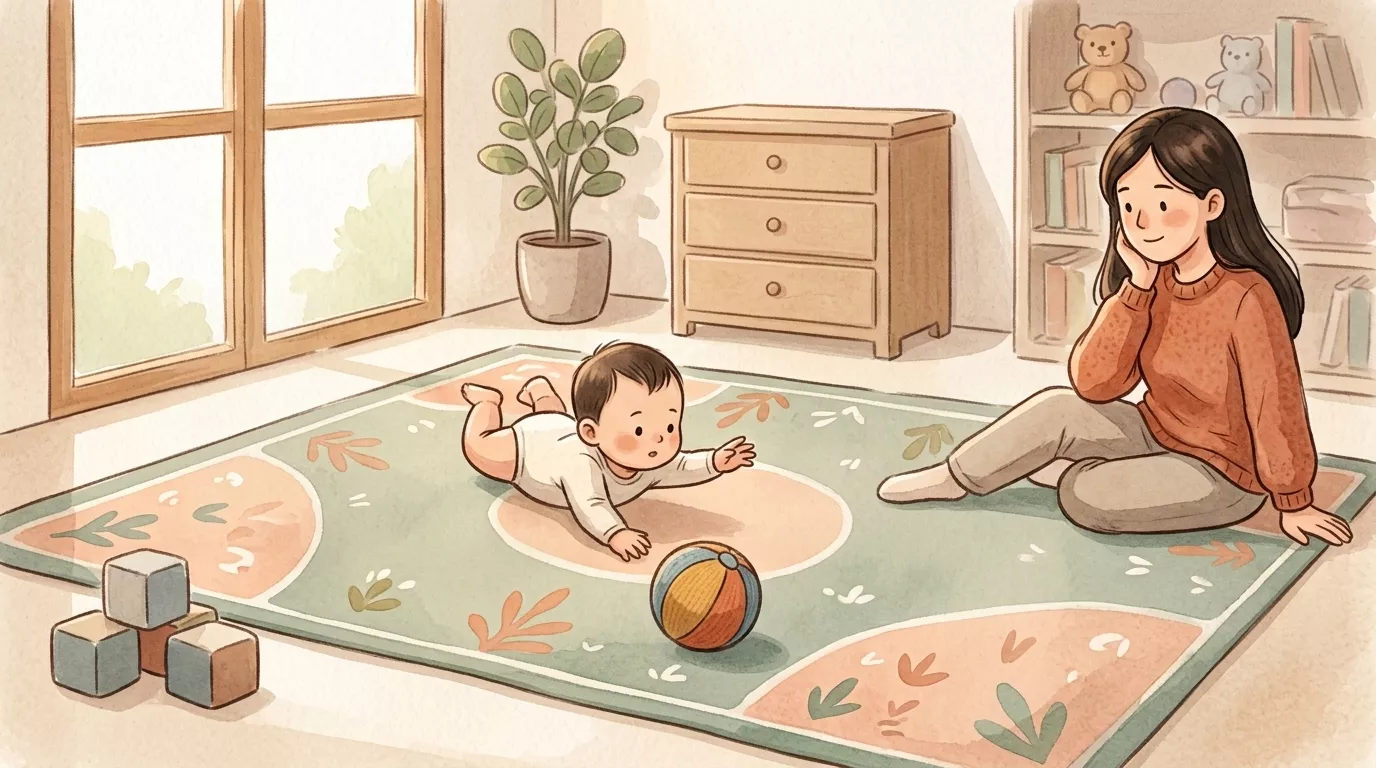
Rolling, crawling, reaching, pulling up, climbing safely, balancing, and walking all help a child understand their body and the space around them. Movement teaches distance, effort, coordination, problem-solving, and cause and effect.
A baby reaching for a toy is not “just moving.”
They are judging how far away it is. Shifting their weight. Using their eyes and hands together. Trying, failing, adjusting, and trying again.
Harvard’s play resources also connect playful activities with the development of executive function skills, which are the mental skills children use for attention, working memory, self-control, and flexible thinking.
This does not mean you need a complicated activity plan.
A safe floor space matters.
Tummy time matters.
A soft mat matters.
A ball to roll, a scarf to pull, blocks to stack, cushions to crawl around, a walk outside to look at leaves and birds — these are all part of development.
Your baby’s brain is not separate from their body.
They learn through both.
Play Builds Language Before Words Appear
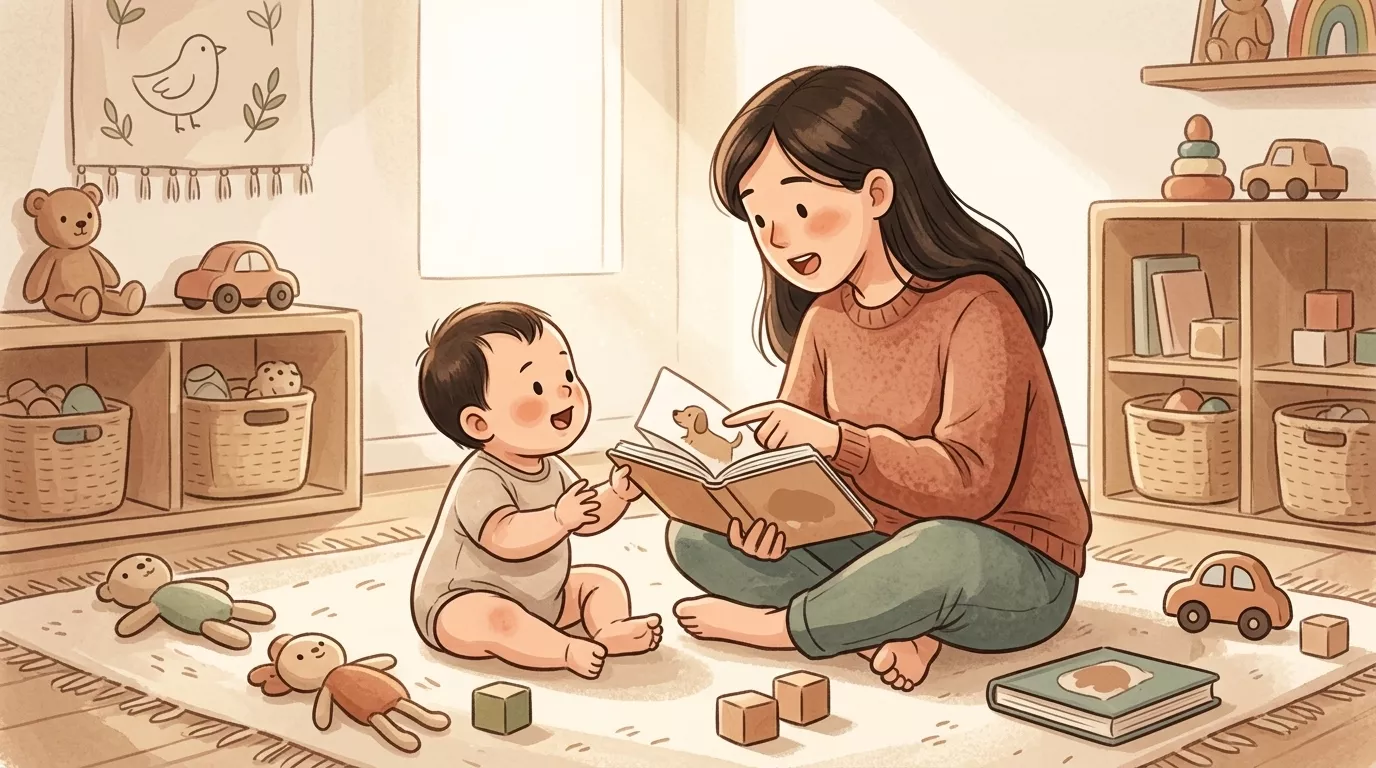
Long before babies speak clearly, they are listening.
They hear your voice during play.
“You found the spoon.”
“The car goes fast.”
“More bubbles?”
“Up, up, up.”
“Oh no, it fell!”
Language makes more sense when it is connected to something real. A word attached to an action, object, feeling, or shared moment is easier for a baby to absorb than a word presented like a test.
The CDC encourages parents to talk to babies, answer when babies make sounds by repeating and adding words, read to them, sing to them, and play with them as part of supporting language and development.
That is why play is such a powerful language environment.
You are not drilling vocabulary.
You are giving words a place to live.
When your baby splashes water and you say, “Splash,” the word belongs to the moment. When your toddler pushes a car and you say, “Fast car,” language connects to movement. When they hand you a toy and you say, “Thank you,” communication becomes social.
Babies do not need constant quizzes.
They need living language.
Free Play Helps Children Practice Problem-Solving
It can be hard not to jump in too quickly.
A child struggles to fit a block into a box, and we want to show them.
A toy rolls under the sofa, and we want to retrieve it immediately.
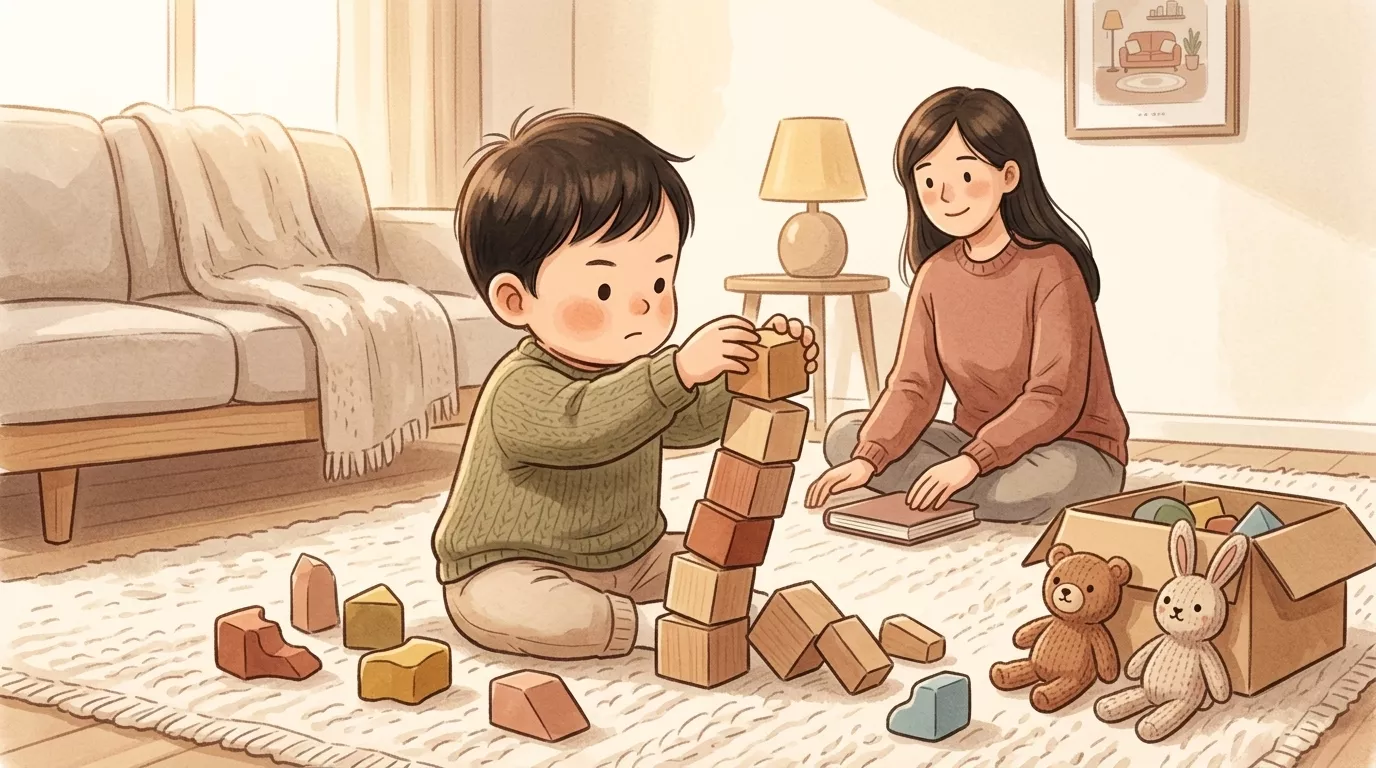
A tower falls, and we want to rebuild it for them.
Sometimes they do need help. But sometimes they also need a little space to try.
Free play gives children room to experiment. They can test ideas, make mistakes, change plans, and discover that frustration does not always mean the end of the activity.
UNICEF describes free play as important for children’s development because it supports creativity, problem-solving, and social skills through unstructured exploration.
That can look very simple at home.
A baby trying to reach a toy just out of grasp.
A toddler figuring out how to stack blocks higher.
A child using a cardboard box as a house, a car, then a drum.
These moments do not need to be corrected into something more productive.
They are already productive.
The adult’s role is not always to solve. Sometimes it is to stay near, keep the environment safe, and let the child discover what happens next.
Social Play Teaches Feelings, Turn-Taking, and Connection
Play is not only about intelligence.
It is also how children learn relationships.
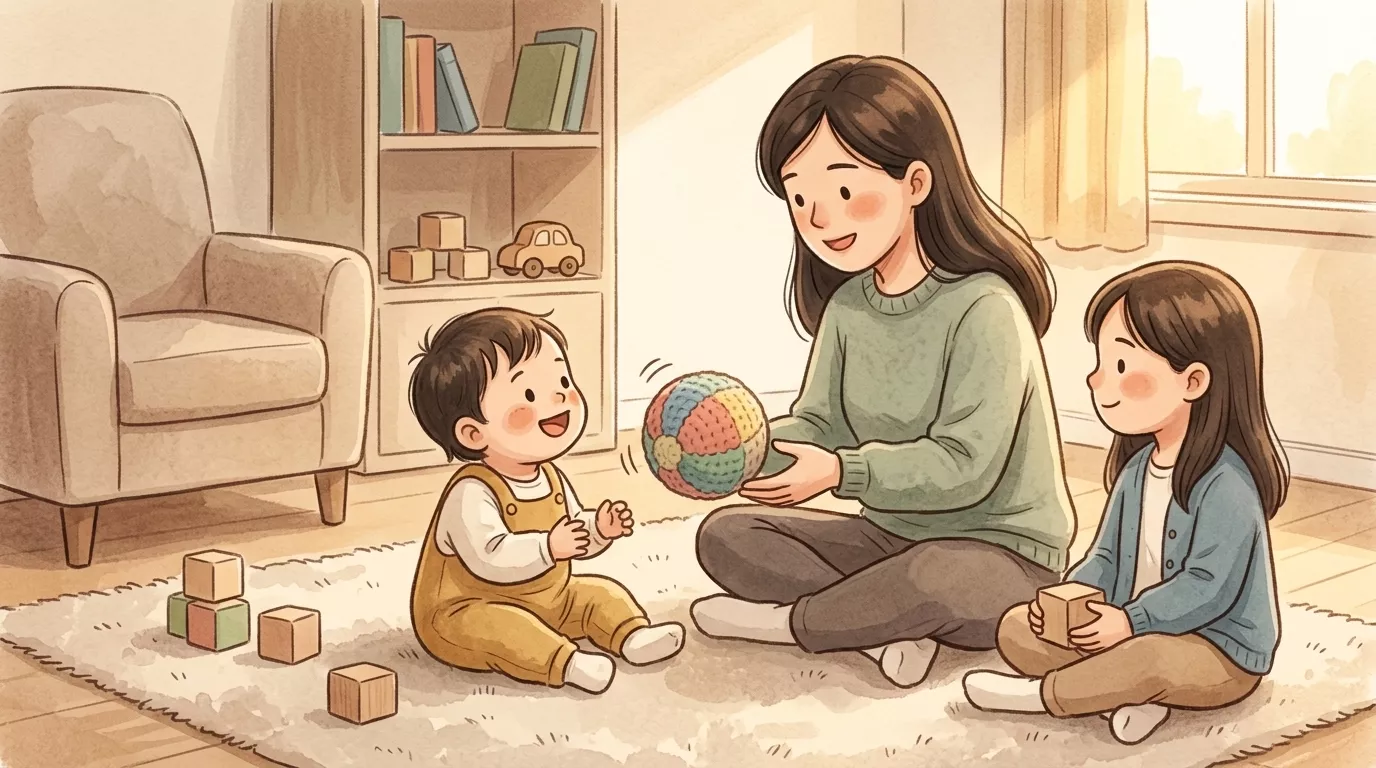
A baby learns connection when you copy their sound and wait for them to respond. A toddler learns turn-taking when you roll a ball back and forth. A child learns empathy when a doll is “sad” and needs comfort. They learn boundaries when another child says no. They learn repair when a game goes wrong and someone tries again.
This is why social play matters so much.
The AAP notes that play supports social and emotional development, not just physical and cognitive growth. (American Academy of Pediatrics)
That means play helps children practice being with other people.
Waiting.
Watching faces.
Reading tone.
Handling disappointment.
Trying again after conflict.
Feeling joy with someone else.
Even a simple game of peekaboo contains social learning. Your baby waits. You return. They laugh. You laugh. They learn that interaction can be predictable, warm, and fun.
That is not a small lesson.
It is the beginning of connection.
What Good Play Looks Like at Home
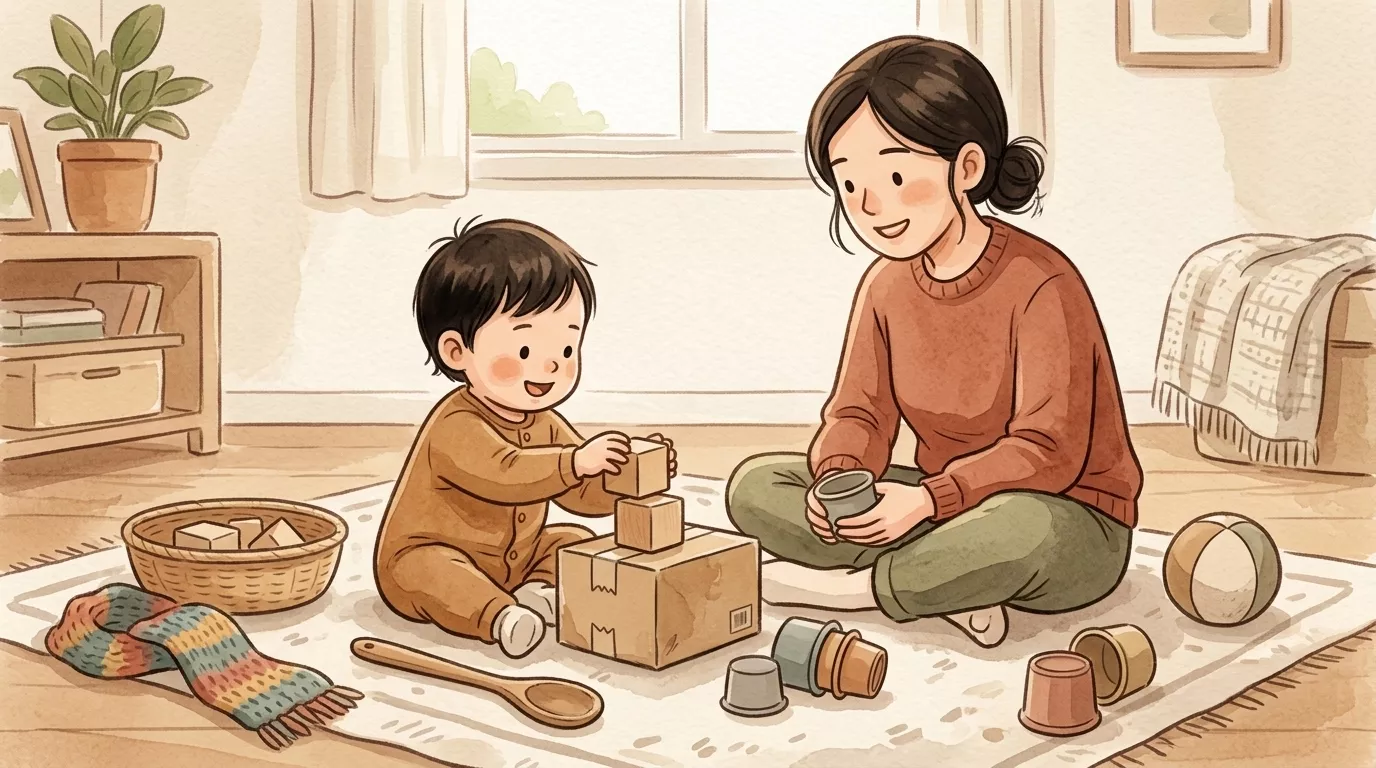
Good play does not have to be expensive.
It does not need to come in a box that says “educational.”
It does not need lights, buttons, music, or a promise to boost development.
Good play can look like peekaboo on the bed. Stacking cups. Reading the same book again. Singing while changing diapers. Letting your baby explore a safe kitchen spoon. Rolling a ball. Filling and emptying a basket. Playing with water under supervision. Walking outside and touching leaves. Making animal sounds badly but with enthusiasm.
Often, the best toys are the ones that let the child do something, not just watch something happen.
A toy that can be held, moved, stacked, opened, closed, filled, emptied, pushed, pulled, or imagined in different ways often invites more active learning than one that only performs when a button is pressed.
This is also good news for tired parents.
You do not need to buy every brain-development toy.
You do not need to create a perfect Montessori shelf if that is not your life.
You can begin with your floor, your voice, your hands, a few simple objects, and your child’s curiosity.
How to Balance Play, Books, and Learning Tools
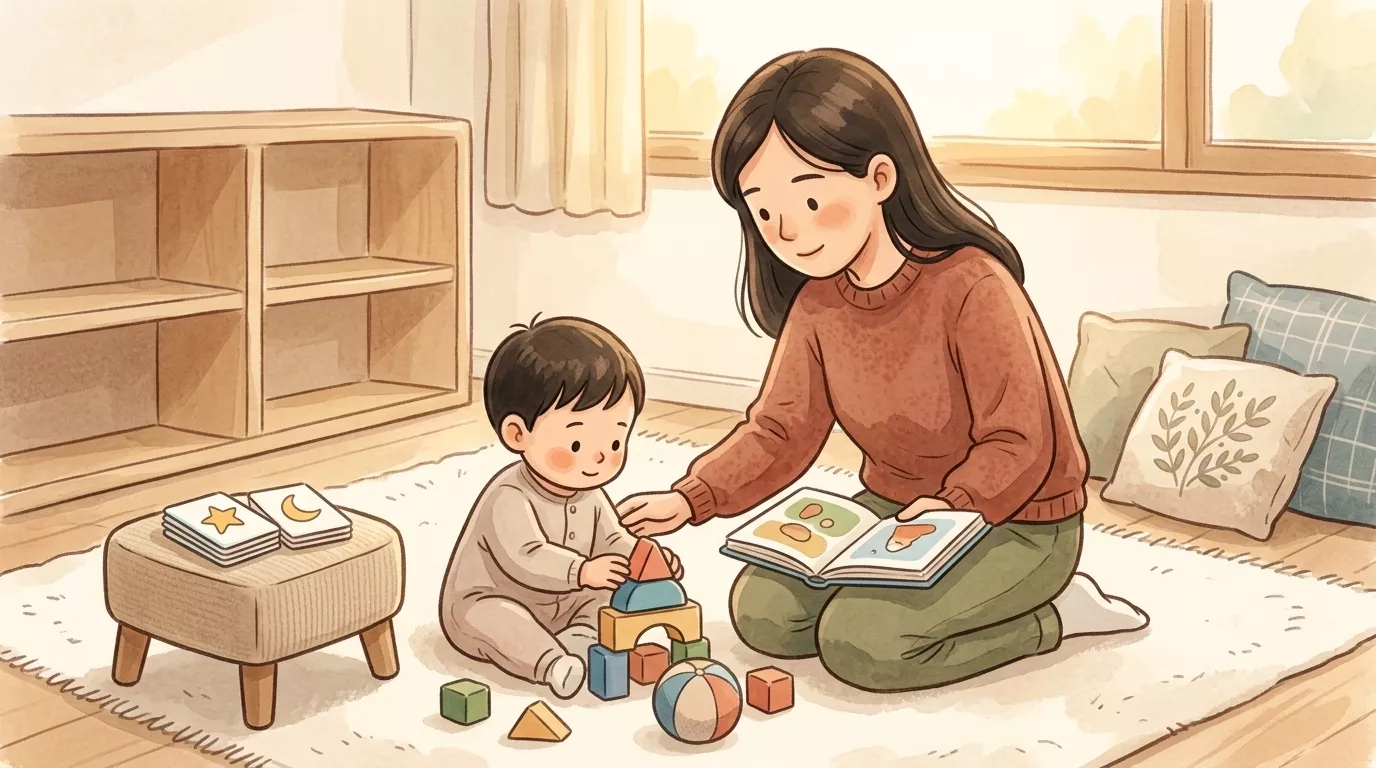
You do not need to throw away the flashcards.
You also do not need to feel guilty if your child enjoys them.
The question is not whether flashcards can ever be used. The question is whether they are replacing richer forms of learning: movement, conversation, sensory exploration, free play, books, songs, and real connection.
For babies and toddlers, the order matters.
Connection first.
Play first.
Real-life language first.
If flashcards are used, they can be short, playful, and pressure-free. Name the picture, make a sound, connect it to something real, then move on when the child loses interest.
A card with a cow can become “moo,” a song, a toy cow, a farm book, or a conversation about milk.
But if the child turns away, the lesson is over.
That is okay.
Flashcards are not the enemy.
Pressure is.
A baby does not need to perform learning to be learning.
The Best Learning Often Looks Ordinary
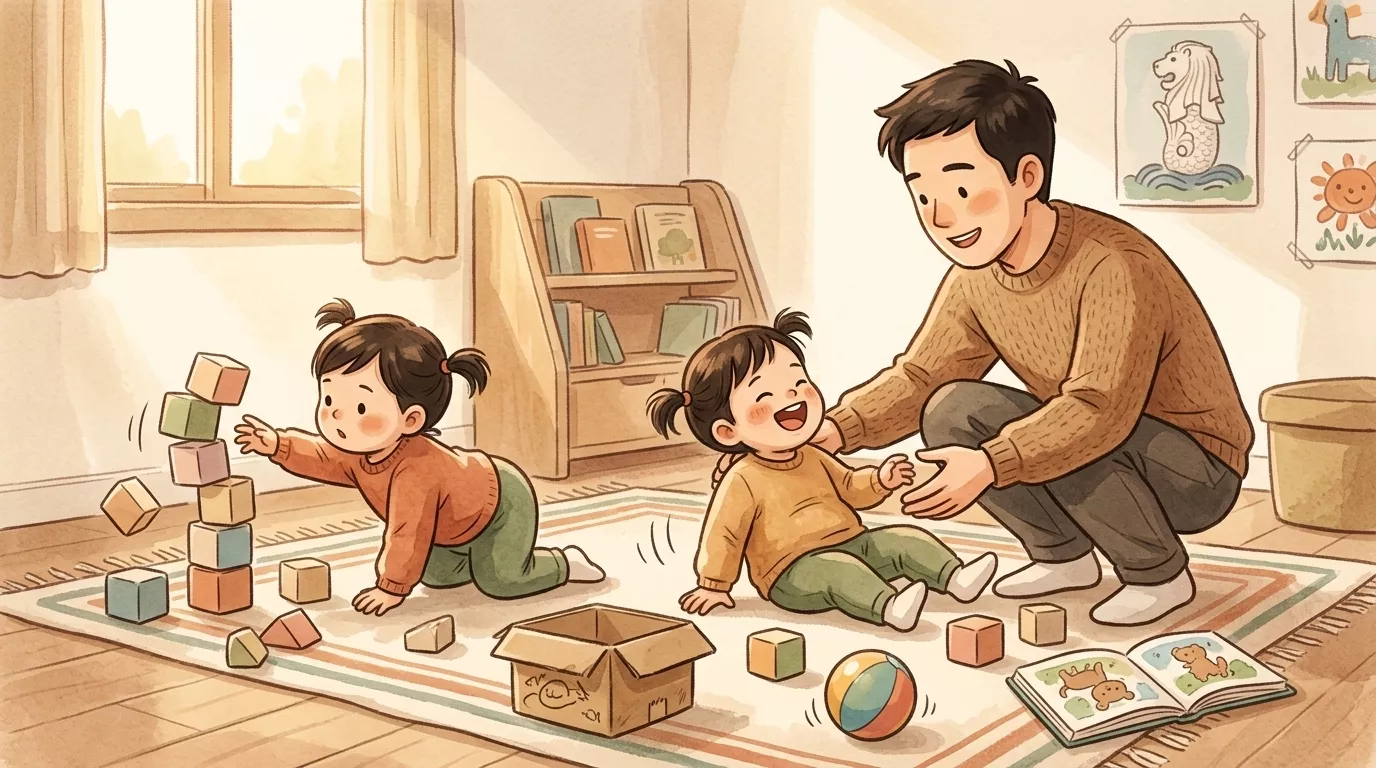
The most important learning in a young child’s day often looks very ordinary.
A baby reaches for a toy.
A toddler knocks down blocks.
A child asks for the same song again.
A parent says, “You did it.”
Someone laughs.
Someone tries again.
There may be no worksheet. No app. No flashcard. No visible proof that a skill has been taught.
But something is happening.
Your child is learning that their body can do things. That objects respond. That people respond. That effort matters. That frustration can be survived. That communication works. That the world is interesting enough to explore.
One day, your child may not remember the flashcards.
But their brain and body will remember reaching, trying, laughing, falling, being helped, and trying again.
That is learning too.
And for babies and young children, it may be the most important kind.