



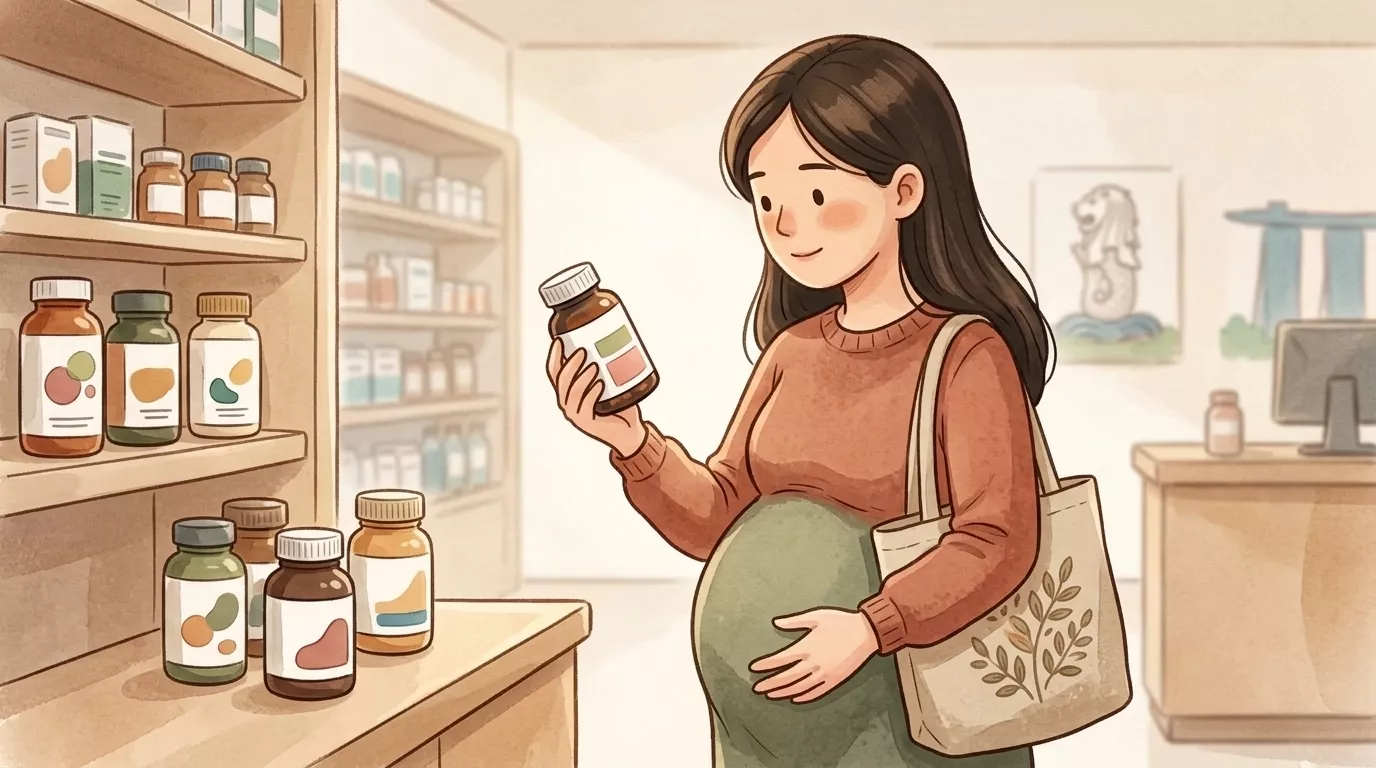
One bottle says “complete.”
Another says it has DHA.
Another has iron.
Another has calcium.
Another costs twice as much and somehow looks more official, which makes you wonder if the cheaper one is secretly not enough.
I remember standing in front of a pharmacy shelf, turning bottles around, reading labels full of words I only half understood, and feeling as though motherhood had already started testing me before the baby had even arrived.
Was I supposed to take folic acid separately?
Did I need fish oil?
Was iron always necessary?
What about vitamin D in sunny Singapore?
And if one prenatal vitamin had more ingredients, did that mean it was better?
If you have ever searched prenatal vitamins in Singapore which ones actually matter, you are probably not trying to buy the fanciest bottle. You are trying to understand what your body and baby actually need, without being scared into buying everything.
This article is not a replacement for advice from your doctor, obstetrician, pharmacist, or dietitian. Pregnancy supplements should be chosen with your medical history, blood tests, diet, medications, and pregnancy needs in mind. But it can help to know what the main nutrients are, why they matter, and what questions to ask at your next appointment.
Start With This: More Supplements Does Not Always Mean Better

Pregnancy can increase the need for certain vitamins and minerals, but that does not mean taking more supplements is always better.
This is one of the most reassuring things to remember.
You do not have to build a whole shelf of capsules to prove you are taking pregnancy seriously. In Singapore, HealthHub describes common antenatal supplements as vitamins, fish oil, calcium, iron, and vitamin D that may be prescribed by a healthcare professional during pregnancy. It also notes that not all multivitamins are safe in pregnancy, because some may contain higher-than-needed vitamin A, so it is best to check with a healthcare professional before buying multivitamins on your own.
That matters because overlap is easy.
A prenatal multivitamin may already contain iron, calcium, folic acid, or fish oil. If you add separate bottles without checking, you may end up doubling up without meaning to.
The goal is not to take the most.
The goal is to take what is appropriate, at a safe dose, for your pregnancy.
Folic Acid Is the One to Know Early

If there is one supplement to understand before pregnancy or in very early pregnancy, it is folic acid.
Folic acid matters early because the baby’s brain and spinal cord begin developing in the first weeks of pregnancy, sometimes before a person even knows they are pregnant. HealthHub says folic acid is usually taken from preconception until the 12th week of pregnancy to reduce the risk of birth defects involving abnormal development of the baby’s spinal cord.
The NHS recommends taking 400 micrograms of folic acid every day when trying to get pregnant, ideally starting three months before, or as soon as pregnancy is known, and continuing through the first 12 weeks. It also notes that some people need a higher prescribed dose, such as those with certain medical histories or medications, but that should be discussed with a doctor.
So no, folic acid is not glamorous.
It does not come with a dramatic label.
But it is one of the few pregnancy supplements that truly matters before many people feel pregnant at all.
If you are planning pregnancy, already pregnant, or unsure whether your current prenatal contains enough folic acid, this is one of the first questions to ask your doctor or pharmacist.
A Prenatal Multivitamin Can Be Helpful, But It Is Not Magic

A prenatal multivitamin can be useful, especially when appetite is unpredictable, nausea is making food difficult, or your doctor wants to support your increased micronutrient needs.
But it is not magic.
It does not replace food. It does not cancel out exhaustion. It does not make pregnancy perfect. It simply helps cover certain nutritional needs that may be harder to meet consistently.
HealthHub says prenatal multivitamins are usually taken from the 12th week of pregnancy onwards until delivery, and that many contain higher amounts of micronutrients to meet increased demand during pregnancy, often including iron, calcium, and folic acid.
The important thing is not choosing the bottle with the longest ingredient list.
It is choosing one that is appropriate for pregnancy and for you.
Some people feel nauseous with certain tablets. Some become constipated from iron or calcium. Some already get a separate supplement from their clinic. Some have blood test results that change what they need.
This is why it helps to bring your supplement bottle, or a photo of the label, to your appointment instead of guessing alone in the pharmacy aisle.
Iron Matters, But Not Everyone Needs the Same Amount

Iron is important during pregnancy because your body is making more blood, and both you and your baby need healthy red blood cells to carry oxygen.
KKH notes that pregnant women have increased iron needs because blood volume increases and the unborn baby also has iron needs. It also explains that heme iron from foods like red meat, chicken, and fish is better absorbed than non-heme iron from foods such as grains, green leafy vegetables, legumes, and nuts.
But iron is also one of the supplements that can make people feel uncomfortable.
It can cause constipation. It can make stools darker. It can feel rough on the stomach for some people. HealthHub lists dark-coloured stools and constipation as possible effects of prenatal multivitamins because of iron and calcium content.
This does not mean iron is bad.
It means the dose and timing matter.
KKH suggests taking vitamin C-rich foods with iron to improve absorption, and avoiding tea, coffee, and milk when taking meals or iron tablets because they can reduce iron absorption. HealthHub similarly advises spacing iron-containing supplements at least two hours apart from coffee, tea, milk, dairy products, and calcium supplements for better absorption.
If you are tired in pregnancy, it is tempting to assume iron is the answer. Sometimes it is. Sometimes tiredness is just pregnancy. Sometimes blood tests are needed to know what is really happening.
So iron matters, but it is better handled with your doctor’s advice rather than self-prescribing a high dose because you feel worn out.
Calcium and Vitamin D Are About Bones, Not Just the Baby’s
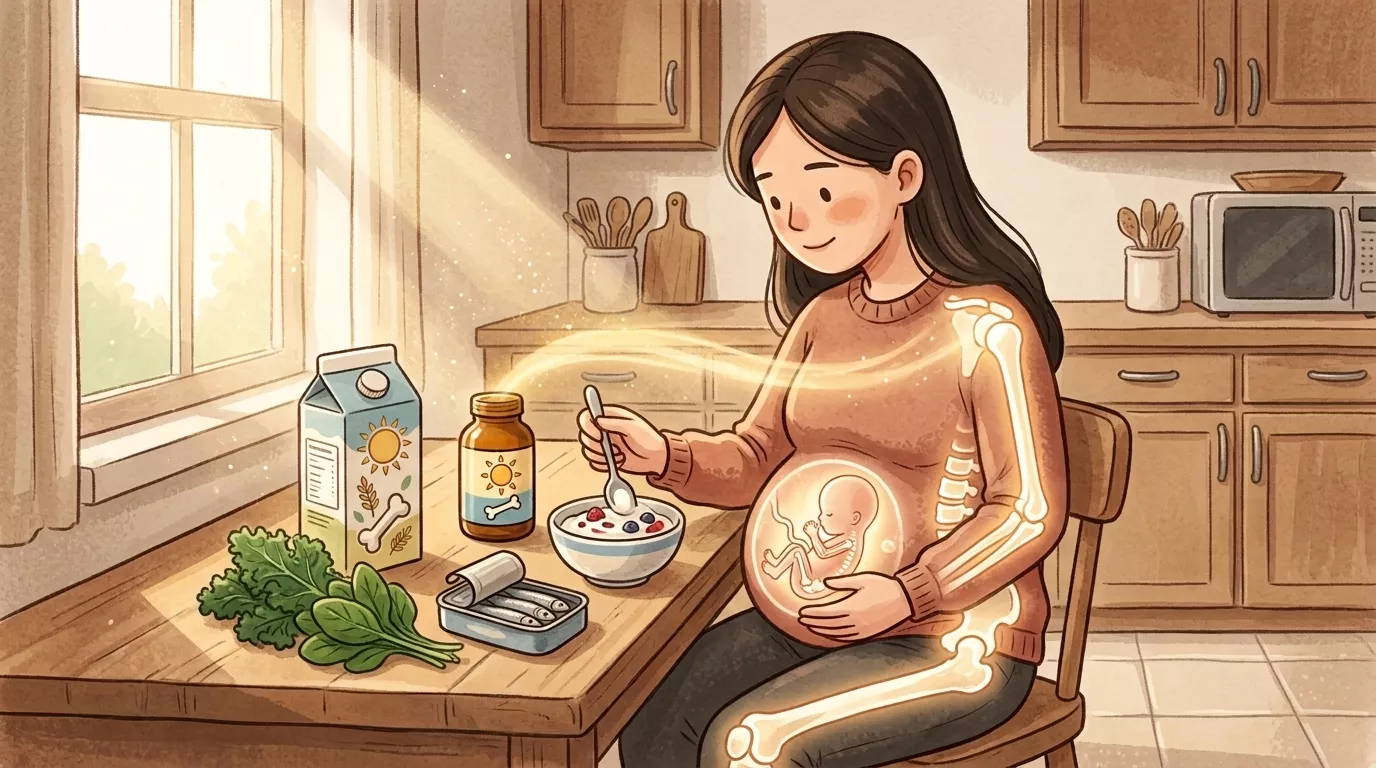
Calcium is often talked about as something the baby needs for bones and teeth, but it also matters for the mother.
KKH explains that calcium helps build, maintain, and strengthen bones, and that if a pregnant mother does not have enough calcium, the developing baby may draw calcium from the mother’s bones, increasing the mother’s later risk of osteoporosis. KKH also says women should have at least 1000 mg of calcium intake each day.
Vitamin D is part of the same conversation because it helps the body absorb calcium. KKH notes that low sun exposure and a sedentary lifestyle increase the risk of vitamin D deficiency.
This is why vitamin D can still be relevant in Singapore, even though there is plenty of sunlight outside.
Many people work indoors. Many avoid the sun because of heat, skin concerns, or daily routine. Some cover up when outdoors. Sunshine exists, but not everyone gets meaningful exposure in a way that supports vitamin D levels.
You may be able to meet some calcium needs through food such as milk, yogurt, cheese, calcium-fortified soy milk, sardines, ikan bilis, and leafy greens. But if your diet is limited, you avoid dairy, or your doctor is concerned, supplementation may be recommended.
Again, the question is not, “Is calcium good?”
The better question is, “Am I getting enough, and do I need extra?”
DHA and Omega-3: Useful, But Check Your Fish Intake First
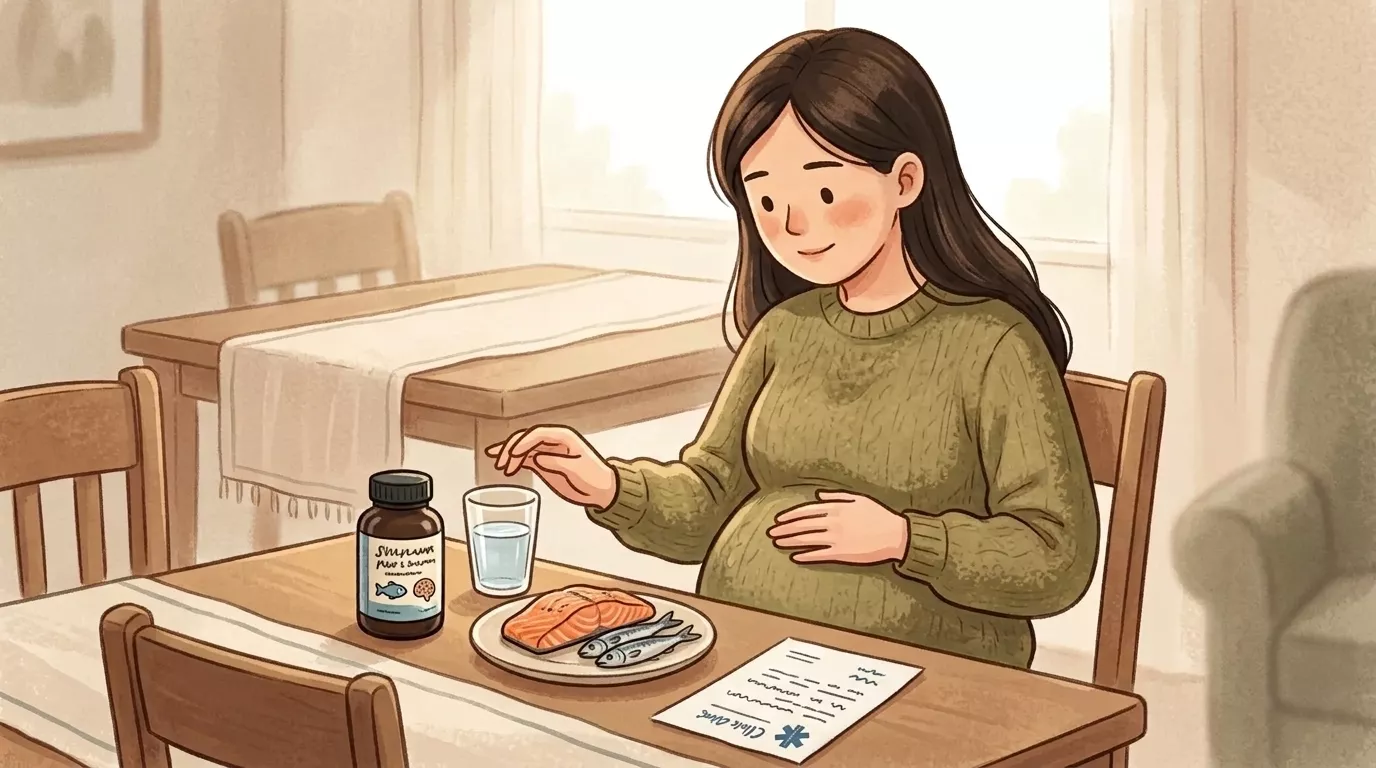
DHA is one of the nutrients that often appears on prenatal vitamin labels, especially in fish oil capsules.
It is not just marketing. DHA is an omega-3 fatty acid linked to the baby’s brain and eye development during pregnancy. KKH says DHA is important for brain and eye development and is mainly found in cold-water deep-sea fish. HealthHub also lists fish oil supplements as common antenatal supplements and says omega-3 fatty acids help with the baby’s brain and eye development.
But not everyone needs to panic-buy the most expensive DHA supplement.
Start with your diet.
Do you eat fish regularly?
Do you avoid fish because of taste, nausea, vegetarian eating, allergies, or worry about mercury?
KKH advises avoiding shark, swordfish, king mackerel, also known locally as batang fish, and tilefish or white snapper because of mercury concerns. It also says pregnant women can have two servings a week of salmon, sardines, herring, halibut, or canned light tuna.
If you rarely eat fish, it is reasonable to ask your doctor whether DHA or fish oil makes sense for you. If you already take a prenatal that includes fish oil, HealthHub notes that additional fish oil supplementation may not be required.
This is exactly why label-checking matters.
Sometimes “extra” is not extra care.
Sometimes it is just duplication.
Be Careful With Vitamin A and General Multivitamins

This is one of the safety points worth taking seriously.
Do not assume any general wellness multivitamin is safe just because it says it supports women’s health, immunity, beauty, energy, or overall wellness.
Pregnancy is different.
HealthHub warns that some multivitamins may contain higher doses of vitamin A that may not be safe in pregnancy, and advises checking with a healthcare professional before buying multivitamins on your own.
The NHS also advises pregnant women not to take cod liver oil or supplements containing vitamin A, sometimes called retinol, because too much vitamin A can harm the baby’s development. It also reminds people to check labels.
This does not mean vitamin A from food is automatically bad. Vitamin A is a nutrient the body needs, and food sources can be part of a healthy diet. But high-dose supplements, retinol-containing products meant to be swallowed, and cod liver oil are not things to casually add during pregnancy.
If you already take a general multivitamin, stop guessing from the front of the bottle.
Turn it around.
Take a photo.
Ask your doctor or pharmacist whether it is pregnancy-safe.
What About Iodine, Probiotics, Choline, Magnesium, and Everything Else?

This is where the supplement aisle gets noisy.
There will always be another nutrient someone mentions.
Iodine.
Choline.
Magnesium.
Probiotics.
Vitamin C.
Zinc.
Something for sleep.
Something for nausea.
Something for immunity.
Something a friend took.
Something an influencer swears by.
Some of these nutrients may matter for some people. Some may be useful depending on diet, medical history, symptoms, medications, or blood test results. But “good nutrient” does not automatically mean “you personally need an extra supplement.”
HealthXchange, citing a KKH dietitian, notes that pregnancy requires more than 30 nutrients, with vitamin A, vitamin C, folic acid, iron, calcium, vitamin D, and DHA being especially important for the baby’s development and the mother’s health. That does not mean every person needs a separate bottle for each one.
A varied diet still matters.
Medical guidance still matters.
Your own situation still matters.
If you are vegetarian or vegan, have severe nausea, have a restricted diet, have anaemia, thyroid issues, diabetes, previous pregnancy complications, are carrying multiples, or are taking regular medication, your needs may be different.
The real question is not, “Can this nutrient be helpful?”
Many nutrients can be helpful.
The real question is, “Do I need more than I am already getting, and is this dose safe during pregnancy?”
How to Choose Prenatal Vitamins in Singapore Without Overthinking

The easiest way to choose prenatal vitamins in Singapore is not to treat the pharmacy shelf like a puzzle you have to solve alone.
Bring the question into your antenatal appointment.
Ask your doctor, obstetrician, pharmacist, or dietitian what you actually need based on your pregnancy stage, blood test results, diet, and symptoms. HealthHub’s antenatal supplement guidance repeatedly emphasizes following healthcare professional instructions, medication labels, and checking before buying multivitamins independently.
A few simple questions can clear a lot of confusion.
Do I need folic acid separately, or does my prenatal already contain enough?
Do my blood tests suggest I need iron?
Should I take calcium or vitamin D?
Do I need DHA if I do not eat much fish?
Am I doubling up on anything?
Is this general multivitamin safe for pregnancy?
Could this supplement worsen my nausea or constipation?
You do not need to sound like an expert.
You only need to bring the bottle, the label, or a photo, and ask.
Also, buy supplements from reputable pharmacies, clinics, or trusted sources. Pregnancy is not the best time to experiment with unknown pills from unclear sellers, especially when the label is vague or the claims sound too dramatic.
The Simple Version: What Actually Matters Most

So what actually matters?
For most pregnant people, the conversation begins with folic acid, especially before pregnancy and in the first trimester. After that, many are advised to use a prenatal multivitamin, often from around 12 weeks onwards, depending on their doctor or clinic’s guidance. HealthHub describes folic acid as usually taken from before pregnancy until week 12, while prenatal multivitamins are usually taken from week 12 until delivery.
Iron matters, especially if blood tests show low levels or your doctor recommends it. Calcium and vitamin D matter for the baby’s bones and the mother’s bone health. DHA or omega-3 may be worth discussing if you do not eat much suitable fish. Vitamin A and retinol-containing supplements should be treated carefully, and general multivitamins should not be assumed safe in pregnancy.
But the bigger message is this:
Prenatal vitamins are support.
They are not a measure of how good a mother you are.
They are not proof that pregnancy is under control.
They are not something you need to overcomplicate just because the shelf has too many options.
The right prenatal vitamin is not always the one with the longest label or the highest price. Sometimes it is simply the one your body actually needs, at a dose that is safe, alongside food, rest, medical care, and a little less pressure to do pregnancy perfectly.