


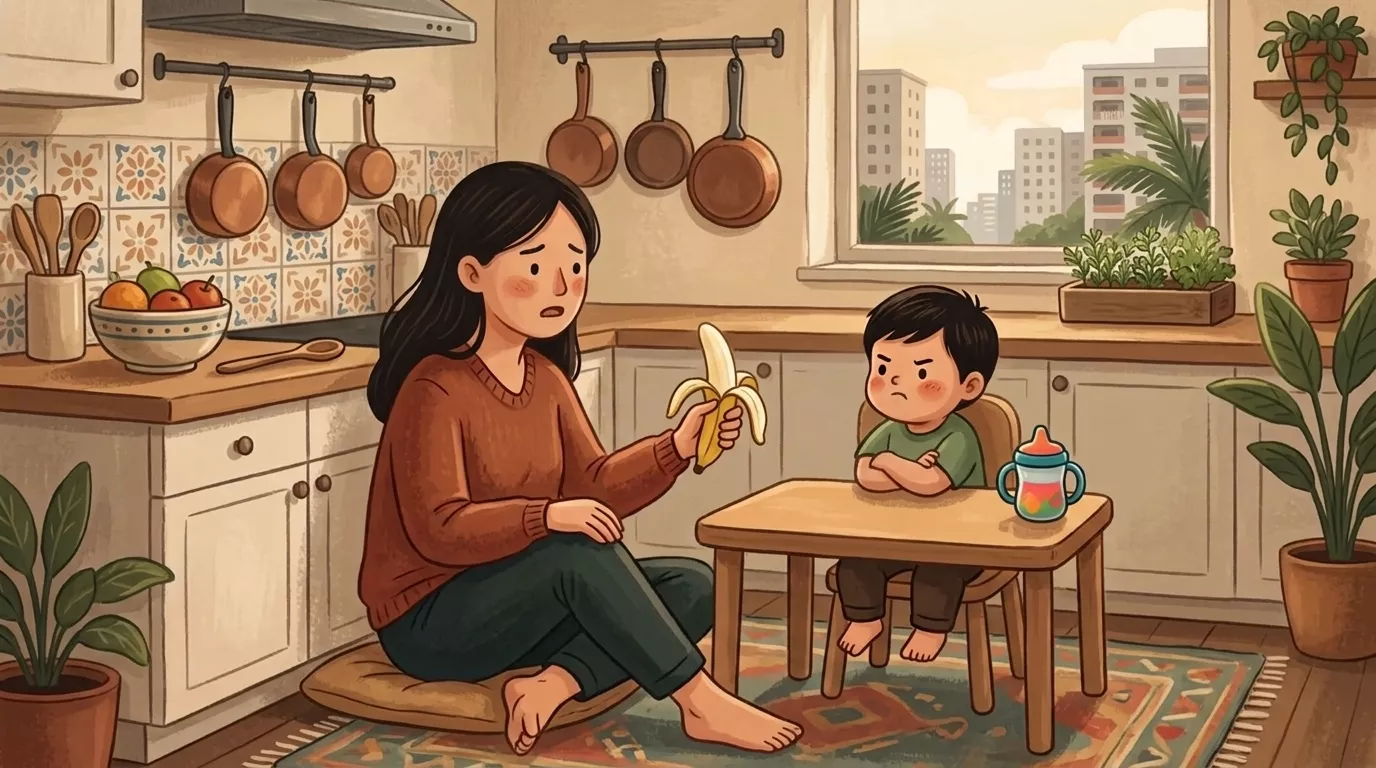
It was a banana.
Not a new food. Not a suspicious vegetable hidden inside pasta sauce. A banana. The same banana he had been asking for with increasing urgency while I tried to peel it fast enough.
I handed it to him.
“No.”
I paused, still holding the banana halfway between us.
“You don’t want it?”
“No.”
I put it down.
Then he cried because I had taken away the banana.
For a few seconds, I genuinely wondered whether I had missed a whole chapter in the parenting manual. How could someone say no to the thing they had just demanded? How could a child reject shoes, then scream because we were not going outside? How could bath time, snacks, books, cuddles, and favourite toys all become opportunities for refusal?
If you have ever searched why does my toddler say no to everything even things they like, I want you to know that you are not imagining how confusing it feels.
Toddlers can say no because they mean no.
They can also say no because they are tired, hungry, overwhelmed, experimenting, asserting independence, testing what happens, or simply enjoying the strange new power of having a word that changes the room.
No Is Often About Independence

Somewhere in toddlerhood, children begin to discover that they are separate people.
Not just babies being carried from one thing to the next, but small humans with opinions, preferences, and a growing awareness that their choices can affect what happens around them. ZERO TO THREE describes “No!” as a favourite word for many toddlers and a powerful way to assert independence, while also noting that this stage can be challenging because toddlers have strong feelings they cannot yet fully control.
That helped me see the word differently.
When my toddler said no to socks, it was not always about socks. When he said no to getting into the pram, it was not always about the pram. Sometimes it was simply the only way he knew to say, “I am a person too. I want to have a say in this.”
This does not mean toddlers should be allowed to decide everything.
They cannot choose whether to sit in the car seat, whether to brush their teeth, or whether to run across a road. But underneath the refusal is often something developmentally ordinary: a young child practicing agency before they have the language, patience, or emotional control to do it neatly.
Their Language Is Still Catching Up
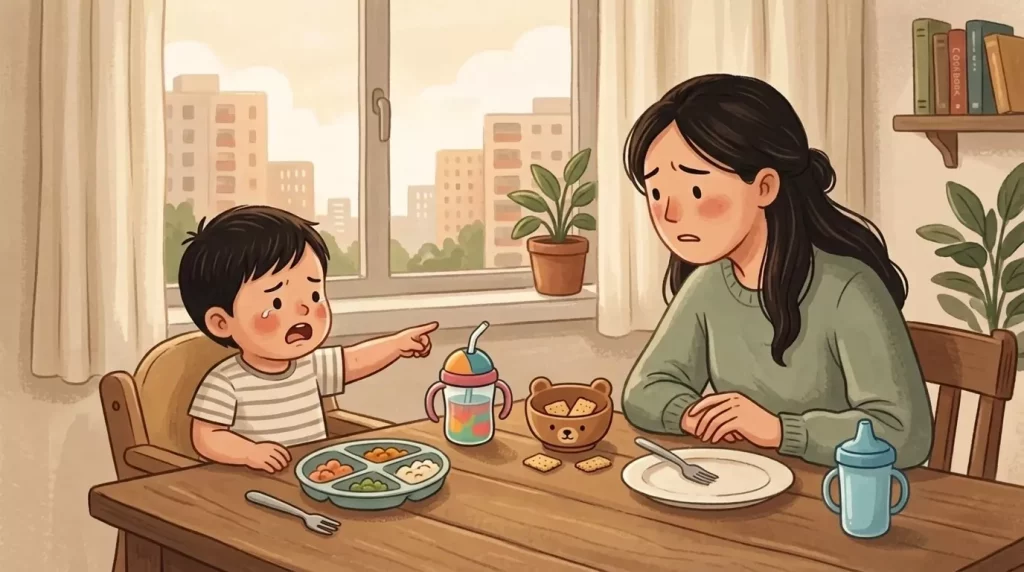
Toddlers often understand more than they can express.
That gap can make daily life noisy.
They may know they do not want the blue cup, but not know how to say they wanted the yellow one from yesterday. They may want to go outside, but not want shoes, because shoes feel like the part that interrupts the idea. They may want the banana, but not broken in half. They may want help, but also want to do it themselves. Both feelings can exist at the same time, which is deeply inconvenient for everyone involved.
Around age two, CDC milestones include communication skills such as saying at least two words together and using gestures beyond waving and pointing, but milestone checklists are guides rather than a perfect script for every child. Even when language is growing well, it is still not always enough to carry the size of a toddler’s feelings.
So “no” becomes a shortcut.
No can mean “I don’t like this.”
It can also mean “I’m not ready.”
Or “I wanted to do it myself.”
Or “That is not how I pictured the banana.”
The word is small.
The feeling behind it may not be.
No Can Mean Too Much Is Happening

There are days when a toddler’s no seems to come from nowhere, but the day around it tells a different story.
Too little sleep. Too many transitions. A loud supermarket. Hunger that arrived five minutes before dinner. A new place. A parent rushing. A sibling touching their toy. A shirt that feels wrong. A plan that changed.
Adults like to imagine we handle these things calmly, but most of us also become less reasonable when we are tired, hungry, rushed, or overstimulated. We simply have better vocabulary for it. Sometimes.
NHS guidance explains that toddlers have big feelings and may struggle to express them; tantrums can be a way of saying they need help with those feelings. It also notes that toddlers’ brains are still developing rapidly, and when they are upset, they may find it hard to take in new information.
That is why reasoning with a toddler in the middle of a full refusal can feel like trying to negotiate with a very emotional door.
They are not ready for the lecture yet.
They need help calming first.
Pick the Battle Before It Picks You
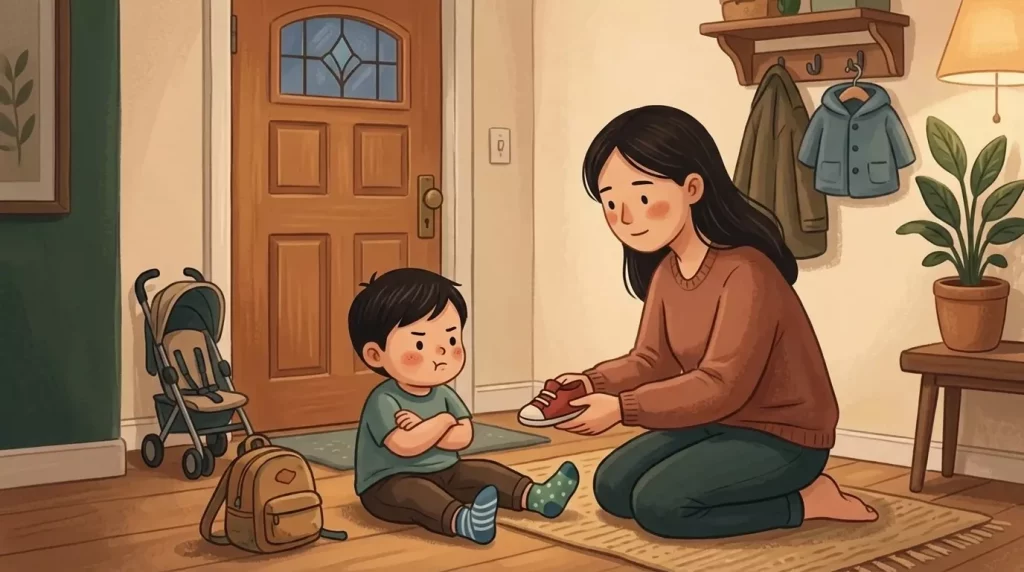
One of the biggest mistakes I made was treating every no like a problem that had to be solved immediately.
No to the green spoon.
No to the shoes.
No to the bath.
No to getting dressed.
No to leaving the playground.
By breakfast, I was already tired from trying to win tiny battles that did not all deserve my energy.
Eventually, I started asking myself a quieter question: does this actually matter?
If the answer was yes, I held the boundary. Car seats, medicine, safety, teeth brushing, kindness to others, and leaving when we truly needed to leave were not optional. I could be gentle, but I could not pretend those things were choices.
If the answer was no, I tried to let the small thing be small.
The yellow cup instead of the blue one. Wearing mismatched socks. Holding the toothbrush first. Reading the same book again. Carrying the banana instead of eating it immediately.
The American Academy of Pediatrics recommends positive discipline strategies such as calm teaching, clear and consistent limits, age-appropriate explanations, and attention for good behaviour. That approach sounds simple until you are standing beside a toddler who has decided that pants are offensive.
Still, it helps to remember that not every no needs a matching no from us.
Some refusals are invitations to adjust.
Others are places to stay steady.
Give Choices That Are Actually Choices
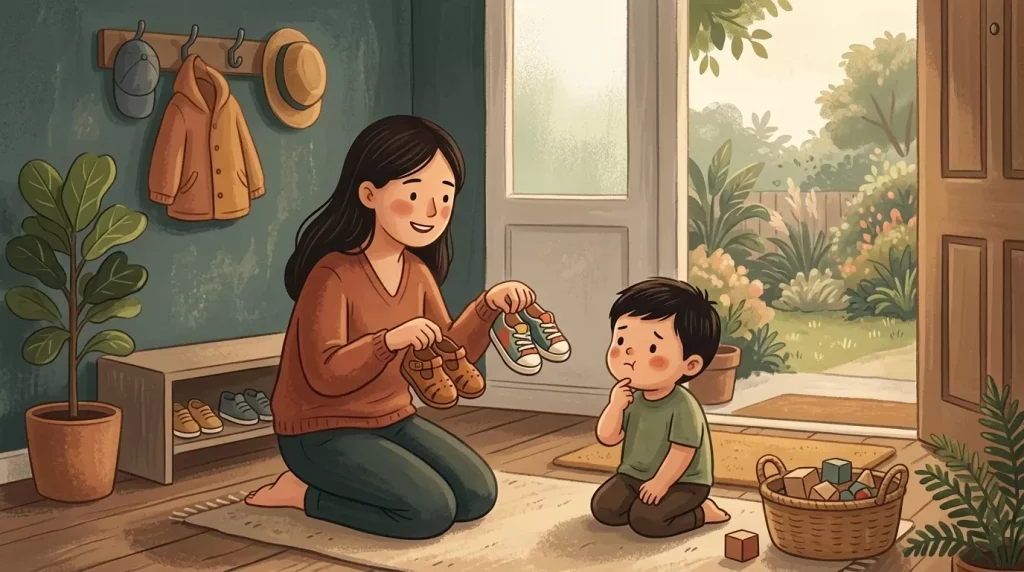
Toddlers often do better when they get a little power inside a boundary.
Not unlimited power.
Just enough to feel included.
Instead of “Put on your shoes,” I had more success with, “Do you want the sandals or the sneakers?” The leaving was not optional. The shoes were not optional. But the choice between two acceptable options gave my toddler somewhere to place his independence.
Instead of “Get into the bath,” it became, “Do you want to bring the duck or the cup to the bath?”
Instead of “Eat your snack,” it became, “Do you want banana first or crackers first?”
This did not work every time.
Nothing with toddlers works every time.
But it reduced the number of moments where every instruction felt like a wall for my child to push against. It also reminded me to stop offering choices I could not actually honour. “Are you ready to go?” sounds polite, but if we truly need to leave, it is not a real question. A toddler who says no is not being difficult. They are answering what we asked.
Sometimes the kinder sentence is clearer.
“We are leaving now. You can hold my hand or I can carry you.”
Say Less When They Are Upset
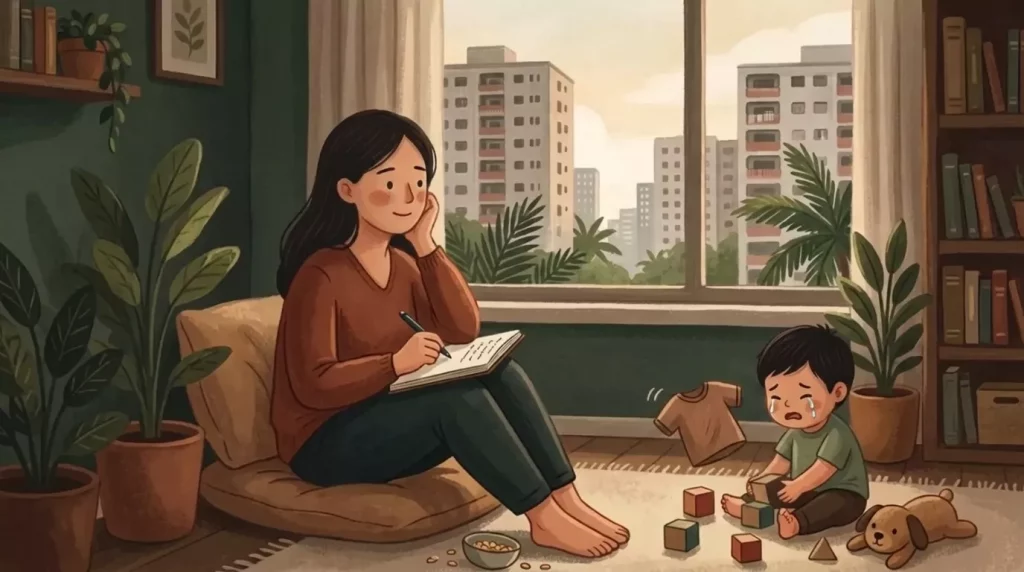
I have given some of my worst speeches to a toddler who could not hear a word of them.
I would explain why we had to leave, why throwing blocks was unsafe, why shoes mattered, why dinner could not be crackers only, why the cat did not enjoy being hugged like a cushion. The more upset my child became, the more words I added, as though the right sentence might unlock calm.
It rarely did.
When toddlers are overwhelmed, they often need fewer words, not better ones. NHS suggests helping toddlers with big feelings by first soothing them, then relating to them, and only reasoning once they are calmer.
That changed the order for me.
First, calm the body.
Then, connect.
Then, explain.
“I know. You wanted to stay. It is hard to leave.”
That was often enough at first.
The teaching could come later, when my toddler was no longer lying on the floor like the playground had personally betrayed him.
Use Routines So No Has Less Work to Do

Routines do not make toddlers perfectly cooperative.
But they do reduce the number of surprises.
A child who knows that pajamas come after bath, that shoes come before going outside, that one more book really means one more book, and that lunch happens before nap may still say no. But the rhythm of the day helps hold some of the structure so the parent does not have to explain everything from the beginning each time.
ZERO TO THREE notes that routines can help toddlers feel secure during a stage when they often feel out of control.
That made sense to me.
So much of toddler life is decided by adults. Where they go. When they sleep. What they wear. What they are allowed to touch. When you think about it that way, the no starts to feel less random. It may be a small protest against a very scheduled world.
A simple routine will not remove that protest.
But it can make the world feel less surprising.
When No Turns Into a Tantrum
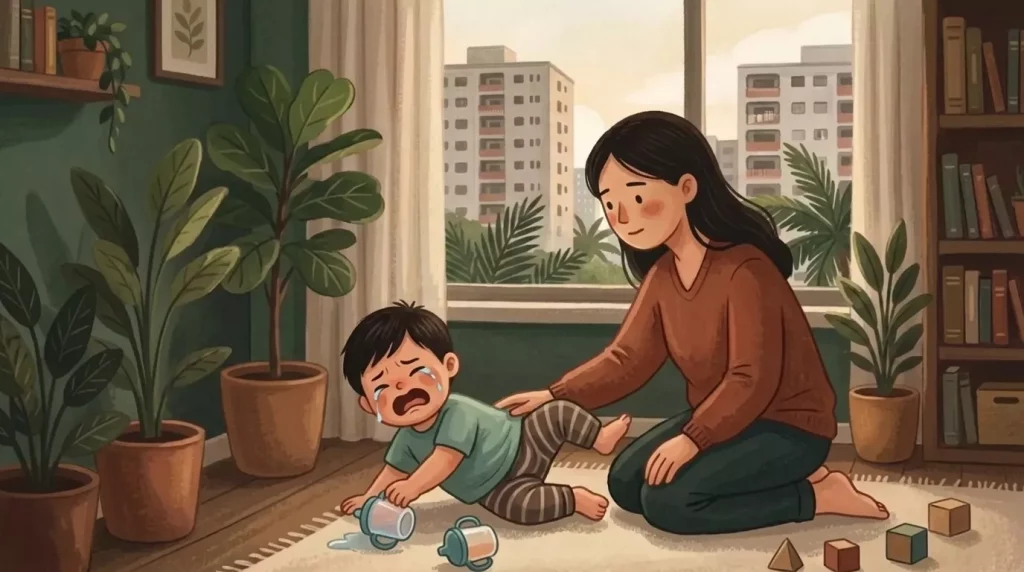
Sometimes the no becomes bigger than the moment.
The cup is wrong, and suddenly the whole morning is wrong. The biscuit broke, and now grief has entered the kitchen. You said it was time to leave the playground, and your toddler’s body seems to lose its ability to remain upright.
Tantrums are common in toddlerhood. NHS notes that they often start around 18 months and may happen because toddlers want to express themselves but cannot yet do so easily, so frustration comes out as a tantrum.
In those moments, I had to stop treating the tantrum as a performance aimed at me.
It was not polite. It was not convenient. It was certainly not my favourite part of the day. But it was also not proof that my child was becoming difficult on purpose. It was a small nervous system overwhelmed by a big feeling.
That did not mean giving in.
If I said no to something important, changing my mind just to stop the crying usually made the next boundary harder. NHS also advises not changing your mind simply to end a tantrum once you have said no.
So I tried to stay near, stay calm, and stay boring.
Not cold.
Just steady.
What to Do in the Moment
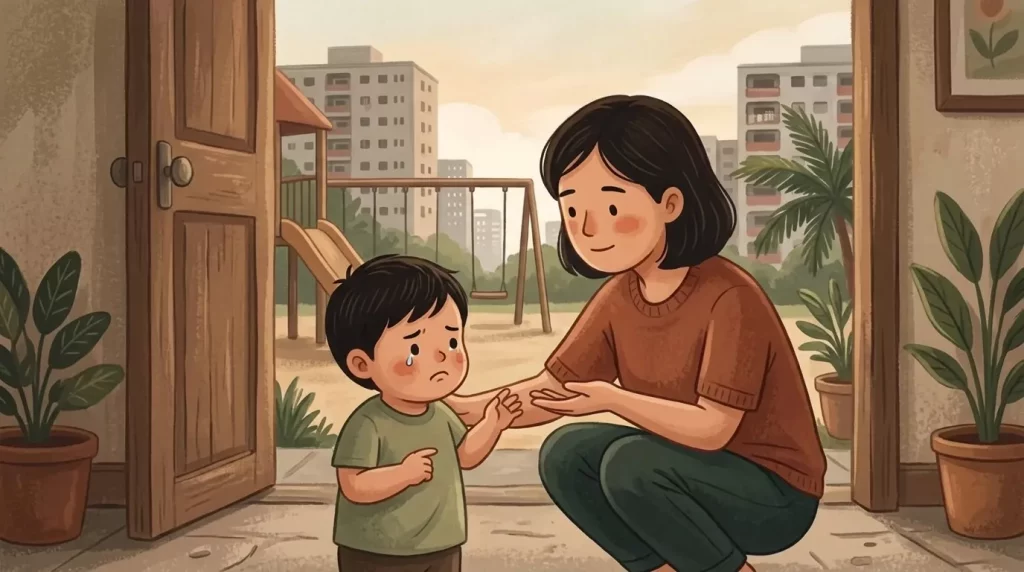
When my toddler’s no became loud, I learned to make the moment smaller.
First, I checked the basics. Is he hungry? Tired? Overstimulated? Does he need help but not know how to ask? Sometimes the solution really was food, sleep, a quieter room, or ten minutes of undivided attention.
Then I named what I could see.
“You don’t want to stop playing.”
“You wanted the other cup.”
“You feel angry that I won’t let you climb that.”
Naming the feeling did not magically make the disappointment disappear, but it seemed to help my child feel less alone inside it. NHS also recommends naming toddlers’ feelings so they gradually learn words for what is happening inside them.
After that, I tried to keep the boundary short and clear.
“The road is not safe.”
“Food stays on the table.”
“I won’t let you hit.”
Then I offered the next step.
“You can walk or I can carry you.”
“You can put the blocks in the basket or I can help.”
“You can cry in my arms or beside me. I’m here.”
It was not perfect parenting.
It was simply a way through.
When to Worry
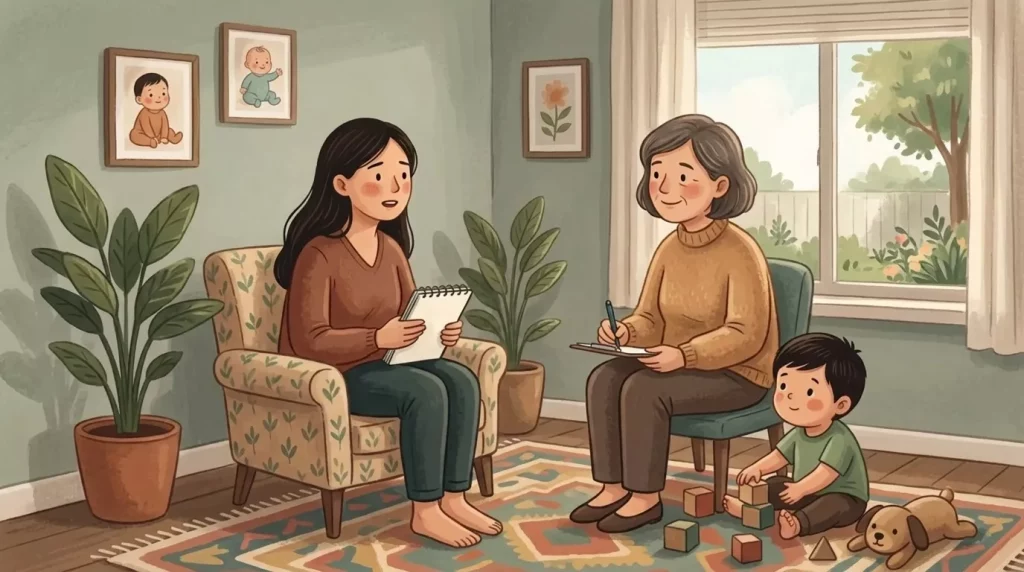
Most toddler no phases are normal.
Annoying, yes. Loud, yes. Occasionally absurd enough to make you question reality, also yes. But normal.
Still, you know your child best.
If your toddler’s behaviour feels extreme, if aggression is frequent or dangerous, if they seem unable to communicate in ways that concern you, if they lose skills they once had, if tantrums feel unusually intense or prolonged, or if your instincts keep telling you something is not right, it is worth speaking with your pediatrician. CDC encourages parents not to wait if a child is not meeting milestones, has lost skills, or there are other concerns, and to talk with the child’s doctor about developmental screening.
Asking does not mean you are overreacting.
It means you are paying attention.
Most of the time, reassurance is exactly what you will receive.
And if support is needed, earlier help is a kindness.
The No Is Not the Whole Story
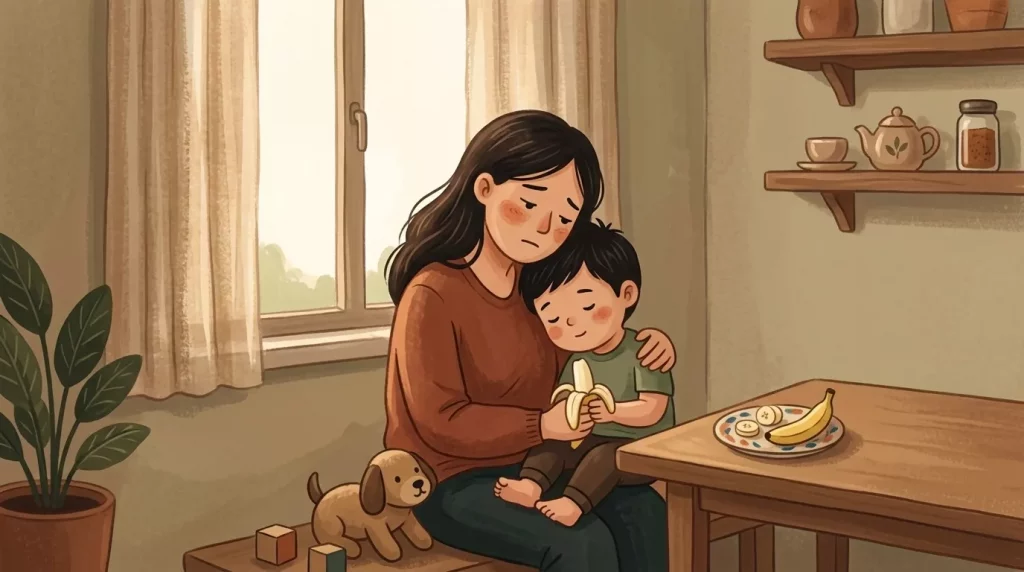
These days, I still hear no more often than I expected.
No to pants.
No to the bath, until the bath begins.
No to the snack, until someone else touches it.
No to leaving, no to staying, no to the thing that was absolutely essential three minutes ago.
But I hear other things underneath it now.
A child learning that they have a voice.
A brain still growing the ability to pause.
A body that gets tired before the feelings do.
A little person trying to be independent while still needing me close enough to fall apart safely.
It does not make every no easy.
Some days, I still sigh. Some days, I choose the wrong battle. Some days, I say too much, get impatient, and have to repair later.
But the word itself scares me less.
Because no is not always defiance.
Sometimes it is practice.
Sometimes it is overwhelm.
Sometimes it is a request for a boundary strong enough to lean against.
And sometimes it is just a toddler saying no to a banana they very much intend to eat.
Little by little, they learn.
And so do we.