


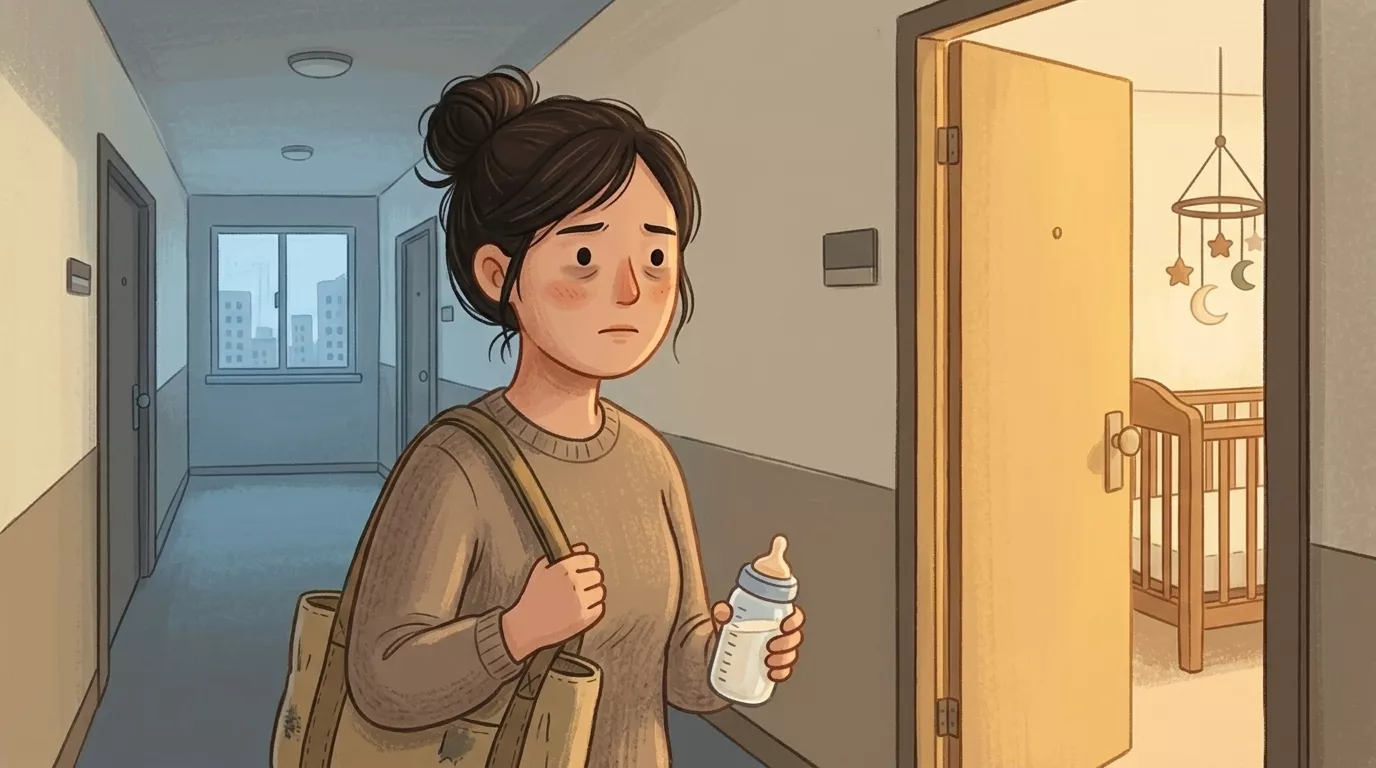
The first morning I went back to work, I put my shirt on inside out and only noticed in the lift.
I remember standing there under the bright ceiling light, staring at my reflection in the metal doors, trying to decide whether I had enough time to go back upstairs and change. My baby had woken four times the night before. I had slept in small, broken pieces, the kind that leave you more confused than rested. Somewhere between the 3:00 AM feed and the 5:40 AM alarm, I had become a person who could no longer be trusted with buttons.
So I turned my shirt around in the office bathroom, splashed water on my face, and walked into work like I was not quietly wondering how anyone was supposed to do this.
Everyone asked how the baby was.
No one really asked how I was staying upright.
The Kind of Tired That Feels Different
Before becoming a parent, I thought I understood exhaustion.
I had worked late before. I had taken early flights, survived long meetings, pushed through deadlines, and stayed up far too late doing things that felt important at the time. I knew what it was like to be tired and still show up.
But new parent exhaustion was different.
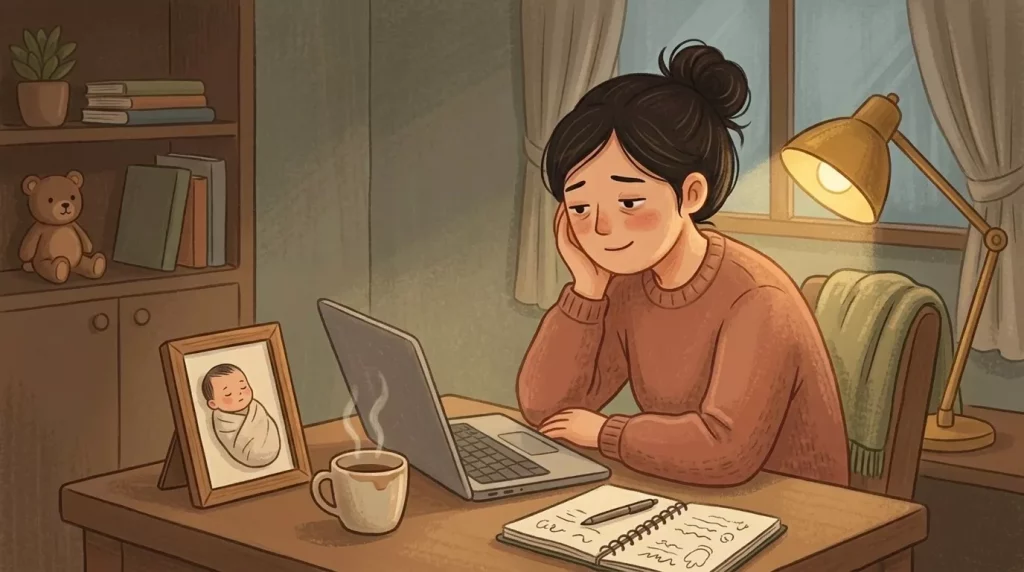
It was not one bad night. It was the stacking of many nights, one on top of another, until my body started to feel like it belonged to someone else. I would sit at my desk and read the same sentence three times. I would walk into the pantry and forget why I was there. I would reply to messages with a level of caution usually reserved for legal documents, because I no longer trusted my brain to understand tone.
The strangest part was how ordinary everything looked from the outside.
My laptop opened. My calendar filled. My baby photos were admired by colleagues. I smiled when people said, “Enjoy this stage, it goes so fast,” because I knew they meant well.
But inside, I was moving through the day with the heavy, floating feeling of someone who had been awake for weeks.
The Question I Was Too Tired to Ask Properly
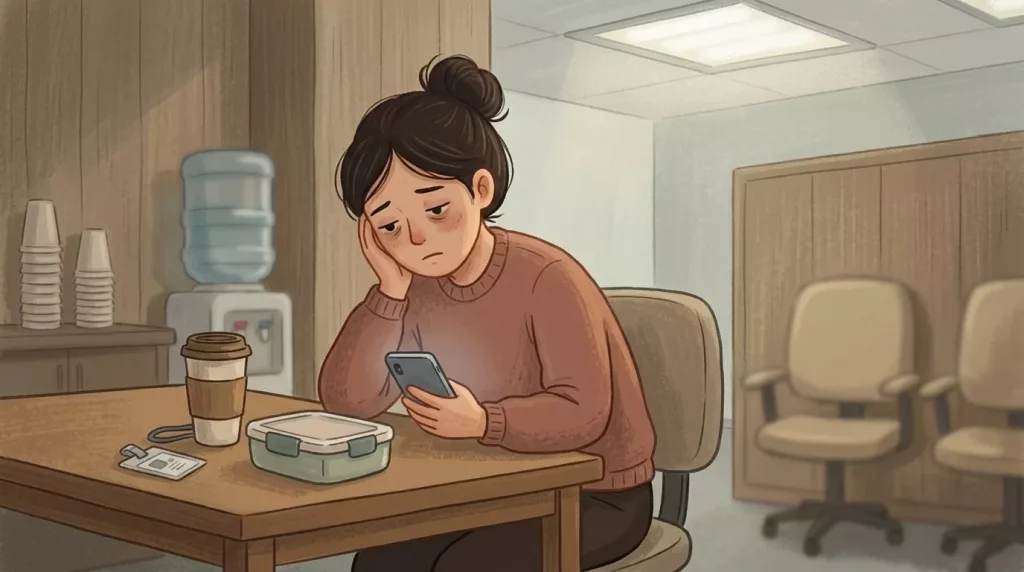
One afternoon, after nearly sending an unfinished email to the wrong person, I typed how to function at work on no sleep new parent into my phone.
I did not even know what answer I wanted.
A routine, maybe. A supplement. A secret used by calmer parents who seemed to return from maternity or paternity leave with clean clothes, clear thoughts, and the ability to remember where they parked. I wanted someone to tell me there was a way to be both fully present at work and fully available at home, without feeling as though I was failing in both places.
Most of what I found was practical, and some of it helped. Drink water. Prepare things the night before. Take naps when possible. Lower expectations. Ask for help.
But what I really needed was permission to admit that this was hard.
Not cute hard.
Not “new parent life” in the funny, coffee-mug way.
Actually hard.
The kind of hard that made me wonder whether my old self had quietly left the room and forgotten to say goodbye.
Trying to Be Professional With a Newborn at Home
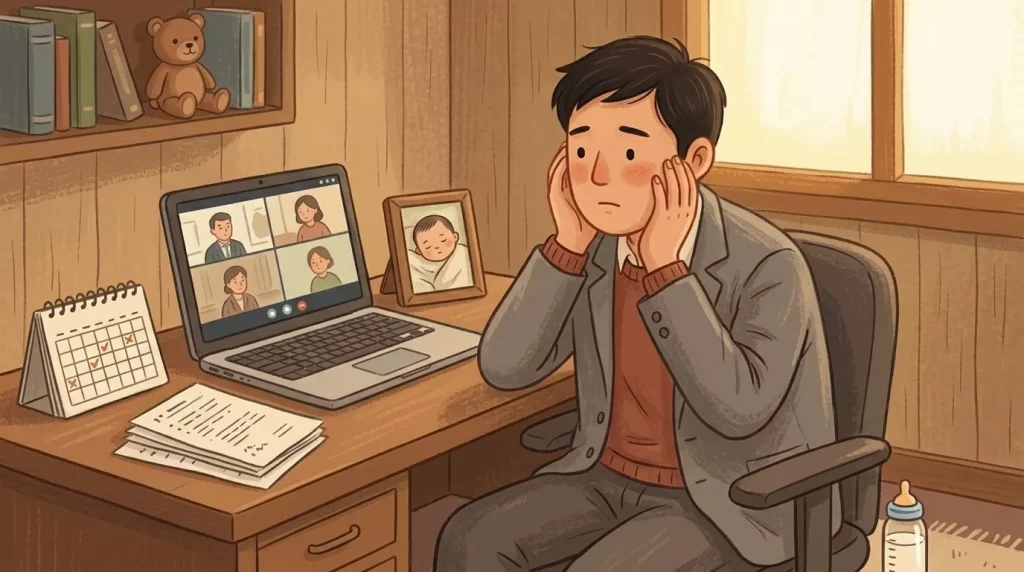
Work used to be the place where I felt competent.
That was one of the hardest parts.
At home, I expected to feel uncertain because everything was new. There were diapers, feeds, burping techniques, wake windows, tiny fingernails that somehow needed trimming, and cries I could not always translate. But work had always been familiar ground. I knew how to answer emails. I knew how to join a meeting. I knew how to finish a task and feel the clean satisfaction of something being done.
Then I became a parent and even familiar things began to feel slippery.
I forgot names I knew. I lost track of simple conversations. I sat in meetings while half of my attention remained at home, wondering whether the baby had napped, whether there was enough milk, whether the person caring for him knew the little bounce that sometimes worked when nothing else did.
I wanted to be the same employee I had been before.
I also wanted to be the kind of parent who did not miss anything.
There was no graceful way to do both perfectly.
For a while, I tried anyway.
The Small Systems That Saved Me
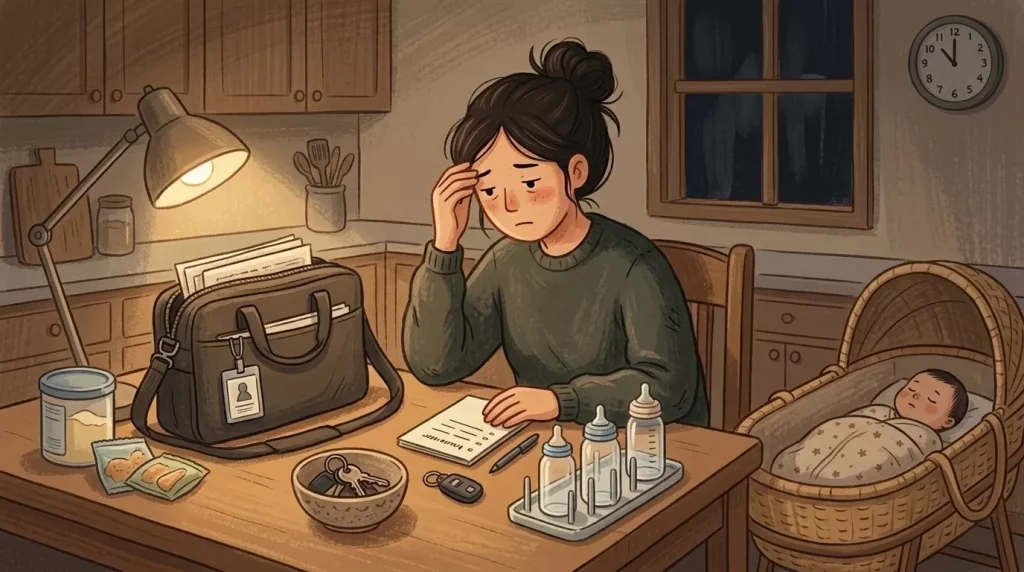
Eventually, I stopped waiting for my brain to return to its old shape and started building little systems around the version of myself I actually had.
I wrote everything down. Not because I suddenly became organized, but because memory had become unreliable. I kept a running list beside my laptop with tasks broken into embarrassingly small steps. Send invoice. Reply to Mei. Check attachment before sending. Drink water. Pump at 2:30. Pick up diapers on the way home.
At first, the list made me feel ridiculous.
Then it made me feel safe.
I started preparing my work bag the night before, even when all I wanted was to collapse into bed. I placed my keys in the same bowl every evening because searching for them in the morning felt like a crisis I no longer had the emotional budget for. I kept snacks in my drawer because hunger and sleep deprivation together turned me into someone I did not particularly enjoy knowing.
None of these things fixed the exhaustion.
They simply reduced the number of small decisions I had to make while already empty.
And in that season, that mattered more than I expected.
Learning What Could Wait

The hardest adjustment was not logistical. It was emotional.
I had to learn that some things could wait.
The laundry could wait. The non-urgent email could wait until my brain was less foggy. The message from a friend could wait for a reply that was more honest than cheerful. The desire to prove that parenthood had not changed my performance, my patience, my body, my marriage, my personality, or my ability to keep the kitchen counter clear had to wait too.
For so long, I treated rest like something I could earn only after everything else was done.
But nothing was ever done.
There was always another bottle to wash, another meeting to prepare for, another baby item to restock, another night ahead that might or might not give me sleep. Waiting until life was fully under control before resting meant I would never rest at all.
So I started taking smaller rests badly.
Ten minutes in the dark before dinner. Sitting quietly in the office stairwell because I could not face another conversation yet. Closing my eyes on the bus instead of answering messages. Letting the dishes sit until morning because my body was asking for mercy more clearly than the sink was asking to be emptied.
It was not glamorous.
But it helped.
The Guilt of Not Being Fully Anywhere
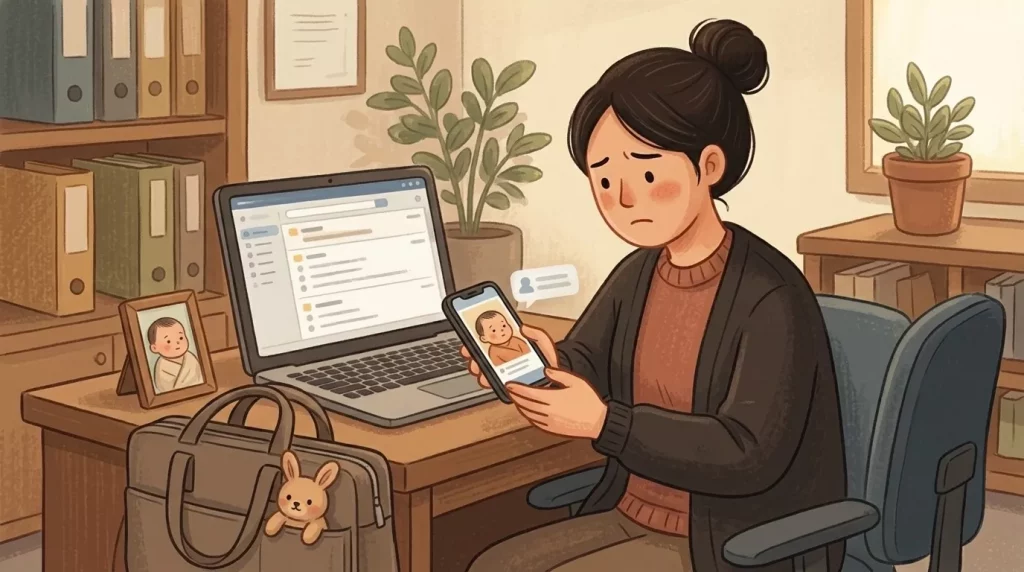
There is a particular guilt that comes with being a working parent on no sleep.
At work, I felt guilty for thinking about my baby.
At home, I felt guilty for thinking about work.
When I was holding my baby, I sometimes caught myself mentally listing emails I had not answered. When I was answering emails, I found myself scrolling through photos from that morning, aching over how much of the day I was missing.
It felt as though I was always giving someone the leftover version of me.
What took me time to understand was that this feeling did not mean I was doing something wrong. It meant I was stretched across more love and responsibility than I had ever carried before. Of course I felt divided. My life had divided and expanded all at once.
Some days, I was not excellent at anything.
I was simply there.
And sometimes, being there was the whole achievement.
The Help I Finally Accepted

I wish I could say I learned quickly to ask for help.
I did not.
I waited until I was too tired to be polite about needing it. I waited until resentment started leaking out in small ways, until I snapped over things that were not really the problem, until one evening I stood in the kitchen holding a sterilized bottle and realized I could not remember whether I had already fed the baby.
That was when I started saying things more clearly.
I need you to take the baby after dinner so I can sleep for one hour.
I need us to order food tonight.
I cannot do visitors this weekend.
I need to tell my manager I am not at full capacity yet.
The world did not collapse when I said these things.
Some people understood immediately. Some needed more explanation. Some help was imperfect, because help often is. But even imperfect help made the days feel less impossible.
I had thought asking for help meant admitting I could not cope.
Really, it meant I was finally taking my exhaustion seriously.
What Nobody Warned Me About
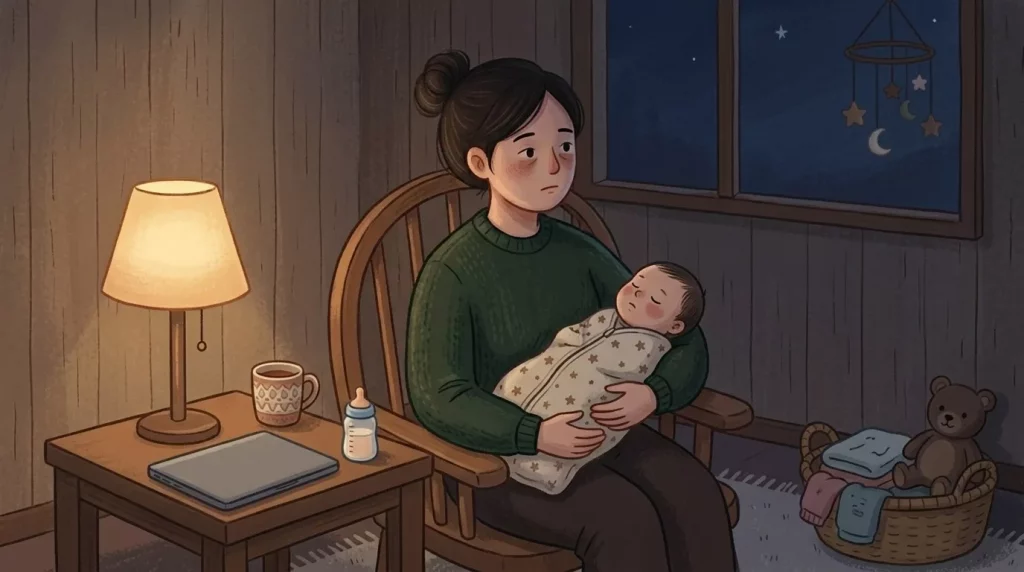
Nobody warned me that the tiredness would change my sense of self.
They warned me about night feeds and early mornings. They told me to sleep when the baby slept, which sounded simple until the baby slept only on me, or only for twenty-three minutes, or only when I had finally accepted that I might never sleep again.
But nobody told me how strange it would feel to miss my own mind.
To miss thinking clearly. To miss finishing a thought. To miss being able to read a page without drifting away halfway through. To miss the version of me who could be tired and still feel like herself.
That was the part I grieved quietly.
Not my old life exactly.
Just the ease with which I used to move through it.
Slowly, It Became Less Impossible
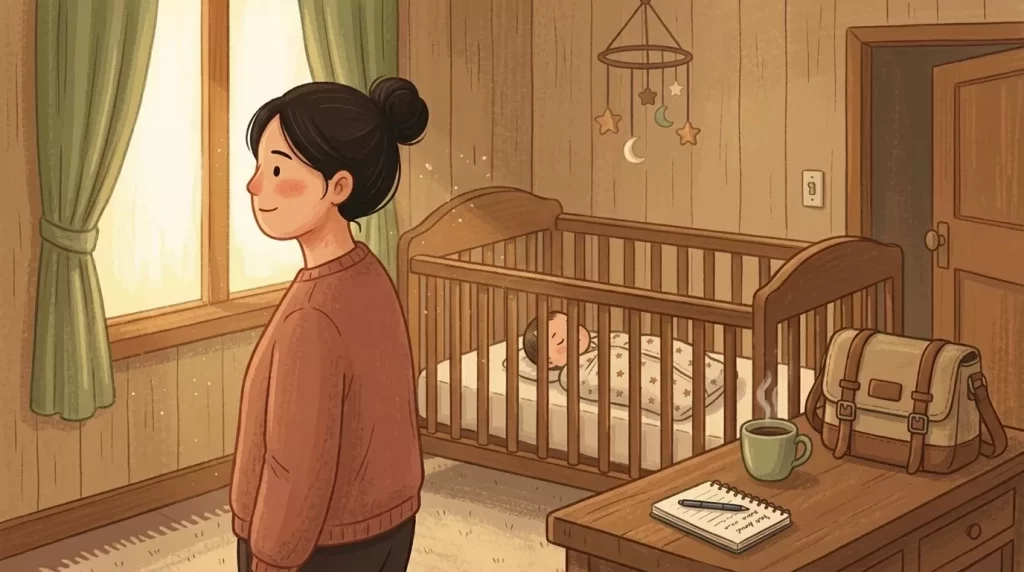
The exhaustion did not disappear all at once.
It softened in uneven pieces.
One night gave me three hours in a row, and I woke up almost suspicious of it. One morning I remembered my password on the first try. One week I made it to Friday without crying in the bathroom. My baby started sleeping a little longer, then worse again, then better again, because babies rarely improve in a straight line.
But somewhere along the way, I stopped believing the tiredness meant I was failing.
It was simply the weather of that season.
Heavy, inconvenient, sometimes overwhelming, but not permanent.
If you are in it now, trying to work on broken sleep while keeping a tiny human alive, I hope you do not measure yourself by who you were before. That person had more sleep. That person had fewer invisible tabs open in their mind. That person was not carrying the same beautiful, exhausting weight.
You are allowed to do less than your best for a while.
You are allowed to use lists, lower standards, accept help, eat cereal for dinner, cry in the shower, and still be doing an extraordinary amount.
The exhaustion nobody warned you about is real.
But so is the quiet strength it takes to keep showing up, even imperfectly, one tired morning at a time.