That is what everyone says. The nausea fades. You get your energy back. You finally start to look pregnant instead of just bloated and exhausted. People tell you to enjoy it. And honestly, for a few weeks, you do.
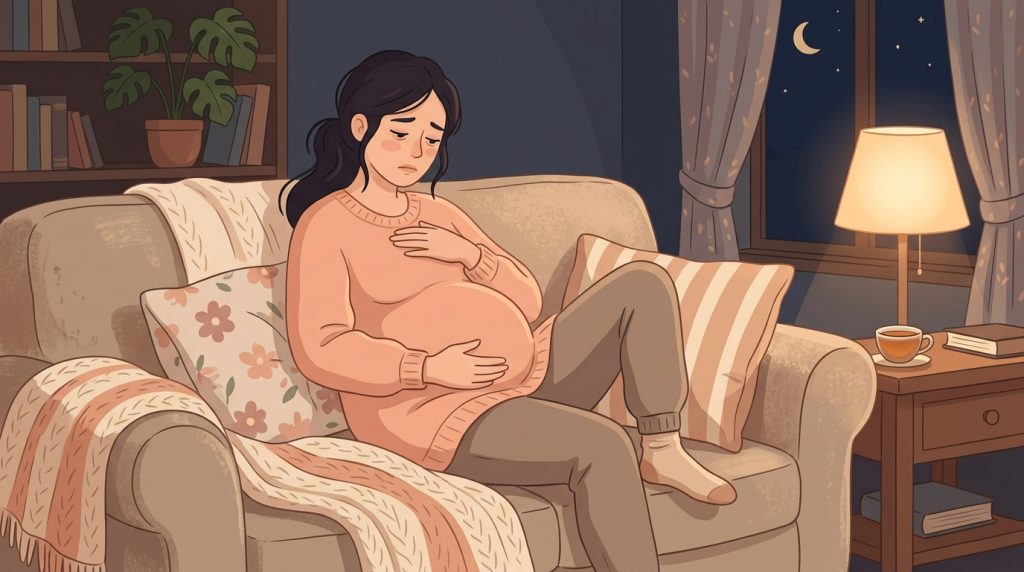
Then you eat a normal dinner and spend the next hour wondering if your chest is slowly dissolving from the inside.
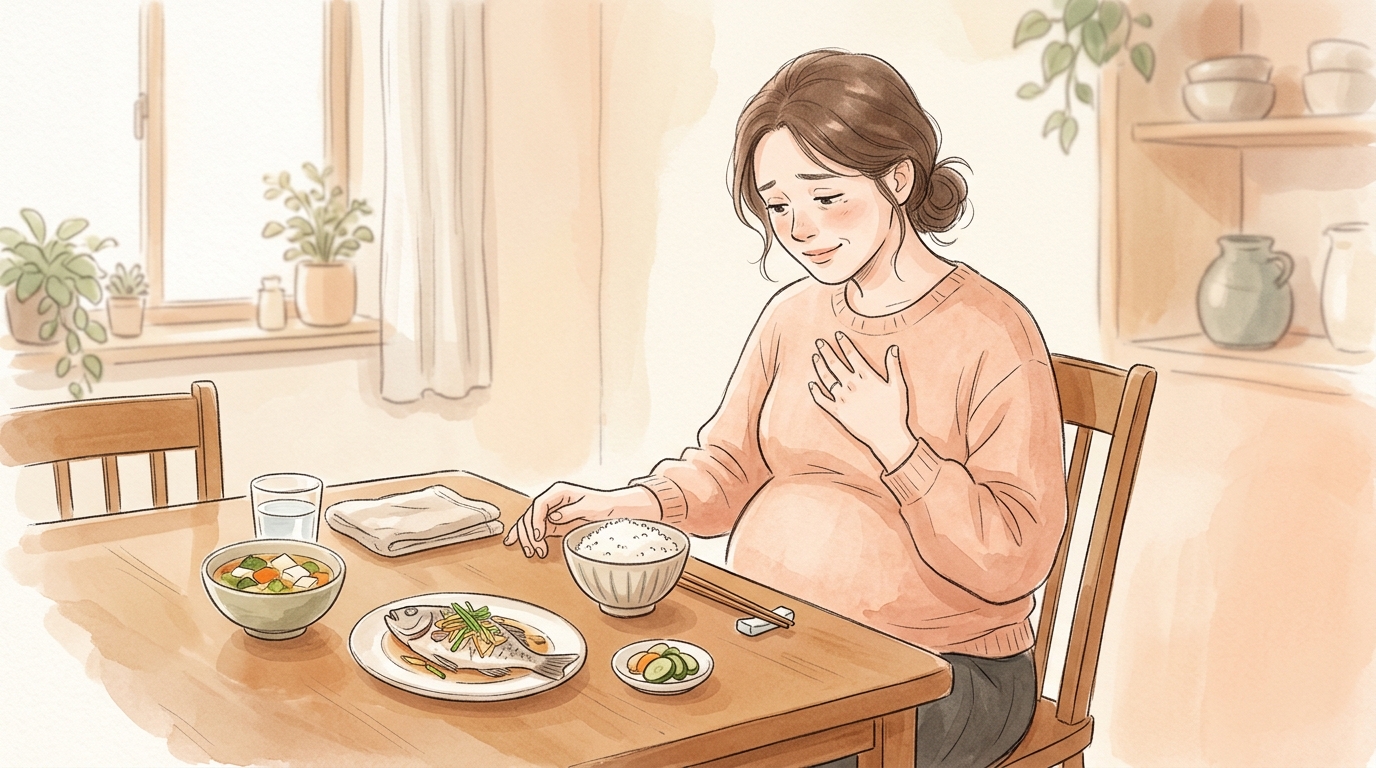
That was me at around week 16. I had made steamed fish with rice and a bowl of simple soup. Nothing dramatic. Nothing spicy. The kind of meal I had eaten my entire life without a second thought. Twenty minutes later I was sitting very still on the sofa, deeply regretting every decision I had ever made.
Nobody had warned me about second trimester heartburn. Or maybe they had and I simply had not listened because I was too busy being relieved that the first trimester was finally over.
Either way, I learned the hard way. And then I spent the rest of my pregnancy learning, adjusting, and occasionally ignoring my own rules because sometimes you just really want that bowl of laksa and you decide the consequences are worth it.
This is everything I wish someone had told me before week 16.
First, Why Does Heartburn Even Happen
I used to think heartburn during pregnancy was about eating the wrong things. Like if I just avoided chilli and fried food I would be fine.
It is actually more complicated than that.
During pregnancy, your body produces more progesterone. One of progesterone’s less glamorous jobs is relaxing smooth muscle tissue — which sounds fine until you realise that the valve separating your stomach from your oesophagus is smooth muscle too. When that valve relaxes, stomach acid travels upward more easily than it normally would. And by the second trimester, your growing uterus is also starting to press against your stomach from below, leaving less room for food to sit comfortably.
So even a totally reasonable meal can suddenly feel like a problem.
Understanding this helped me stop being so hard on myself every time dinner ended badly. It was not that I made a bad choice. My body was just doing something new and I needed to figure out how to work with it rather than fight it.
What Your Body Actually Needs Right Now

Iron — More Than You Think
Your blood volume increases dramatically during pregnancy. Which means your iron needs go up too. When my iron was slightly low around week 20, the exhaustion was on a completely different level from normal pregnancy tiredness. It was the kind of tired where climbing one flight of stairs felt genuinely unreasonable.
Good sources your body can actually use well:
- lean red meat, chicken, fish
- leafy greens like spinach, kai lan, bayam
- lentils and chickpeas
- tofu
- ikan bilis, which is genuinely convenient if you eat a lot of local food
One thing worth knowing — pairing iron-rich foods with something high in vitamin C helps your body absorb it more efficiently. A squeeze of lime over your greens. A small glass of orange juice with your meal. Small habits that actually add up.
Calcium
Your baby’s bones are developing quickly during this trimester. If your diet does not supply enough calcium, your body takes it from yours instead. Which is exactly as unpleasant as it sounds.
Dairy is the obvious answer but pregnancy made me genuinely lactose sensitive in a way I had never been before. Bloating, discomfort, the works. If that sounds familiar, you are not imagining it. It is fairly common.
What worked better for me personally:
- calcium-fortified soy milk and oat milk
- tofu set with calcium sulphate (check the label — not all tofu qualifies)
- ikan bilis eaten whole
- bok choy, broccoli, kai lan
- yoghurt in small amounts, which I tolerated better than straight milk for some reason
Folate
Most people associate folate with the first trimester because of neural tube development. But it remains important throughout pregnancy for your baby’s ongoing growth.
Dark leafy vegetables, lentils, eggs, avocado. And honestly, just keep taking your prenatal vitamins consistently. Diet alone has too many variables on any given day.
Fibre — Underrated and Necessary
Nobody talks about pregnancy constipation enough. Progesterone slows digestion throughout your entire pregnancy. Iron supplements make it worse. Some days you will eat beautifully and your digestive system will simply decide to take a personal day.
Enough fibre helps. Oats, brown rice, wholegrain bread, papaya, prunes, pear, vegetables of all kinds. And water — fibre without adequate hydration makes constipation worse, not better.
Also, better digestion genuinely does reduce heartburn for some women. So fibre is doing double duty here.
Protein
Keeps your energy more stable. Supports your baby’s tissue development. Helps reduce the blood sugar crashes that make afternoon fatigue feel absolutely brutal.
Eggs, chicken, fish, tofu, tempeh, Greek yoghurt, a small handful of nuts. Nothing complicated. Just making sure protein shows up consistently throughout your day rather than only at dinner.
What to Limit or Avoid
The Heartburn Triggers
This is the part that requires the most trial and error, honestly. Because not every trigger affects every mother the same way. Some women cannot touch citrus fruit. Others eat oranges daily and feel completely fine. You have to pay attention to your own patterns rather than following a list too rigidly.
That said, the most common culprits:
| Food | Why It Causes Problems |
|---|---|
| Spicy food — chilli, sambal, heavy pepper | Directly irritates the oesophagus lining |
| Acidic food — tomatoes, citrus, vinegar-based dishes | Increases stomach acid production |
| Fried and fatty food — fried chicken, oily noodles | Slows digestion, relaxes the oesophageal valve further |
| Carbonated drinks | Increases stomach pressure |
| Caffeine — coffee, strong tea, chocolate | Relaxes the valve that keeps acid down |
| Large meals eaten quickly | Overfills the stomach |
I gave up my morning kopi somewhere around week 17. I want to be honest — I resented it. I switched to a small weak cup of tea instead and it helped, but I mourned the kopi for a genuinely unreasonable amount of time.
The large meals thing was the hardest adjustment. I was hungry all the time. Eating smaller amounts more frequently felt annoying and inconvenient. But splitting into five or six smaller meals throughout the day made a bigger difference to my heartburn than almost anything else I tried.
Raw and Undercooked Food
Your immune system is naturally suppressed during pregnancy to protect the baby. This means foodborne illnesses hit harder and take longer to recover from than usual.
Things to avoid:
- sashimi, raw oysters, undercooked seafood
- runny or raw eggs
- unpasteurised dairy
- cold deli meats that have not been heated through
- raw bean sprouts
For context — most freshly cooked hawker food served hot is generally considered safe. The concern is food that has been sitting at room temperature for a while, or food served raw. So your regular nasi padang and char kway teow from a busy stall is not the enemy here.
High-Mercury Fish
Large fish accumulate mercury over their lifespans. High mercury intake during pregnancy has been linked to developmental issues.
Avoid shark, swordfish, king mackerel. Salmon, sardines, pomfret, tilapia, ikan bilis — all fine in moderate amounts. Seafood is genuinely good for you during pregnancy, particularly for omega-3s. The goal is informed choices, not blanket avoidance.
Excess Sugar and Refined Carbs
Gestational diabetes screening happens between weeks 24 and 28. Eating patterns heavy in refined carbohydrates and added sugar can contribute to blood sugar instability leading up to that point.
This does not mean no carbohydrates. It means choosing brown rice over white where you can manage it, moderating sugary drinks, and pairing carbs with protein or fibre to slow how quickly glucose enters your bloodstream.
Some days you will manage this well. Other days dinner will be white rice and a fried egg and that will simply be what happened. Both are fine.
Small Habits That Actually Made a Difference
Smaller meals more frequently. I have already said this but it bears repeating because it genuinely helped more than anything else.
Stay upright after eating. At least thirty to forty-five minutes. Lying down after a meal is a very reliable way to ruin the next two hours of your evening.
Stop eating two to three hours before bed. I ignored this rule regularly and paid for it every single time.
Keep something small nearby between meals. A plain cracker, a slice of wholegrain bread. An empty stomach can sometimes make acid reflux worse rather than better. Having something small to buffer it helps.
Drink water between meals, not during. Large amounts of water during a meal increases stomach volume and can worsen reflux. Staying consistently hydrated throughout the day between meals works better.
For The Days When None Of This Goes To Plan

There will be an evening when you eat the safest possible meal and still end up uncomfortable on the sofa at 9pm. There will be a week when the only thing that sounds edible is plain toast and that becomes the default. There will be a day when you give up on the brown rice and just eat the white rice because you are exhausted and you are doing your best and that is enough.
Pregnancy nutrition is not about perfect execution. It is about paying attention, adjusting when something stops working, and being patient with a body that is doing something genuinely difficult.
You are figuring it out as you go. Most of us were.
And most of us, looking back, did just fine.