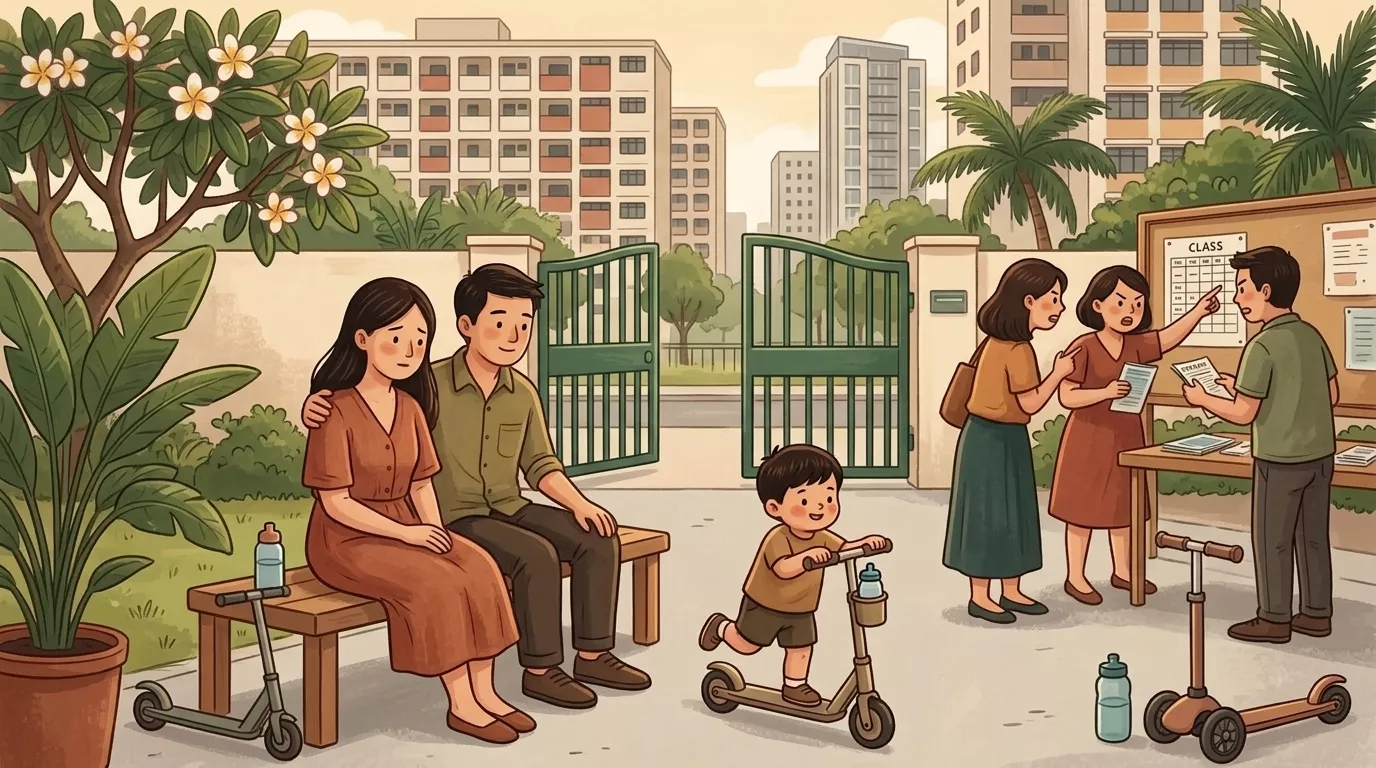
It happened at a playground, because these things often do.
One moment, we were watching our children take turns on the slide. The next, someone mentioned phonics. Then swimming. Then Mandarin. Then a weekend class I had never heard of, taught at a centre with a waiting list long enough to make it sound like we were applying for university instead of helping preschoolers recognise sounds.
I smiled and nodded the way parents do when trying not to look alarmed.
Until that afternoon, I had been quite sure about the kind of childhood I wanted for my child. Slow mornings when possible. Time to play. Books, outdoor space, family meals, enough structure to feel safe but not so much that every hour had a purpose.
Then suddenly, standing under the hot Singapore sun with a water bottle in one hand and my child’s scooter in the other, I wondered if I was being too casual.
What if everyone else knew something I did not?
That is how the pressure often begins.
Not as ambition.
As worry.
If you are trying to figure out raising kids in Singapore without the kiasu pressure, the hard part is not always knowing what kind of parent you want to be. Sometimes the hard part is remembering it when everyone around you seems to be doing just a little more.
Why Parenting in Singapore Can Feel So Full of Noise
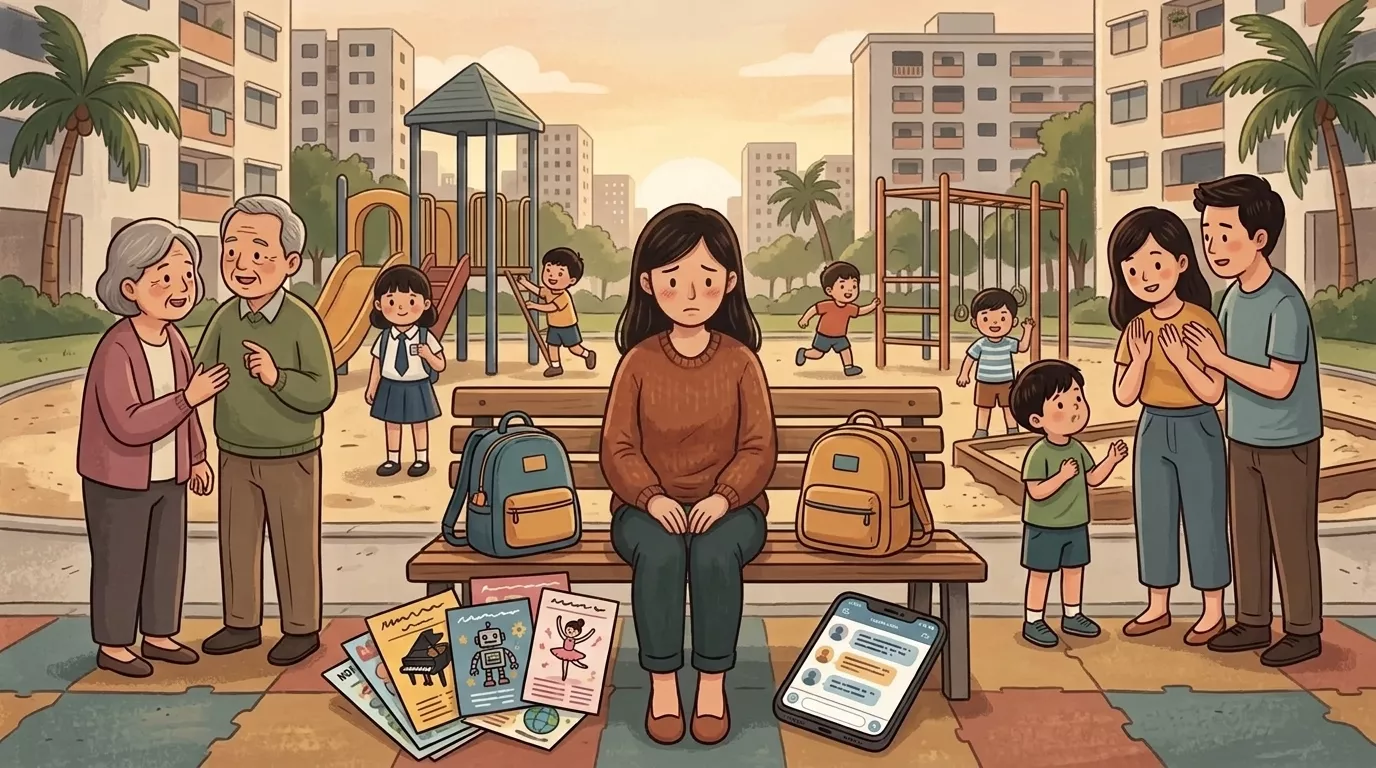
Parenting in Singapore can feel crowded, even inside your own head.
There are school expectations, family expectations, cultural expectations, and the quiet pressure that comes from living in a small, fast-moving place where it is very easy to compare. Someone always seems to know about a better preschool, a better class, a better method, a better tutor, a better way to prepare a child for the next stage before the current one has even finished.
Then there are the voices inside the family.
One grandparent may believe children should be disciplined early, because manners and respect are the foundation of everything. Another may believe children should be given more freedom because childhood should not feel like training. One parent may come from a background where academic success meant safety. The other may want their child to grow up with more emotional space than they had.
None of these views appear from nowhere.
They usually come from love, fear, memory, and culture.
That is what makes them hard to dismiss.
Cultural differences in parenting are not only about race, nationality, or language. They can also be generational. They can be about what childhood was like for the adults now raising children. They can be about what each person believes a “good parent” is supposed to do when the world feels competitive.
And in Singapore, that world can feel very competitive indeed.
The Kiasu Pressure Often Starts Earlier Than We Expect
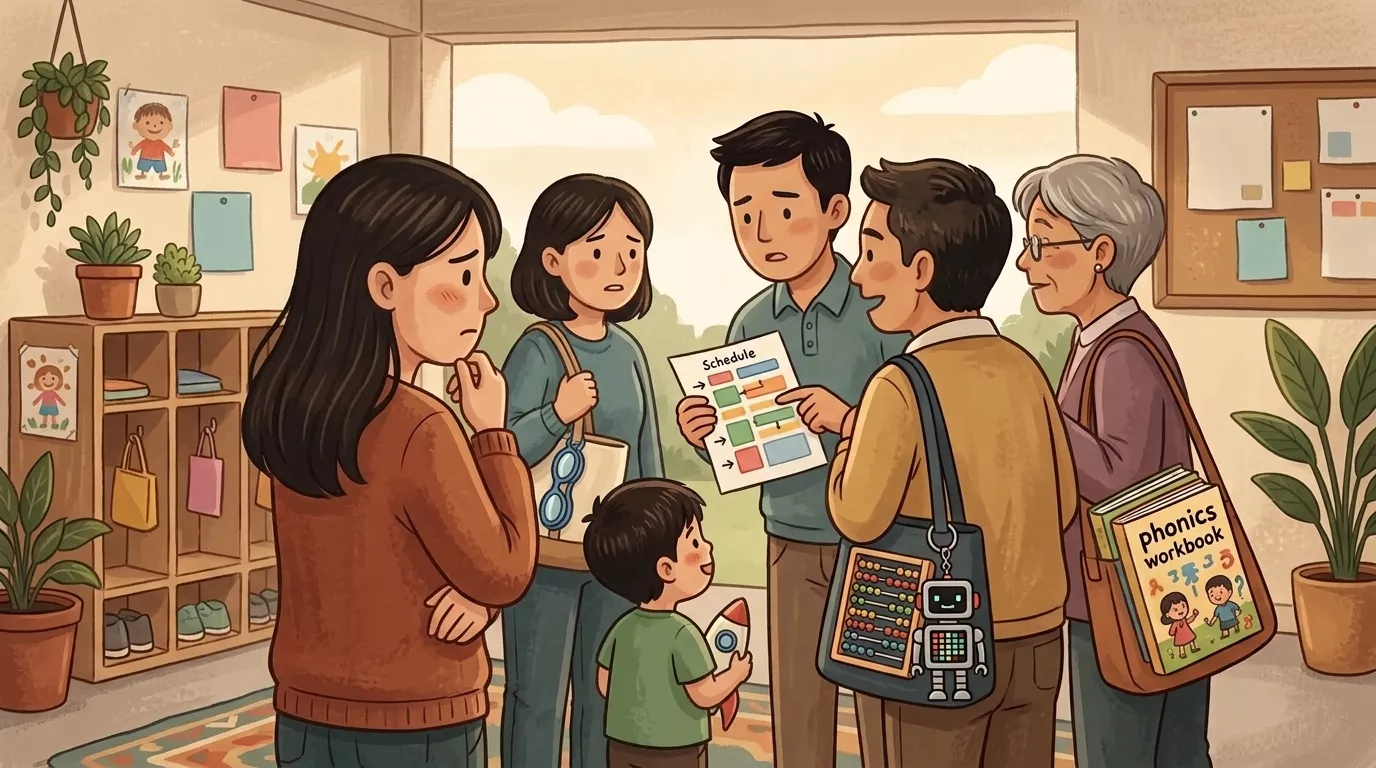
Many parents think the real pressure begins in primary school.
Then preschool begins, and suddenly the questions arrive earlier.
Is your child reading yet?
Are they speaking enough Mandarin?
Should they start swimming?
Should they do phonics before Primary 1?
Is playgroup enough?
Is everyone else already doing something we are not?
The strange thing is that almost every parent says they do not want to be kiasu. Most of us do not wake up wanting to turn childhood into a race. But the pressure rarely sounds like pressure at first. It sounds like being responsible. It sounds like giving your child opportunities. It sounds like not wanting them to struggle later because you were too relaxed now.
A CNA commentary by Institute of Policy Studies researchers made a similar point: parents cannot simply be asked to change their mindsets in isolation if the wider conditions still make kiasu behaviour feel necessary.
That feels true.
Because often, kiasu parenting is not driven only by ego.
It is driven by fear.
Fear that your child will fall behind. Fear that school will be hard. Fear that everyone else is preparing quietly while you are trying to be calm. Fear that saying no to one more class means closing a door your child might need later.
Fear can look a lot like love when you are holding it tightly.
Different Cultures, Different Ideas of a Good Parent
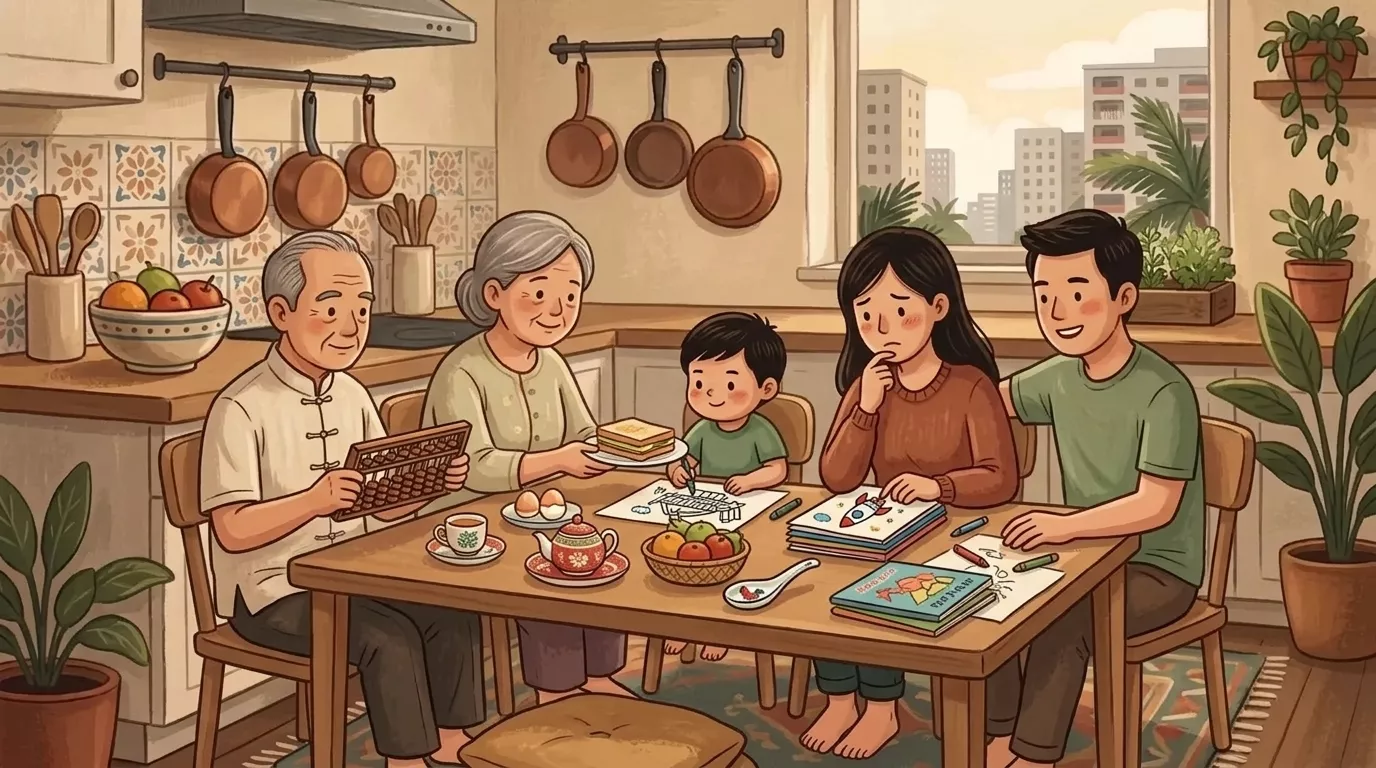
One of the hardest parts of parenting across cultures is realizing that everyone may be trying to protect the child, just in different ways.
A grandparent who insists on extra practice may not be trying to rob the child of joy. They may believe discipline creates security. A parent who wants more play may not be careless. They may believe rest, curiosity, and emotional safety are also forms of preparation.
A family member who says, “Children must learn to be tough,” may be speaking from a life where softness did not feel safe. Another who says, “Let them express their feelings,” may be trying to give the child something they once needed but did not receive.
It helps to ask what value is hiding underneath the method.
Is it respect?
Resilience?
Independence?
Gratitude?
Safety?
Confidence?
Once you find the value, the conversation becomes less about winning and more about translation. Maybe everyone wants the child to grow up capable, but not everyone agrees that capability must come from the same route.
That does not mean every opinion needs to become a household rule.
It simply means we can listen without surrendering.
Deciding What Success Means in Your Own Home
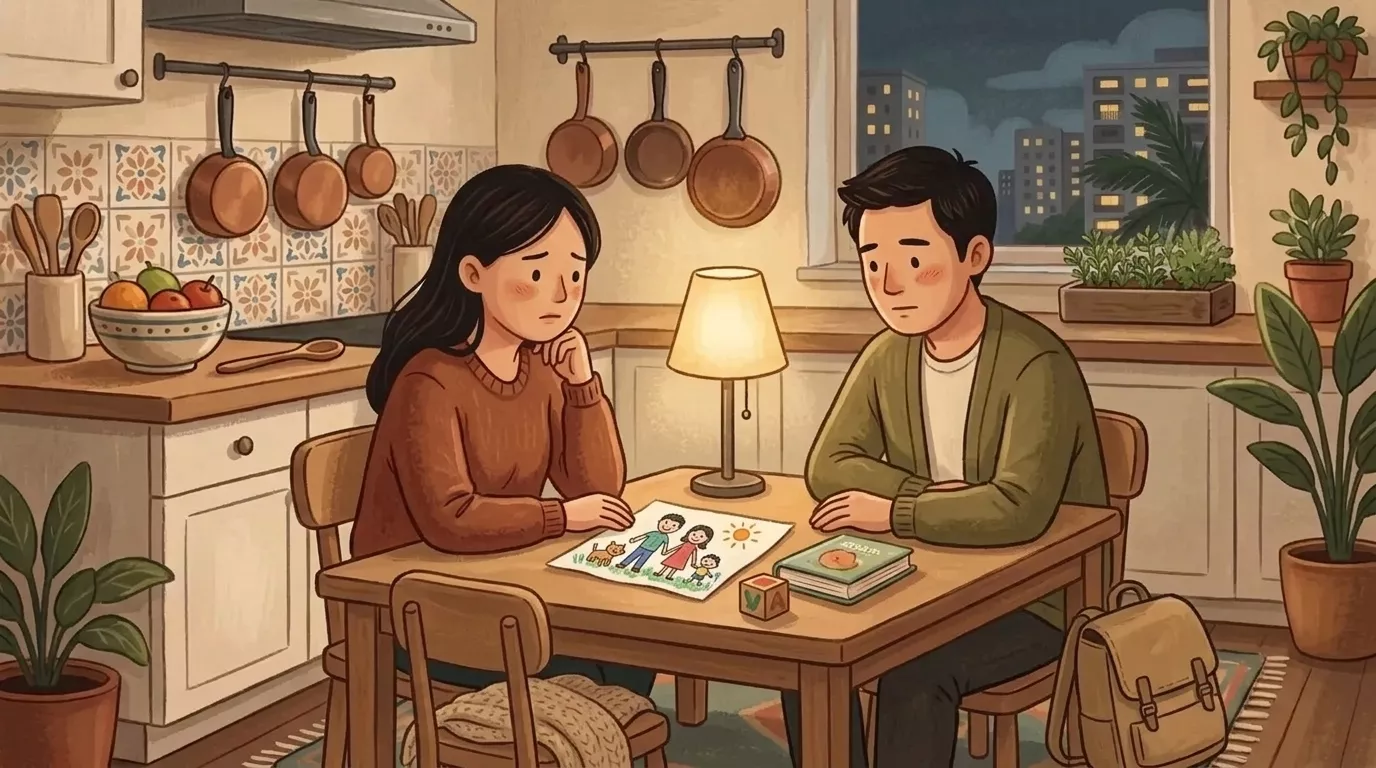
At some point, every family has to decide what success means inside their own home.
Not in the school ranking.
Not in the group chat.
Not in the eyes of relatives who ask questions that sound innocent but somehow leave you feeling examined.
Inside your home.
Maybe success is not only a child who performs well academically, but also a child who sleeps enough, plays freely, knows how to ask for help, and still believes mistakes are survivable. Maybe it is a child who is curious, kind, brave enough to try again, and secure enough to rest. Maybe it is a child who learns that achievement matters, but not more than their sense of self.
This does not mean academics are unimportant.
In Singapore, education does matter. School pathways matter. Effort matters. But even the national conversation around education has been slowly trying to make more room for different strengths and pathways. MOE describes Full Subject-Based Banding as part of efforts to nurture the joy of learning and develop multiple pathways that cater to students’ different strengths and interests.
That idea is worth holding onto at home too.
A child is not one number.
Not one grade.
Not one comparison at one age.
They are a whole person still becoming.
How to Handle Family Advice Without Turning Every Meal Into a Debate
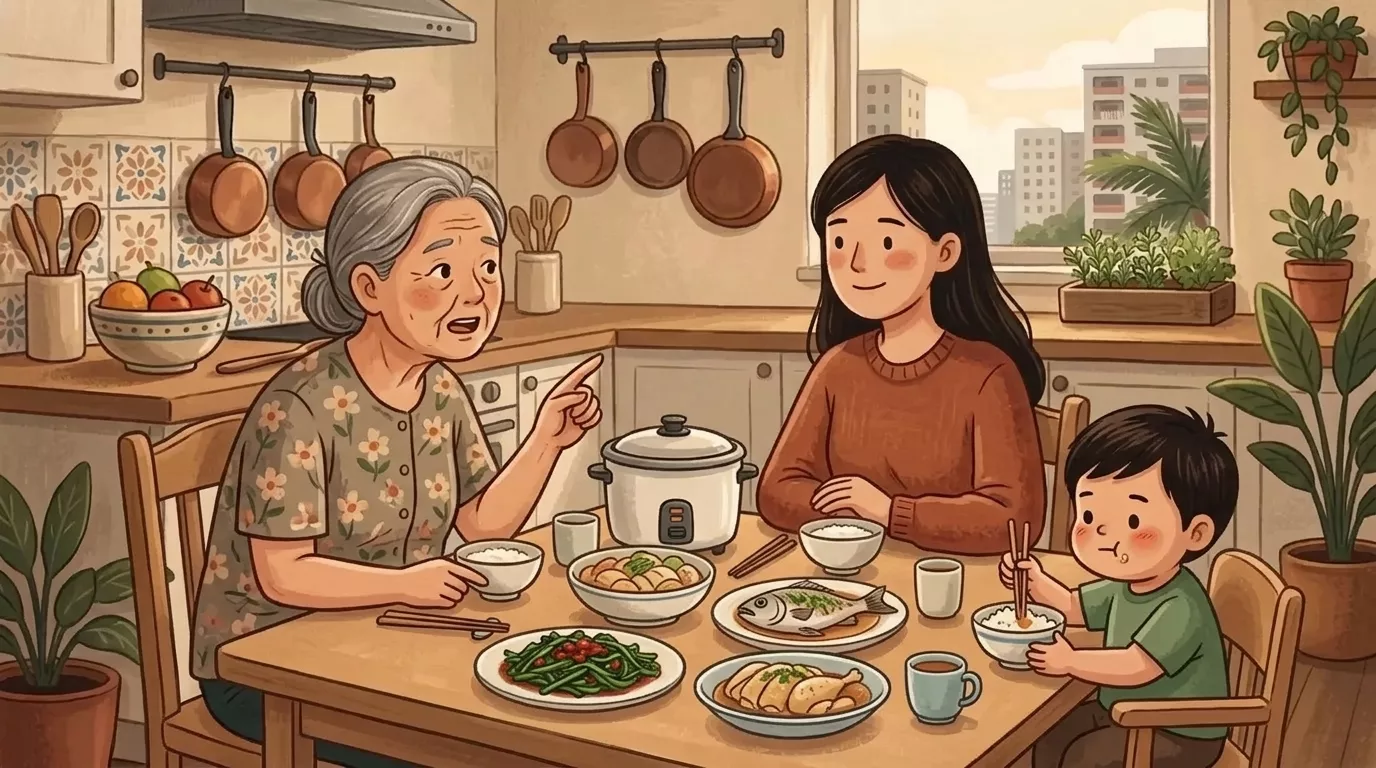
Family advice can be one of the tenderest and most exhausting parts of parenting in Singapore.
It often comes during meals, visits, video calls, or ordinary moments when you were not emotionally prepared to defend your entire parenting philosophy over soup.
“You should send her for class.”
“He is too soft.”
“Last time, children were not like this.”
“If you don’t start now, later very hard.”
Sometimes the advice is useful. Sometimes it is outdated. Sometimes it is really anxiety wearing a helpful voice.
I have learned that not every comment deserves a debate.
Some moments need a soft answer with a firm centre.
“We know you’re worried, but we’re trying this first.”
“We’ll think about it, but we don’t want to add another class right now.”
“For now, we’re focusing on sleep and routine before enrichment.”
“That matters to us too, but we’re approaching it differently.”
These sentences do not always end the conversation completely, but they create a boundary without turning the table into a battlefield.
Being respectful does not mean allowing every adult to vote on your child’s life.
It means listening carefully, then remembering that you are still the parent.
Choosing Enrichment Without Letting It Take Over Childhood
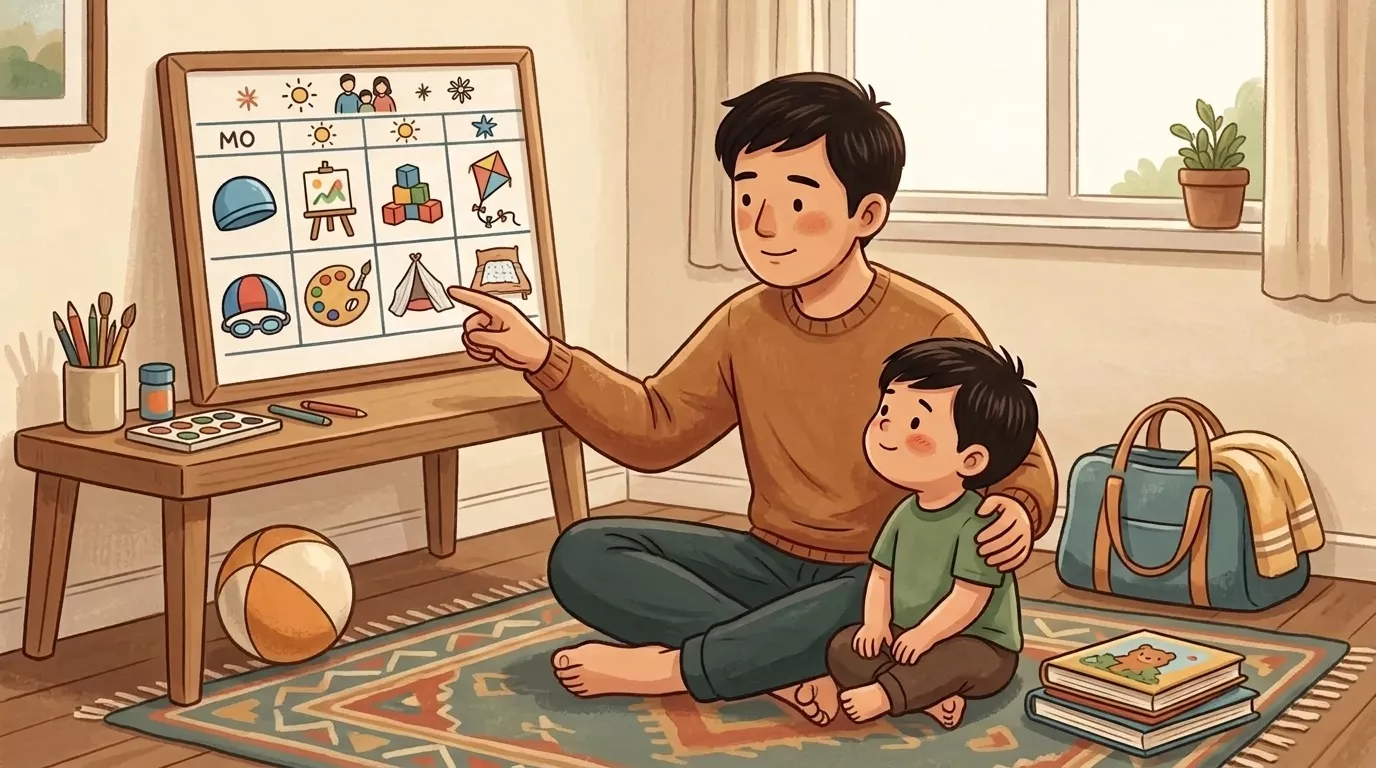
Enrichment is not the enemy.
Some children genuinely love their classes. Some benefit from extra support. Some discover confidence through swimming, music, art, sports, drama, coding, or language classes. A good class with a good teacher can be a beautiful thing.
The problem begins when every empty space starts to feel like wasted potential.
When weekends become a calendar of logistics.
When the child is tired but the parent is afraid to stop.
When we sign up not because the child needs it, but because someone else’s child is doing it.
Singapore families do spend heavily on tuition and enrichment; CNA reported that household spending on tuition reached S$1.8 billion in 2023, while also reflecting how divided parents can feel about whether enrichment gives children a head start or adds unnecessary pressure.
That tension is real.
So before adding one more class, it may help to ask quieter questions.
Does my child enjoy this?
Does this support who they are, or only who I fear they might not become?
Does the schedule still leave space for rest, play, family time, and boredom?
Am I choosing this from intention, or from panic?
Sometimes the answer may still be yes.
Sometimes it may be no.
Both can be loving.
Teaching Children to Respect Culture Without Carrying Every Expectation
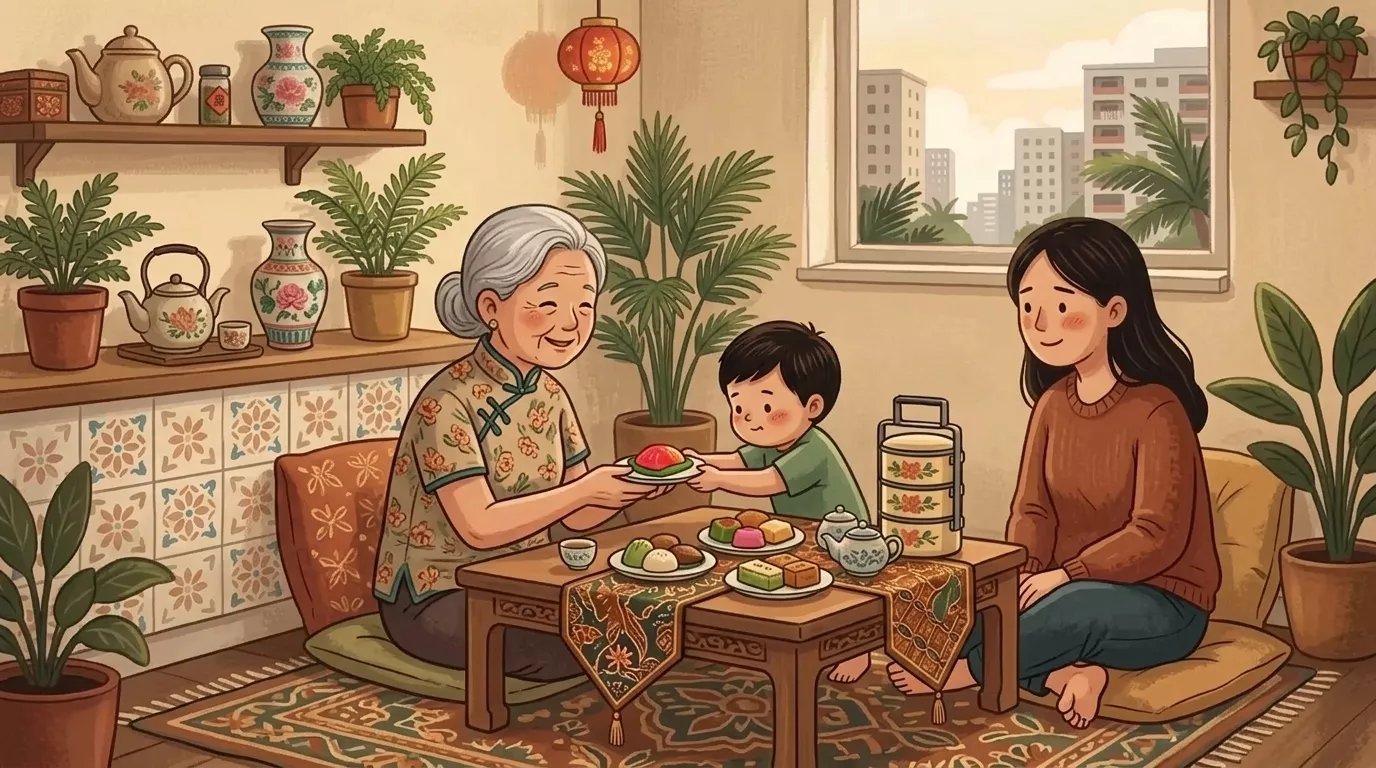
One of the beautiful things about raising children in Singapore is that culture is everywhere.
In the languages children hear at school and on the MRT.
In the food on the table.
In the festivals, family traditions, greetings, rituals, and ways of showing respect.
A child can grow up learning to call elders properly, remove shoes at the door, share food, respect different religions, hear multiple languages, and understand that the world is bigger than one family’s way of doing things.
Those are gifts.
But culture should give children roots, not only rules.
There is a difference between teaching respect and teaching fear. There is a difference between passing down tradition and passing down shame. There is a difference between helping children understand where they come from and making them feel they are valuable only when they meet every expectation attached to that history.
We do not have to keep everything exactly as we received it.
We can keep the warmth.
The food.
The language.
The greetings.
The stories.
The sense of belonging.
And we can soften the parts that taught children to hide feelings, fear mistakes, or believe love must always be earned through performance.
That is not rejecting culture.
Sometimes it is caring for it enough to let it become kinder.
Helping Your Child Stay Grounded When Everyone Is Comparing
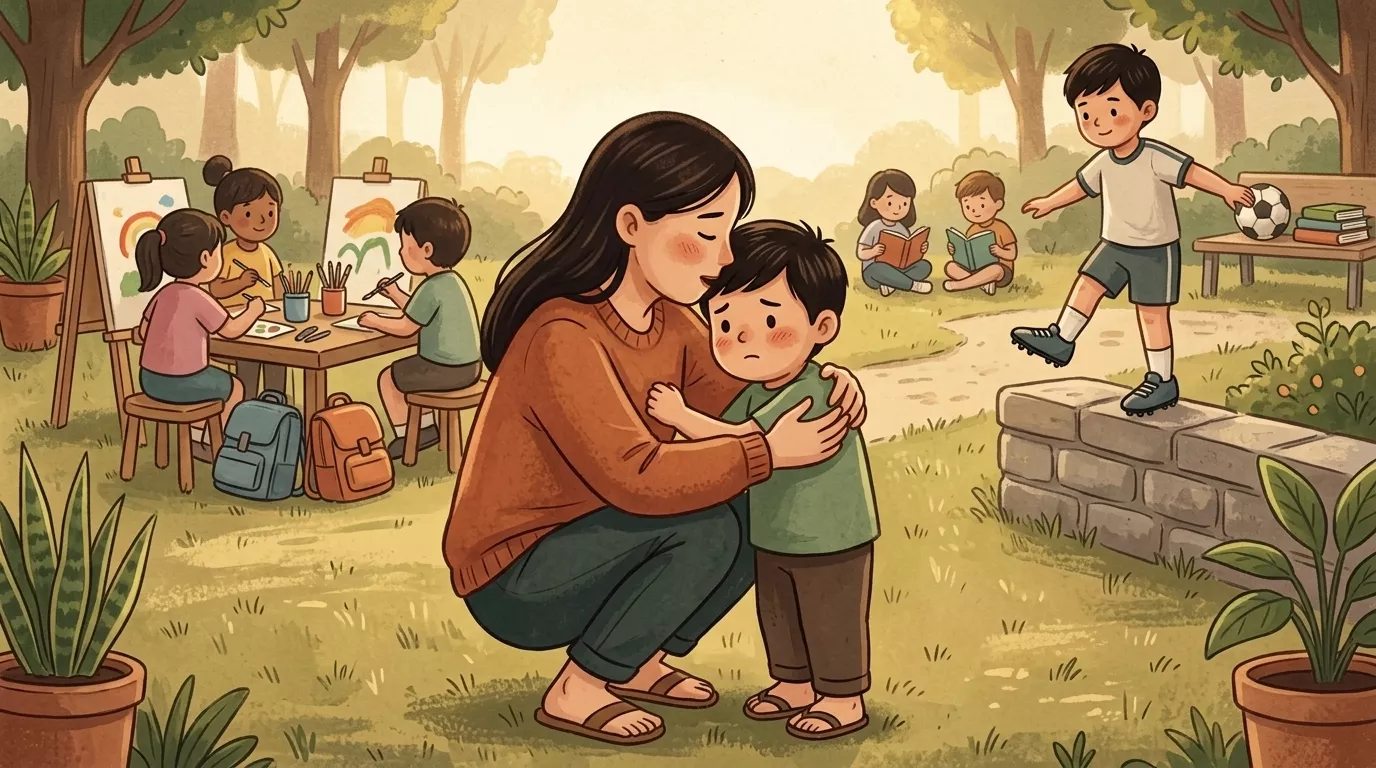
Children notice comparison earlier than we think.
They hear adults talk.
They notice when we praise results more loudly than effort.
They feel the shift in the room when someone else’s child does something earlier, faster, or better.
Even if we never say, “Why can’t you be like them?” they can still absorb the idea that childhood is a series of rankings.
This is where parents can quietly become a shelter.
Not by pretending achievement does not matter, but by widening what we notice.
“You worked hard on that.”
“I like how you tried again.”
“That was kind of you.”
“You looked nervous, but you still gave it a go.”
“You don’t have to be the best at everything to keep learning.”
These sentences may sound small, but children build an inner voice from the voices they hear around them.
Singapore has also been paying more attention to children’s wellbeing. A 2025 Duke-NUS landscape brief described children’s mental health and wellbeing as an urgent public health priority and mapped a need for more coordinated support across schools, communities, families, and services.
That matters because children are not only academic beings.
They are emotional ones too.
What Parents Can Say No To
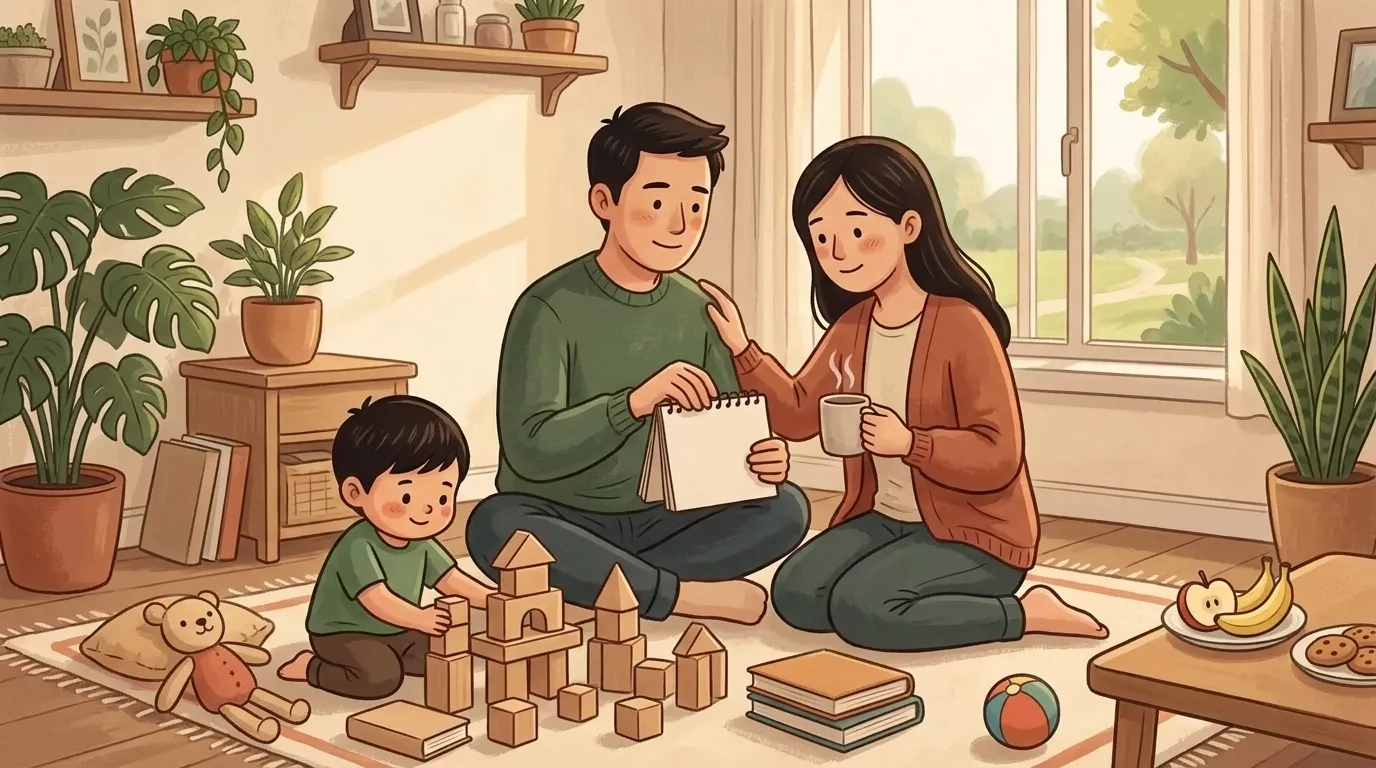
One of the most powerful things parents can do is decide what they are allowed to refuse.
Not everything offered is needed.
Not every opportunity is right.
Not every group chat anxiety requires action.
You can say no to a class that leaves your child exhausted.
No to comparing siblings.
No to weekends that feel like transport duty.
No to conversations that make your child sound like a project under constant upgrade.
No to the idea that a good parent is always doing more.
And when you say no to those things, you are not saying no to your child’s future.
You may be saying yes to sleep.
Yes to free play.
Yes to family dinners.
Yes to a quiet Saturday.
Yes to emotional safety.
Yes to the belief that your child can grow without being rushed through every stage.
This can feel uncomfortable in a place where doing more often looks like caring more.
But sometimes restraint is also care.
Sometimes the loving choice is not adding.
It is protecting space.
Raising Kids Without the Kiasu Pressure Does Not Mean Not Caring
I used to worry that if I stepped away from the pressure, people would think I was not serious about my child’s future.
Now I think that fear is part of the pressure.
Raising children without the kiasu pressure does not mean being careless. It does not mean ignoring school, effort, discipline, or opportunity. It does not mean pretending the world is not competitive or that children will never need resilience.
It means choosing with more intention.
It means asking whether the thing we are doing is truly serving the child in front of us, or only calming the fear inside us.
It means remembering that children need guidance, but they also need room. They need encouragement, but also rest. They need roots, but not chains. They need adults who care about their future without making them feel as though they are always running late for it.
There will still be pressure.
At the playground.
At school gates.
At family dinners.
In group chats.
Inside our own minds.
But perhaps parenting in Singapore is not about escaping every pressure completely. Perhaps it is about noticing when the noise becomes louder than the child.
And coming back to the child.
The one standing in front of us.
Still growing.
Still learning.
Still needing to know that they are loved not only for how far they go, but for who they are while getting there.