


When Love Looks Different: Finding Our Way Through Parenting, Culture, and Boundaries
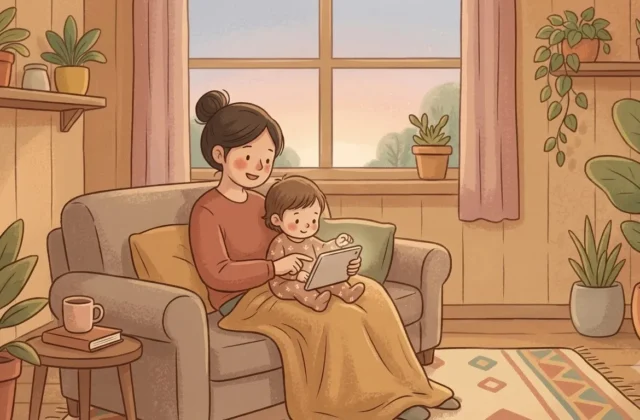
It started on a weekday evening that felt like every other. Dinner had just ended, the house was winding down, and I was already mentally preparing for bedtime. That familiar rhythm we had worked so hard to build. Our child padded over, a little more restless than usual, and asked to watch a video.
We had talked about this many times before. No screens on weekdays. It wasn’t a strict rule we had pulled out of nowhere. It came from trial and error. From nights where one episode turned into three, where bedtime stretched later and later, where mornings felt heavier for all of us. We had chosen this boundary because it made our days calmer, our evenings more connected.
So I gently said no.
There was a small pause, the kind that hangs quietly in the air, and before I could redirect or distract, a familiar, loving voice from across the room stepped in.
“Just let him watch a little. It’s okay.”
The TV flickered on.
At that moment, nothing dramatic happened. There was no argument, no raised voices. Just a child happily watching what he wanted, and a grandparent smiling, pleased to have brought a little joy into the evening.
But inside, I felt that quiet shift. The kind that is hard to explain unless you have been there. You cannot call it anger. It wasn’t even frustration, not entirely. It was the feeling of something we had carefully built being gently, unintentionally undone.
Growing up in an Asian family, I had always known that parenting didn’t belong to just two people. Grandparents were part of the everyday rhythm of life. Their presence was constant, their opinions valued, their love unquestioned. When I was younger, I never thought twice about it. It simply felt like more people caring for you.
But standing where I was now, as a parent myself, I began to understand how layered that dynamic could be.
Because love doesn’t always look the same across generations.
To a grandparent, giving in to a small request can feel like kindness. It is their way of bonding, of creating moments that feel light and joyful. They are no longer thinking about routines or long-term habits in the same way. They have already done the years of structure, discipline, and constant decisions. What remains is a softer kind of love one that wants to give more than it withholds.
I could see that clearly. I could feel it in the way they looked at my child, in the quiet pride, in the desire to make them happy.
And yet, at the same time, I was holding something different.
I was thinking about tomorrow morning, about how one small change could ripple into the next day. I was thinking about the consistency we were trying to build, the small routines that made our home feel steady. I was thinking about how quickly children learn where the boundaries bend.
That was the part that felt difficult to explain.
What made it more complicated was that even within our own home, the agreement hadn’t come easily.
My partner and I hadn’t always seen things the same way. There were evenings early on when one of us would say, “Maybe just one is fine,” while the other hesitated, wondering if that “just one” would quietly entail. It took more conversations than I expected. Small ones, repeated over time to understand each other’s thinking.
We weren’t just deciding on rules. We were figuring out what kind of environment we wanted to create for our child.
There were moments of compromise, moments of rethinking, and moments where we had to admit that neither of us had all the answers. But slowly, something began to take shape. Not a perfect system, but a shared understanding. A way of parenting that felt like ours.
And once we found that alignment, even imperfectly, it became something we wanted to protect.
That evening with the TV wasn’t really about screen time.
It was about what happens when a child receives two different answers to the same question, depending on who is in the room. It was about the subtle confusion that builds over time, when a “no” doesn’t quite hold its meaning.
Children are incredibly observant. They may not articulate it, but they learn quickly. They notice when a rule can be negotiated, when it shifts, when it depends. And while that might seem harmless at the moment, it slowly shapes how they understand boundaries.
I began to see that consistency wasn’t about being rigid. It was about creating a sense of predictability. A quiet reassurance that the world makes sense, that expectations don’t change without reason.
What helped, eventually, wasn’t correcting the situation at the moment. It was finding a way to talk about it after, when everything was calm.
It wasn’t an easy conversation to start. There is always a layer of hesitation when speaking to someone who has raised you, someone you respect deeply. The instinct is often to let things go, to avoid discomfort, to tell yourself that it’s just a small thing.
But I realised that if I didn’t speak up, the pattern would continue not out of disregard, but simply because it hadn’t been clearly understood.
So I tried to approach it differently.
I spoke about what we were trying to do, not what had gone wrong. I shared how the weekday routine had been helping, how our child was settling better at night, how those small boundaries were making a difference. And I said, gently, that it would mean a lot if they could support us in keeping that consistency.
There was a pause, a moment of quiet listening.
And then, something softened.
Because underneath it all, the intention had never been to challenge our parenting. It had simply been to show love in a familiar way.
Once that was acknowledged, it became easier to move forward together.
Over time, I began to understand that parenting within a family is not just about raising a child. It really is about navigating relationships, expectations, and different ways of showing care.
There will be moments when things don’t align perfectly. There will be days when rules bend, when you let something go because everyone is tired, when you choose connection over correction.
And that’s okay.
What matters more is the overall direction. The effort to come back to each other as parents, to stay grounded in what you believe is right for your child, and to communicate that with patience and respect.
Because children are not only shaped by the rules we set. They are shaped by how we hold those rules, how we explain them, and how we navigate the differences around them.
Looking back, that small moment with the TV feels less like a disruption and more like a lesson.
It taught me that being a parent isn’t just about deciding what’s best for your child. It’s also about learning how to stand by those decisions, gently but firmly, even when love around you takes a different form.
And it reminded me that consistency doesn’t have to come at the expense of harmony.
It can grow from understanding, from conversation, and from the shared desire across generations to give a child the best we can, in the ways we each know how.
From My Happy Aura
If you are finding your way through similar moments, where your parenting choices don’t always match the instincts of those around you, know that this is more common than it feels.
You are allowed to take your time to figure out what works for your child.
You are allowed to ask for support in holding those boundaries.
And you are allowed to build a home where love and consistency exist side by side.
Because in the end, what children carry with them is not just what we allowed or didn’t allow.
It is the feeling of being guided with care, surrounded by people who may love differently, but are learning, together, how to stand on the same side. 💛