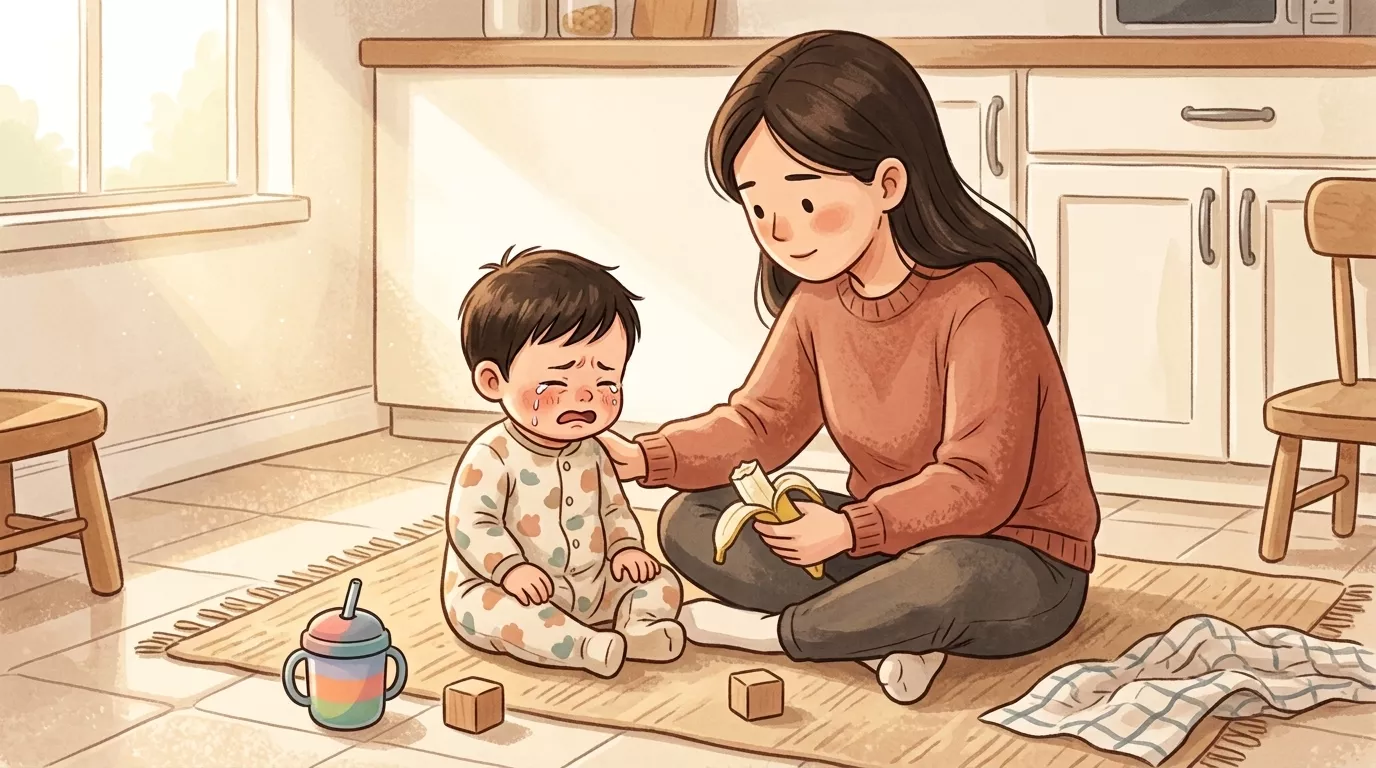
“It still tastes the same,” I said, holding the two pieces together as if logic could repair both the fruit and the heartbreak.
He cried harder.
So I tried again.
“Look, it’s still banana. You like banana. It’s just in two pieces now.”
More crying.
By the third explanation, I realized I was no longer talking to a child who needed information. I was talking to a tiny person whose whole body had been taken over by disappointment, and my very reasonable speech about fruit structure was not helping anyone.
That is often where parents begin when they try to talk to young children about feelings.
We explain too soon.
We use too many words.
We try to solve the feeling before the child has even had a chance to feel it.
If you have ever searched how to explain big emotions to a 2 year old, you probably already know that logic does not work very well in the middle of a meltdown. A toddler in a big-feeling moment does not usually need a lecture. They need help finding their way back to calm, one small word, one safe boundary, one steady adult at a time.
Start by Remembering That Big Feelings Are Not Bad Behavior
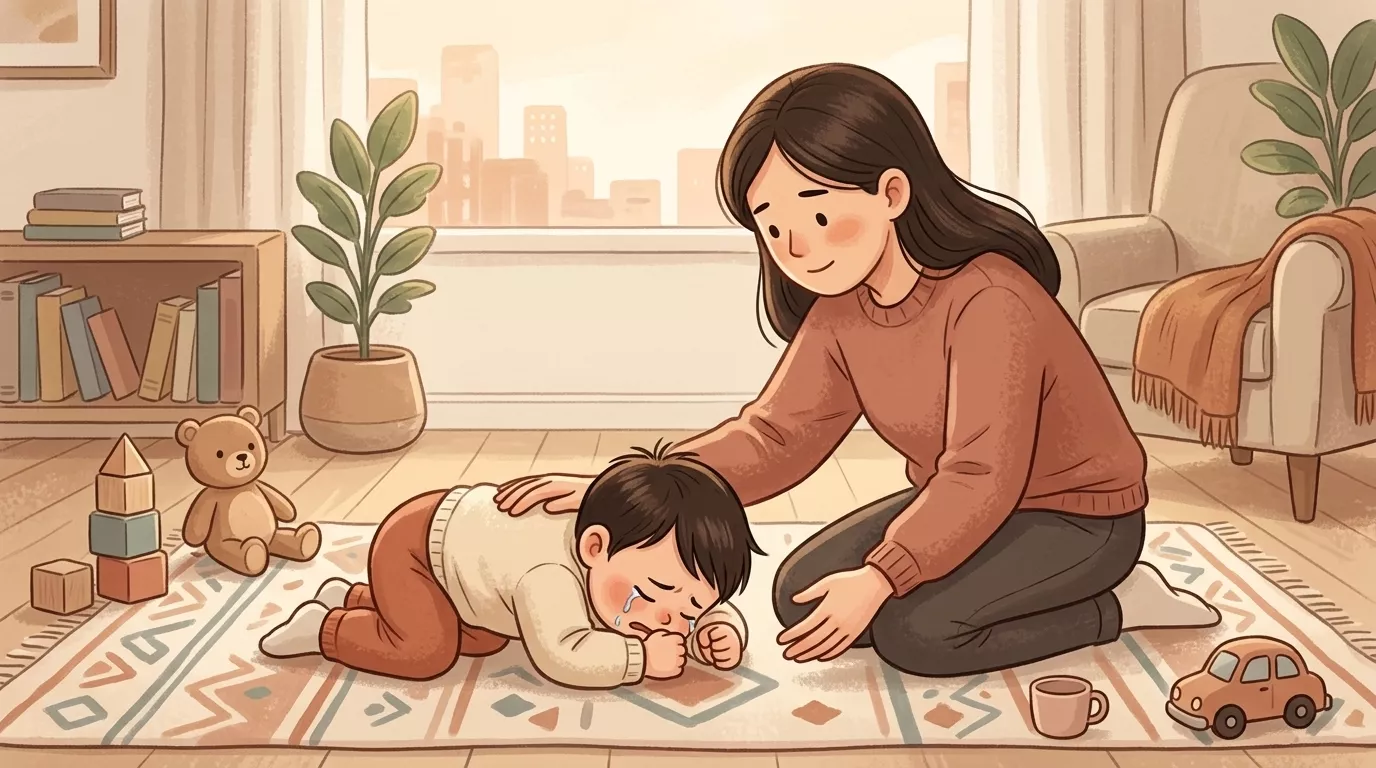
It helps to begin here: big feelings are not the same as bad behaviour.
This does not mean every behaviour is allowed. Hitting, biting, throwing things, and running into unsafe places still need clear limits. But the feeling underneath the behaviour is not wrong. Anger is not wrong. Sadness is not wrong. Frustration is not wrong. Fear is not wrong.
For toddlers, big emotions are part of learning how to live in a body that wants many things but cannot always explain them. The American Academy of Pediatrics says big feelings are a natural part of toddlerhood, and tantrums or aggression can happen because young children are still learning language and self-control. ZERO TO THREE also describes tantrums as a normal part of toddler development as children learn to express their needs.
That shift matters.
When we see a child’s meltdown only as defiance, we tend to respond with control.
When we see it as overwhelm, we are more likely to respond with guidance.
Your child is not trying to ruin the morning because the cup is blue. They are having a very real feeling about something that looks small to you but feels enormous to them.
You do not have to agree with the size of the reaction to respect that the feeling is real.
Use Fewer Words Than You Think
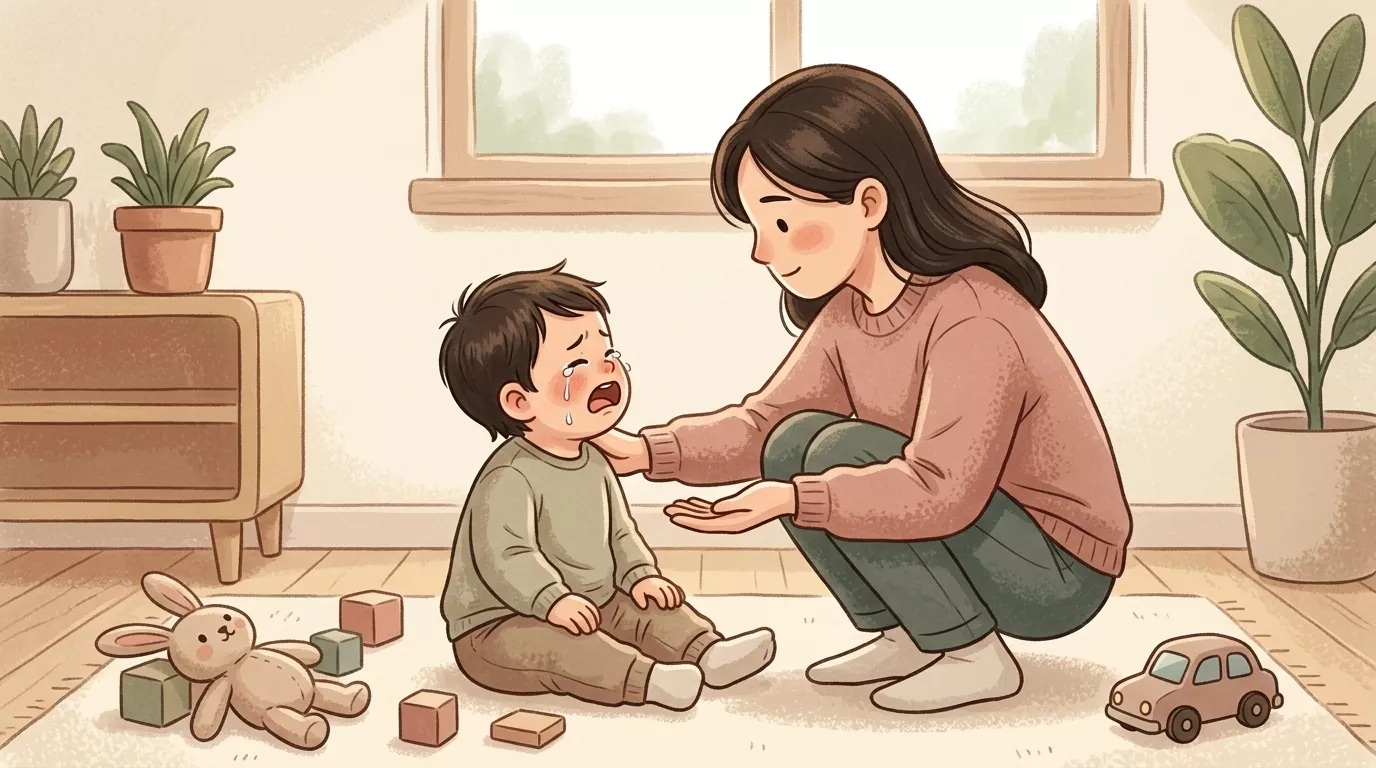
When a toddler is crying hard, this is not the moment for a beautiful parenting speech.
It is tempting to explain. Especially when the situation seems obvious to us.
“We cannot stay at the playground because it is raining, and your shoes are already wet, and we have to go home for lunch, and we can come back another day.”
All true.
All too much.
In the middle of a meltdown, fewer words are usually better.
“You’re mad.”
“You wanted to stay.”
“It’s hard to leave.”
“I’m here.”
That may be enough.
A 2-year-old is still learning how to understand language, feelings, limits, and their own body all at the same time. When the emotion is already big, long explanations can become more noise. The goal is not to win the argument. The goal is to help the child feel understood enough to slowly come back.
There will be time to explain later.
For now, keep your voice low. Keep the words simple. Say less than you think you need to say.
Sometimes the calmest sentence is also the shortest one.
Name the Feeling Without Trying to Fix It Immediately
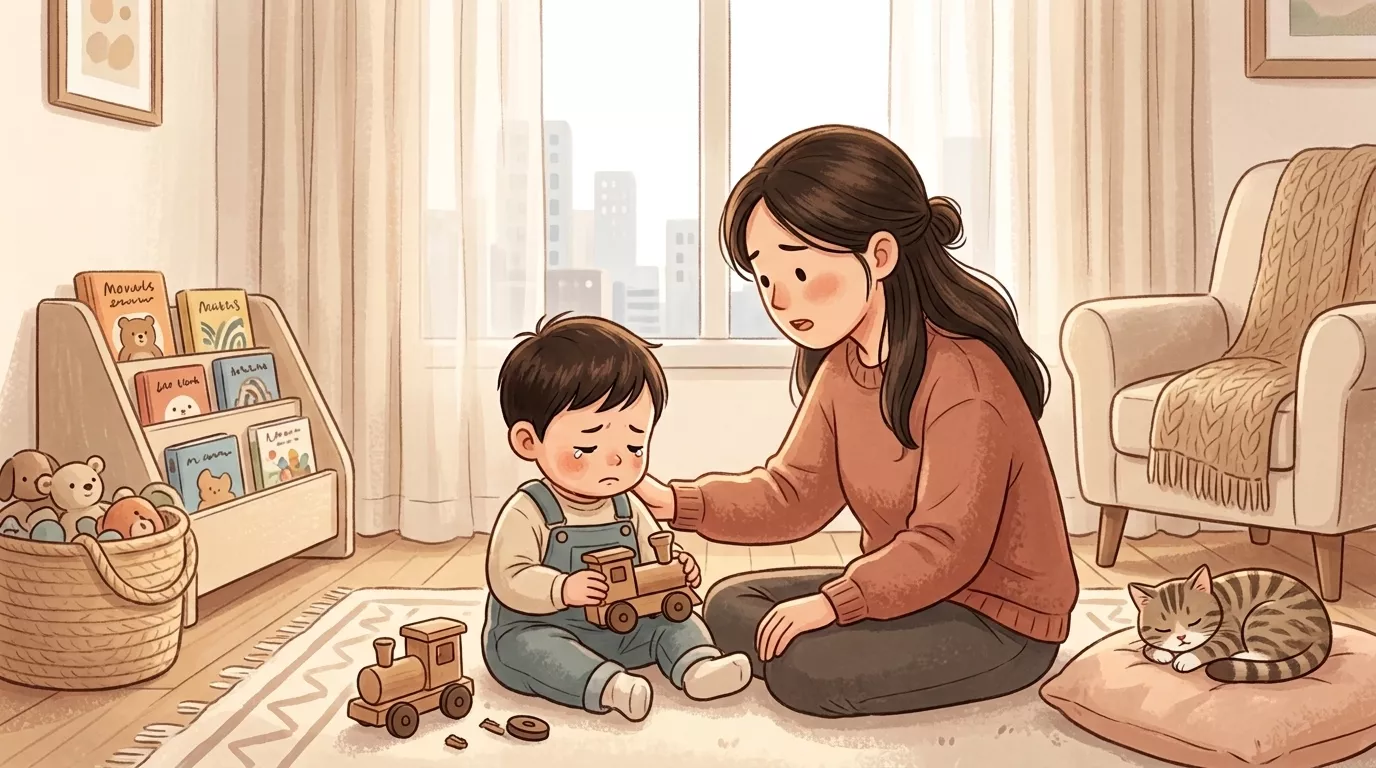
One of the most useful things we can do is name the feeling.
Not dramatically.
Not as a performance.
Just gently.
“You feel sad because Daddy left.”
“You’re angry because I said no.”
“You’re scared of the loud sound.”
“You feel frustrated because the blocks fell down.”
When we name the feeling, we give children language for something that may feel confusing inside their bodies. HealthyChildren, from the AAP, suggests that parents can help young children recognize emotions by using simple feeling words and connecting those feelings to what is happening.
At first, your toddler may not respond.
They may keep crying. They may push you away. They may say “No!” even if you are naming the exact feeling correctly.
That does not mean it is not working.
A child may hear the word many times before they can use it. They may need you to say “mad” on many different days before one day, through tears, they say, “I mad.”
And when that happens, it is not a small thing.
It means the feeling has started to become something they can hold with words, not only with screams.
Hold the Boundary While Accepting the Feeling
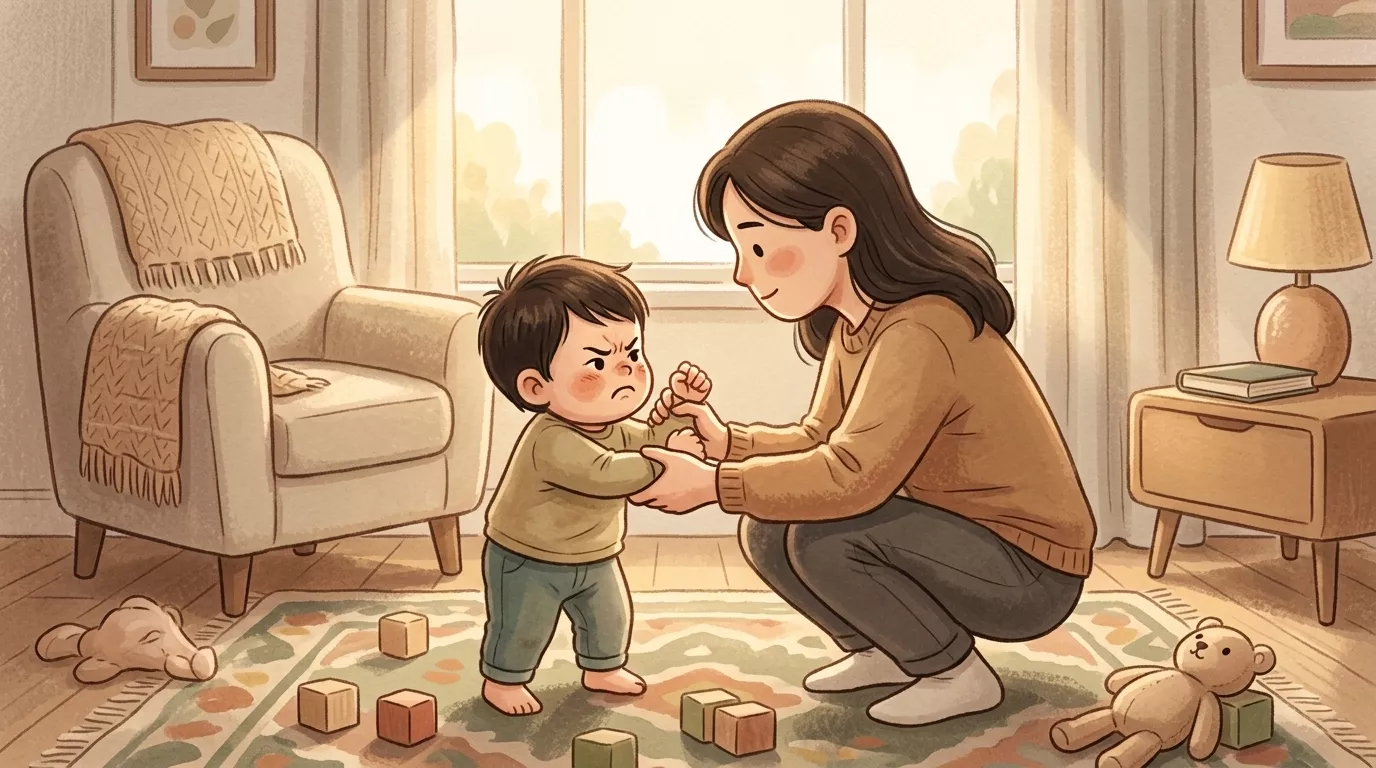
This is the part that can feel confusing.
Accepting the feeling does not mean giving in to everything the child wants.
You can be warm and firm at the same time.
“You’re angry. I won’t let you hit.”
“You want more screen time. The tablet is all done.”
“You can cry. We are still leaving the playground.”
“You wanted the toy. I won’t let you grab it from your friend.”
This is not harsh. It is clear.
Children need to know that all feelings are allowed, but not all actions are safe or acceptable. A toddler can be furious and still not be allowed to hit. A child can be disappointed and still not get more sweets. A child can cry about leaving and still need to leave.
The feeling gets empathy.
The boundary stays.
That combination is powerful because it teaches two truths at once: your emotions are not too much for me, and I will still keep you safe.
Gentle parenting does not mean becoming afraid of your child’s sadness or anger. It means not using their emotions as a reason to shame them, while also not handing them the whole world just to make the crying stop.
Help Their Body Calm Down Before You Teach
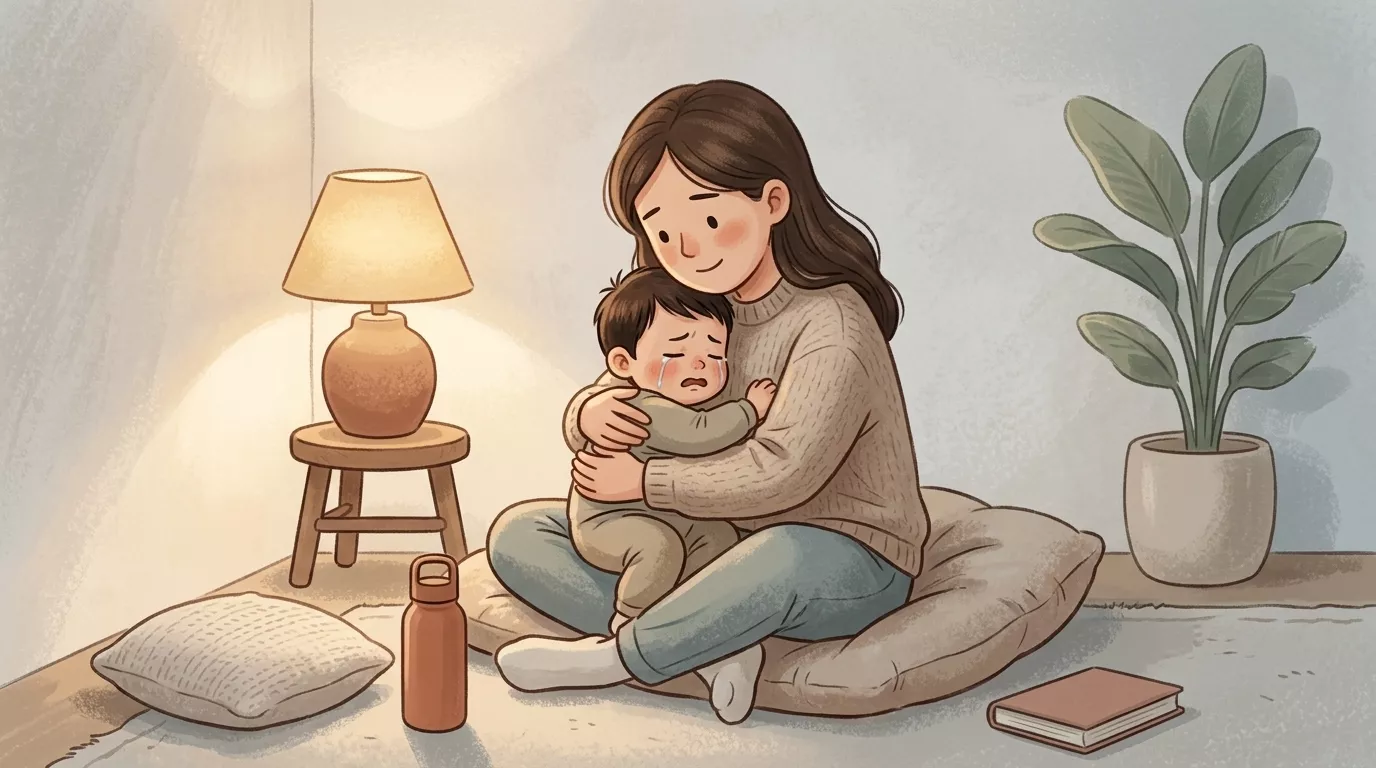
A child in the middle of a big emotion is not ready for a lesson yet.
Their body is loud.
Their breathing may be fast. Their face may be hot. Their fists may be tight. They may not be able to hear you properly, even if your words are wise and loving.
So before teaching, help the body.
Sit nearby.
Lower your voice.
Offer a hug if they want one.
Move them away from a loud or crowded place if possible.
Take slow breaths yourself.
Offer water.
Hold their hands gently if they are trying to hit.
Some children want touch when they are upset. Others need space first. The point is not to force comfort in the way we prefer, but to become a steady presence while they find their way back.
Harvard’s Center on the Developing Child describes “serve and return” interactions as responsive back-and-forth exchanges between a young child and a caring adult that support early brain development, language, and social skills. In everyday parenting, that can look very simple: your child cries, reaches, looks away, or makes a sound, and you respond with warmth, words, eye contact, or comfort.
You are not just stopping a tantrum.
You are helping your child borrow your calm until they slowly build their own.
Teach Simple Feeling Words During Calm Moments
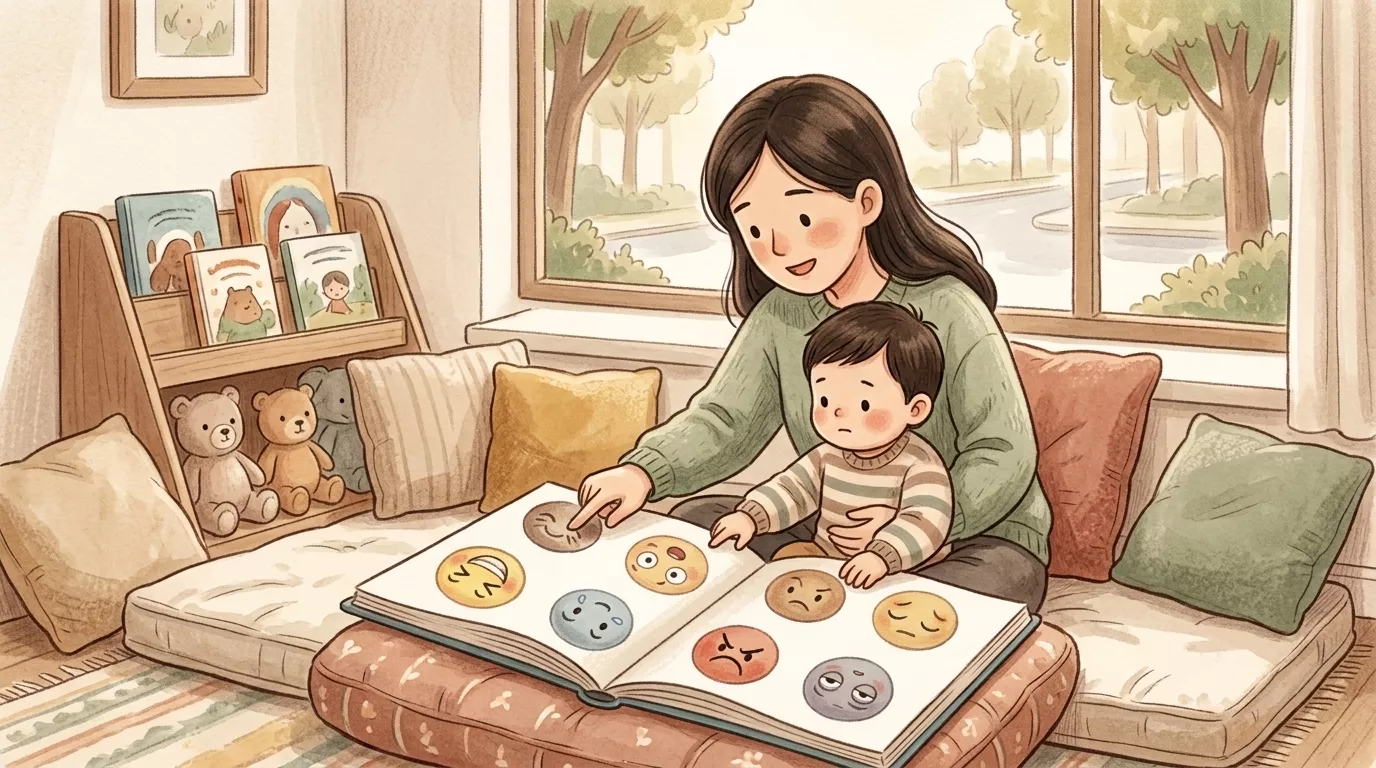
The middle of a meltdown is not the best classroom.
Calm moments are better.
You can talk about feelings while reading a book.
“The bunny looks sad.”
“The boy is angry because his tower fell.”
“She feels scared of the dark.”
You can talk about your child’s smaller feelings before they become huge.
“You look proud.”
“You seem frustrated.”
“You are excited to go outside.”
You can talk during play.
“The teddy wants a turn.”
“The doll is crying. Maybe she feels tired.”
“The car crashed. That was surprising.”
This does not need to feel formal. You are not running an emotional literacy lesson at the dining table. You are simply giving your child a few words they can slowly attach to their inner world.
Start with simple words: happy, sad, mad, scared, tired, worried, frustrated, excited.
You do not need perfect nuance at age two.
You just need a beginning.
The CDC encourages parents of toddlers to talk, read, sing, and respond to children as part of supporting communication and development. Feeling words can become part of that everyday language, folded naturally into books, play, routines, and small moments.
The more often children hear these words when they are calm, the more available those words may become when they are not.
Give Them Better Words for What They Want
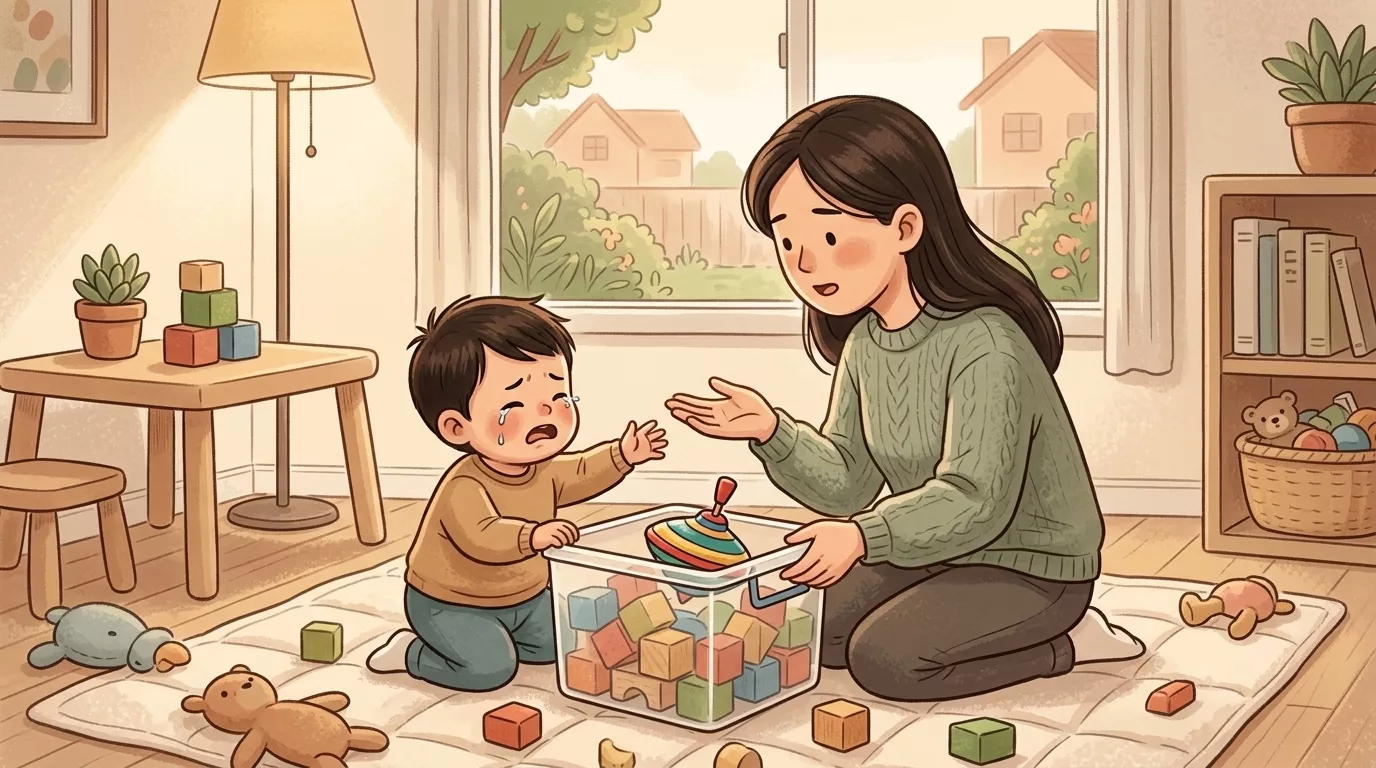
Many big emotions become bigger because toddlers do not yet have the words they need.
They want the toy.
They want help.
They want you to stop.
They want another turn.
They want to do it themselves.
They want the sock off, the light on, the door open, the banana whole, the song again, the cup not that cup.
And when the words are missing, the body speaks.
That is why it helps to teach simple replacement phrases.
“Help, please.”
“My turn.”
“More, please.”
“Stop.”
“I don’t like it.”
“Again.”
“I need a hug.”
“I do it.”
If your child is not using many spoken words yet, gestures can still help. Pointing, signing “more,” holding out a hand for help, shaking their head, or bringing you an object can all become part of communication.
When your toddler screams because the lid will not come off, you can say, “Help, please,” and then help them say it or gesture it.
When they grab, you can say, “My turn, please.”
When they push your hand away, you can say, “Stop. You can say stop.”
You are not expecting them to get it right every time. You are building a bridge between the feeling and the words.
Slowly, the bridge gets stronger.
Talk About Your Own Feelings Out Loud
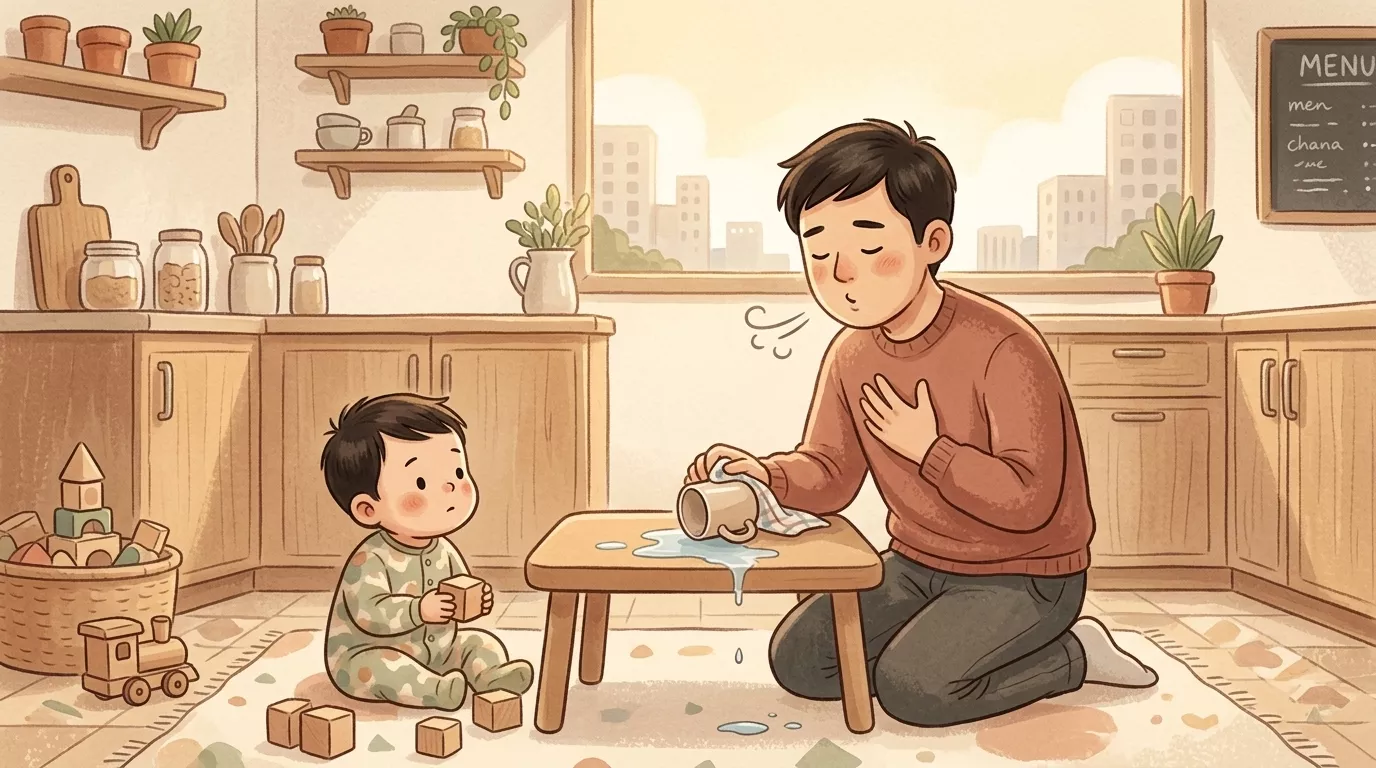
Children learn a lot from what we say to them.
They learn even more from watching how we handle ourselves.
This does not mean we should pour our adult worries onto a toddler. A 2-year-old does not need to carry our stress, our marriage problems, our money fears, or the emotional weight of our day.
But they can benefit from hearing simple, safe examples of feelings and coping.
“I feel frustrated. I’m going to take a deep breath.”
“I feel tired, so I’m going to sit for a minute.”
“I was upset when the water spilled. I can clean it up.”
“I feel happy when we read together.”
These little sentences show that feelings have names, and feelings can be handled.
They also teach something many of us are still learning as adults: emotions do not have to immediately become blame, shouting, or panic.
Your child may not copy you right away.
But they are watching.
They are hearing what you do when something goes wrong. They are learning whether frustration means explosion or repair. Whether sadness is hidden or comforted. Whether anger is dangerous or manageable.
Sometimes talking to kids about feelings begins with how we talk about our own.
Repair After Hard Moments
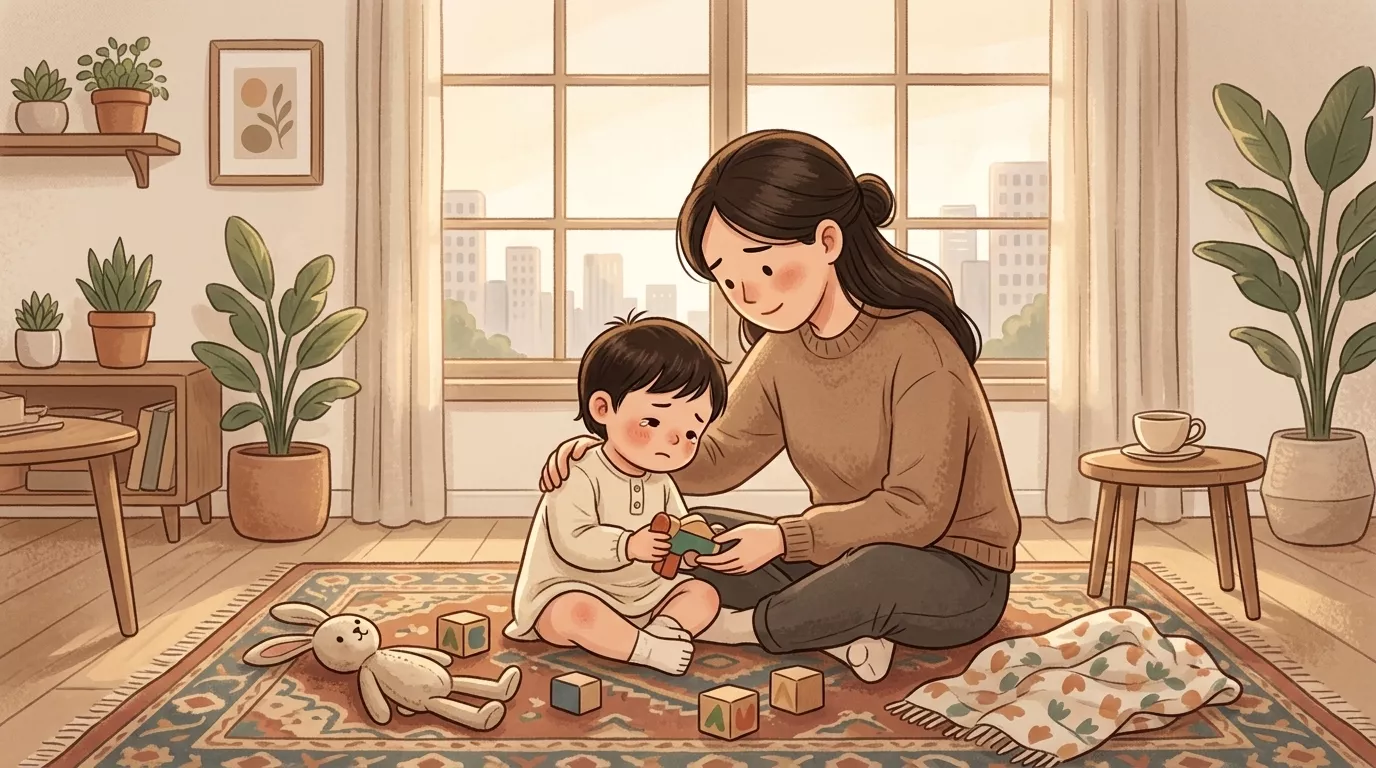
You will not do this perfectly.
No parent does.
There will be days when you use too many words. Days when you sound sharper than you meant to. Days when your toddler’s crying touches the last thin nerve you had left. Days when you know the calm response and still cannot find it in time.
That does not mean you have ruined everything.
It means you are human.
Repair matters.
After the hard moment, when everyone is calmer, you can say:
“I’m sorry I shouted.”
“You were upset, and I got upset too.”
“I should have used a calmer voice.”
“I love you. We can try again.”
This is not about making your child responsible for your emotions. It is about showing them what it looks like to come back after disconnection.
A child does not need a parent who never gets overwhelmed.
They need a parent who knows how to return.
Repair teaches children that big feelings do not break love. Hard moments can be talked about. People can make mistakes and still be safe with each other.
That lesson may matter just as much as naming anger or sadness.
Keep Coming Back to the Same Gentle Message
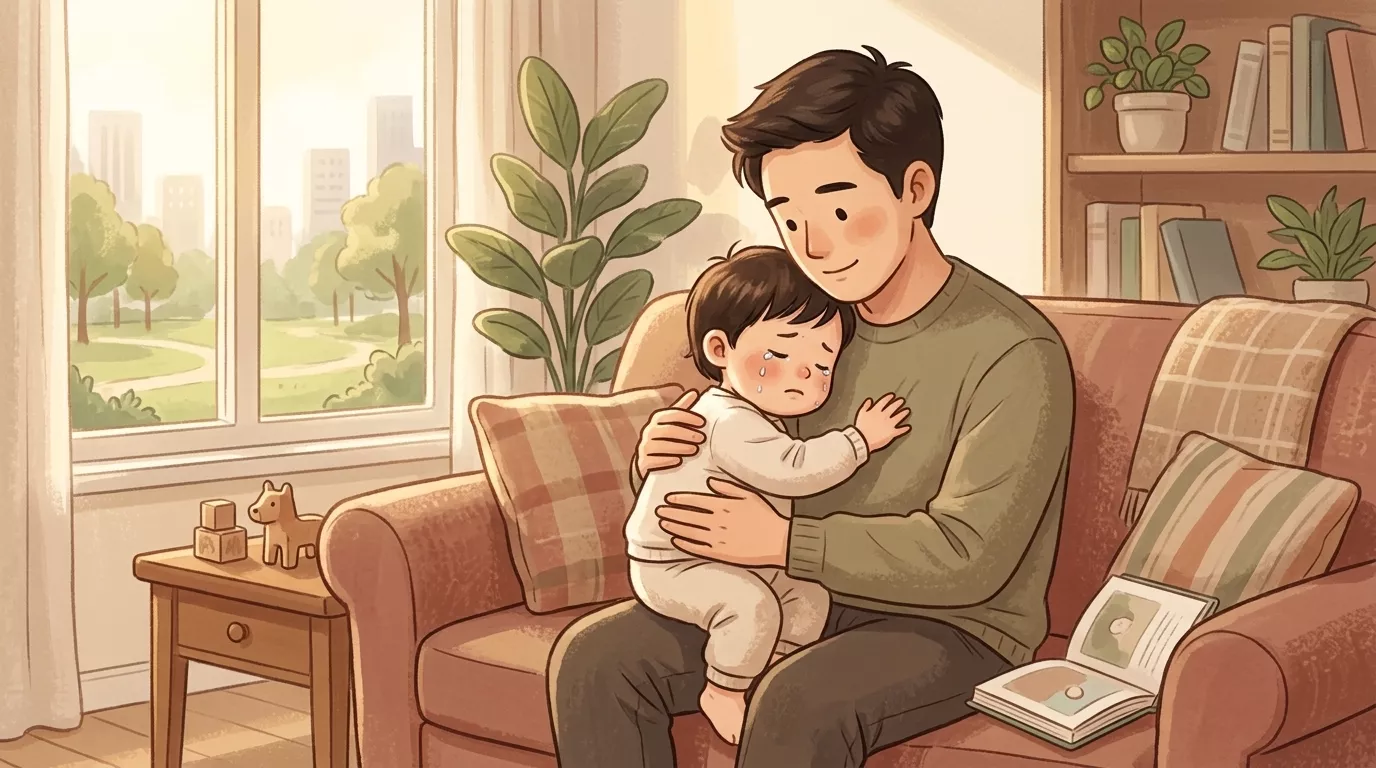
You may say all the right things and your child may still cry.
They may still scream because the cup is wrong.
They may still fall apart when it is time to leave the playground.
They may still shout “No!” with their whole chest when you are already late.
This does not mean you are doing it wrong.
Emotional regulation is not learned in one beautiful conversation. It is built through repetition. The same calm words. The same safe boundaries. The same return after hard moments. Again and again and again.
You are not trying to stop your child from ever having big feelings.
You are helping them understand that feelings can be named. Bodies can calm. Limits can hold. Love can stay.
One day, your child may not be able to stop the big feeling right away.
But they may look at you through tears and say, “I’m mad.”
And that tiny sentence is not tiny at all.
It is the beginning of a child learning that the storm inside them has a name, and they do not have to be alone in it.