The Search That Turned Into More Questions Than Answers
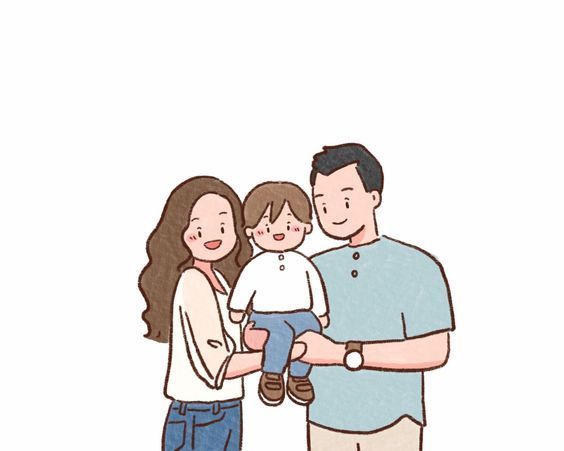
When our daughter turned three, my husband and I assumed choosing a preschool would be one of the easier parenting decisions we would make.
We were wrong.
Like many first-time parents, we imagined there would be a handful of schools in our neighbourhood, each offering roughly the same experience with different fees, facilities, and locations. We thought the decision would come down to practical considerations such as distance from home, operating hours, and whether the school felt welcoming.
Instead, we found ourselves entering a world filled with educational philosophies, teaching methods, and passionate opinions. Every school seemed to believe it had discovered the ideal way for children to learn. Every parent we spoke to had a different perspective. Some insisted that strong academic foundations should begin as early as possible. Others believed childhood should be protected from academic pressure for as long as possible. Some advocated structured learning while others championed child-led exploration.
Within a few weeks, what initially seemed like a straightforward task became one of the most overwhelming parenting decisions we had faced.
Every School Seemed to Have a Different Idea of What Children Need
We took the morning off from work one Monday and visited a school where children were working quietly at tables, practising letters and numbers. The classrooms were orderly, the teachers were attentive, and the children appeared comfortable with routines and expectations. Several parents we met praised the school’s academic programme and spoke confidently about preparing children for primary school.
The following week, we visited a Montessori preschool. The atmosphere felt entirely different. Children moved freely around the classroom, choosing activities that interested them. Some were building structures, others were working with practical life exercises, while a few sat quietly concentrating on puzzles and learning materials. The teachers guided rather than directed, and the children seemed remarkably independent for their age.
A few days later, another parent encouraged us to visit a school that followed a Waldorf-inspired approach. There were natural materials everywhere. The classrooms felt warm and inviting, more like a family home than a school. Children spent time outdoors, listened to stories, painted, sang songs, and engaged in imaginative play. Academic instruction was introduced more gently, with a strong emphasis on creativity and emotional development during the early years.
As we continued our search, we met families who had chosen homeschooling. Before those conversations, I had assumed homeschooling was uncommon and perhaps only suited a small group of families. What surprised me was how thoughtfully many of these parents had arrived at their decision. Some had children with learning styles that did not fit comfortably within conventional classrooms. Others wanted greater flexibility to follow their children’s interests and pace of learning. While homeschooling clearly required significant commitment, the families we met described experiences that were both challenging and deeply rewarding.
The Question That Kept Following Us Home
The more schools we visited and the more parents we spoke with, the more one question kept returning to my mind.
If so many intelligent and caring parents were making such different choices, could there really be a single best approach?
One afternoon, that question became particularly important when I met a mother with three children. What fascinated me was that each child attended a different type of school.
Her eldest thrived in a traditional academic environment. He enjoyed routines, clear expectations, and measurable goals. Her middle child struggled in the same setting and became far more engaged after moving to a Montessori programme. Her youngest was still preschool age, but she was considering a play-based environment because his personality seemed entirely different from his siblings.
As we spoke, she shared something that stayed with me long after our conversation ended.
She said that her first child had taught her that not every child learns the same way. Her second child had taught her that not every successful child values the same things when it comes to learning.
Until then, I had been approaching our search as though we were choosing the best educational system. She helped me realise that perhaps we should have been trying to understand our child instead.
When We Stopped Looking for the Perfect School
It was a relief because that realisation completely changed the way we evaluated schools.
Rather than asking which programme produced the strongest academic outcomes or had the most impressive reputation, we began paying closer attention to our daughter’s personality. We thought about how she spent her time at home, considered the activities she naturally gravitated towards, and reflected on what helped her feel confident and engaged.
She was curious but cautious. She loved exploring independently but also appreciated gentle guidance. She loved stories, nature, and hands-on activities. While she was not particularly interested in worksheets, she could spend an hour absorbed in building, drawing, or creating imaginary worlds.
For the first time, our decision felt less overwhelming because we were no longer searching for a universally perfect school. We were searching for an environment that matched the child we knew and loved.
What Families From Different Educational Paths Had in Common
As our research continued, we also discovered something reassuring. Despite their differences, many respected early childhood approaches shared more similarities than we initially realised.
Whether we were speaking with teachers from traditional schools, Montessori programmes, Waldorf settings, Reggio Emilia-inspired centres, or experienced homeschooling parents, certain themes appeared repeatedly. Children learned best when they felt safe and emotionally secure. Meaningful relationships with caring adults mattered enormously. Play remained one of the most powerful ways young children explored and understood the world. Curiosity was not something educators needed to create but something they needed to protect.
This was supported not only by educational research but also by the experiences of countless families we met along the way.
Why Play-Based Learning Continues to Win Parents Over
Perhaps that explains why play-based education has become one of the most widely accepted approaches for young children across many parts of the world. Modern early childhood programmes increasingly recognise that children do not need childhood to be rushed. They benefit from opportunities to play, experiment, ask questions, solve problems, build relationships, and develop confidence before formal academics become the primary focus.
This does not mean academic learning is unimportant. Rather, many educators now view social, emotional, and cognitive development as deeply connected. A child who feels secure, curious, resilient, and confident often becomes a more successful learner in the long run.
The Most Important Lesson We Learned
Looking back, I sometimes smile at how desperately we searched for certainty. We wanted experts to tell us which educational philosophy was superior. We wanted reassurance that one particular path would guarantee success.
Instead, what we found was something far more valuable.
We discovered that education is not about finding a perfect system. It is about finding an environment where a child can develop a lifelong love of learning, build confidence in their abilities, and feel supported as they grow into the person they are meant to become.
For parents who are beginning this journey today, my advice would be simple. Visit schools. Speak to teachers. Listen to other parents. Keep an open mind. Learn about the different approaches available.
Most importantly, spend time observing your child.
The more we learned about educational philosophies, the more we realised that our daughter had been quietly showing us what she needed all along. The answer was never hidden inside a brochure or an admissions presentation. It was sitting at our kitchen table every day, colouring pictures, asking endless questions, and revealing her personality one small moment at a time.
Understanding her turned out to be the most important part of the entire process.