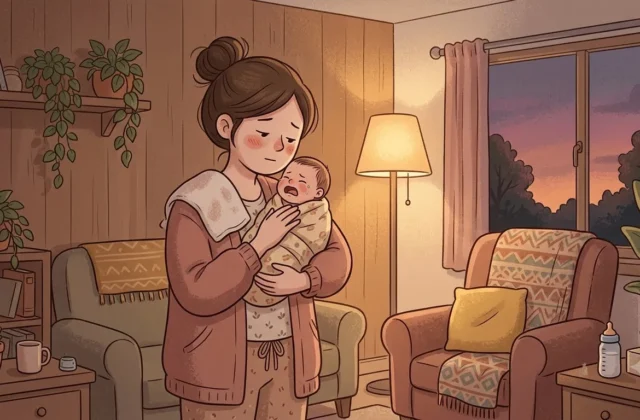



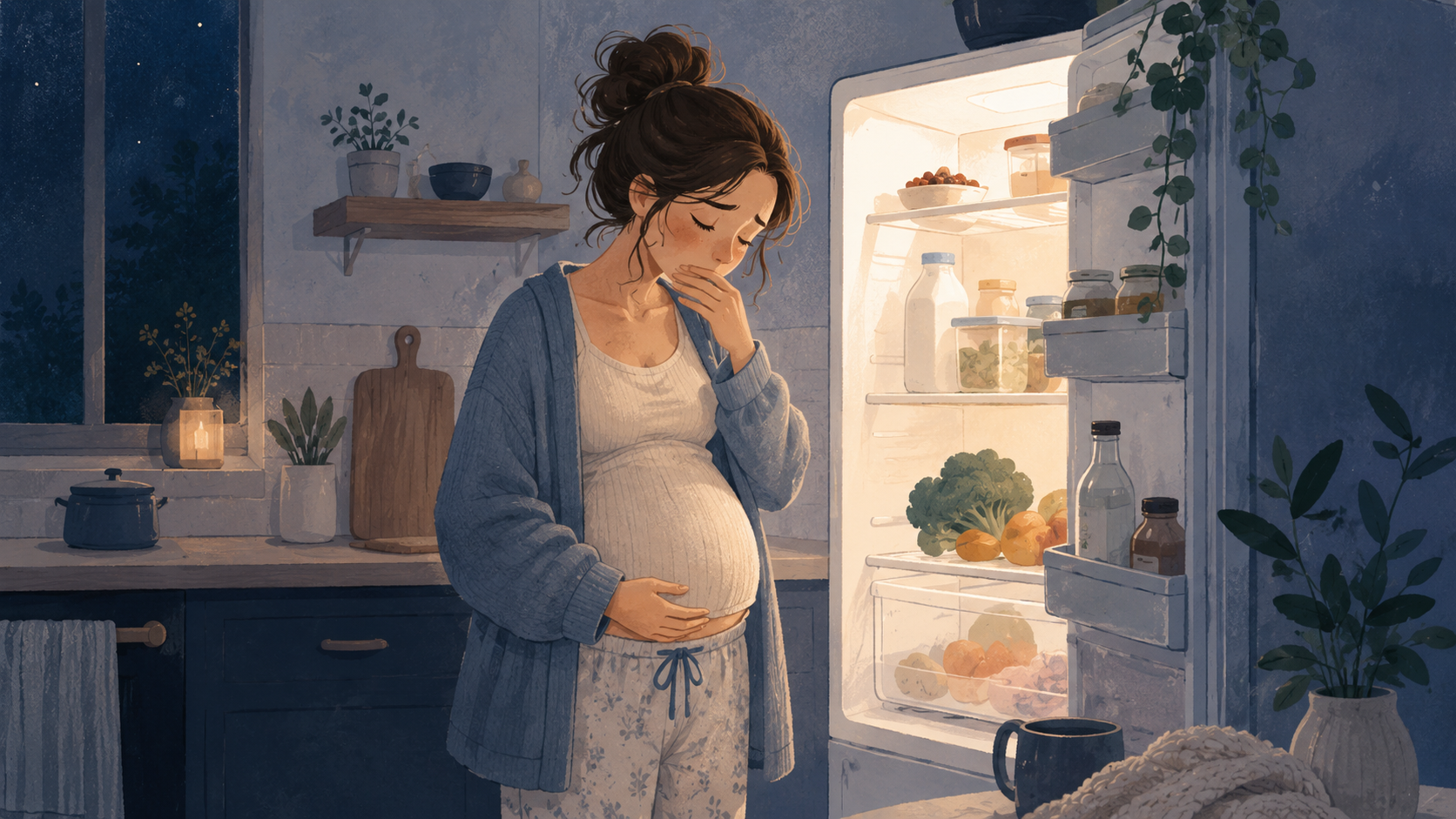
It usually happened in the evening, right when the day was supposed to slow down. I would stand in front of the fridge, hungry enough to cry but too nauseous to eat anything inside it. The leftovers smelled too strong, the thought of cooking felt impossible, and even plain food suddenly seemed suspicious.
That was the part nobody had warned me about. I expected nausea first thing in the morning, maybe a few rough afternoons, some crackers on the nightstand, maybe ginger tea if I was lucky. I did not expect to feel almost okay at lunch and completely defeated by dinner.
For weeks, I kept searching the same thing on my phone: why does morning sickness feel worse at night. I wanted a reason, but I also wanted reassurance. I wanted someone to tell me I was not imagining it, because the name “morning sickness” made me feel like my body was getting the schedule wrong.
It turns out, nighttime nausea makes a lot of sense. By evening, I was tired, hungry, overstimulated by smells, and emotionally worn out from trying to function all day. My stomach was often too empty, but a proper meal felt too heavy. That combination made dinner feel less like a normal part of the day and more like a small personal battle.
Once I stopped trying to eat the way I used to, things got a little easier.
Not easy. Just easier.
I stopped waiting until I was starving
The biggest mistake I made was waiting too long to eat. Once the nausea became strong, food felt impossible, even if hunger was part of the problem. I learned to eat before my stomach got too empty, even if that meant having a few crackers, a banana, a piece of toast, or a glass of milk at odd times.
It did not look like a proper meal, but it helped. Keeping small snacks beside the bed, in my bag, and near the couch made evenings less dramatic. I realized I did not need to feel hungry before eating; I needed to stay slightly ahead of the nausea.
I let dinner become whatever I could handle
Before pregnancy, dinner had a shape in my mind. It was warm, balanced, and served on a plate like an adult meal. During morning sickness, that idea only made me feel worse.
Some nights, dinner was toast. Some nights, it was yogurt, cereal, cold fruit, crackers with cheese, or half a bagel eaten slowly in bed. At first, I felt guilty about it, but then I reminded myself that the first trimester is not the time to perform wellness. It is survival mode, and survival mode has different rules.
If I could keep it down, it counted.
I avoided hot food when smells were too much
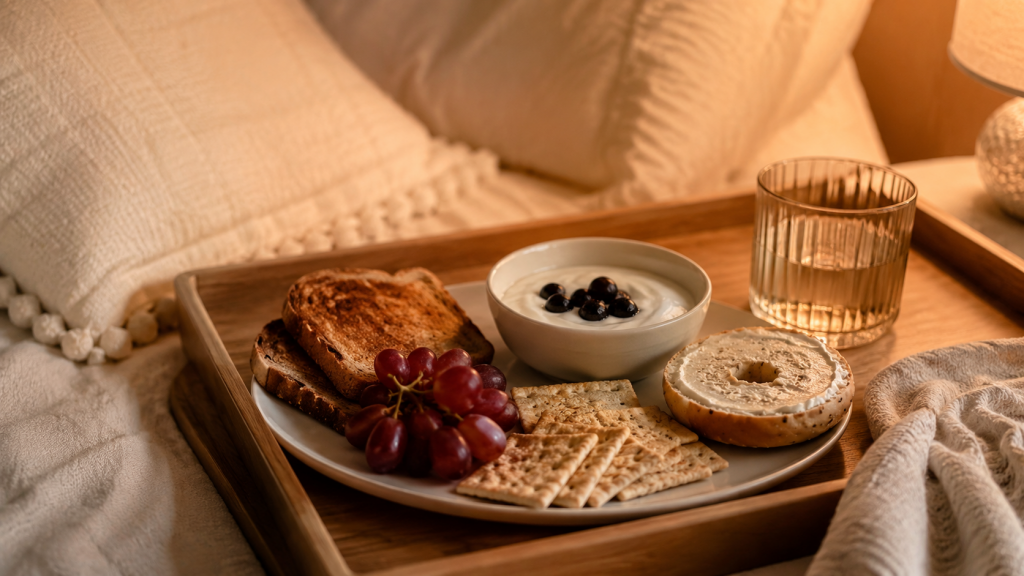
Warm food was often the problem, not food itself. The smell of oil, garlic, meat, or leftovers heating up could ruin my appetite before I even took a bite. Once I noticed that pattern, I stopped forcing myself to cook or sit near the kitchen at night.
Cold or room-temperature foods were much easier. Fruit, sandwiches, cereal, yogurt, smoothies, and simple snacks felt quieter because they did not fill the room with smell. It was such a small adjustment, but it made evenings feel less overwhelming.
I changed my toothpaste routine
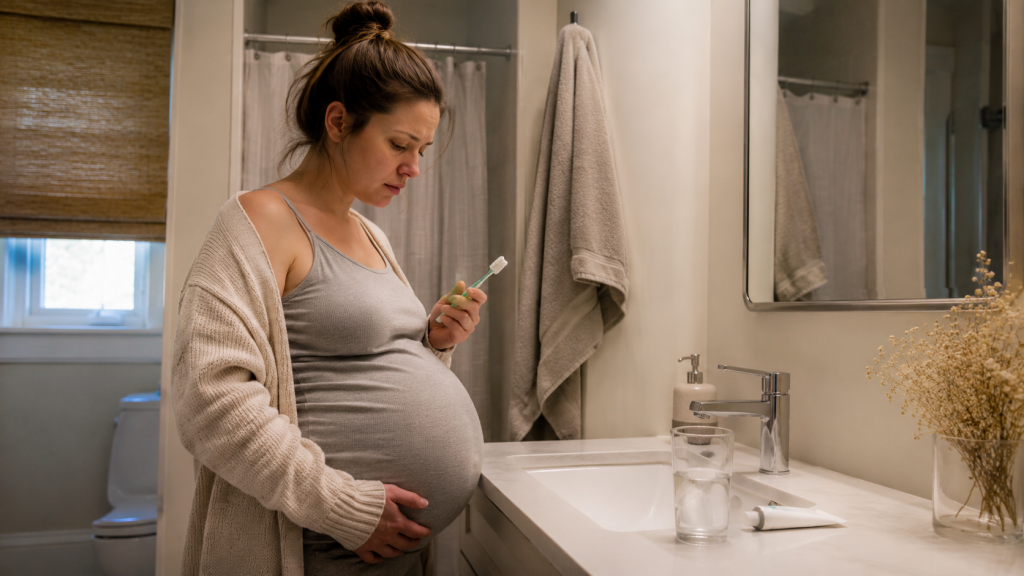
This sounds minor until toothpaste becomes your enemy. The mint, the foam, and the toothbrush touching too far back on my tongue could undo an entire evening of trying not to throw up.
Using less toothpaste helped. So did brushing more slowly, switching to a milder flavor, and not brushing immediately after eating. It was not a perfect fix, but it reduced one of the most annoying triggers of the day.
I sipped instead of forcing big glasses of water
It is important to stay hydrated, but drinking too much at once sometimes made my stomach turn. Tiny sips worked better than full glasses. Cold water helped on some days, ice chips helped on others, and occasionally lemon water was tolerable until suddenly it was not.
That was one of the frustrating parts of pregnancy nausea: what helped on Monday could be disgusting by Thursday. I had to stop expecting consistency and just follow whatever my body could handle that day.
I asked for help sooner
For a while, I acted like nausea was something I had to quietly endure because “everyone gets morning sickness.” But struggling every night is still struggling, even if it is common. When I finally told my doctor how much it was affecting my eating, sleep, and mood, I felt embarrassed for about two seconds before I felt relieved.
You do not have to wait until things are extreme to ask for support. If you cannot keep fluids down, feel dizzy, are barely peeing, notice dark urine, are losing weight, or feel like vomiting is taking over your day, call your doctor or midwife. Morning sickness may be common, but that does not mean you have to suffer through it alone.
What helped most was lowering the standard
Looking back, the most helpful change was not a specific food or trick. It was letting go of the version of pregnancy I thought I was supposed to have.
I stopped trying to eat perfectly. I stopped expecting dinner to look normal. I stopped feeling guilty when I needed to leave the kitchen, lie down early, or ask someone else to deal with the fridge. I stopped treating every hard night like proof that I was failing.
Morning sickness made ordinary things feel strangely difficult: brushing my teeth, opening the fridge, choosing food, drinking water, getting through the evening without crying. But once I stopped fighting my body and started working around it, the days became a little more manageable.
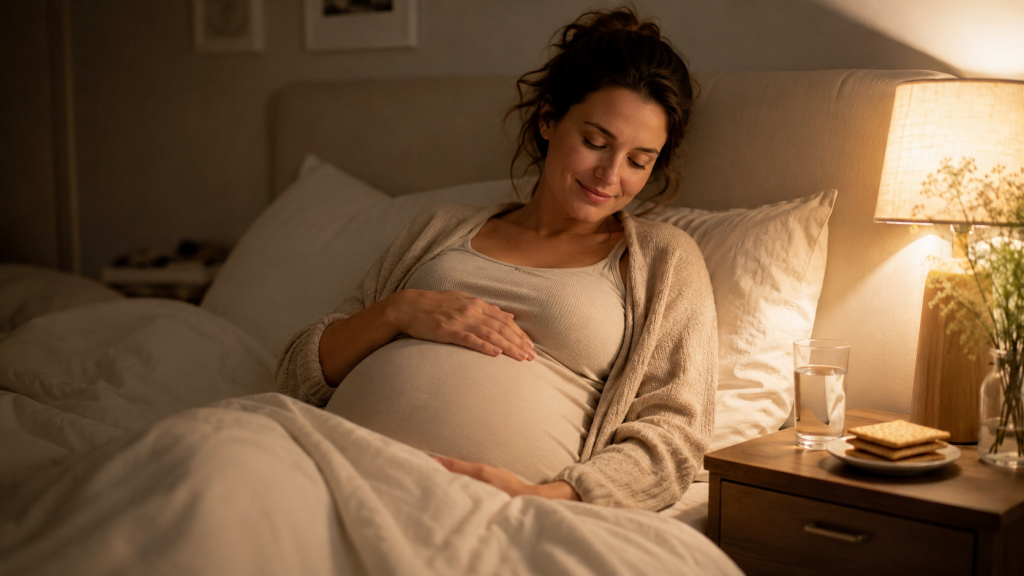
So if you are in that stage right now, searching why morning sickness feels worse at night while lying in bed with crackers beside you, please know this: you are not being dramatic. You are not bad at pregnancy. You are dealing with something genuinely hard.
Eat what you can. Avoid what makes you gag. Let meals be weird. Ask for help when you need it.
And if tonight all you manage is a few bites, a few sips, and getting yourself to bed, that still counts.